







Question: please answer ASAP NO PLAGARISM Case Study 1 Due Feb 8 by 11:59pm Points 100 Submitting an external tool For Case Study 1, we will
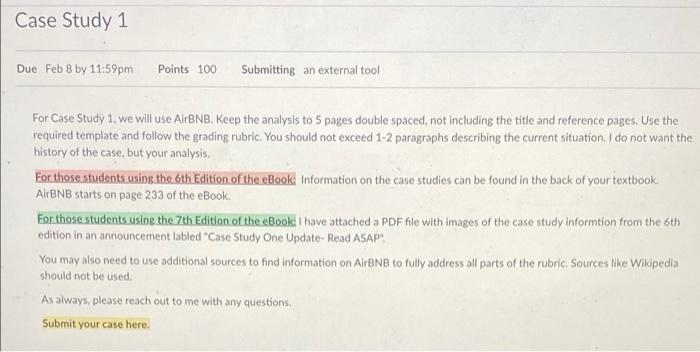
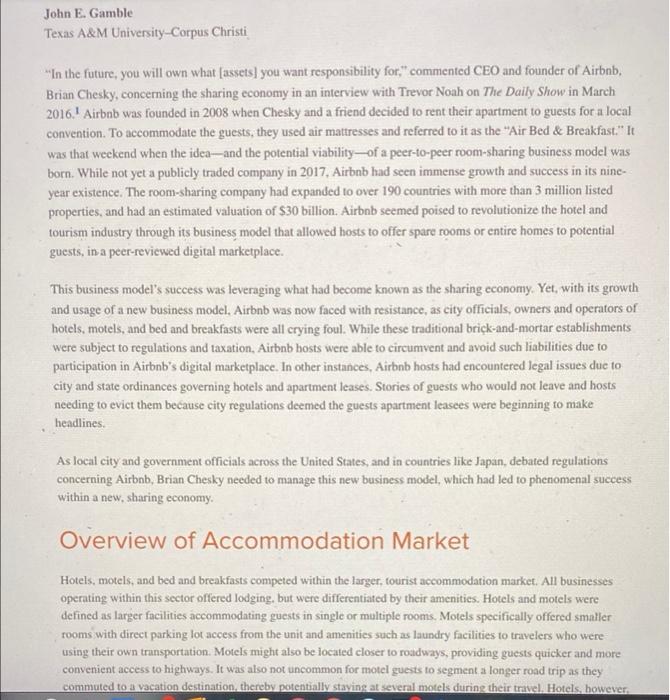
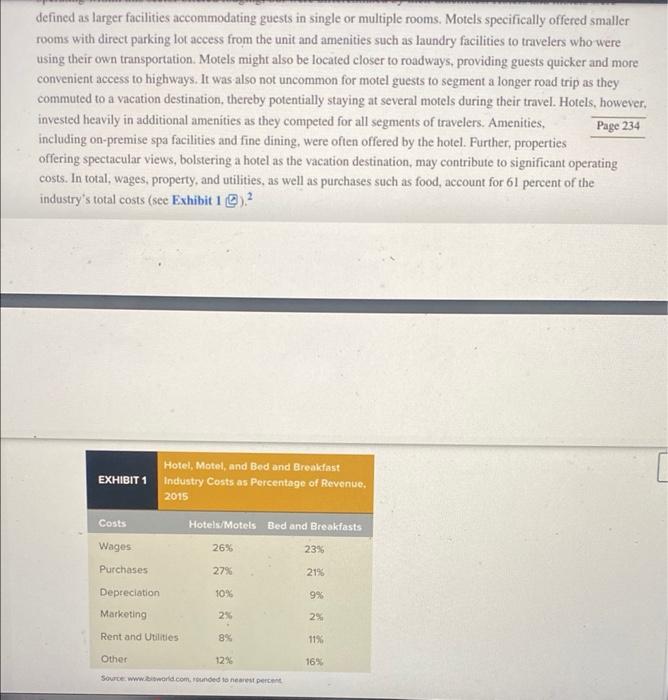
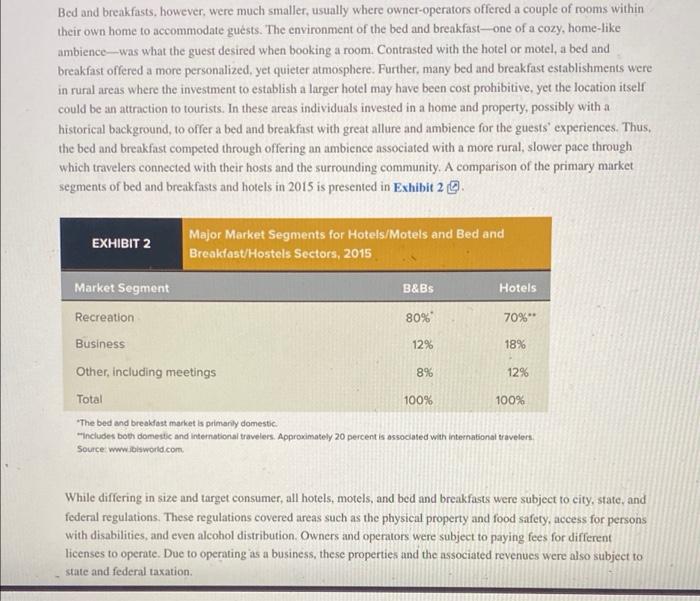
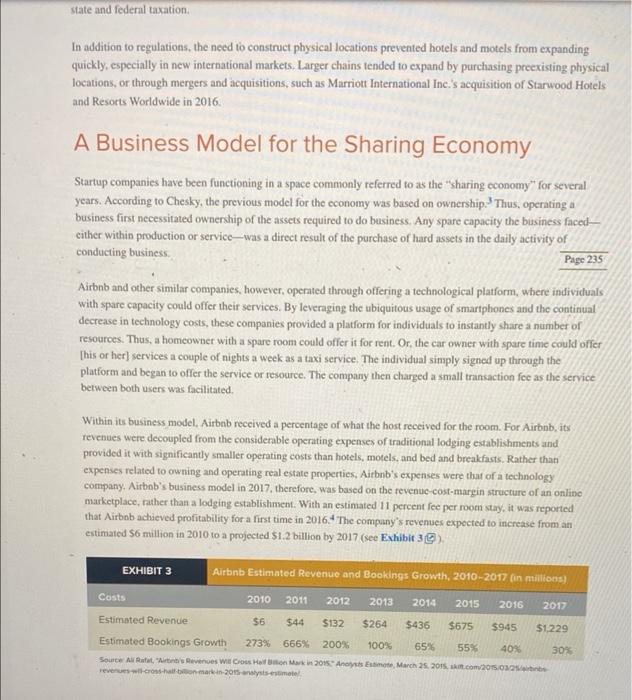
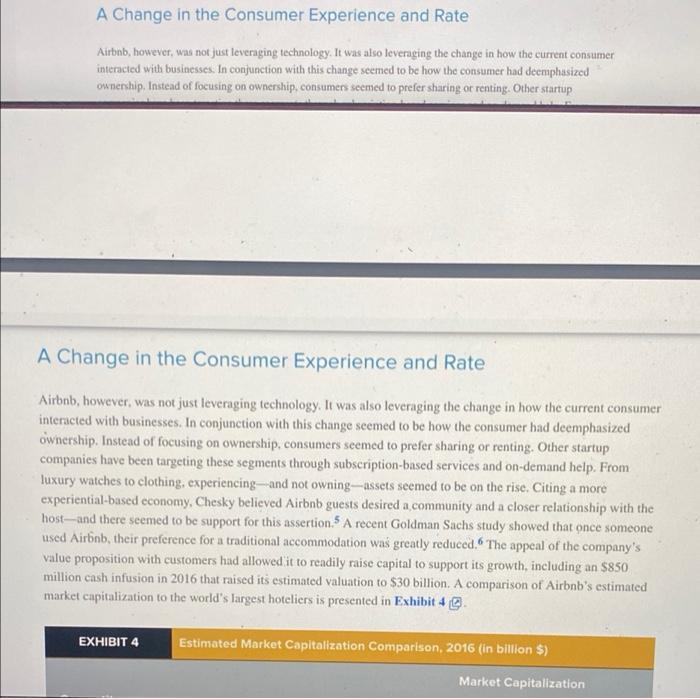
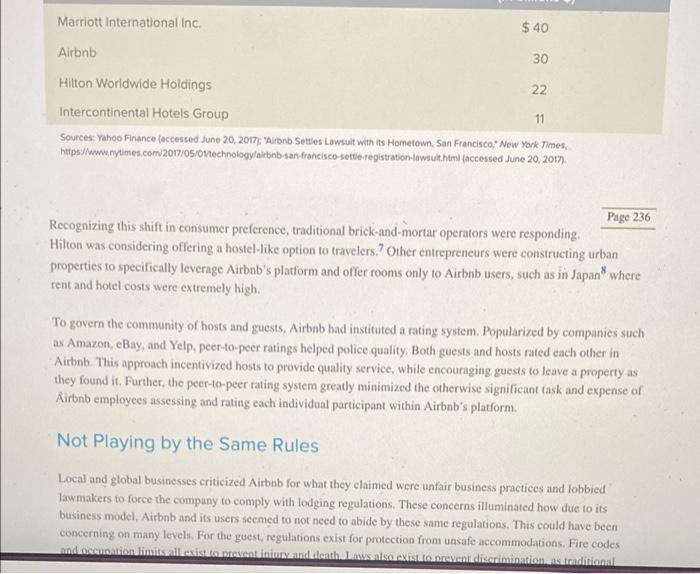
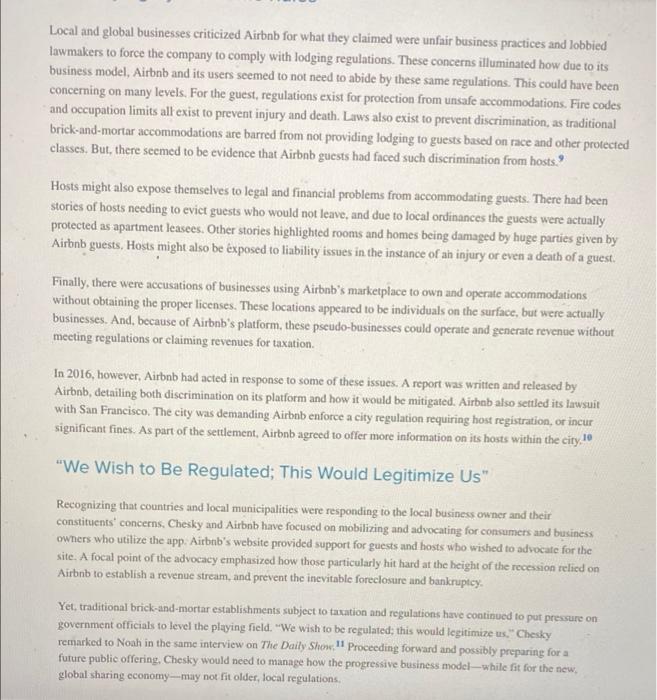
Case Study 1 Due Feb 8 by 11:59pm Points 100 Submitting an external tool For Case Study 1, we will use AirBNB. Keep the analysis to 5 pages double spaced, not including the title and reference pages. Use the required template and follow the grading rubric. You should not exceed 1-2 paragraphs describing the current situation. I do not want the history of the case, but your analysis. For those students using the 6th Edition of the eBook: Information on the case studies can be found in the back of your textbook. AirBNB starts on page 233 of the eBook. For those students usine the 7th Edition of the eBook: I have attached a PDF file with images of the case study informtion from the 6th edition in an announcement labled "Case Study One Update-Read ASAP You may also need to use additional sources to find information on Airbne to fully address all parts of the rubric Sources like Wikipedia should not be used As always, please reach out to me with any questions Submit your case here. John E. Gamble Texas A&M University-Corpus Christi "In the future, you will own what (assets) you want responsibility for," commented CEO and founder of Airbnb, Brian Chesky, concerning the sharing economy in an interview with Trevor Noah on The Daily Show in March 2016. Airbnb was founded in 2008 when Chesky and a friend decided to rent their apartment to guests for a local convention. To accommodate the guests, they used air mattresses and referred to it as the "Air Bed & Breakfast." It was that weekend when the idea---and the potential viability-of a peer-to-peer room-sharing business model was born. While not yet a publicly traded company in 2017. Airbnb had seen immense growth and success in its ninc- year existence. The room-sharing company had expanded to over 190 countries with more than 3 million listed properties, and had an estimated valuation of $30 billion. Airbnb seemed poised to revolutionize the hotel and tourism industry through its business model that allowed hosts to offer spare rooms or entire homes to potential guests, in a peer-reviewed digital marketplace. This business model's success was leveraging what had become known as the sharing economy. Yet, with its growth and usage of a new business model. Airbnb was now faced with resistance, as city officials, owners and operators of hotels, motels, and bed and breakfasts were all crying foul. While these traditional brick-and-mortar establishments were subject to regulations and taxation, Airbnb hosts were able to circumvent and avoid such liabilities due to participation in Airbnb's digital marketplace. In other instances, Airbnb hosts had encountered legal issues due to city and state ordinances governing hotels and apartment leases. Stories of guests who would not leave and hosts needing to evict them because city regulations deemed the guests apartment leasees were beginning to make headlines. As local city and government officials across the United States, and in countries like Japan, debated regulations concerning Airbnb, Brian Chesky needed to manage this new business model, which had led to phenomenal success within a new, sharing economy. Overview of Accommodation Market Hotels, motels, and bed and breakfasts competed within the larger, tourist accommodation market. All businesses operating within this sector offered lodging, but were differentiated by their amenities. Hotels and motels were defined as larger facilities accommodating guests in single or multiple rooms. Motels specifically offered smaller rooms with direct parking lot access from the unit and amenities such as laundry facilities to travelers who were using their own transportation. Motels might also be located closer to roadways, providing guests quicker and more convenient access to highways. It was also not uncommon for motel guests to segment a longer road trip as they commuted to a vacation destination, thereby potentially staying at several models during their travel, Hotels, however defined as larger facilities accommodating guests in single or multiple rooms. Motels specifically offered smaller rooms with direct parking lot access from the unit and amenities such as laundry facilities to travelers who were using their own transportation. Motels might also be located closer to roadways, providing guests quicker and more convenient access to highways. It was also not uncommon for motel guests to segment a longer road trip as they commuted to a vacation destination, thereby potentially staying at several motels during their travel. Hotels, however, invested heavily in additional amenities as they competed for all segments of travelers. Amenities, Page 234 including on-premise spa facilities and fine dining, were often offered by the hotel. Further, properties offering spectacular views, bolstering a hotel as the vacation destination, may contribute to significant operating costs. In total, wages, property, and utilities, as well as purchases such as food, account for 61 percent of the industry's total costs (see Exhibit 10) EXHIBIT Hotel, Motel, and Bed and Breakfast Industry Costs as Percentage of Revenue. 2015 Costs Hotels/Motels Bed and Breakfasts 26% 23% 27% 2195 Wages Purchases Depreciation Marketing 10% 9% 2% 2% Rent and Utilities 8% 11% 16% Other 12% Source www.world.com.sunded to nearest percent Bed and breakfasts, however, were much smaller, usually where owner-operators offered a couple of rooms within their own home to accommodate guests. The environment of the bed and breakfast one of a cozy, home-like ambience-was what the guest desired when booking a room. Contrasted with the hotel or motel, a bed and breakfast offered a more personalized, yet quieter atmosphere. Further, many bed and breakfast establishments were in rural areas where the investment to establish a larger hotel may have been cost prohibitive, yet the location itself could be an attraction to tourists. In these areas individuals invested in a home and property, possibly with a historical background, to offer a bed and breakfast with great allure and ambience for the guests' experiences. Thus, the bed and breakfast competed through offering an ambience associated with a more rural, slower pace through which travelers connected with their hosts and the surrounding community. A comparison of the primary market segments of bed and breakfasts and hotels in 2015 is presented in Exhibit 2 EXHIBIT 2 Major Market Segments for Hotels/Motels and Bed and Breakfast/Hostels Sectors, 2015 Market Segment B&Bs Hotels Recreation 80% 70% Business 12% 18% Other, including meetings 8% 12% Total 100% 100% *The bed and breakfast market is primarily domestic -includes both domestic and International travelers. Approximately 20 percent is associated with International travelers Source www.bisworld.com While differing in size and target consumer, all hotels, motels, and bed and breakfasts were subject to city, state, and federal regulations. These regulations covered areas such as the physical property and food safety, access for persons with disabilities, and even alcohol distribution Owners and operators were subject to paying fees for different licenses to operate. Due to operating as a business, these properties and the associated revenues were also subject to state and federal taxation state and federal taxation In addition to regulations, the need to construct physical locations prevented hotels and motels from expanding quickly, especially in new international markets. Larger chains tended to expand by purchasing preexisting physical locations, or through mergers and acquisitions, such as Marriott International Inc.'s acquisition of Starwood Hotels and Resorts Worldwide in 2016 A Business Model for the Sharing Economy Startup companies have been functioning in a space commonly referred to as the "sharing economy" for several years. According to Chesky, the previous model for the economy was based on ownership. Thus, operating a business first necessitated ownership of the assets required to do business. Any spare capacity the business faced cither within production or service-was a direct result of the purchase of hard assets in the daily activity of conducting business Page 235 Airbnb and other similar companies, however, operated through offering a technological platform, where individuals with spare capacity could offer their services. By leveraging the ubiquitous usage of smartphones and the continual decrease in technology costs, these companies provided a platform for individuals to instantly share a number of resources. Thus, a homeowner with a spare room could offer it for rent. Or, the car owner with spare time could offer This or her) services a couple of nights a week as a taxi service. The individual simply signed up through the platform and began to offer the service or resource. The company then charged a small transaction fee as the service between both users was facilitated. Within its business model Airbnb received a percentage of whar the host received for the room. For Airbnb, its revenues were decoupled from the considerable operating expenses of traditional lodging establishments and provided it with significantly smaller operating costs than hotels, motels, and bed and breakfasts. Rather than expenses related to owning and operating real estate properties, Airbnb's expenses were that of a technology company, Airbob's business model in 2017, therefore, was based on the revenue-cost-margin structure of an online marketplace, rather than a lodging establishment. With an estimated 11 percent fee per room stay. it was reported that Airbnb achieved profitability for a first time in 2016. The company's revenues expected to increase from an estimated $6 million in 2010 to a projected $1.2 billion by 2017 (see Exhibit 3) EXHIBIT 3 Airbnb Estimated Revenue and Bookings Growth, 2010-2017 (in millions) Costs 2010 2011 2012 2013 2014 2015 2016 2012 Estimated Revenue $6 $44 $132 $264 $436 $675 $945 $1.229 Estimated Bookings Growth 273% 666% 200% 65% 55% 40% 30% Source All Ratt, Art's Revenues Will Cros Hot Mark 2015 Anos Estimate, March 25, 2015. st.com/2015.03 reverswil-cross-marin-2015-analystsemetel 100% A Change in the Consumer Experience and Rate Airbnb, however, was not just leveraging technology. It was also leveraging the change in how the current consumer interacted with businesses. In conjunction with this change seemed to be how the consumer had deemphasized ownership. Instead of focusing on ownership, consumers seemed to prefer sharing or renting. Other startup A Change in the Consumer Experience and Rate Airbnb, however, was not just leveraging technology. It was also leveraging the change in how the current consumer interacted with businesses. In conjunction with this change seemed to be how the consumer bad deemphasized ownership. Instead of focusing on ownership, consumers seemed to prefer sharing or renting. Other startup companies have been targeting these segments through subscription-based services and on-demand help. From luxury watches to clothing, experiencing and not owning-assets seemed to be on the rise. Citing a more experiential-based economy, Chesky believed Airbnb guests desired a community and a closer relationship with the host-and there seemed to be support for this assertion. A recent Goldman Sachs study showed that once someone used Airbnb, their preference for a traditional accommodation was greatly reduced. The appeal of the company's value proposition with customers had allowed it to readily raise capital to support its growth, including an $850 million cash infusion in 2016 that raised its estimated valuation to $30 billion. A comparison of Airbnb's estimated market capitalization to the world's largest hoteliers is presented in Exhibit 40. EXHIBIT 4 Estimated Market Capitalization Comparison, 2016 (in billion $) Market Capitalization Marriott International Inc. $ 40 Airbnb 30 Hilton Worldwide Holdings 22 Intercontinental Hotels Group 11 Source: Yahoo Finance (accessed June 20, 2017; "Airbnb Settles Lawsuit with its Hometown, San Francisco New York Times https://www.nytimes.com/2017/05/01technologylairbnb san francisco settle-registration-lawsuit.html (accessed June 20, 2017) Page 236 Recognizing this shift in consumer preference, traditional brick-and-mortar operators were responding. Hilton was considering offering a hostel-like option to travelers.? Other entrepreneurs were constructing urban properties to specifically leverage Airbnb's platform and offer rooms only to Airbnb users, such as in Japan" where rent and hotel costs were extremely high To govern the community of hosts and guests, Airbnb had instituted a rating system. Popularized by companies such as Amazon, eBay, and Yelp, peer-to-peer ratings helped police quality. Both guests and hosts rated each other in Airbnb. This approach incentivized hosts to provide quality service, while encouraging guests to leave a property as they found it. Further, the peer-to-peer rating system greatly minimized the otherwise significant task and expense of Airbnb employees assessing and rating each individual participant within Airbnb's platform. Not Playing by the Same Rules Local and global businesses criticized Airbnb for what they claimed were unfair business practices and lobbied lawmakers to force the company to comply with lodging regulations. These concerns illuminated how due to its business model, Airbnb and its users seemed to not need to abide by these same regulations. This could have been concerning on many levels. For the guest, regulations exist for protection from unsafe accommodations. Fire codes and constion limitlesistentinuvaandeath Lawskocionown discriminations traditional Local and global businesses criticized Airbnb for what they claimed were unfair business practices and lobbied lawmakers to force the company to comply with lodging regulations. These concerns illuminated how due to its business model, Airbnb and its users seemed to not need to abide by these same regulations. This could have been concerning on many levels. For the guest, regulations exist for protection from unsafe accommodations. Fire codes and occupation limits all exist to prevent injury and death. Laws also exist to prevent discrimination, as traditional brick-and-mortar accommodations are barred from not providing lodging to guests based on race and other protected classes. But, there seemed to be evidence that Airbnb guests had faced such discrimination from hosts.? Hosts might also expose themselves to legal and financial problems from accommodating guests. There had been stories of hosts needing to evict guests who would not leave, and due to local ordinances the guests were actually protected as apartment leasees. Other stories highlighted rooms and homes being damaged by huge parties given by Airbnb guests, Hosts might also be exposed to liability issues in the instance of an injury or even a death of a guest. Finally, there were accusations of businesses using Airbnb's marketplace to own and operate accommodations without obtaining the proper licenses. These locations appeared to be individuals on the surface, but were actually businesses. And, because of Airbnb's platform, these pseudo-businesses could operate and generate revenue without meeting regulations or claiming revenues for taxation. In 2016, however, Airbnb had acted in response to some of these issues. A report was written and released by Airbnb, detailing both discrimination on its platform and how it would be mitigated. Airbnb also settled its lawsuit with San Francisco. The city was demanding Airbnb enforce a city regulation requiring host registration, or incur significant fines. As part of the settlement, Airbnb agreed to offer more information on its hosts within the city.10 "We Wish to Be Regulated; This Would Legitimize Us" Recognizing that countries and local municipalities were responding to the local business owner and their constituents' concerns, Chesky and Airbnb have focused on mobilizing and advocating for consumers and business owners who utilize the app. Airbnb's website provided support for guests and hosts who wished to advocate for the site. A focal point of the advocacy emphasized how those particularly hit hard at the height of the recession relied on Airbnb to establish a revenue stream and prevent the inevitable foreclosure and bankruptcy. Yet, traditional brick-and-mortar establishments subject to taxation and regulations have continued to put pressure on government officials to level the playing field. "We wish to be regulated this would legitimize us." Chesky remarked to Noah in the same interview on The Daily Show." Proceeding forward and possibly preparing for a future public offering, Chesky would need to manage how the progressive business model-while fit for the new, global sharing economy--may not fit older, local regulations. 11 Case Study 1 Due Feb 8 by 11:59pm Points 100 Submitting an external tool For Case Study 1, we will use AirBNB. Keep the analysis to 5 pages double spaced, not including the title and reference pages. Use the required template and follow the grading rubric. You should not exceed 1-2 paragraphs describing the current situation. I do not want the history of the case, but your analysis. For those students using the 6th Edition of the eBook: Information on the case studies can be found in the back of your textbook. AirBNB starts on page 233 of the eBook. For those students usine the 7th Edition of the eBook: I have attached a PDF file with images of the case study informtion from the 6th edition in an announcement labled "Case Study One Update-Read ASAP You may also need to use additional sources to find information on Airbne to fully address all parts of the rubric Sources like Wikipedia should not be used As always, please reach out to me with any questions Submit your case here. John E. Gamble Texas A&M University-Corpus Christi "In the future, you will own what (assets) you want responsibility for," commented CEO and founder of Airbnb, Brian Chesky, concerning the sharing economy in an interview with Trevor Noah on The Daily Show in March 2016. Airbnb was founded in 2008 when Chesky and a friend decided to rent their apartment to guests for a local convention. To accommodate the guests, they used air mattresses and referred to it as the "Air Bed & Breakfast." It was that weekend when the idea---and the potential viability-of a peer-to-peer room-sharing business model was born. While not yet a publicly traded company in 2017. Airbnb had seen immense growth and success in its ninc- year existence. The room-sharing company had expanded to over 190 countries with more than 3 million listed properties, and had an estimated valuation of $30 billion. Airbnb seemed poised to revolutionize the hotel and tourism industry through its business model that allowed hosts to offer spare rooms or entire homes to potential guests, in a peer-reviewed digital marketplace. This business model's success was leveraging what had become known as the sharing economy. Yet, with its growth and usage of a new business model. Airbnb was now faced with resistance, as city officials, owners and operators of hotels, motels, and bed and breakfasts were all crying foul. While these traditional brick-and-mortar establishments were subject to regulations and taxation, Airbnb hosts were able to circumvent and avoid such liabilities due to participation in Airbnb's digital marketplace. In other instances, Airbnb hosts had encountered legal issues due to city and state ordinances governing hotels and apartment leases. Stories of guests who would not leave and hosts needing to evict them because city regulations deemed the guests apartment leasees were beginning to make headlines. As local city and government officials across the United States, and in countries like Japan, debated regulations concerning Airbnb, Brian Chesky needed to manage this new business model, which had led to phenomenal success within a new, sharing economy. Overview of Accommodation Market Hotels, motels, and bed and breakfasts competed within the larger, tourist accommodation market. All businesses operating within this sector offered lodging, but were differentiated by their amenities. Hotels and motels were defined as larger facilities accommodating guests in single or multiple rooms. Motels specifically offered smaller rooms with direct parking lot access from the unit and amenities such as laundry facilities to travelers who were using their own transportation. Motels might also be located closer to roadways, providing guests quicker and more convenient access to highways. It was also not uncommon for motel guests to segment a longer road trip as they commuted to a vacation destination, thereby potentially staying at several models during their travel, Hotels, however defined as larger facilities accommodating guests in single or multiple rooms. Motels specifically offered smaller rooms with direct parking lot access from the unit and amenities such as laundry facilities to travelers who were using their own transportation. Motels might also be located closer to roadways, providing guests quicker and more convenient access to highways. It was also not uncommon for motel guests to segment a longer road trip as they commuted to a vacation destination, thereby potentially staying at several motels during their travel. Hotels, however, invested heavily in additional amenities as they competed for all segments of travelers. Amenities, Page 234 including on-premise spa facilities and fine dining, were often offered by the hotel. Further, properties offering spectacular views, bolstering a hotel as the vacation destination, may contribute to significant operating costs. In total, wages, property, and utilities, as well as purchases such as food, account for 61 percent of the industry's total costs (see Exhibit 10) EXHIBIT Hotel, Motel, and Bed and Breakfast Industry Costs as Percentage of Revenue. 2015 Costs Hotels/Motels Bed and Breakfasts 26% 23% 27% 2195 Wages Purchases Depreciation Marketing 10% 9% 2% 2% Rent and Utilities 8% 11% 16% Other 12% Source www.world.com.sunded to nearest percent Bed and breakfasts, however, were much smaller, usually where owner-operators offered a couple of rooms within their own home to accommodate guests. The environment of the bed and breakfast one of a cozy, home-like ambience-was what the guest desired when booking a room. Contrasted with the hotel or motel, a bed and breakfast offered a more personalized, yet quieter atmosphere. Further, many bed and breakfast establishments were in rural areas where the investment to establish a larger hotel may have been cost prohibitive, yet the location itself could be an attraction to tourists. In these areas individuals invested in a home and property, possibly with a historical background, to offer a bed and breakfast with great allure and ambience for the guests' experiences. Thus, the bed and breakfast competed through offering an ambience associated with a more rural, slower pace through which travelers connected with their hosts and the surrounding community. A comparison of the primary market segments of bed and breakfasts and hotels in 2015 is presented in Exhibit 2 EXHIBIT 2 Major Market Segments for Hotels/Motels and Bed and Breakfast/Hostels Sectors, 2015 Market Segment B&Bs Hotels Recreation 80% 70% Business 12% 18% Other, including meetings 8% 12% Total 100% 100% *The bed and breakfast market is primarily domestic -includes both domestic and International travelers. Approximately 20 percent is associated with International travelers Source www.bisworld.com While differing in size and target consumer, all hotels, motels, and bed and breakfasts were subject to city, state, and federal regulations. These regulations covered areas such as the physical property and food safety, access for persons with disabilities, and even alcohol distribution Owners and operators were subject to paying fees for different licenses to operate. Due to operating as a business, these properties and the associated revenues were also subject to state and federal taxation state and federal taxation In addition to regulations, the need to construct physical locations prevented hotels and motels from expanding quickly, especially in new international markets. Larger chains tended to expand by purchasing preexisting physical locations, or through mergers and acquisitions, such as Marriott International Inc.'s acquisition of Starwood Hotels and Resorts Worldwide in 2016 A Business Model for the Sharing Economy Startup companies have been functioning in a space commonly referred to as the "sharing economy" for several years. According to Chesky, the previous model for the economy was based on ownership. Thus, operating a business first necessitated ownership of the assets required to do business. Any spare capacity the business faced cither within production or service-was a direct result of the purchase of hard assets in the daily activity of conducting business Page 235 Airbnb and other similar companies, however, operated through offering a technological platform, where individuals with spare capacity could offer their services. By leveraging the ubiquitous usage of smartphones and the continual decrease in technology costs, these companies provided a platform for individuals to instantly share a number of resources. Thus, a homeowner with a spare room could offer it for rent. Or, the car owner with spare time could offer This or her) services a couple of nights a week as a taxi service. The individual simply signed up through the platform and began to offer the service or resource. The company then charged a small transaction fee as the service between both users was facilitated. Within its business model Airbnb received a percentage of whar the host received for the room. For Airbnb, its revenues were decoupled from the considerable operating expenses of traditional lodging establishments and provided it with significantly smaller operating costs than hotels, motels, and bed and breakfasts. Rather than expenses related to owning and operating real estate properties, Airbnb's expenses were that of a technology company, Airbob's business model in 2017, therefore, was based on the revenue-cost-margin structure of an online marketplace, rather than a lodging establishment. With an estimated 11 percent fee per room stay. it was reported that Airbnb achieved profitability for a first time in 2016. The company's revenues expected to increase from an estimated $6 million in 2010 to a projected $1.2 billion by 2017 (see Exhibit 3) EXHIBIT 3 Airbnb Estimated Revenue and Bookings Growth, 2010-2017 (in millions) Costs 2010 2011 2012 2013 2014 2015 2016 2012 Estimated Revenue $6 $44 $132 $264 $436 $675 $945 $1.229 Estimated Bookings Growth 273% 666% 200% 65% 55% 40% 30% Source All Ratt, Art's Revenues Will Cros Hot Mark 2015 Anos Estimate, March 25, 2015. st.com/2015.03 reverswil-cross-marin-2015-analystsemetel 100% A Change in the Consumer Experience and Rate Airbnb, however, was not just leveraging technology. It was also leveraging the change in how the current consumer interacted with businesses. In conjunction with this change seemed to be how the consumer had deemphasized ownership. Instead of focusing on ownership, consumers seemed to prefer sharing or renting. Other startup A Change in the Consumer Experience and Rate Airbnb, however, was not just leveraging technology. It was also leveraging the change in how the current consumer interacted with businesses. In conjunction with this change seemed to be how the consumer bad deemphasized ownership. Instead of focusing on ownership, consumers seemed to prefer sharing or renting. Other startup companies have been targeting these segments through subscription-based services and on-demand help. From luxury watches to clothing, experiencing and not owning-assets seemed to be on the rise. Citing a more experiential-based economy, Chesky believed Airbnb guests desired a community and a closer relationship with the host-and there seemed to be support for this assertion. A recent Goldman Sachs study showed that once someone used Airbnb, their preference for a traditional accommodation was greatly reduced. The appeal of the company's value proposition with customers had allowed it to readily raise capital to support its growth, including an $850 million cash infusion in 2016 that raised its estimated valuation to $30 billion. A comparison of Airbnb's estimated market capitalization to the world's largest hoteliers is presented in Exhibit 40. EXHIBIT 4 Estimated Market Capitalization Comparison, 2016 (in billion $) Market Capitalization Marriott International Inc. $ 40 Airbnb 30 Hilton Worldwide Holdings 22 Intercontinental Hotels Group 11 Source: Yahoo Finance (accessed June 20, 2017; "Airbnb Settles Lawsuit with its Hometown, San Francisco New York Times https://www.nytimes.com/2017/05/01technologylairbnb san francisco settle-registration-lawsuit.html (accessed June 20, 2017) Page 236 Recognizing this shift in consumer preference, traditional brick-and-mortar operators were responding. Hilton was considering offering a hostel-like option to travelers.? Other entrepreneurs were constructing urban properties to specifically leverage Airbnb's platform and offer rooms only to Airbnb users, such as in Japan" where rent and hotel costs were extremely high To govern the community of hosts and guests, Airbnb had instituted a rating system. Popularized by companies such as Amazon, eBay, and Yelp, peer-to-peer ratings helped police quality. Both guests and hosts rated each other in Airbnb. This approach incentivized hosts to provide quality service, while encouraging guests to leave a property as they found it. Further, the peer-to-peer rating system greatly minimized the otherwise significant task and expense of Airbnb employees assessing and rating each individual participant within Airbnb's platform. Not Playing by the Same Rules Local and global businesses criticized Airbnb for what they claimed were unfair business practices and lobbied lawmakers to force the company to comply with lodging regulations. These concerns illuminated how due to its business model, Airbnb and its users seemed to not need to abide by these same regulations. This could have been concerning on many levels. For the guest, regulations exist for protection from unsafe accommodations. Fire codes and constion limitlesistentinuvaandeath Lawskocionown discriminations traditional Local and global businesses criticized Airbnb for what they claimed were unfair business practices and lobbied lawmakers to force the company to comply with lodging regulations. These concerns illuminated how due to its business model, Airbnb and its users seemed to not need to abide by these same regulations. This could have been concerning on many levels. For the guest, regulations exist for protection from unsafe accommodations. Fire codes and occupation limits all exist to prevent injury and death. Laws also exist to prevent discrimination, as traditional brick-and-mortar accommodations are barred from not providing lodging to guests based on race and other protected classes. But, there seemed to be evidence that Airbnb guests had faced such discrimination from hosts.? Hosts might also expose themselves to legal and financial problems from accommodating guests. There had been stories of hosts needing to evict guests who would not leave, and due to local ordinances the guests were actually protected as apartment leasees. Other stories highlighted rooms and homes being damaged by huge parties given by Airbnb guests, Hosts might also be exposed to liability issues in the instance of an injury or even a death of a guest. Finally, there were accusations of businesses using Airbnb's marketplace to own and operate accommodations without obtaining the proper licenses. These locations appeared to be individuals on the surface, but were actually businesses. And, because of Airbnb's platform, these pseudo-businesses could operate and generate revenue without meeting regulations or claiming revenues for taxation. In 2016, however, Airbnb had acted in response to some of these issues. A report was written and released by Airbnb, detailing both discrimination on its platform and how it would be mitigated. Airbnb also settled its lawsuit with San Francisco. The city was demanding Airbnb enforce a city regulation requiring host registration, or incur significant fines. As part of the settlement, Airbnb agreed to offer more information on its hosts within the city.10 "We Wish to Be Regulated; This Would Legitimize Us" Recognizing that countries and local municipalities were responding to the local business owner and their constituents' concerns, Chesky and Airbnb have focused on mobilizing and advocating for consumers and business owners who utilize the app. Airbnb's website provided support for guests and hosts who wished to advocate for the site. A focal point of the advocacy emphasized how those particularly hit hard at the height of the recession relied on Airbnb to establish a revenue stream and prevent the inevitable foreclosure and bankruptcy. Yet, traditional brick-and-mortar establishments subject to taxation and regulations have continued to put pressure on government officials to level the playing field. "We wish to be regulated this would legitimize us." Chesky remarked to Noah in the same interview on The Daily Show." Proceeding forward and possibly preparing for a future public offering, Chesky would need to manage how the progressive business model-while fit for the new, global sharing economy--may not fit older, local regulations. 11
Step by Step Solution
There are 3 Steps involved in it

Get step-by-step solutions from verified subject matter experts
 Study Help