







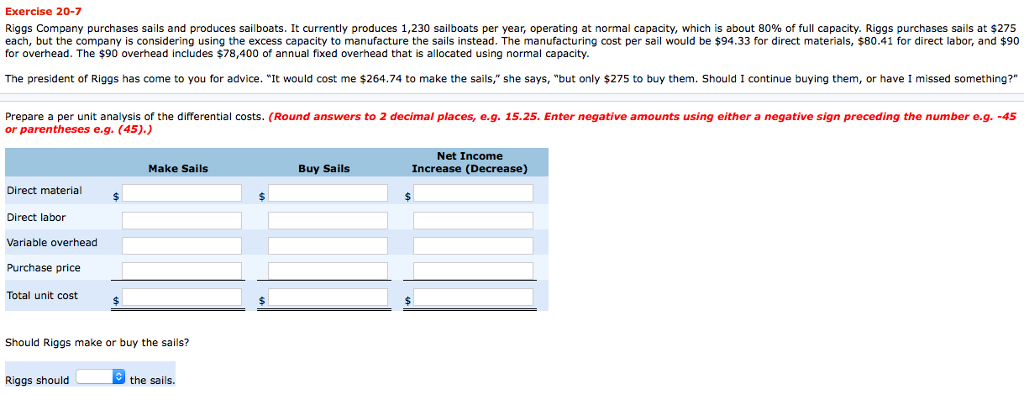
Question: PLEASE ANSWER BOTH QUESTIONS, HAVING A DIFFICULT TIME. THANK YOU! 1. 2. Exercise 20-7 Riggs Company purchases sails and produces sailboats. It currently produces 1,230
PLEASE ANSWER BOTH QUESTIONS, HAVING A DIFFICULT TIME. THANK YOU!
1.

2.
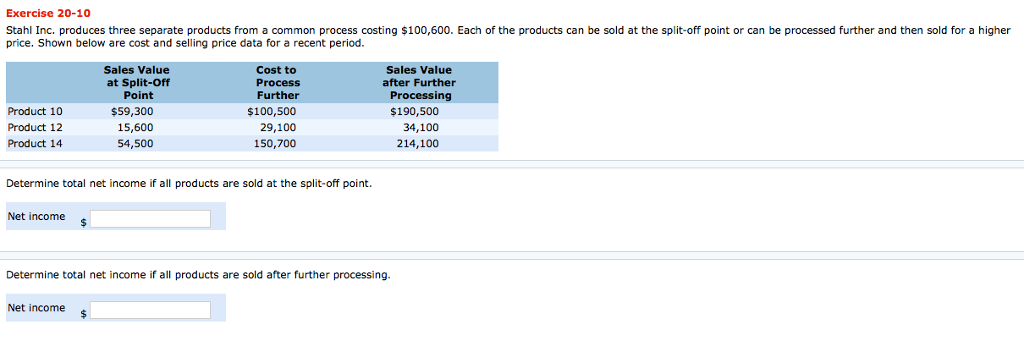
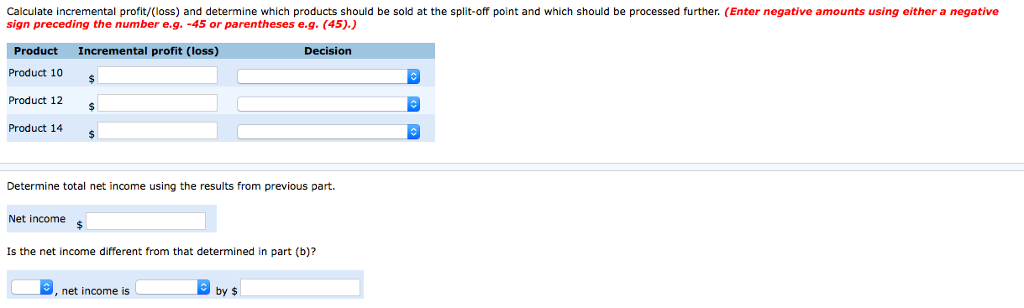
Exercise 20-7 Riggs Company purchases sails and produces sailboats. It currently produces 1,230 sailboats per year, operating at normal capacity, which is about 80% of full capacity. Riggs purchases sails at $275 each, but the company is considering using the excess capacity to manufacture the sails instead. The manufacturing cost per sail would be $94.33 for direct materials, $80.41 for direct labor, and $90 for overhead. The $90 overhead includes $78,400 of annual fixed overhead that is allocated using normal capacity. The president of Riggs has come to you for advice. "It would cost me $264.74 to make the sails," she says, "but only $275 to buy them. Should I continue buying them, or have I missed something?" Prepare a per unit analysis of the differential costs. (Round answers to 2 decimal places, e.g. 15.25. Enter negative amounts using either a negative sign preceding the number e.g. -45 or parentheses e g. (45.) Net Income Make Sails Buy Sails Increase (Decrease) s Direct material Direct labor variable overhead Purchase price Total unit cost Should Riggs make or buy the sails? Riggs should the sails
Step by Step Solution
There are 3 Steps involved in it

Get step-by-step solutions from verified subject matter experts
 Study Help