







Question: Please answer each section separately FORMATIVE ASSESSMENT 4.4 Everyday Forces REVIEWING MAIN IDEAS 1. Draw a free-body diagram for each of the following objects: a.
Please answer each section separately
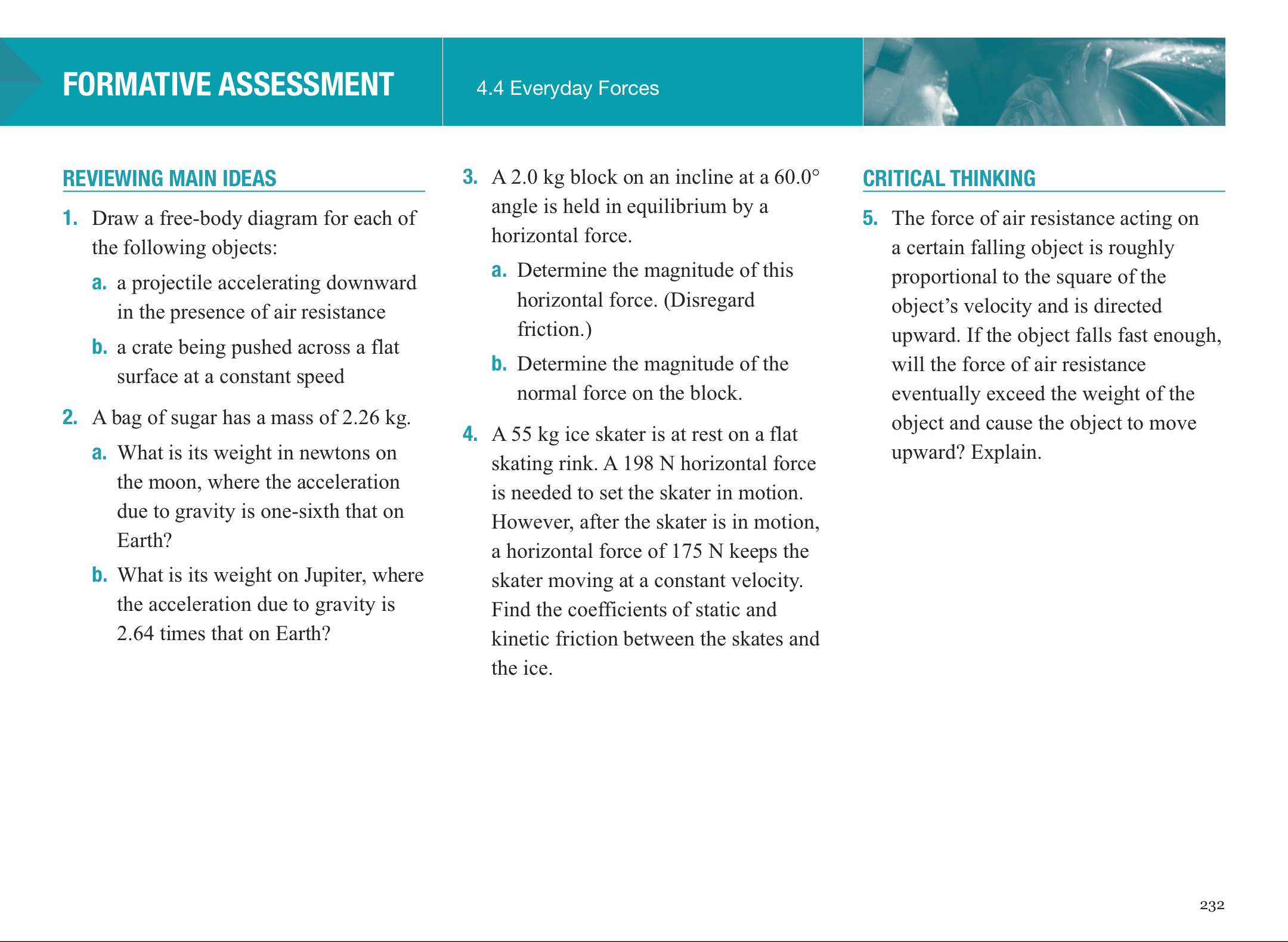
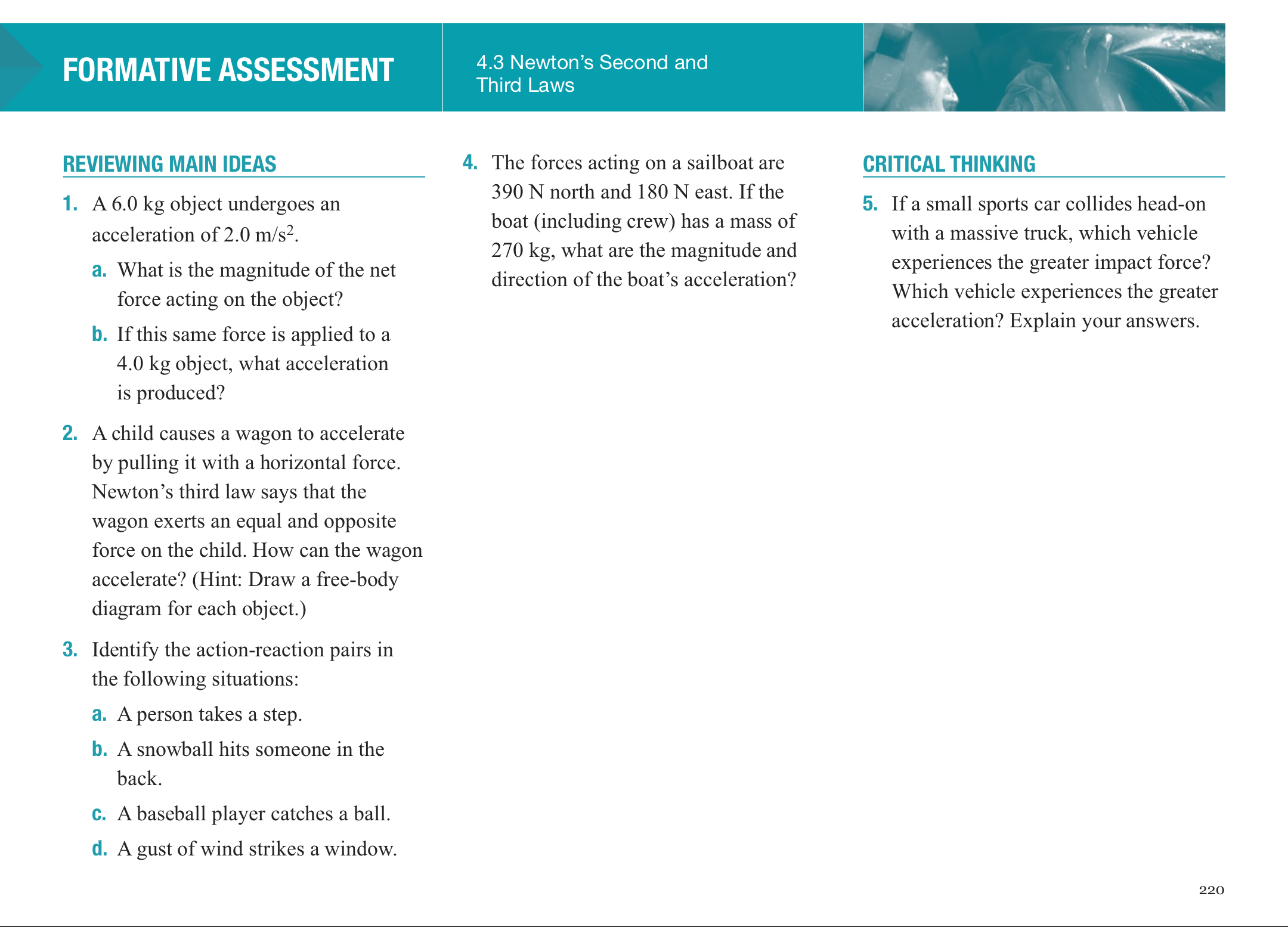
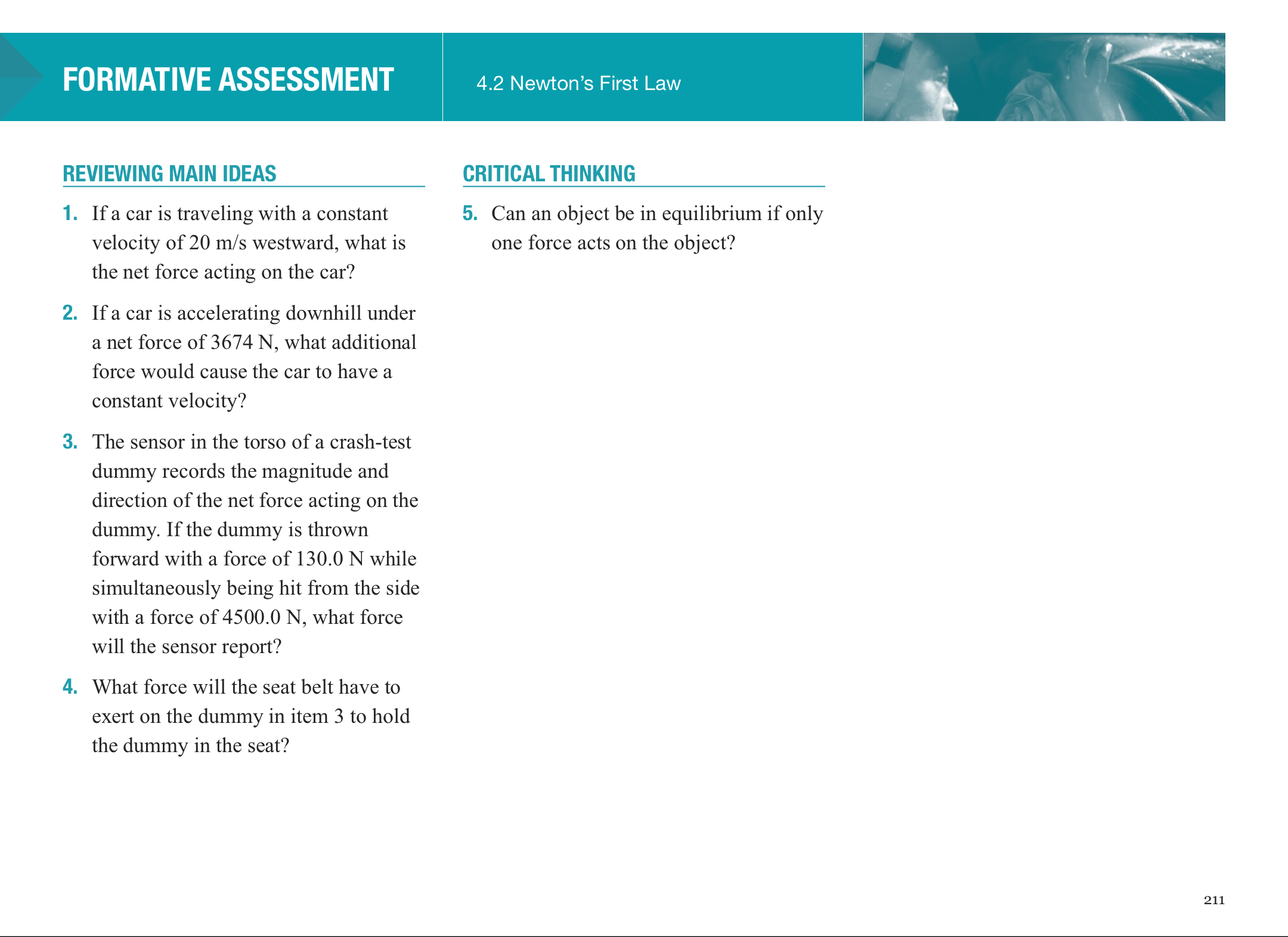
FORMATIVE ASSESSMENT 4.4 Everyday Forces REVIEWING MAIN IDEAS 1. Draw a free-body diagram for each of the following objects: a. a projectile accelerating downward in the presence of air resistance b. a crate being pushed across a at surface at a constant speed 2. Abag of sugar has a mass of 2.26 kg. a. What is its weight in newtons on the moon, where the acceleration due to gravity is one-sixth that on Earth? b. What is its weight on Jupiter, where the acceleration due to gravity is 2.64 times that on Earth? . A 2.0 kg block on an incline at a 60.0 angle is held in equilibrium by a horizontal force. a. Determine the magnitude of this horizontal force. (Disregard friction.) b. Determine the magnitude of the normal force on the block. . A 55 kg ice skater is at rest on a at skating rink. A 198 N horizontal force is needed to set the skater in motion. However, after the skater is in motion, a horizontal force of 175 N keeps the skater moving at a constant velocity. Find the coefcients of static and kinetic friction between the skates and the ice. CRITICAL THINKING 5. The force of air resistance acting on a certain falling object is roughly proportional to the square of the object's velocity and is directed upward. If the object falls fast enough, will the force of air resistance eventually exceed the weight of the object and cause the object to move upward? Explain. 232 FORMATIVE ASSESSMENT 4.3 Newton's Second and Third Laws REVIEWING MAIN IDEAS 4. The forces acting on a sailboat are CRITICAL THINKING 1. A 6.0 kg object undergoes an 390 N north and 180 N east. If the 5. If a small sports car collides head-on acceleration of 2.0 m/s2. boat (including crew) has a mass of with a massive truck, which vehicle 270 kg, what are the magnitude and a. What is the magnitude of the net experiences the greater impact force? direction of the boat's acceleration? force acting on the object? Which vehicle experiences the greater b. If this same force is applied to a acceleration? Explain your answers. 4.0 kg object, what acceleration is produced? 2. A child causes a wagon to accelerate by pulling it with a horizontal force. Newton's third law says that the wagon exerts an equal and opposite force on the child. How can the wagon accelerate? (Hint: Draw a free-body diagram for each object.) 3. Identify the action-reaction pairs in the following situations: a. A person takes a step. b. A snowball hits someone in the back. C. A baseball player catches a ball. d. A gust of wind strikes a window. 220FORMATIVE ASSESSMENT 4.2 Newton's First Law REVIEWING MAIN IDEAS CRITICAL THINKING 1. If a car is traveling with a constant 5. Can an object be in equilibrium if only velocity of 20 m/s westward, what is one force acts on the object? the net force acting on the car? 2. If a car is accelerating downhill under a net force of 3674 N, what additional force would cause the car to have a constant velocity? 3. The sensor in the torso of a crash-test dummy records the magnitude and direction of the net force acting on the dummy. If the dummy is thrown forward with a force of 130.0 N while simultaneously being hit from the side with a force of 45000 N, what force will the sensor report? 4. What force will the seat belt have to exert on the dummy in item 3 to hold the dummy in the seat? 211
Step by Step Solution
There are 3 Steps involved in it

Get step-by-step solutions from verified subject matter experts
 Study Help