







Question: please answer fast this should help please answer fast. Charles is a post doctoral fellow who teaches molecular physics at a university where he carns
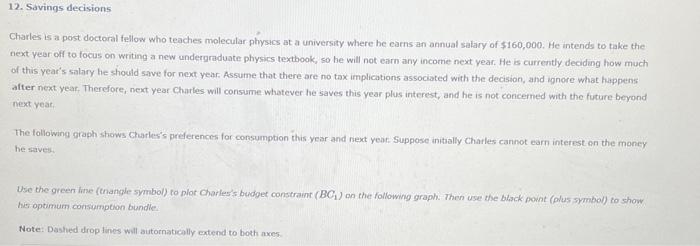
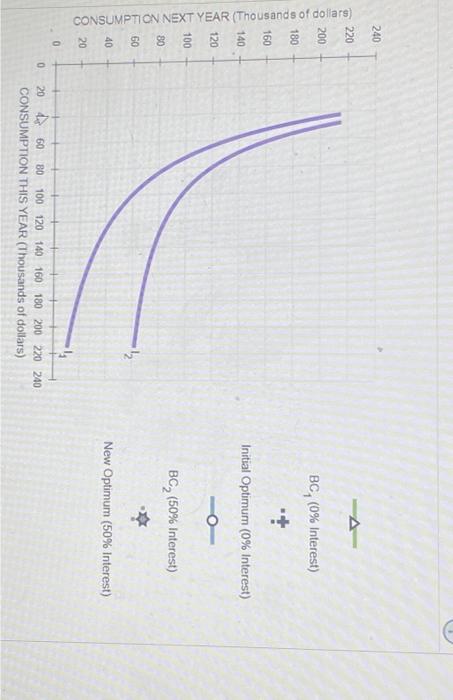
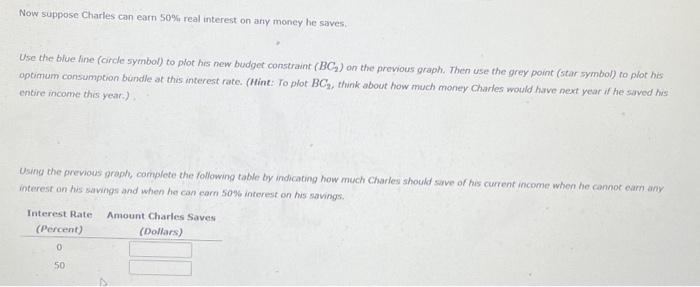
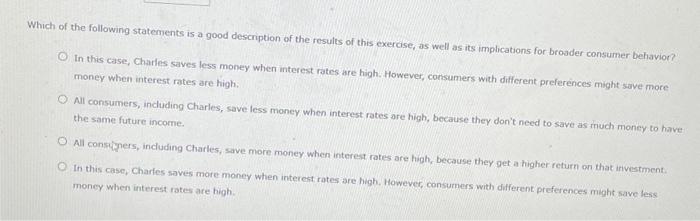
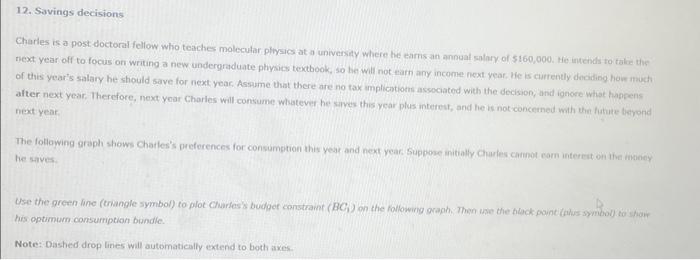
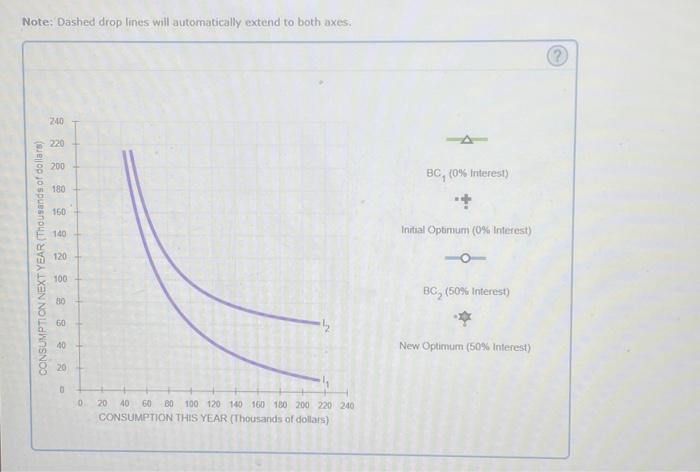
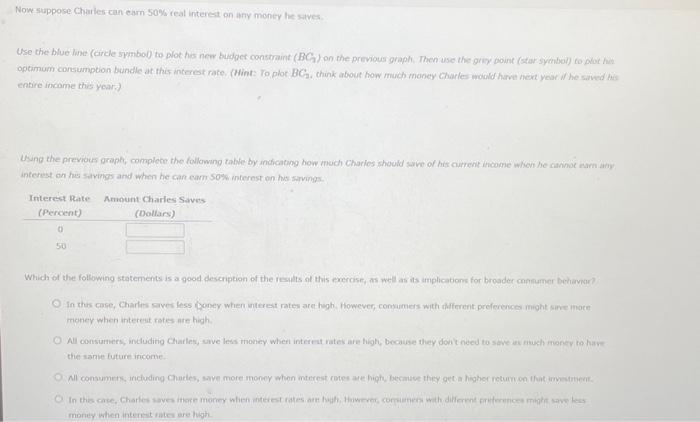
Charles is a post doctoral fellow who teaches molecular physics at a university where he carns an annual salary of $160,000. He intends to take the next year off to focus on writing a new undergraduate physics textbook, so be will not earn any income next year. He is currently decidang how much of this year's salary he should save for next year Assume that there are no tax implications associated with the decision, and agnore what happens after next year. Therefore, next year Charles will consume whatever he saves this year plus interest, and he is not concerned with the future beyond The foliowing graph shows Charles's preferences for consumption this year and next yeat Suppose initsally charles cannot earn interest on the money he saveis. Use the green line (thangle symbol) to plot Chatles s budget constraint (BC1 ) on the following graphi- Then use the bigck povnt (olus symbou) fo show. hes optimum consumption bundle. Note: Dashed drop ines will autornatically extend to both axes Now suppose Charles can earn 50% real interest on ary money he saves. Use the biue fine (cincle symbol) to plot his new budget constraunt (BC 2 ) on the previous graph. Then use the grey point (star symbol) po plot his optimum consumption bundle at this interest rate. (Mint: To plot BC , thunk about how much money Charles would have next year af he simod his. entire income this yeat:) Using the previous graph, camplete the following table by indicating how much charles should save of has current inceme when he cannor earn any intierest an his savings and when ho can carn 50% interest on his savings. Which of the following statements is a good description of the results of this exercise, as well as its implications for broader consumer behavior? In this case, Charies saves less money when interest rates are high. However, comsumers with different preferences might save more money when interest rates are high, All consumers, including Charles, save less money when interest rates are high, because they don't need to save as much money to have the same future income. Al constipers, induding Charles, save more money when interewt rotes are high, because they get a higher return on that irivestment. In this case, Charfes saves more money when interest rates are high. However, consumers with different preferences might save less moncy when interest rates are high. Charles is a post doctoral fellow who teaches molecuhar plysics at a university where hec earns an annuat salary of $160,000. He intends ro talie this riext year off to focus on writing a new undergraduate physies teotbook, so be will not earn any income next year. He is chrrently donading haw inuch. of this year's salary he should save for next year. Astume that there are no tax implicationi associated with the decision, and ignore what hapeens alter next year. Therefore, next year Charles will consume whatever he simes this year plus interest, and he is not concerned with the liatute beyond next year he sives. his optimum consurription bendile. Note: Dashed drop lines will automaticilly extend to both inxes Note: Dashed drop lines will automatically extend to both axes. Now-stuppose Charles-can eam 50\% real intereat on anty money he saves. entire income this yearn Usung the previous graph, complece the following table by indicabog how much Charlos should suive of hir aument income whon he cathinse zam any interest on his stivings and when he carc eanr 50% interest on has saving: Which of the following statements is a good description of the iesults at this emerose, as well an is implicabons for broader comelumer bechavin? money when intereit rates are high. the sanie future income. money when anteret tutra are high Charles is a post doctoral fellow who teaches molecular physics at a university where he carns an annual salary of $160,000. He intends to take the next year off to focus on writing a new undergraduate physics textbook, so be will not earn any income next year. He is currently decidang how much of this year's salary he should save for next year Assume that there are no tax implications associated with the decision, and agnore what happens after next year. Therefore, next year Charles will consume whatever he saves this year plus interest, and he is not concerned with the future beyond The foliowing graph shows Charles's preferences for consumption this year and next yeat Suppose initsally charles cannot earn interest on the money he saveis. Use the green line (thangle symbol) to plot Chatles s budget constraint (BC1 ) on the following graphi- Then use the bigck povnt (olus symbou) fo show. hes optimum consumption bundle. Note: Dashed drop ines will autornatically extend to both axes Now suppose Charles can earn 50% real interest on ary money he saves. Use the biue fine (cincle symbol) to plot his new budget constraunt (BC 2 ) on the previous graph. Then use the grey point (star symbol) po plot his optimum consumption bundle at this interest rate. (Mint: To plot BC , thunk about how much money Charles would have next year af he simod his. entire income this yeat:) Using the previous graph, camplete the following table by indicating how much charles should save of has current inceme when he cannor earn any intierest an his savings and when ho can carn 50% interest on his savings. Which of the following statements is a good description of the results of this exercise, as well as its implications for broader consumer behavior? In this case, Charies saves less money when interest rates are high. However, comsumers with different preferences might save more money when interest rates are high, All consumers, including Charles, save less money when interest rates are high, because they don't need to save as much money to have the same future income. Al constipers, induding Charles, save more money when interewt rotes are high, because they get a higher return on that irivestment. In this case, Charfes saves more money when interest rates are high. However, consumers with different preferences might save less moncy when interest rates are high. Charles is a post doctoral fellow who teaches molecuhar plysics at a university where hec earns an annuat salary of $160,000. He intends ro talie this riext year off to focus on writing a new undergraduate physies teotbook, so be will not earn any income next year. He is chrrently donading haw inuch. of this year's salary he should save for next year. Astume that there are no tax implicationi associated with the decision, and ignore what hapeens alter next year. Therefore, next year Charles will consume whatever he simes this year plus interest, and he is not concerned with the liatute beyond next year he sives. his optimum consurription bendile. Note: Dashed drop lines will automaticilly extend to both inxes Note: Dashed drop lines will automatically extend to both axes. Now-stuppose Charles-can eam 50\% real intereat on anty money he saves. entire income this yearn Usung the previous graph, complece the following table by indicabog how much Charlos should suive of hir aument income whon he cathinse zam any interest on his stivings and when he carc eanr 50% interest on has saving: Which of the following statements is a good description of the iesults at this emerose, as well an is implicabons for broader comelumer bechavin? money when intereit rates are high. the sanie future income. money when anteret tutra are high
Step by Step Solution
There are 3 Steps involved in it

Get step-by-step solutions from verified subject matter experts
 Study Help