







Question: Please answer following 1-10 Multiple choice question below From Anarchy to a Centralised State Question 1 What is a centralised state? Select the correct answer.
Please answer following 1-10 Multiple choice question below
From Anarchy to a Centralised State
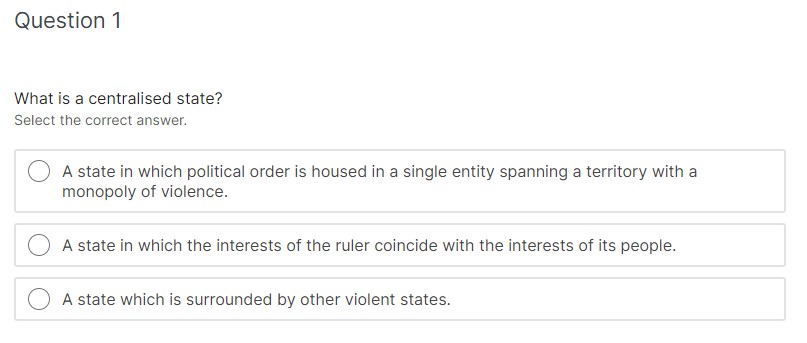
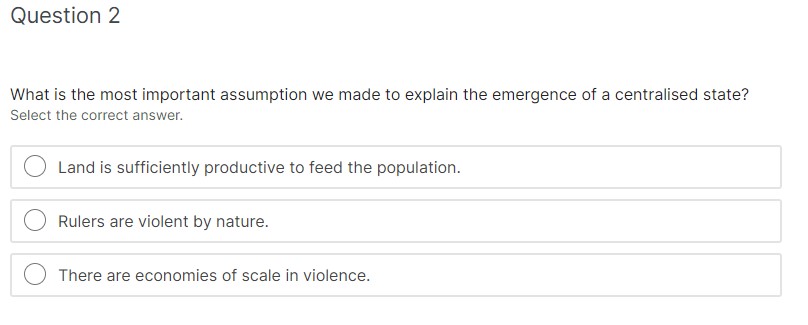
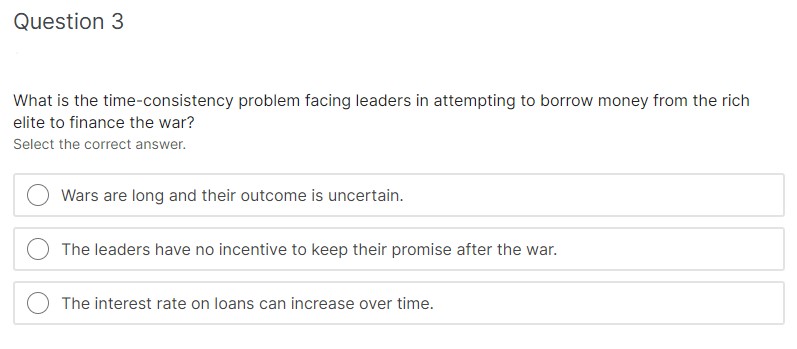
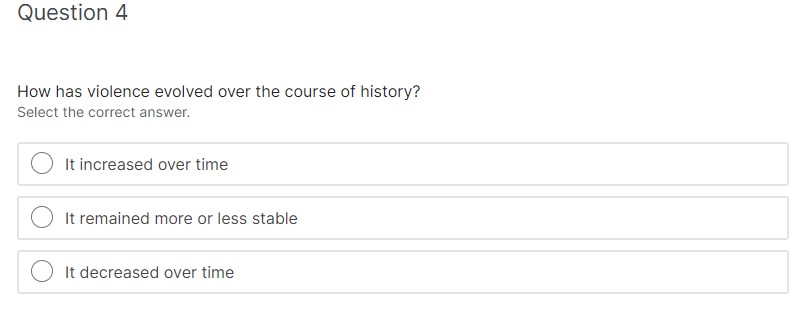
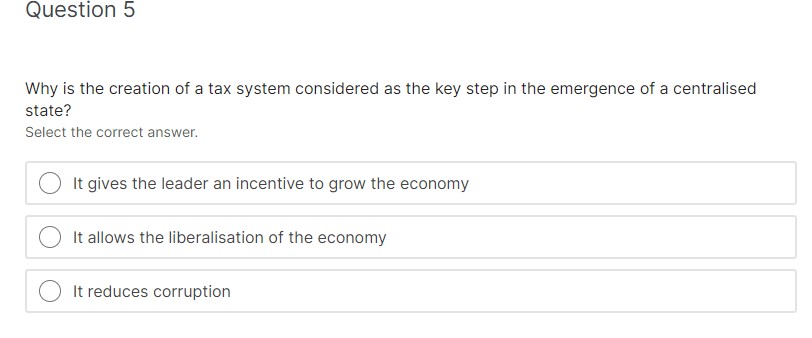
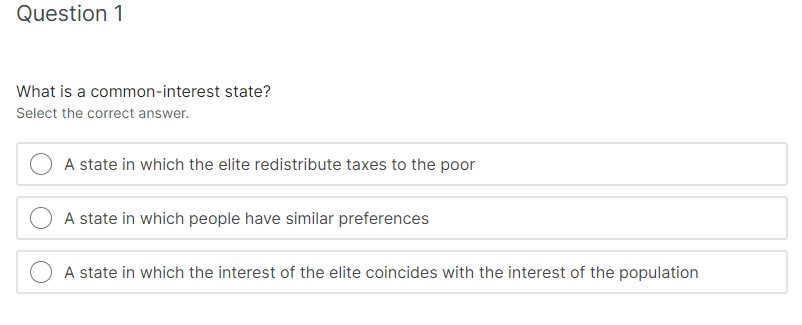
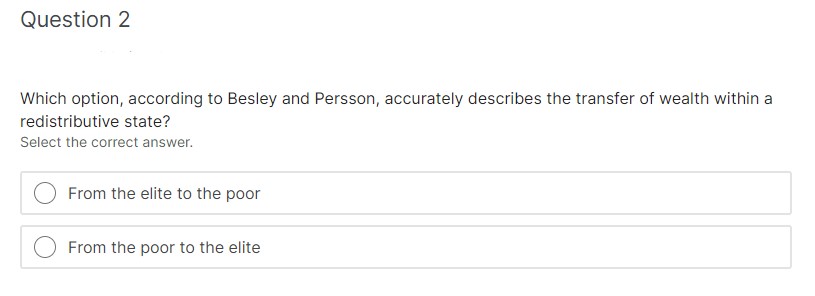
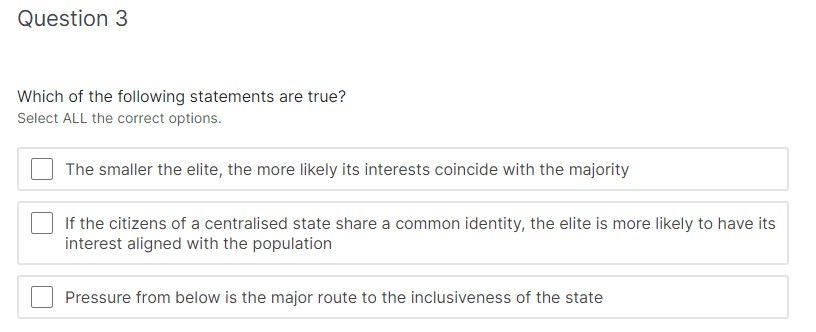
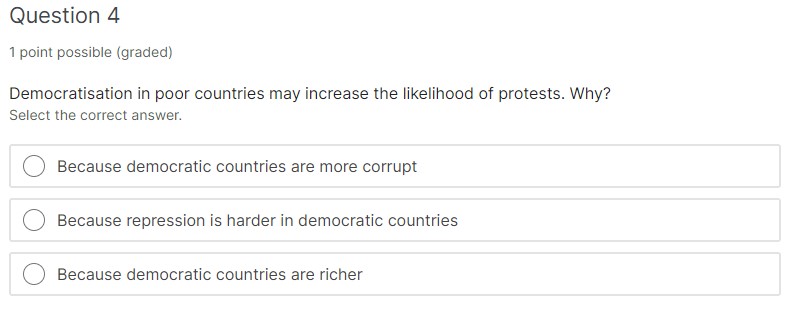
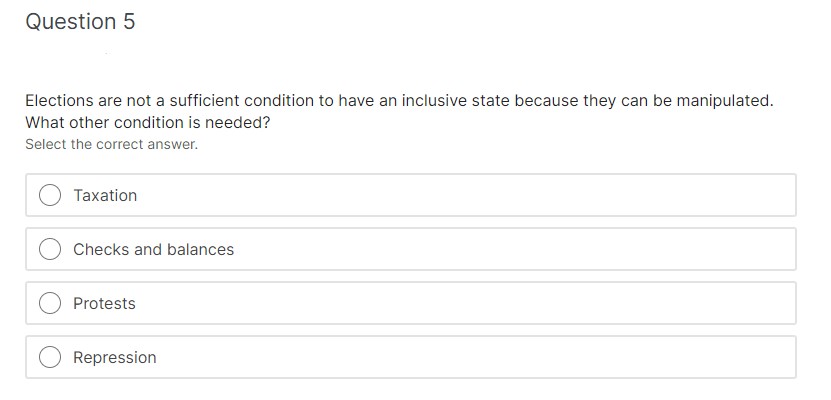
Question 1 What is a centralised state? Select the correct answer. A state in which political order is housed in a single entity spanning a territory with a monopoly of violence. O A state in which the interests of the ruler coincide with the interests of its people. )A state which is surrounded by other violent states.Question 2 What is the most important assumption we made to explain the emergence of a centralised state? Select the correct answer. 0 Land is sufficiently.r productive to feed the population. 0 Rulers are violent lav nature. 0 There are economies of scale in violence. Question 3 What is the time-consistency problem facing leaders in attempting to borrow money from the rich elite to finance the war? Select the correct answer. O Wars are long and their outcome is uncertain. O The leaders have no incentive to keep their promise after the war. O The interest rate on loans can increase over time.Question 4 How has violence evolved over the course of history? Select the correct answer. O It increased over time O It remained more or less stable O It decreased over timeQuestion 5 Why is the creation of a tax system considered as the key step in the emergence of a centralised state? Select the correct answer. Q It gives the leader an incentive to grow the economy Q It allows the liberalisation of the economy 0 It reduces corruption Question 1 llilli'hat is a common-interest state? Select the correct answer. Q A state in which the elite redistribute taxes to the poor 0 A state in which people have similar preferences 0 A state in which the interest of the elite coincides with the interest of the population Question 2 Which option, according to Besley and Persson, accurately describes the transfer of wealth within a redistributive state? Select the correct answer. O From the elite to the poor O From the poor to the eliteQuestion 3 Which of the following statements are true? Select ALL the correct options. The smaller the elite, the more likely its interests coincide with the majority If the citizens of a centralised state share a common identity, the elite is more likely to have its interest aligned with the population Pressure from below is the major route to the inclusiveness of the stateQuestion 4 1 point possible (graded) Democratisation in poor countries may increase the likelihood of protests. Why? Select the correct answer. O Because democratic countries are more corrupt O Because repression is harder in democratic countries O Because democratic countries are richerQuestion 5 Elections are not a sufficient condition to have an inclusive state because they can be manipulated. What other condition is needed? Select the correct answer. O Taxation O Checks and balances O Protests O Repression
Step by Step Solution
There are 3 Steps involved in it

Get step-by-step solutions from verified subject matter experts
 Study Help