







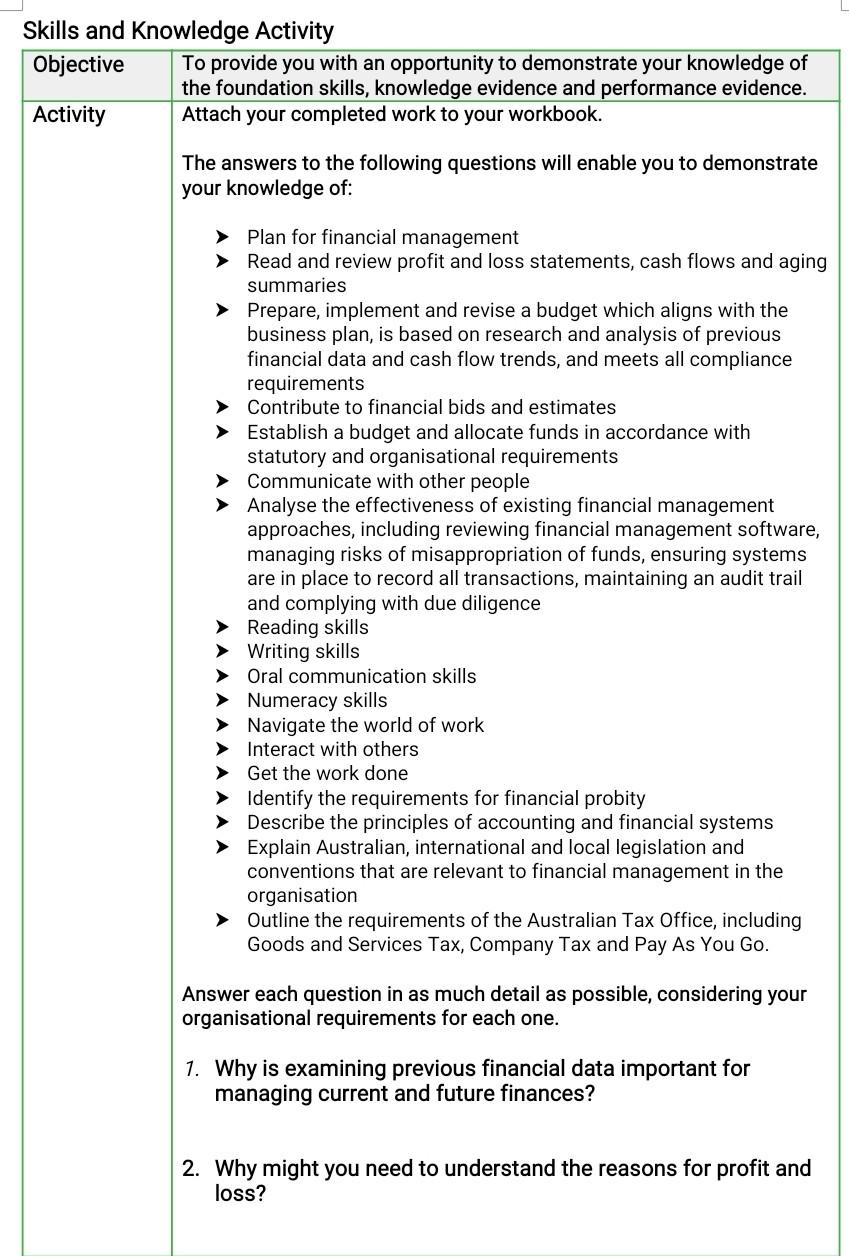
Question: Please answer sort answer for all these question. all they are related. No Hand written plz. Skills and Knowledge Activity Objective To provide you with
Please answer sort answer for all these question. all they are related. No Hand written plz.
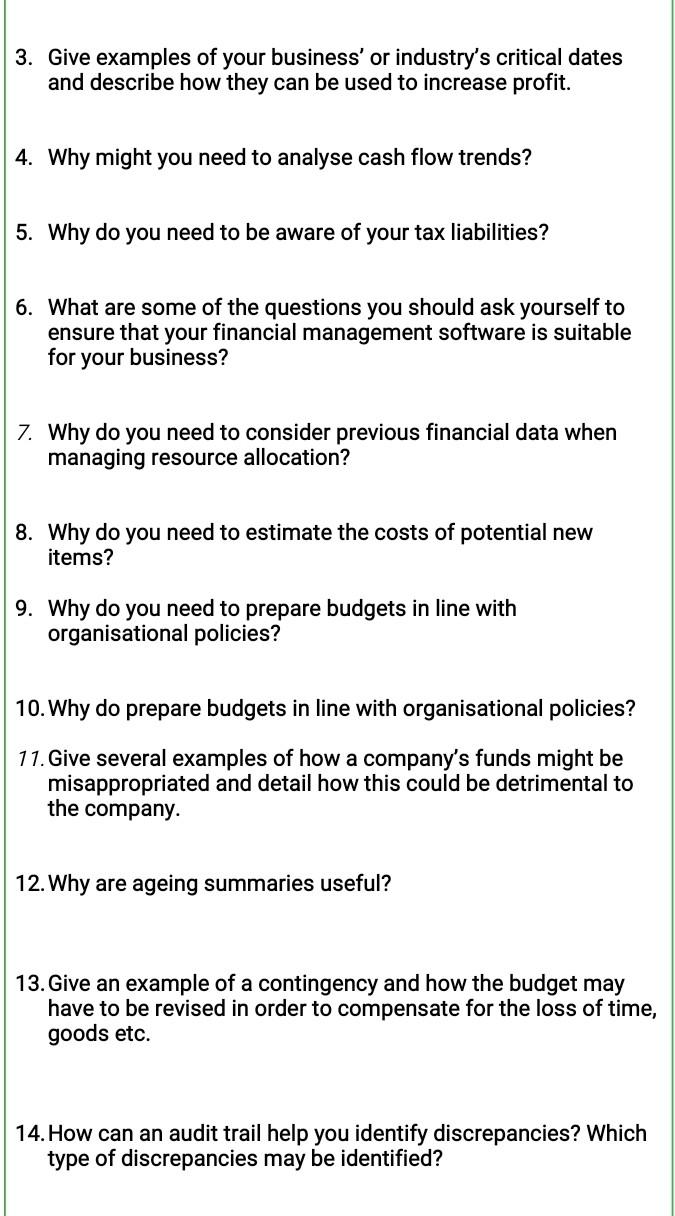
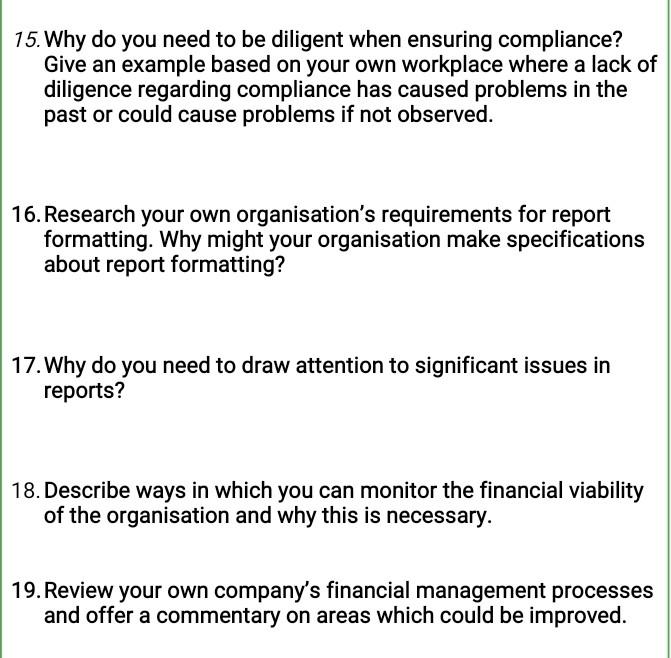
Skills and Knowledge Activity Objective To provide you with an opportunity to demonstrate your knowledge of the foundation skills, knowledge evidence and performance evidence. Activity Attach your completed work to your workbook. The answers to the following questions will enable you to demonstrate your knowledge of: Plan for financial management > Read and review profit and loss statements, cash flows and aging summaries Prepare, implement and revise a budget which aligns with the business plan, is based on research and analysis of previous financial data and cash flow trends, and meets all compliance requirements Contribute to financial bids and estimates Establish a budget and allocate funds in accordance with statutory and organisational requirements > Communicate with other people > Analyse the effectiveness of existing financial management approaches, including reviewing financial management software, managing risks of misappropriation of funds, ensuring systems are in place to record all transactions, maintaining an audit trail and complying with due diligence Reading skills Writing skills > Oral communication skills > Numeracy skills Navigate the world of work > Interact with others Get the work done Identify the requirements for financial probity Describe the principles of accounting and financial systems Explain Australian, international and local legislation and conventions that are relevant to financial management in the organisation Outline the requirements of the Australian Tax Office, including Goods and Services Tax, Company Tax and Pay As You Go. Answer each question in as much detail as possible, considering your organisational requirements for each one. 1. Why is examining previous financial data important for managing current and future finances? 2. Why might you need to understand the reasons for profit and loss? 3. Give examples of your business' or industry's critical dates and describe how they can be used to increase profit. 4. Why might you need to analyse cash flow trends? 5. Why do you need to be aware of your tax liabilities? 6. What are some of the questions you should ask yourself to ensure that your financial management software is suitable for your business? 7. Why do you need to consider previous financial data when managing resource allocation? 8. Why do you need to estimate the costs of potential new items? 9. Why do you need to prepare budgets in line with organisational policies? 10. Why do prepare budgets in line with organisational policies? 11. Give several examples of how a company's funds might be misappropriated and detail how this could be detrimental to the company. 12. Why are ageing summaries useful? 13. Give an example of a contingency and how the budget may have to be revised in order to compensate for the loss of time, goods etc. 14. How can an audit trail help you identify discrepancies? Which type of discrepancies may be identified? 15. Why do you need to be diligent when ensuring compliance? Give an example based on your own workplace where a lack of diligence regarding compliance has caused problems in the past or could cause problems if not observed. 16. Research your own organisation's requirements for report formatting. Why might your organisation make specifications about report formatting? 17. Why do you need to draw attention to significant issues in reports? 18. Describe ways in which you can monitor the financial viability of the organisation and why this is necessary. 19. Review your own company's financial management processes and offer a commentary on areas which could be improvedStep by Step Solution
There are 3 Steps involved in it
1 Expert Approved Answer
Step: 1 Unlock

Question Has Been Solved by an Expert!
Get step-by-step solutions from verified subject matter experts
Step: 2 Unlock
Step: 3 Unlock
 Study Help