







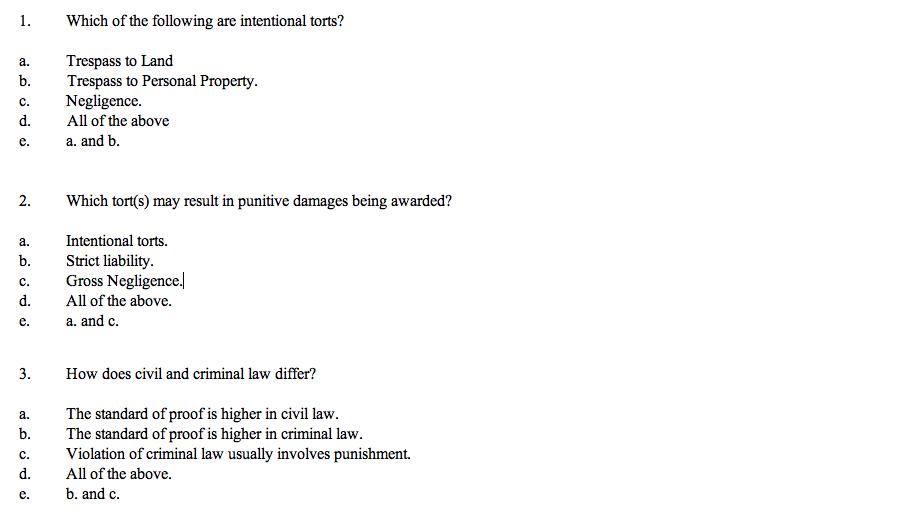
Question: Please answer the 10 questions and explain your answer 1. Which of the following are intentional torts? a. Trespass to Land b. Trespass to Personal
Please answer the 10 questions and explain your answer
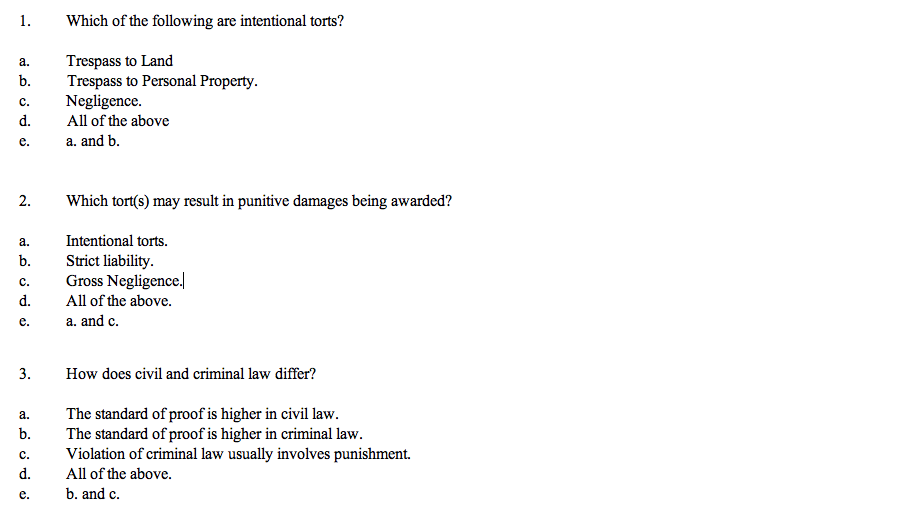
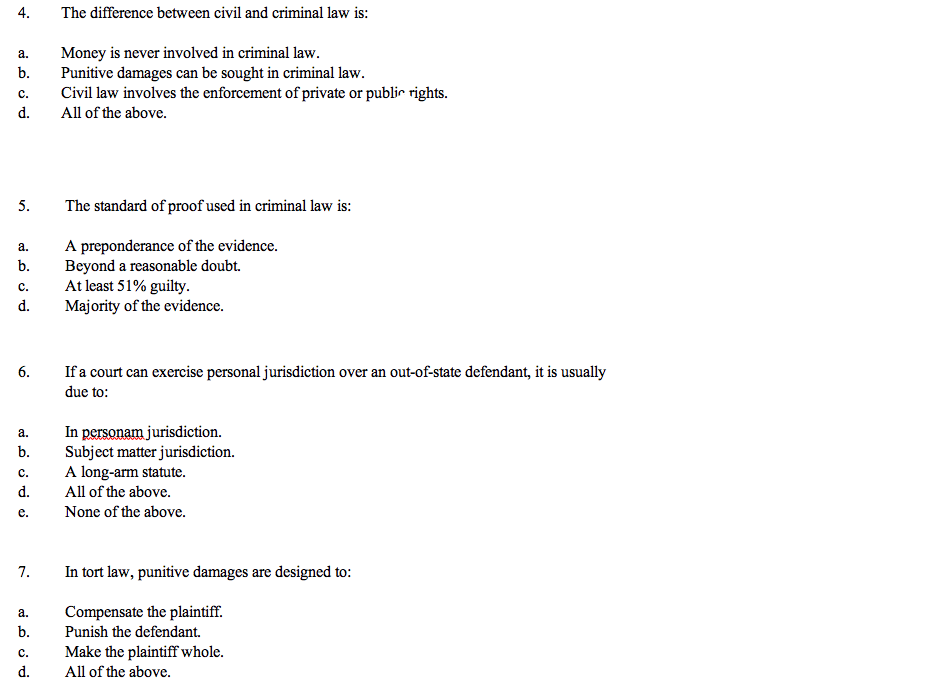
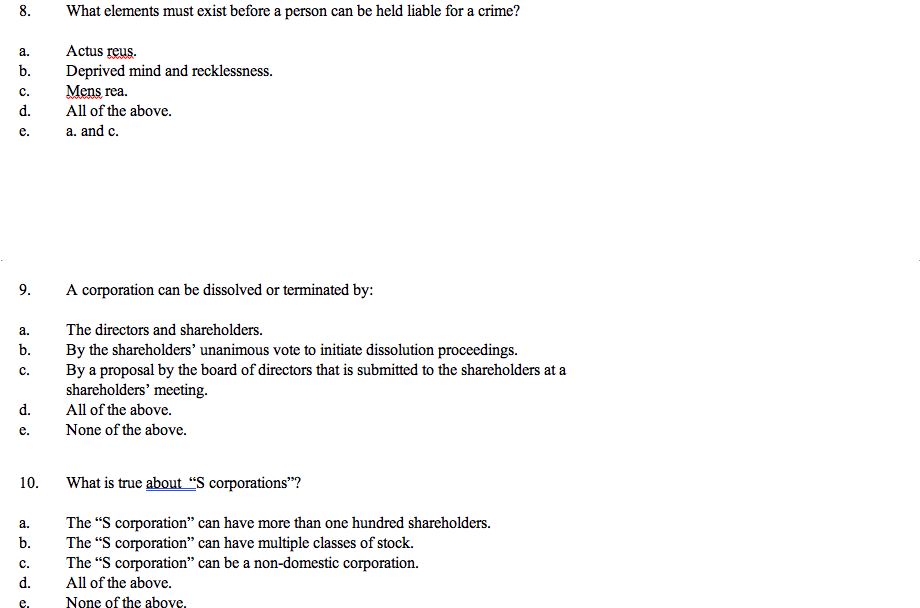
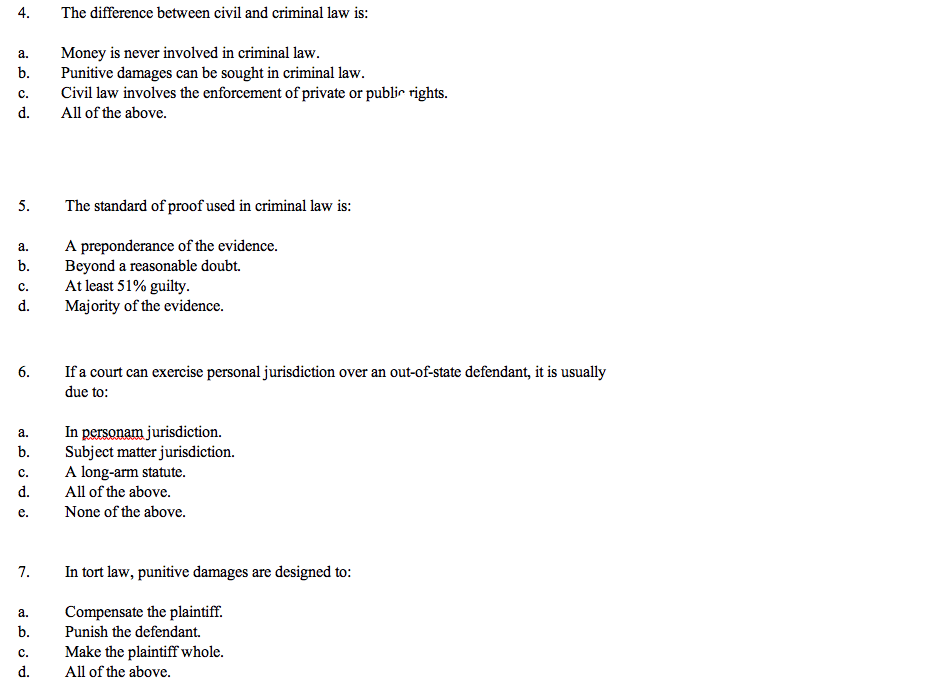
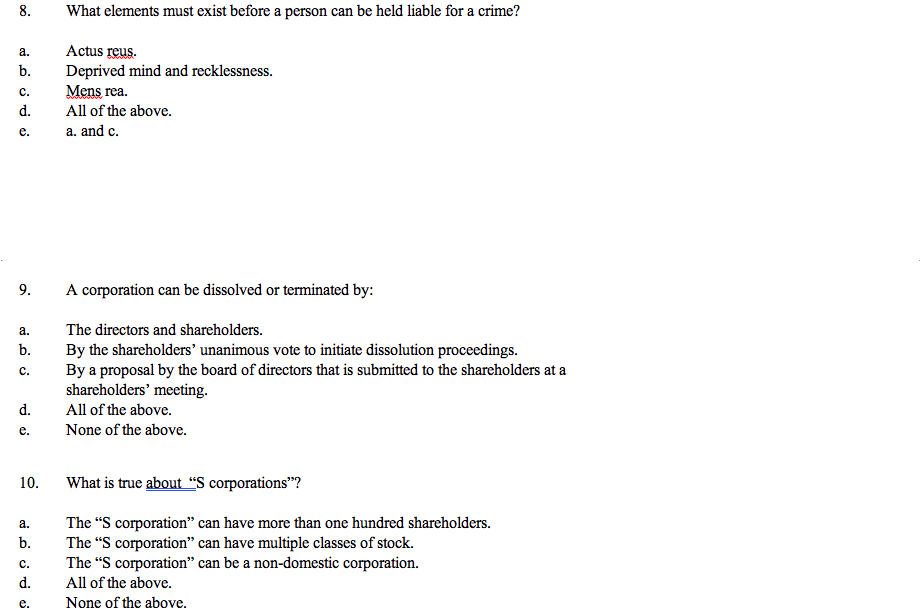
1. Which of the following are intentional torts? a. Trespass to Land b. Trespass to Personal Property. C. Negligence. d. All of the above C. a. and b. 2. Which tort(s) may result in punitive damages being awarded? a. Intentional torts. b. Strict liability. C. Gross Negligence.| d. All of the above. C. a. and c. 3. How does civil and criminal law differ? a. The standard of proof is higher in civil law. b. The standard of proof is higher in criminal law. C. Violation of criminal law usually involves punishment. d. All of the above. C. b. and c.4. The difference between civil and criminal law is: a. Money is never involved in criminal law. b. Punitive damages can be sought in criminal law. C. Civil law involves the enforcement of private or public rights. d. All of the above. 5. The standard of proof used in criminal law is: a. A preponderance of the evidence. b. Beyond a reasonable doubt. C. At least 51% guilty. d. Majority of the evidence. 6. If a court can exercise personal jurisdiction over an out-of-state defendant, it is usually due to: a. In personam jurisdiction. b. Subject matter jurisdiction. C . A long-arm statute. All of the above. e . None of the above. 7. In tort law, punitive damages are designed to: a. Compensate the plaintiff. Punish the defendant. C . Make the plaintiff whole. All of the above.8. What elements must exist before a person can be held liable for a crime? a. Actus reus. b. Deprived mind and recklessness. C. Mens rea. d. All of the above. e . a. and c. 9. A corporation can be dissolved or terminated by: a. The directors and shareholders. b. By the shareholders' unanimous vote to initiate dissolution proceedings. C. By a proposal by the board of directors that is submitted to the shareholders at a shareholders' meeting. d. All of the above. C. None of the above. 10. What is true about "S corporations"? a. The "S corporation" can have more than one hundred shareholders. b. The "S corporation" can have multiple classes of stock. C. The "S corporation" can be a non-domestic corporation. d. All of the above. None of the above
Step by Step Solution
There are 3 Steps involved in it

Get step-by-step solutions from verified subject matter experts
 Study Help