







Question: Please answer this in java and show your output. In the field of networking, information is packed into a single entity called a packet. A
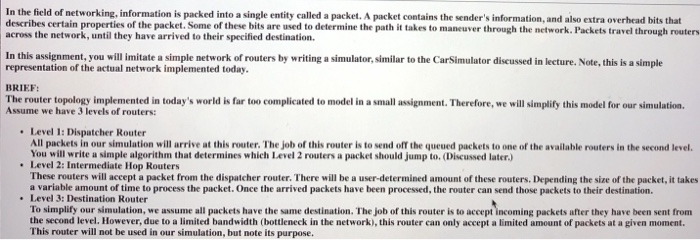
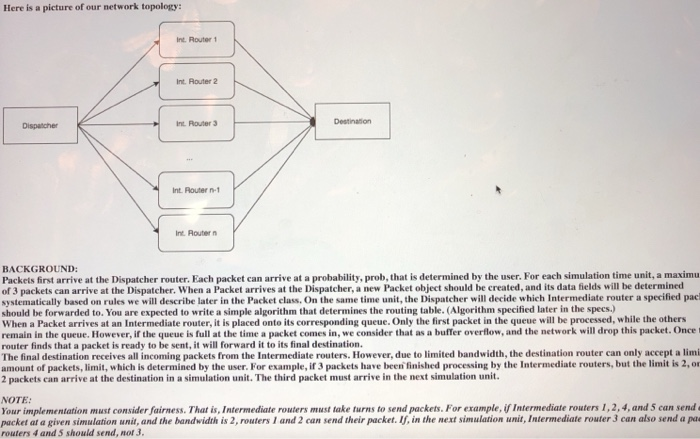
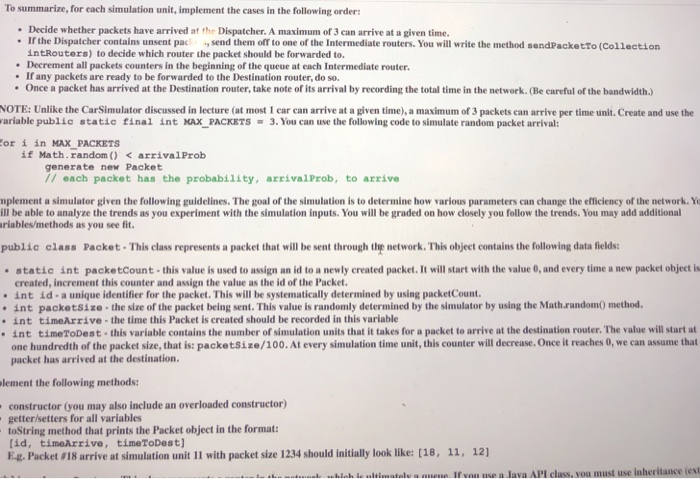
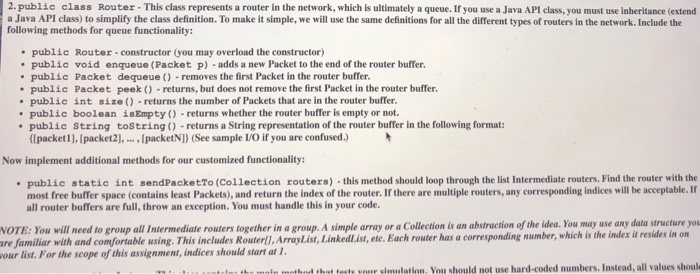
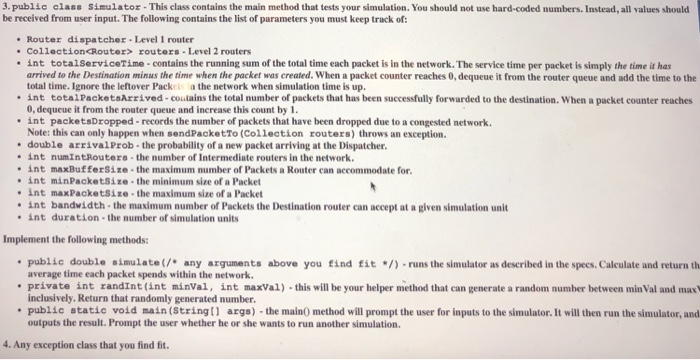
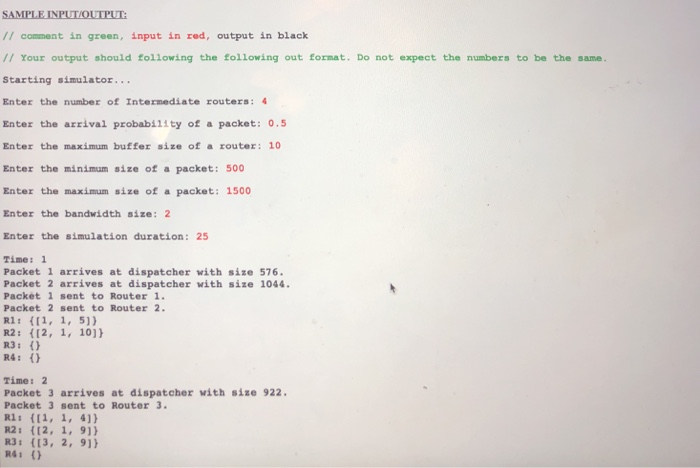
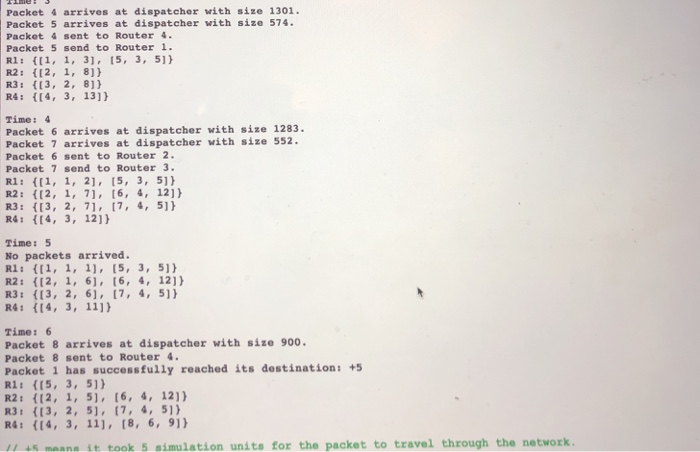
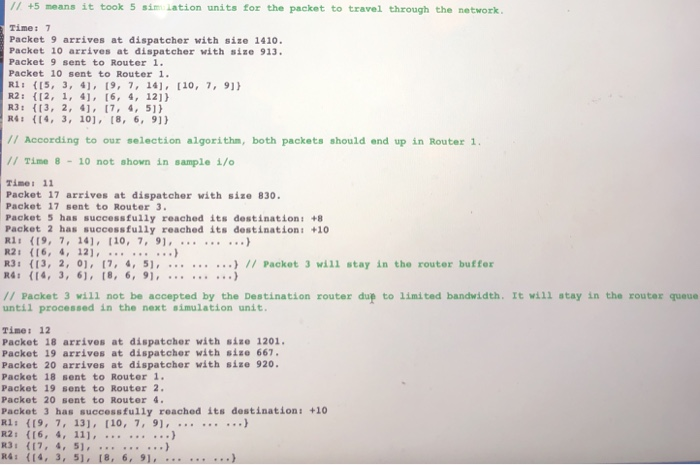
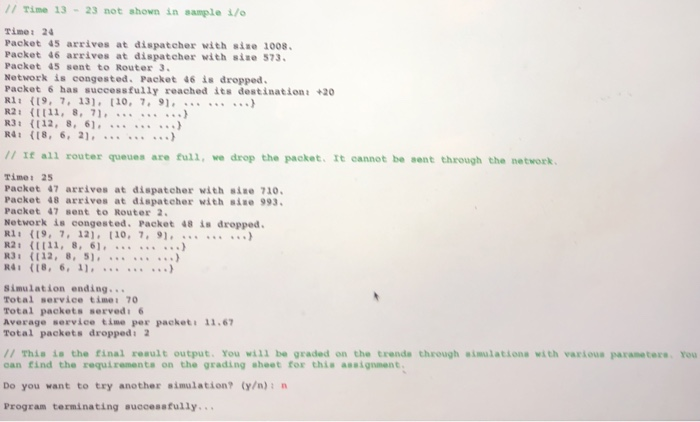
In the field of networking, information is packed into a single entity called a packet. A packet contains the sender's information, and also estra overhead bits that describes certain properties of the packet. Some of these bits are used across the network, until they have arrived to their specified destination. to determine the path it takes to maneuver through the network. Packets travel through routers In this assignment, you will imitate a simple network of routers by writing a simulator, similar to the CarSimulator discussed in lecture. Note, this is a simple representation of the actual network implemented today. BRIEF: The router topology implemented in today's world is far too complicated to model in a small assignment. Therefore, we will simplify this model for our simulation. Assume we have 3 levels of routers: Level 1: Dispatcher Router All packets in our simulation will arrive at this router. The job of this router is to send off the queued packets to one of the available routers in the second level. You will write a simple algorithm that determines which Level 2 routers a packet should jump to. (Discussed later) Level 2: Intermediate Hop Routers These routers will accept a packet from the dispatcher router. There will be a user-determined amount of these routers. Depending the size of the packet, it takes a variable amount of time to process the packet.Once the arrived packets have been processed, the router can send those packets to their destination. Level 3: Destination Router To simplify our simulation, we assume all packets have the same destination. The job of this router is to accept incoming packets after they have been sent from the second level. However, due to a limited bandwidth (bottleneck in the network), this router can only accept a limited amount of packets at a given moment. This router will not be used in our simulation, but note its purpose. In the field of networking, information is packed into a single entity called a packet. A packet contains the sender's information, and also estra overhead bits that describes certain properties of the packet. Some of these bits are used across the network, until they have arrived to their specified destination. to determine the path it takes to maneuver through the network. Packets travel through routers In this assignment, you will imitate a simple network of routers by writing a simulator, similar to the CarSimulator discussed in lecture. Note, this is a simple representation of the actual network implemented today. BRIEF: The router topology implemented in today's world is far too complicated to model in a small assignment. Therefore, we will simplify this model for our simulation. Assume we have 3 levels of routers: Level 1: Dispatcher Router All packets in our simulation will arrive at this router. The job of this router is to send off the queued packets to one of the available routers in the second level. You will write a simple algorithm that determines which Level 2 routers a packet should jump to. (Discussed later) Level 2: Intermediate Hop Routers These routers will accept a packet from the dispatcher router. There will be a user-determined amount of these routers. Depending the size of the packet, it takes a variable amount of time to process the packet.Once the arrived packets have been processed, the router can send those packets to their destination. Level 3: Destination Router To simplify our simulation, we assume all packets have the same destination. The job of this router is to accept incoming packets after they have been sent from the second level. However, due to a limited bandwidth (bottleneck in the network), this router can only accept a limited amount of packets at a given moment. This router will not be used in our simulation, but note its purpose
Step by Step Solution
There are 3 Steps involved in it

Get step-by-step solutions from verified subject matter experts
 Study Help