







Question: PLEASE ANSWER WITH BRIEF AND RELEVANT EXPLANATION/ QUESTION- 5 . Can the similar-to-me effect influence the effectiveness of Northern Lights operating team? Explain 6. Is
PLEASE ANSWER WITH BRIEF AND RELEVANT EXPLANATION/
QUESTION-
5. Can the similar-to-me effect influence the effectiveness of Northern Lights operating team? Explain
6. Is the diversity of the team operating Norther Light important for the quality of customer service? Explain
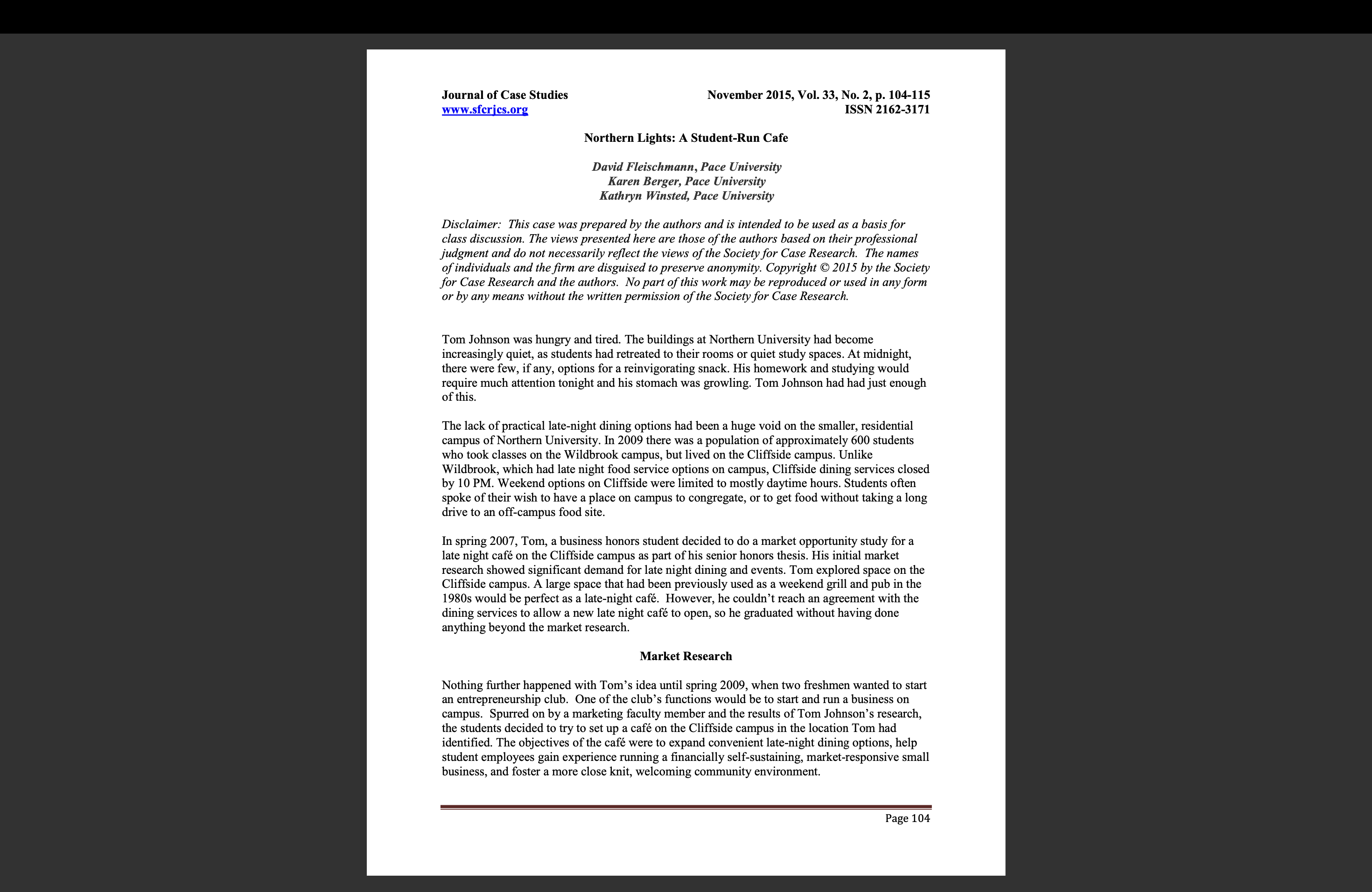
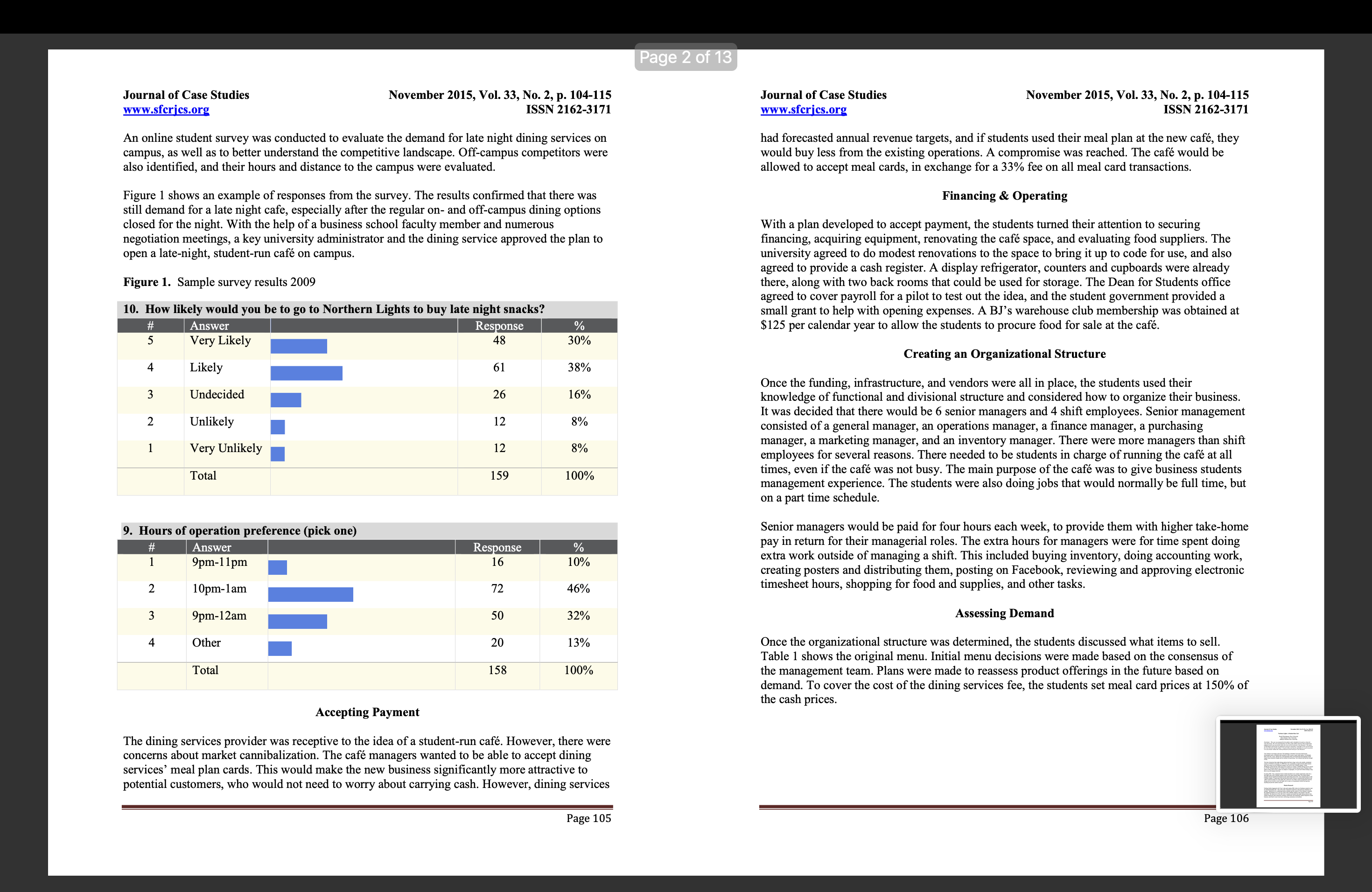
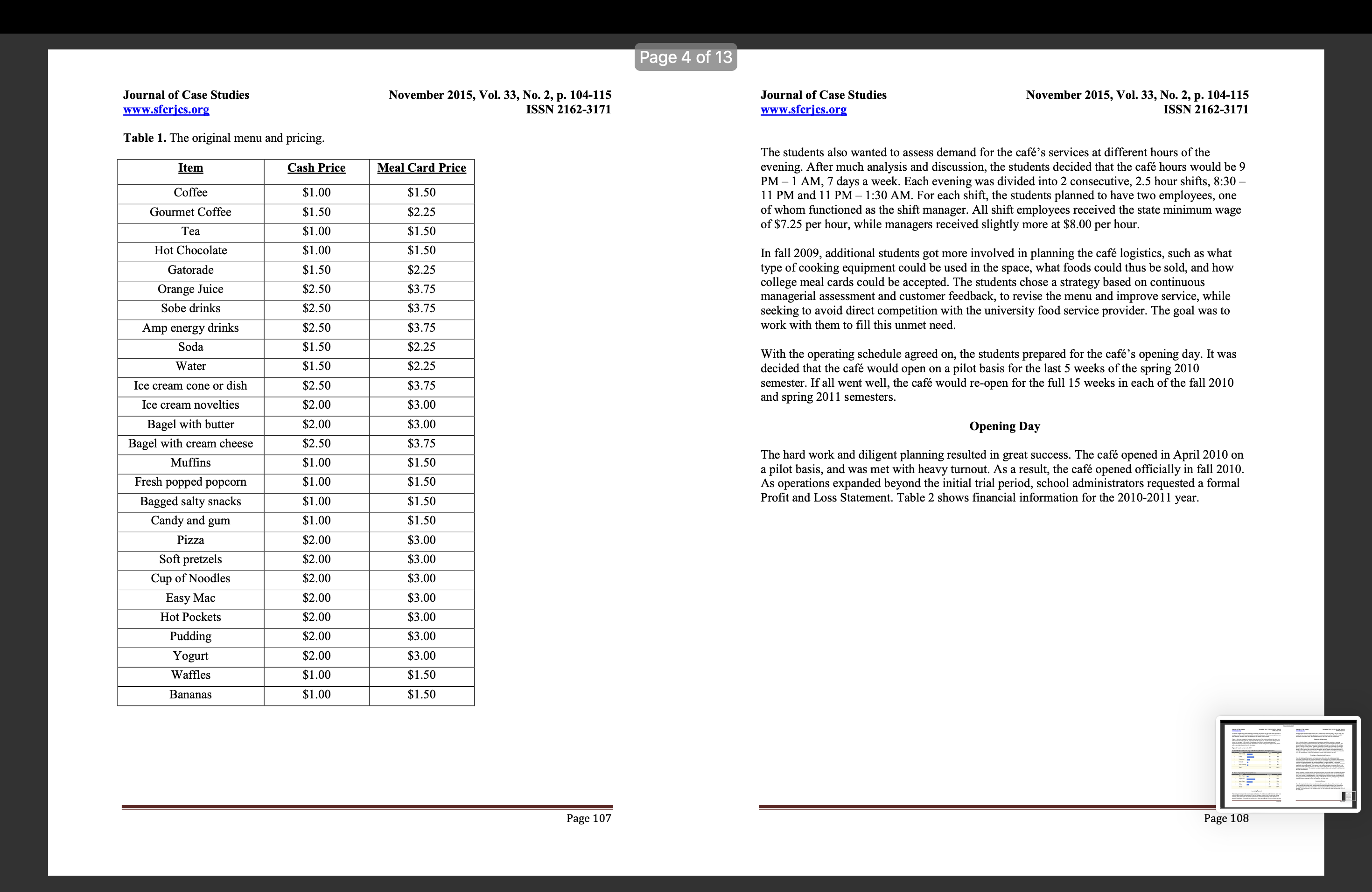
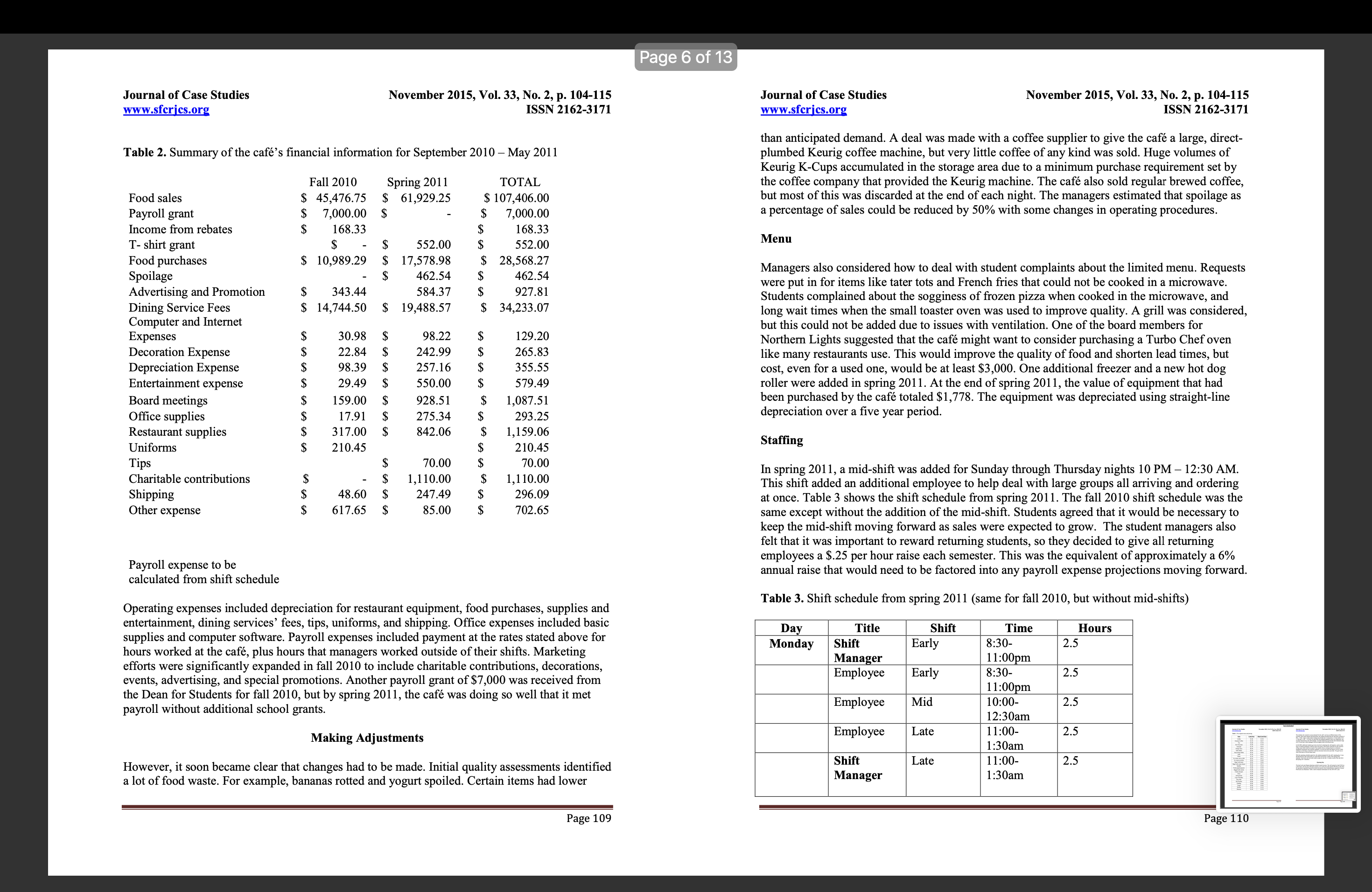
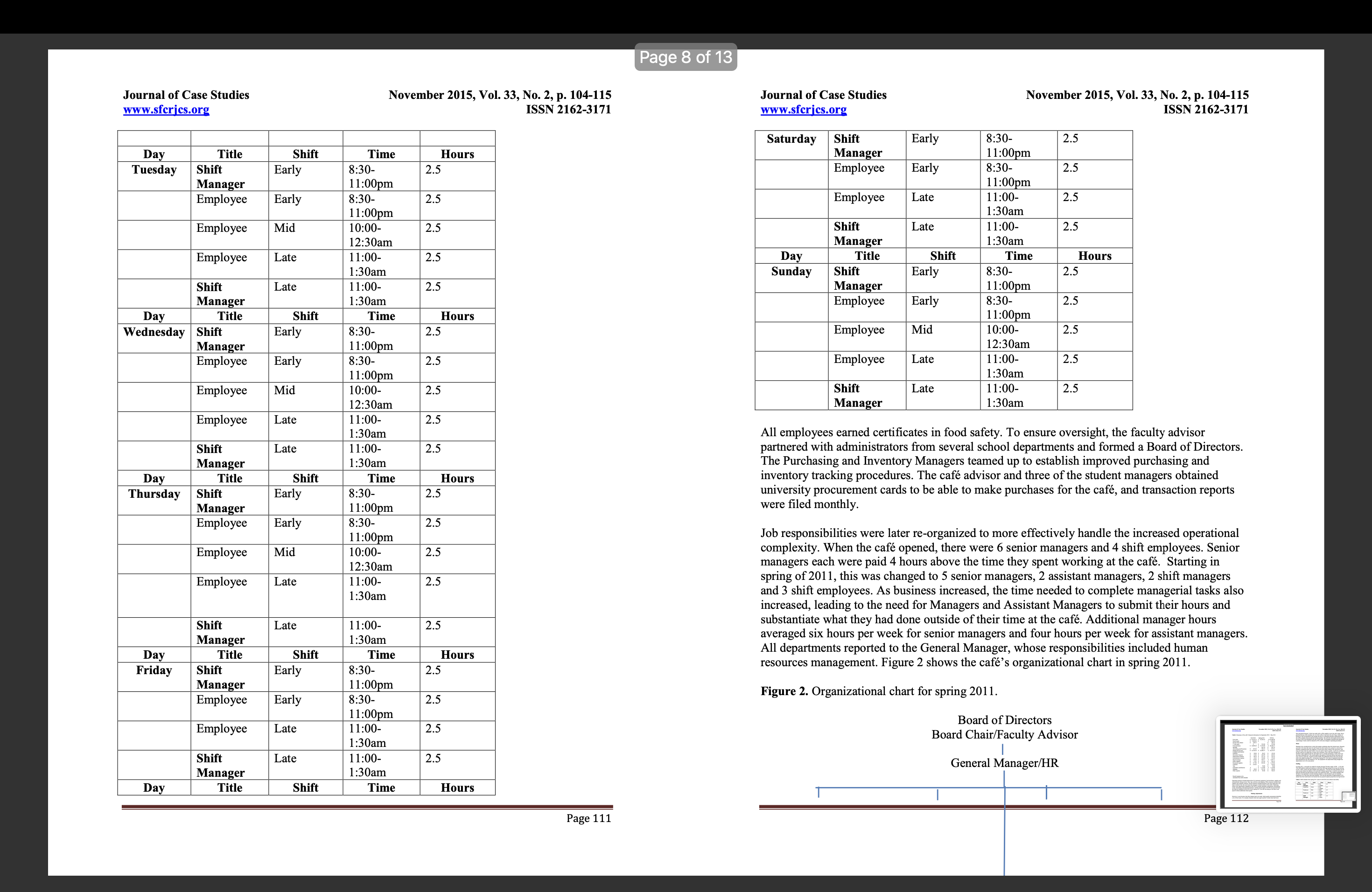
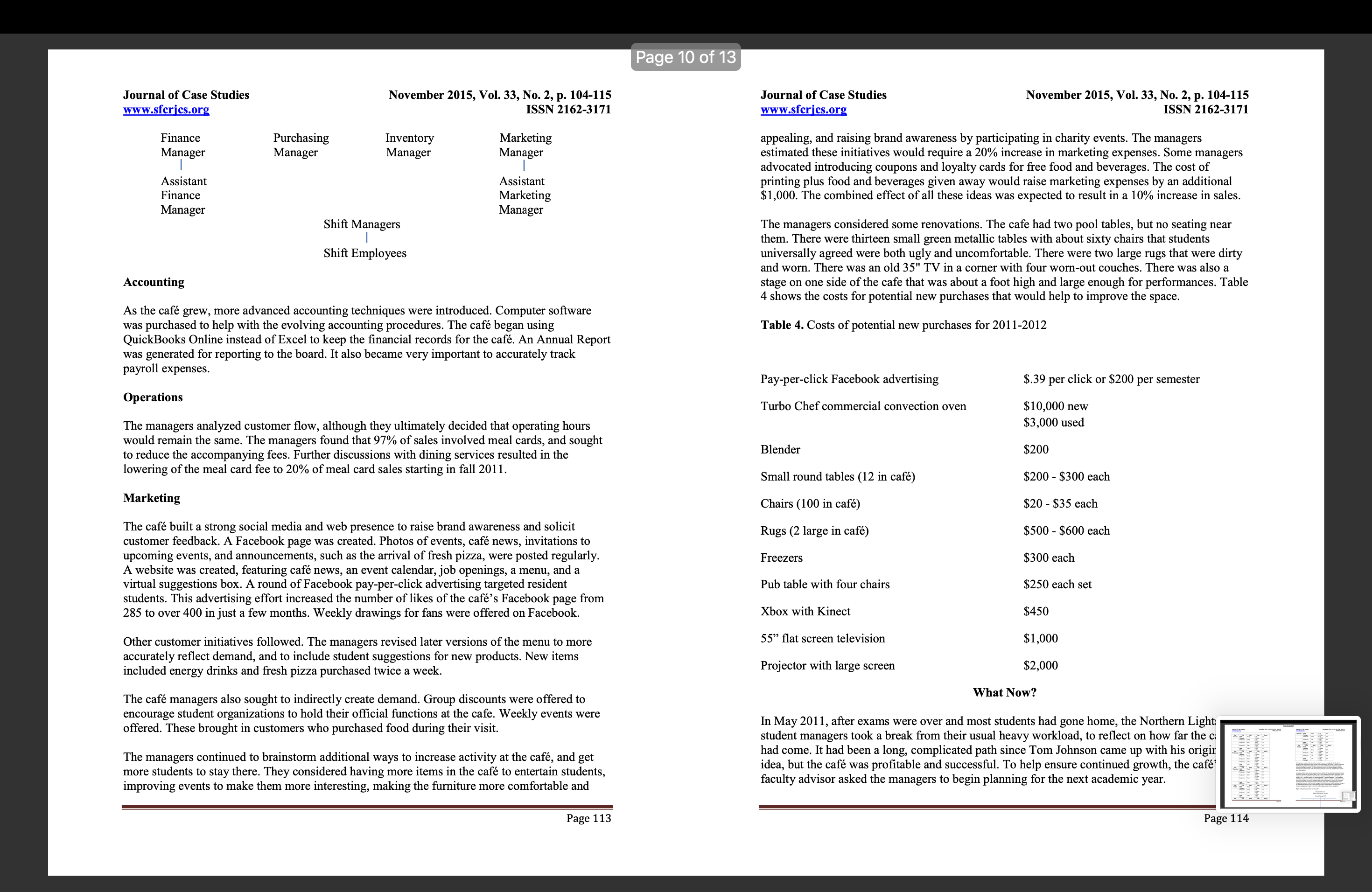
Journal of Case Studies November 2015, Vol. 33, No. 2, p. 104-115 www.sfcrics.org ISSN 2162-3171 Northern Lights: A Student-Run Cafe David Fleischmann, Pace University Karen Berger, Pace University Kathryn Winsted, Pace University Disclaimer: This case was prepared by the authors and is intended to be used as a basis for class discussion. The views presented here are those of the authors based on their professional judgment and do not necessarily reflect the views of the Society for Case Research. The names of individuals and the firm are disguised to preserve anonymity. Copyright 2015 by the Society for Case Research and the authors. No part of this work may be reproduced or used in any form or by any means without the written permission of the Society for Case Research. Tom Johnson was hungry and tired. The buildings at Northern University had become increasingly quiet, as students had retreated to their rooms or quiet study spaces. At midnight, there were few, if any, options for a reinvigorating snack. His homework and studying would require much attention tonight and his stomach was growling. Tom Johnson had had just enough of this. The lack of practical late-night dining options had been a huge void on the smaller, residential campus of Northern University. In 2009 there was a population of approximately 600 students who took classes on the Wildbrook campus, but lived on the Cliffside campus. Unlike Wildbrook, which had late night food service options on campus, Cliffside dining services closed by 10PM. Weekend options on Cliffside were limited to mostly daytime hours. Students often spoke of their wish to have a place on campus to congregate, or to get food without taking a long drive to an off-campus food site. In spring 2007, Tom, a business honors student decided to do a market opportunity study for a late night caf on the Cliffside campus as part of his senior honors thesis. His initial market research showed significant demand for late night dining and events. Tom explored space on the Cliffside campus. A large space that had been previously used as a weekend grill and pub in the 1980s would be perfect as a late-night caf. However, he couldn't reach an agreement with the dining services to allow a new late night caf to open, so he graduated without having done anything beyond the market research. Market Research Nothing further happened with Tom's idea until spring 2009 , when two freshmen wanted to start an entrepreneurship club. One of the club's functions would be to start and run a business on campus. Spurred on by a marketing faculty member and the results of Tom Johnson's research, the students decided to try to set up a caf on the Cliffside campus in the location Tom had identified. The objectives of the caf were to expand convenient late-night dining options, help student employees gain experience running a financially self-sustaining, market-responsive small business, and foster a more close knit, welcoming community environment. Journal of Case Studies November 2015, Vol. 33, No. 2, p. 104-115 Journal of Case Studies November 2015, Vol. 33, No. 2, p. 104-115 Www.sfcrics.org ISSN 2162-3171 An online student survey was conducted to evaluate the demand for late night dining services on had forecasted annual revenue targets, and if students used their meal plan at the new caf, they campus, as well as to better understand the competitive landscape. Off-campus competitors were would buy less from the existing operations. A compromise was reached. The caf would be also identified, and their hours and distance to the campus were evaluated allowed to accept meal cards, in exchange for a 33% fee on all meal card transactions. Figure 1 shows an example of responses from the survey. The results confirmed that there was Financing \& Operating still demand for a late night cafe, especially after the regular on- and off-campus dining options closed for the night. With the help of a business school faculty member and numerous With a plan developed to accept payment, the students turned their attention to securing negotiation meetings, a key university administrator and the dining service approved the plan to financing, acquiring equipment, renovating the caf space, and evaluating food suppliers. The open a late-night, student-run caf on campus. university agreed to do modest renovations to the space to bring it up to code for use, and also agreed to provide a cash register. A display refrigerator, counters and cupboards were already Figure 1. Sample survey results 2009 there, along with two back rooms that could be used for storage. The Dean for Students office agreed to cover payroll for a pilot to test out the idea, and the student government provided a small grant to help with opening expenses. A BJ's warehouse club membership was obtained at $125 per calendar year to allow the students to procure food for sale at the caf. Creating an Organizational Structure Once the funding, infrastructure, and vendors were all in place, the students used their knowledge of functional and divisional structure and considered how to organize their business. It was decided that there would be 6 senior managers and 4 shift employees. Senior management consisted of a general manager, an operations manager, a finance manager, a purchasing manager, a marketing manager, and an inventory manager. There were more managers than shift employees for several reasons. There needed to be students in charge of running the caf at all times, even if the caf was not busy. The main purpose of the caf was to give business students management experience. The students were also doing jobs that would normally be full time, but on a part time schedule. Senior managers would be paid for four hours each week, to provide them with higher take-home pay in return for their managerial roles. The extra hours for managers were for time spent doing extra work outside of managing a shift. This included buying inventory, doing accounting work, creating posters and distributing them, posting on Facebook, reviewing and approving electronic timesheet hours, shopping for food and supplies, and other tasks. Assessing Demand Once the organizational structure was determined, the students discussed what items to sell. Table 1 shows the original menu. Initial menu decisions were made based on the consensus of the management team. Plans were made to reassess product offerings in the future based on demand. To cover the cost of the dining services fee, the students set meal card prices at 150% of the cash prices. Accepting Payment The dining services provider was receptive to the idea of a student-run caf. However, there were concerns about market cannibalization. The caf managers wanted to be able to accept dining services' meal plan cards. This would make the new business significantly more attractive to potential customers, who would not need to worry about carrying cash. However, dining services Journal of Case Studies November 2015, Vol. 33, No. 2, p. 104-115 Journal of Case Studies November 2015, Vol. 33, No. 2, p. 104-115 www.sfcrjcs.org ISSN 2162-3171 Www.sfcrics.org ISSN 2162-3171 Table 1. The original menu and pricing. The students also wanted to assess demand for the caf's services at different hours of the evening. After much analysis and discussion, the students decided that the caf hours would be 9 PM - 1 AM, 7 days a week. Each evening was divided into 2 consecutive, 2.5 hour shifts, 8:30 11PM and 11PM1:30 AM. For each shift, the students planned to have two employees, one of whom functioned as the shift manager. All shift employees received the state minimum wage of $7.25 per hour, while managers received slightly more at $8.00 per hour. In fall 2009, additional students got more involved in planning the caf logistics, such as what type of cooking equipment could be used in the space, what foods could thus be sold, and how college meal cards could be accepted. The students chose a strategy based on continuous managerial assessment and customer feedback, to revise the menu and improve service, while seeking to avoid direct competition with the university food service provider. The goal was to work with them to fill this unmet need. With the operating schedule agreed on, the students prepared for the caf's opening day. It was decided that the caf would open on a pilot basis for the last 5 weeks of the spring 2010 semester. If all went well, the caf would re-open for the full 15 weeks in each of the fall 2010 and spring 2011 semesters. Opening Day The hard work and diligent planning resulted in great success. The caf opened in April 2010 on a pilot basis, and was met with heavy turnout. As a result, the caf opened officially in fall 2010. As operations expanded beyond the initial trial period, school administrators requested a formal Profit and Loss Statement. Table 2 shows financial information for the 2010-2011 year. Journal of Case Studies November 2015, Vol. 33, No. 2, p. 104-115 Journal of Case Studies November 2015, Vol. 33, No. 2, p. 104-115 www.sfcrjcs.org www.sfcrjcs.org ISSN 2162-3171 than anticipated demand. A deal was made with a coffee supplier to give the caf a large, direct- Table 2. Summary of the caf's financial information for September 2010 - May 2011 plumbed Keurig coffee machine, but very little coffee of any kind was sold. Huge volumes of Keurig K-Cups accumulated in the storage area due to a minimum purchase requirement set by the coffee company that provided the Keurig machine. The caf also sold regular brewed coffee, but most of this was discarded at the end of each night. The managers estimated that spoilage as a percentage of sales could be reduced by 50% with some changes in operating procedures. Menu Managers also considered how to deal with student complaints about the limited menu. Requests were put in for items like tater tots and French fries that could not be cooked in a microwave. Students complained about the sogginess of frozen pizza when cooked in the microwave, and long wait times when the small toaster oven was used to improve quality. A grill was considered, but this could not be added due to issues with ventilation. One of the board members for Northern Lights suggested that the caf might want to consider purchasing a Turbo Chef oven like many restaurants use. This would improve the quality of food and shorten lead times, but cost, even for a used one, would be at least $3,000. One additional freezer and a new hot dog roller were added in spring 2011. At the end of spring 2011, the value of equipment that had been purchased by the caf totaled $1,778. The equipment was depreciated using straight-line depreciation over a five year period. Staffing In spring 2011, a mid-shift was added for Sunday through Thursday nights 10 PM - 12:30 AM. This shift added an additional employee to help deal with large groups all arriving and ordering at once. Table 3 shows the shift schedule from spring 2011 . The fall 2010 shift schedule was the same except without the addition of the mid-shift. Students agreed that it would be necessary to keep the mid-shift moving forward as sales were expected to grow. The student managers also felt that it was important to reward returning students, so they decided to give all returning employees a $.25 per hour raise each semester. This was the equivalent of approximately a 6% Payroll expense to be annual raise that would need to be factored into any payroll expense projections moving forward. calculated from shift schedule Table 3. Shift schedule from spring 2011 (same for fall 2010, but without mid-shifts) Operating expenses included depreciation for restaurant equipment, food purchases, supplies and entertainment, dining services' fees, tips, uniforms, and shipping. Office expenses included basic supplies and computer software. Payroll expenses included payment at the rates stated above for hours worked at the caf, plus hours that managers worked outside of their shifts. Marketing efforts were significantly expanded in fall 2010 to include charitable contributions, decorations, events, advertising, and special promotions. Another payroll grant of $7,000 was received from the Dean for Students for fall 2010 , but by spring 2011, the caf was doing so well that it met payroll without additional school grants. Making Adjustments However, it soon became clear that changes had to be made. Initial quality assessments identified Journal of Case Studies November 2015, Vol. 33, No. 2, p. 104-115 Journal of Case Studies November 2015, Vol. 33, No. 2, p. 104-115 www.sfcrjes.org ISSN 2162-3171 www.sfcrjcs.org ISSN 2162-3171 All employees earned certificates in food safety. To ensure oversight, the faculty advisor partnered with administrators from several school departments and formed a Board of Directors. The Purchasing and Inventory Managers teamed up to establish improved purchasing and inventory tracking procedures. The caf advisor and three of the student managers obtained university procurement cards to be able to make purchases for the caf, and transaction reports were filed monthly. Job responsibilities were later re-organized to more effectively handle the increased operational complexity. When the caf opened, there were 6 senior managers and 4 shift employees. Senior managers each were paid 4 hours above the time they spent working at the caf. Starting in spring of 2011, this was changed to 5 senior managers, 2 assistant managers, 2 shift managers and 3 shift employees. As business increased, the time needed to complete managerial tasks also increased, leading to the need for Managers and Assistant Managers to submit their hours and substantiate what they had done outside of their time at the caf. Additional manager hours averaged six hours per week for senior managers and four hours per week for assistant managers. All departments reported to the General Manager, whose responsibilities included human resources management. Figure 2 shows the caf's organizational chart in spring 2011. Journal of Case Studies November 2015, Vol. 33, No. 2, p. 104-115 Journal of Case Studies November 2015, Vol. 33, No. 2, p. 104-115 www.sfcrics.org www.sfcrjcs.org ISSN 2162-3171 appealing, and raising brand awareness by participating in charity events. The managers estimated these initiatives would require a 20% increase in marketing expenses. Some managers advocated introducing coupons and loyalty cards for free food and beverages. The cost of printing plus food and beverages given away would raise marketing expenses by an additional $1,000. The combined effect of all these ideas was expected to result in a 10% increase in sales. The managers considered some renovations. The cafe had two pool tables, but no seating near them. There were thirteen small green metallic tables with about sixty chairs that students universally agreed were both ugly and uncomfortable. There were two large rugs that were dirty and worn. There was an old 35" TV in a corner with four worn-out couches. There was also a Accounting stage on one side of the cafe that was about a foot high and large enough for performances. Table 4 shows the costs for potential new purchases that would help to improve the space. As the caf grew, more advanced accounting techniques were introduced. Computer software was purchased to help with the evolving accounting procedures. The caf began using Table 4. Costs of potential new purchases for 2011-2012 QuickBooks Online instead of Excel to keep the financial records for the caf. An Annual Report was generated for reporting to the board. It also became very important to accurately track payroll expenses. Operations The managers analyzed customer flow, although they ultimately decided that operating hours would remain the same. The managers found that 97% of sales involved meal cards, and sought to reduce the accompanying fees. Further discussions with dining services resulted in the lowering of the meal card fee to 20% of meal card sales starting in fall 2011. Marketing The caf built a strong social media and web presence to raise brand awareness and solicit customer feedback. A Facebook page was created. Photos of events, caf news, invitations to upcoming events, and announcements, such as the arrival of fresh pizza, were posted regularly. A website was created, featuring caf news, an event calendar, job openings, a menu, and a virtual suggestions box. A round of Facebook pay-per-click advertising targeted resident students. This advertising effort increased the number of likes of the caf's Facebook page from 285 to over 400 in just a few months. Weekly drawings for fans were offered on Facebook. Other customer initiatives followed. The managers revised later versions of the menu to more accurately reflect demand, and to include student suggestions for new products. New items included energy drinks and fresh pizza purchased twice a week. The caf managers also sought to indirectly create demand. Group discounts were offered to encourage student organizations to hold their official functions at the cafe. Weekly events were In May 2011, after exams were over and most students had gone home, the Northern Light: offered. These brought in customers who purchased food during their visit. student managers took a break from their usual heavy workload, to reflect on how far the c had come. It had been a long, complicated path since Tom Johnson came up with his origir The managers continued to brainstorm additional ways to increase activity at the caf, and get idea, but the caf was profitable and successful. To help ensure continued growth, the caf' more students to stay there. They considered having more items in the caf to entertain students, faculty advisor asked the managers to begin planning for the next academic year. improving events to make them more interesting, making the furniture more comfortable and
Step by Step Solution
There are 3 Steps involved in it

Get step-by-step solutions from verified subject matter experts
 Study Help