







Question: please complete as much as possible that is not already completed in the same layout, thank you! FFO Method, Two-Department Analysis compieted; it is transkmed
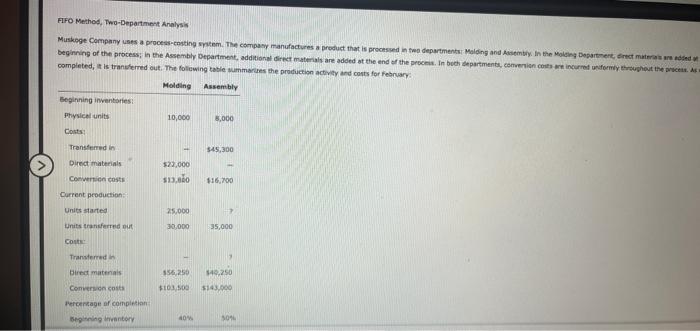
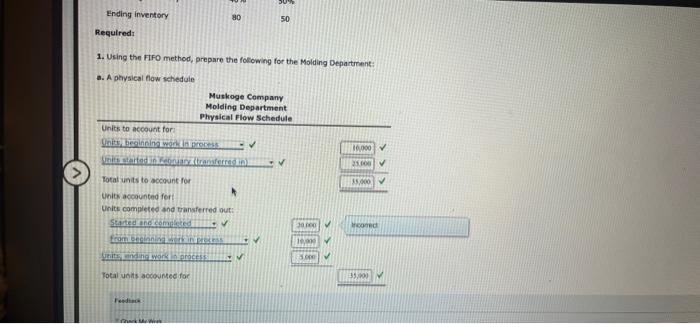
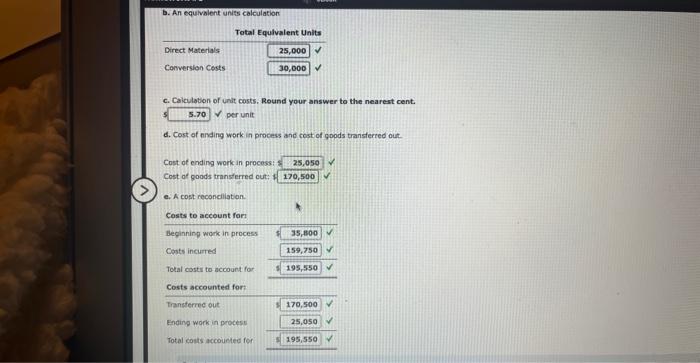
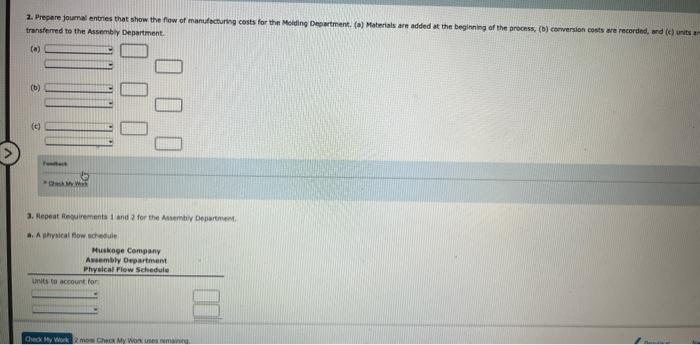
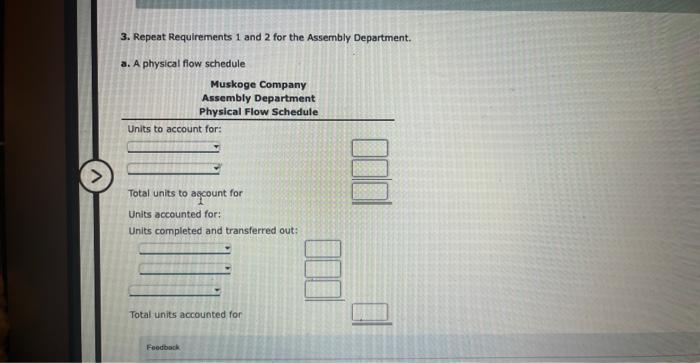
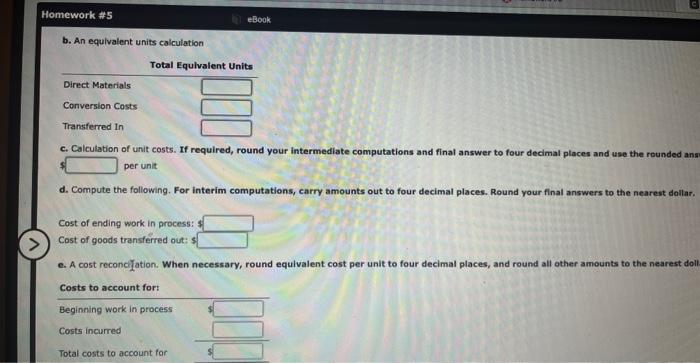
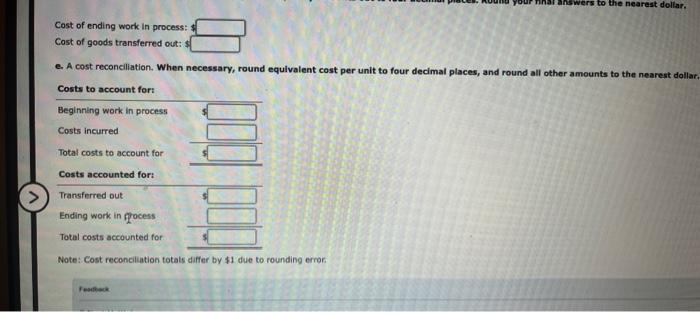
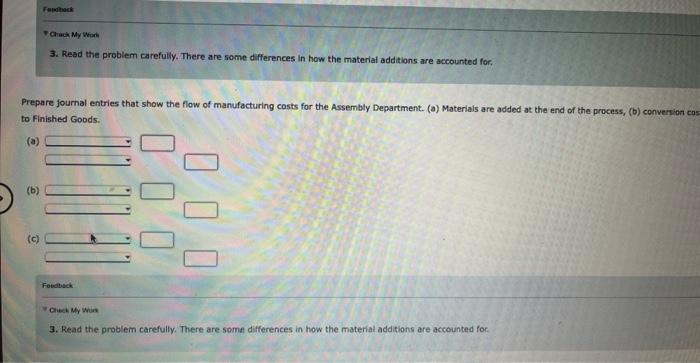
FFO Method, Two-Department Analysis compieted; it is transkmed out. The foliuwing table wummaries the proctuction actity and costs for february: 1. Using the FFFO method, prepare the folcowing for the Molding Department: a. A paysical flow schedule b. An equivalent uniss calculation c. Caiculation of unit costs. Round your answer to the nearest cent. 1 per unit d. Cost of ninding work in process and cost of gopds transferred out. Cost of ending work in process: 1 Cost of goods transferred out: i e. A cost reconcliation. transfered to the Assembly Department. 3. Hepeat flecoirements 1 ind 2 for the Assemtiy Denertmed, 3. Repeat Requirements 1 and 2 for the Assembly Department. a. A physical fiow schedule b. An equivalent units calculation c. Calculation of unit costs. If required, round your intermediate computations and final answer to four decimal places and use the rounded ans per unit d. Compute the following. For interim computations, carry amounts out to four decimal places. Round your final answers to the nearest dellar. Cost of ending work in process: 1 Cost of goods transferred out: $ e. A cost reconcilation. When necessary, round equivalent cost per unit to four decimal places, and round all other amounts to the nearest dol Cost of ending work in process: 1 Cost of goods transferred out: $ e. A cost reconciliation. When necessary, round equivalent cost per unit to four decimal places, and round all other amounts to the nearest dolia Note: Cost reconcilation totals differ by $1 due to rounding error: 3. Read the problem carefully. There are some differences in how the material additions are accounted for, Prepare journal entries that show the flow of manufacturing costs for the Assembly Department. (a) Materials are added at the end of the process, (b) converiion ca: to Finished Goods. (a) (b) (c) Fobebeck 7 Cweek My whir 3. Read the problem carefully. There are some differences in how the material additions are accounted for: FFO Method, Two-Department Analysis compieted; it is transkmed out. The foliuwing table wummaries the proctuction actity and costs for february: 1. Using the FFFO method, prepare the folcowing for the Molding Department: a. A paysical flow schedule b. An equivalent uniss calculation c. Caiculation of unit costs. Round your answer to the nearest cent. 1 per unit d. Cost of ninding work in process and cost of gopds transferred out. Cost of ending work in process: 1 Cost of goods transferred out: i e. A cost reconcliation. transfered to the Assembly Department. 3. Hepeat flecoirements 1 ind 2 for the Assemtiy Denertmed, 3. Repeat Requirements 1 and 2 for the Assembly Department. a. A physical fiow schedule b. An equivalent units calculation c. Calculation of unit costs. If required, round your intermediate computations and final answer to four decimal places and use the rounded ans per unit d. Compute the following. For interim computations, carry amounts out to four decimal places. Round your final answers to the nearest dellar. Cost of ending work in process: 1 Cost of goods transferred out: $ e. A cost reconcilation. When necessary, round equivalent cost per unit to four decimal places, and round all other amounts to the nearest dol Cost of ending work in process: 1 Cost of goods transferred out: $ e. A cost reconciliation. When necessary, round equivalent cost per unit to four decimal places, and round all other amounts to the nearest dolia Note: Cost reconcilation totals differ by $1 due to rounding error: 3. Read the problem carefully. There are some differences in how the material additions are accounted for, Prepare journal entries that show the flow of manufacturing costs for the Assembly Department. (a) Materials are added at the end of the process, (b) converiion ca: to Finished Goods. (a) (b) (c) Fobebeck 7 Cweek My whir 3. Read the problem carefully. There are some differences in how the material additions are accounted for
Step by Step Solution
There are 3 Steps involved in it

Get step-by-step solutions from verified subject matter experts
 Study Help