







Question: Please do not copy and paste, do your own way icture this scenario. You've landed at an airport, you're headed for baggage claim, and you
Please do not copy and paste, do your own way
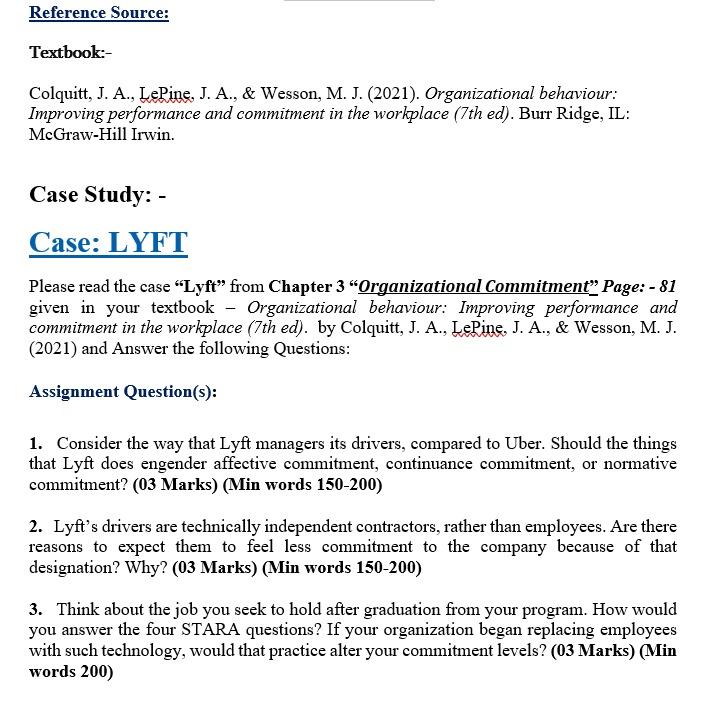
icture this scenario. You've landed at an airport, you're headed for baggage claim, and you just double-checked the name of your hotel. What ride-sharing app do you launch? Uber? Or Lyft? Maybe you used to use Uber but have a sense that the company's reputation has taken a hitsomething about a sexist culture and an ethically challenged CIEO. Maybe you have a sense that Lyft is better on such counts. Indeed, wasn't it Lyft's commercial that ended with the tagline, "It matters how you get there?" A similar debate plays out in the minds of current and prospective drivers for the two companies. Which company should I start driving for? And which company should I continue to drive for? Lyft's president, John Zimmer, acknowledges the similarity in technology and pricing for the two companies, summarizing, "So now it's all about the brand and experience." From the start, Lyft's brand was more driver-focused than Uber. It was Lyft that originated the idea that regular people could use their own cars for ride sharing. In fact, riders were encouraged to sit up front with the driver and exchange fist bumps when getting in the car. Uber, in contrast, was focused solely on upscale black cars steered by professional drivers. Of course, Uber quickly pivoted to a model like Lyft's, and its aggressive entering of new markets gave it a significant lead in market share. But Lyft is starting to catch up, partly because its brand is associated with better values than Uber's. In a meeting at Lyft's new "driver hub" in Phoenix, a Lyft employee named Stephanie Reynolds is asked why someone would work for Lyft over Uber. "I'm not going to talk about Uber," Stephanie replies. "I love this company because of what it stands for." How does what the company stands for impact its drivers? For one, Lyft's app had a feature for leaving tips for drivers from its inceptionsomething Uber only recently copied. That difference explains part of why driving for Lyft is slightly more lucrative, with Lyft drivers earning $377 per month and Uber drivers earning $364 per month. Surveys also show that drivers are happier with the experience of working for Lyft than the experience of working for Uber. These are important advantages when fostering commitment on the part of drivers. Of course, such commitment could be tested given Lyft's next big initiative: moving toward driverless cars. Could you remain attached to your employer while the company takes steps to eliminate your job?
Step by Step Solution
There are 3 Steps involved in it

Get step-by-step solutions from verified subject matter experts
 Study Help