







Question: please explain this process? F33 X f A B B C D E 2 0.2173 0 34.7 3 0.2186 0.1 35.4 11 Part C: Titration
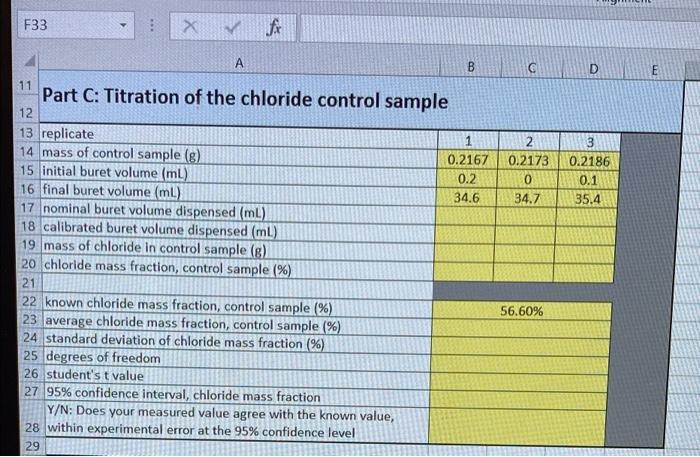
F33 X f A B B C D E 2 0.2173 0 34.7 3 0.2186 0.1 35.4 11 Part C: Titration of the chloride control sample 12 13 replicate 14 mass of control sample (8) 0.2167 15 initial buret volume (ml) 0.2 16 final buret volume (ml) 34.6 17 nominal buret volume dispensed (mL) 18 calibrated buret volume dispensed (ml) 19 mass of chloride in control sample (8) 20 chloride mass fraction, control sample (%) 21 22 known chloride mass fraction, control sample (%) 23 average chloride mass fraction, control sample %) 24 standard deviation of chloride mass fraction (%) 25 degrees of freedom 26 student's t value 27 95% confidence interval, chloride mass fraction Y/N: Does your measured value agree with the known value, 28 within experimental error at the 95% confidence level 29 56.60% F33 X f A B B C D E 2 0.2173 0 34.7 3 0.2186 0.1 35.4 11 Part C: Titration of the chloride control sample 12 13 replicate 14 mass of control sample (8) 0.2167 15 initial buret volume (ml) 0.2 16 final buret volume (ml) 34.6 17 nominal buret volume dispensed (mL) 18 calibrated buret volume dispensed (ml) 19 mass of chloride in control sample (8) 20 chloride mass fraction, control sample (%) 21 22 known chloride mass fraction, control sample (%) 23 average chloride mass fraction, control sample %) 24 standard deviation of chloride mass fraction (%) 25 degrees of freedom 26 student's t value 27 95% confidence interval, chloride mass fraction Y/N: Does your measured value agree with the known value, 28 within experimental error at the 95% confidence level 29 56.60%
Step by Step Solution
There are 3 Steps involved in it

Get step-by-step solutions from verified subject matter experts
 Study Help