







Question: PLEASE HELP ASAP. PLEASE USE MATLAB FOR COMPUTATION AND INCLUDE SCRIPT AND PLOTS IN SOLUTION. **THIS IS A HINT ON HOW TO START SOLVING** **PROBLEM
PLEASE HELP ASAP. PLEASE USE MATLAB FOR COMPUTATION AND INCLUDE SCRIPT AND PLOTS IN SOLUTION.
**THIS IS A HINT ON HOW TO START SOLVING**
**PROBLEM STATEMENT**
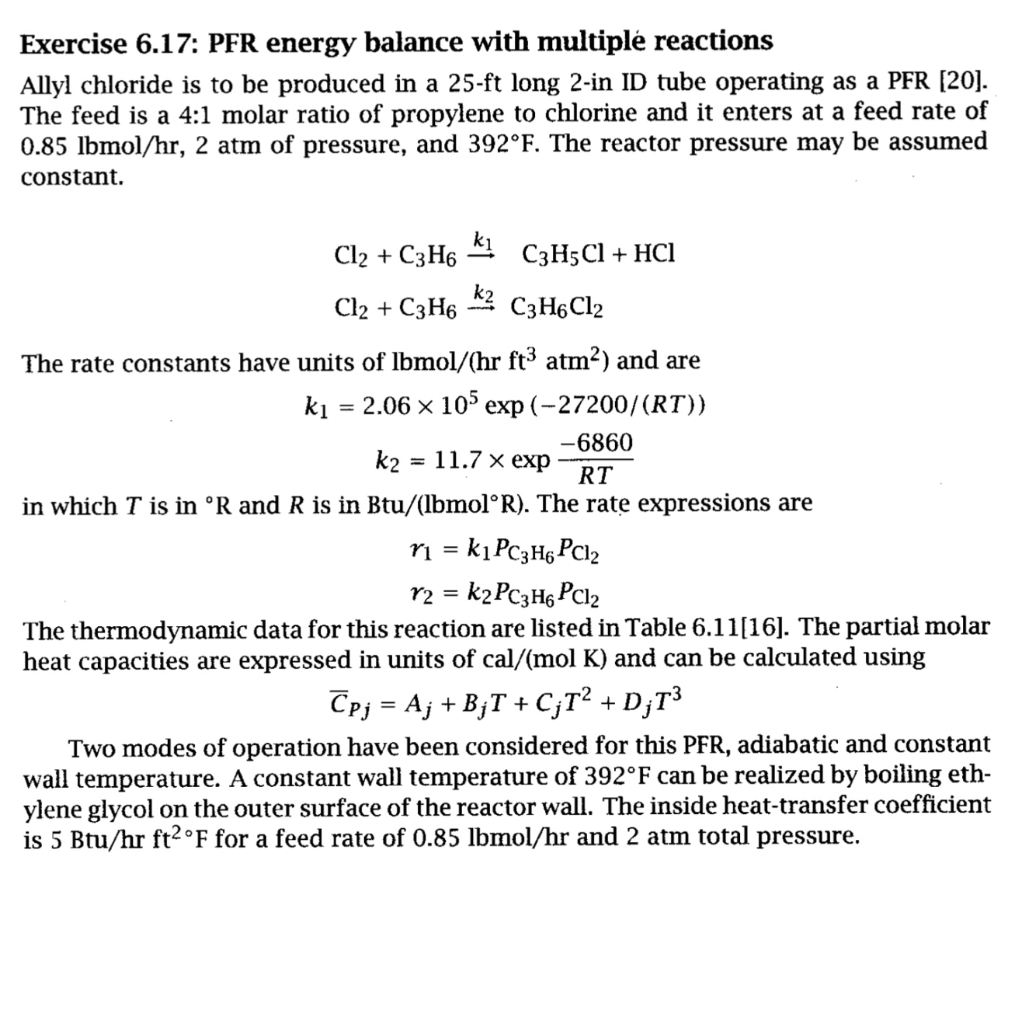
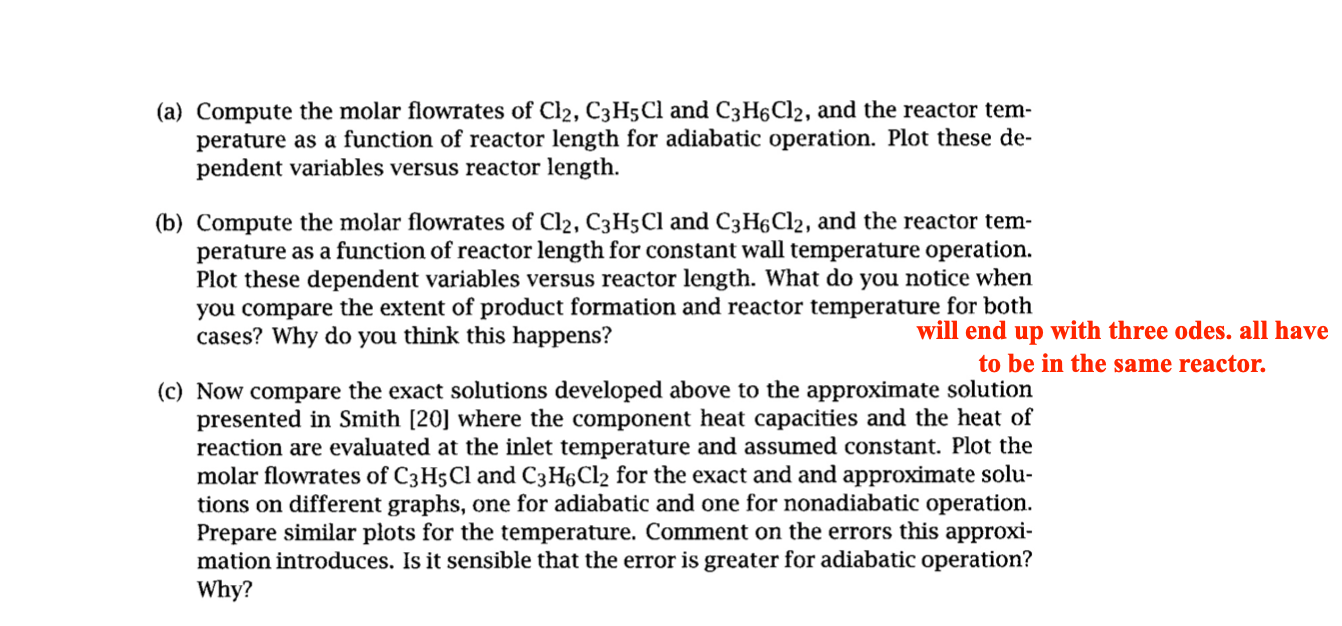
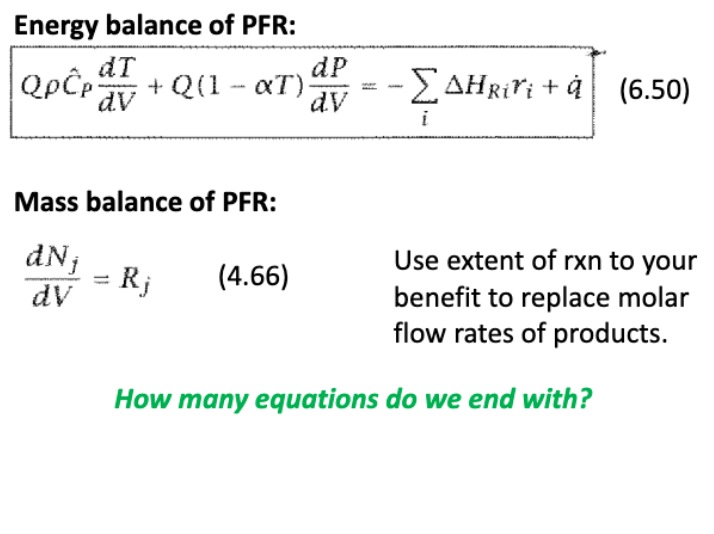
Energy balance of PFR: QC^PdVdT+Q(1T)dVdP=iHRiri+q Mass balance of PFR: dVdNj=Rj(4.66)Useextentofrxntoyourbenefittoreplacemolarflowratesofproducts. How many equations do we end with? Exercise 6.17: PFR energy balance with multiple reactions Allyl chloride is to be produced in a 25 -ft long 2-in ID tube operating as a PFR [20]. The feed is a 4:1 molar ratio of propylene to chlorine and it enters at a feed rate of 0.85lbmol/hr,2atm of pressure, and 392F. The reactor pressure may be assumed constant. Cl2+C3H6k1C3H5Cl+HClCl2+C3H6k2C3H6Cl2 The rate constants have units of lbmol/(hrft3atm2) and are k1=2.06105exp(27200/(RT))k2=11.7expRT6860 in which T is in R and R is in Btu/(lbmolR). The rate expressions are r1=k1PC3H6PCl2r2=k2PC3H6PCl2 The thermodynamic data for this reaction are listed in Table 6.11[16]. The partial molar heat capacities are expressed in units of cal/(molK) and can be calculated using CPj=Aj+BjT+CjT2+DjT3 Two modes of operation have been considered for this PFR, adiabatic and constant wall temperature. A constant wall temperature of 392F can be realized by boiling ethylene glycol on the outer surface of the reactor wall. The inside heat-transfer coefficient is 5Btu/hrft2F for a feed rate of 0.85lbmol/hr and 2atm total pressure. (a) Compute the molar flowrates of Cl2,C3H5Cl and C3H6Cl2, and the reactor temperature as a function of reactor length for adiabatic operation. Plot these dependent variables versus reactor length. (b) Compute the molar flowrates of Cl2,C3H5Cl and C3H6Cl2, and the reactor temperature as a function of reactor length for constant wall temperature operation. Plot these dependent variables versus reactor length. What do you notice when you compare the extent of product formation and reactor temperature for both cases? Why do you think this happens? will end up with three odes. all have to be in the same reactor. (c) Now compare the exact solutions developed above to the approximate solution presented in Smith [20] where the component heat capacities and the heat of reaction are evaluated at the inlet temperature and assumed constant. Plot the molar flowrates of C3H5Cl and C3H6Cl2 for the exact and and approximate solutions on different graphs, one for adiabatic and one for nonadiabatic operation. Prepare similar plots for the temperature. Comment on the errors this approximation introduces. Is it sensible that the error is greater for adiabatic operation? Why? Energy balance of PFR: QC^PdVdT+Q(1T)dVdP=iHRiri+q Mass balance of PFR: dVdNj=Rj(4.66)Useextentofrxntoyourbenefittoreplacemolarflowratesofproducts. How many equations do we end with? Exercise 6.17: PFR energy balance with multiple reactions Allyl chloride is to be produced in a 25 -ft long 2-in ID tube operating as a PFR [20]. The feed is a 4:1 molar ratio of propylene to chlorine and it enters at a feed rate of 0.85lbmol/hr,2atm of pressure, and 392F. The reactor pressure may be assumed constant. Cl2+C3H6k1C3H5Cl+HClCl2+C3H6k2C3H6Cl2 The rate constants have units of lbmol/(hrft3atm2) and are k1=2.06105exp(27200/(RT))k2=11.7expRT6860 in which T is in R and R is in Btu/(lbmolR). The rate expressions are r1=k1PC3H6PCl2r2=k2PC3H6PCl2 The thermodynamic data for this reaction are listed in Table 6.11[16]. The partial molar heat capacities are expressed in units of cal/(molK) and can be calculated using CPj=Aj+BjT+CjT2+DjT3 Two modes of operation have been considered for this PFR, adiabatic and constant wall temperature. A constant wall temperature of 392F can be realized by boiling ethylene glycol on the outer surface of the reactor wall. The inside heat-transfer coefficient is 5Btu/hrft2F for a feed rate of 0.85lbmol/hr and 2atm total pressure. (a) Compute the molar flowrates of Cl2,C3H5Cl and C3H6Cl2, and the reactor temperature as a function of reactor length for adiabatic operation. Plot these dependent variables versus reactor length. (b) Compute the molar flowrates of Cl2,C3H5Cl and C3H6Cl2, and the reactor temperature as a function of reactor length for constant wall temperature operation. Plot these dependent variables versus reactor length. What do you notice when you compare the extent of product formation and reactor temperature for both cases? Why do you think this happens? will end up with three odes. all have to be in the same reactor. (c) Now compare the exact solutions developed above to the approximate solution presented in Smith [20] where the component heat capacities and the heat of reaction are evaluated at the inlet temperature and assumed constant. Plot the molar flowrates of C3H5Cl and C3H6Cl2 for the exact and and approximate solutions on different graphs, one for adiabatic and one for nonadiabatic operation. Prepare similar plots for the temperature. Comment on the errors this approximation introduces. Is it sensible that the error is greater for adiabatic operation? Why
Step by Step Solution
There are 3 Steps involved in it

Get step-by-step solutions from verified subject matter experts
 Study Help