Question: Please help fill out forms 1 and 2. EXERCISE: Design and Evaluation of Training Programs 1. OBJECTIVES To help you determine which training methods are
Please help fill out forms 1 and 2. 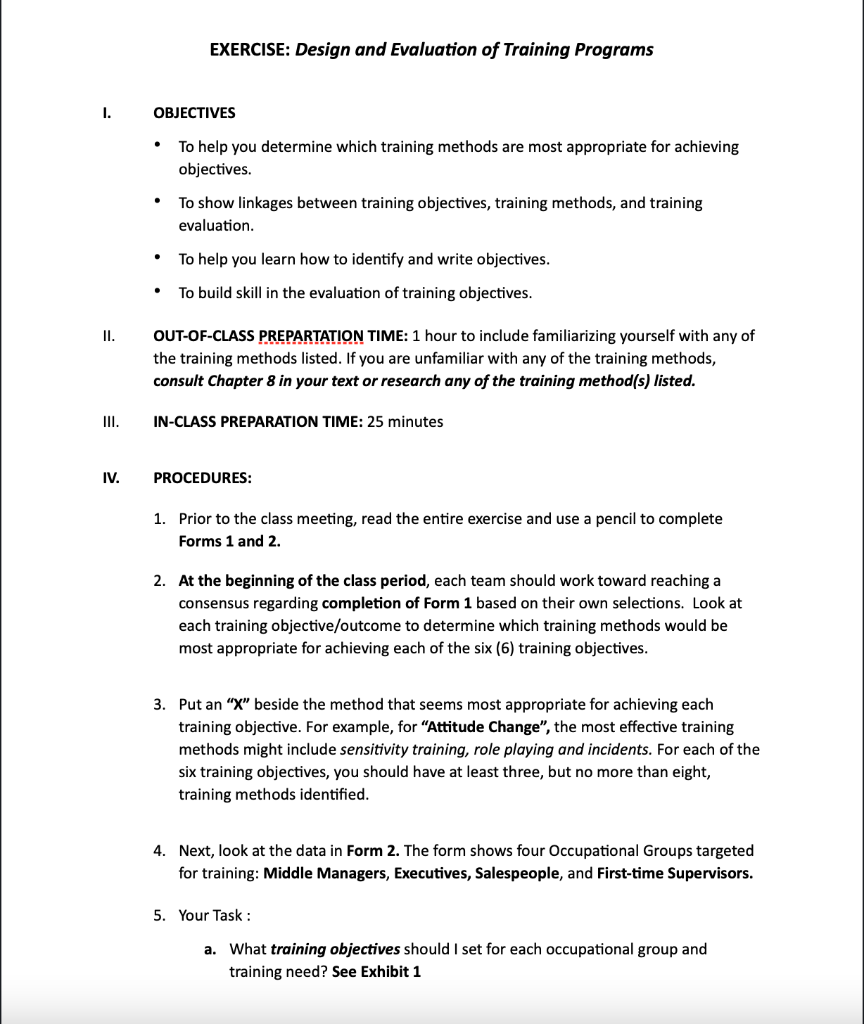
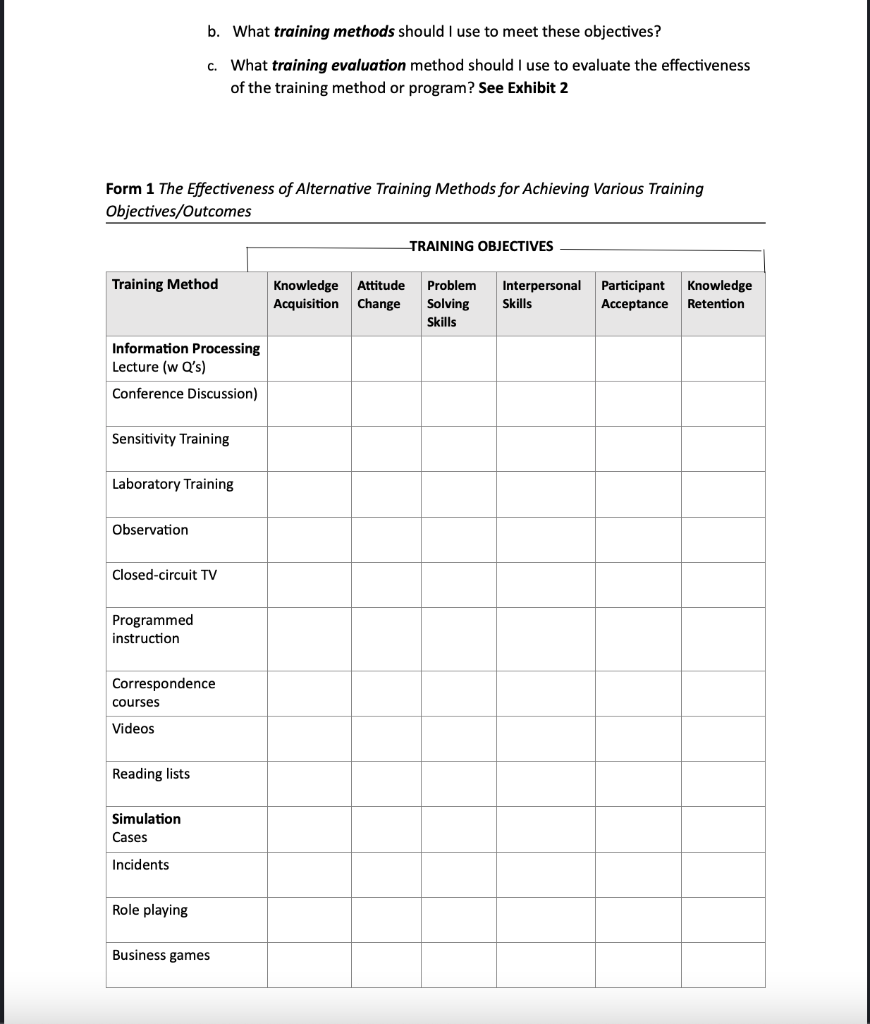
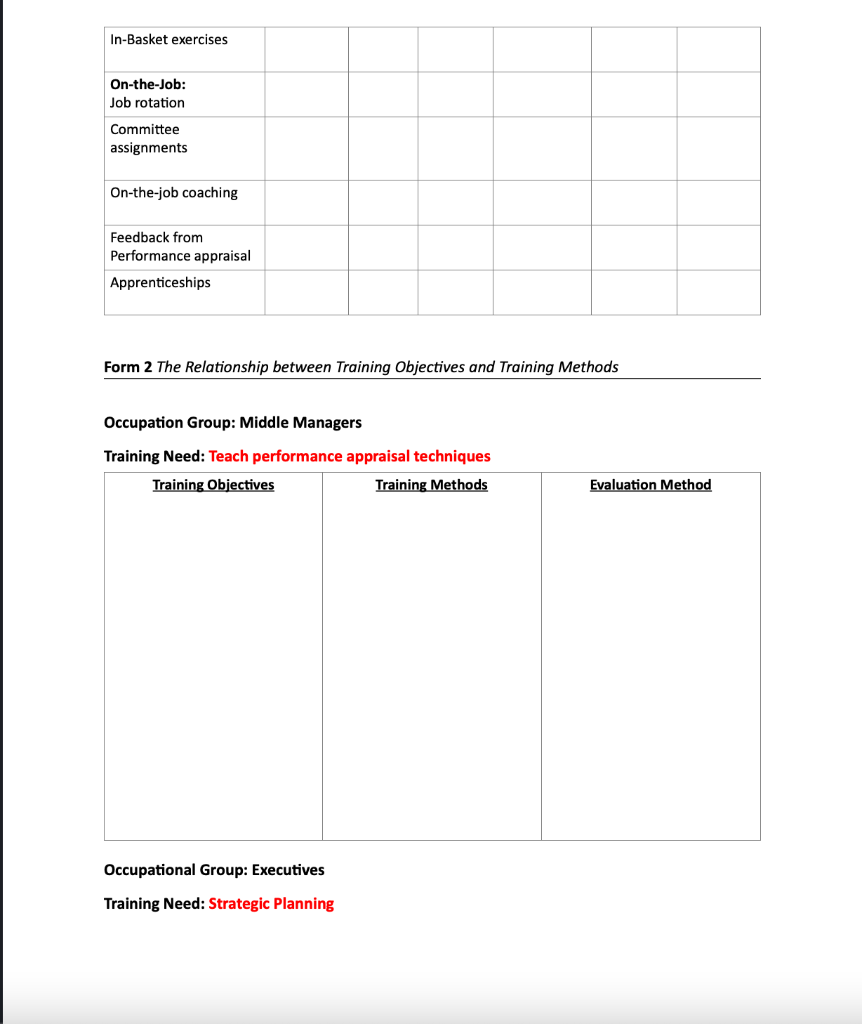
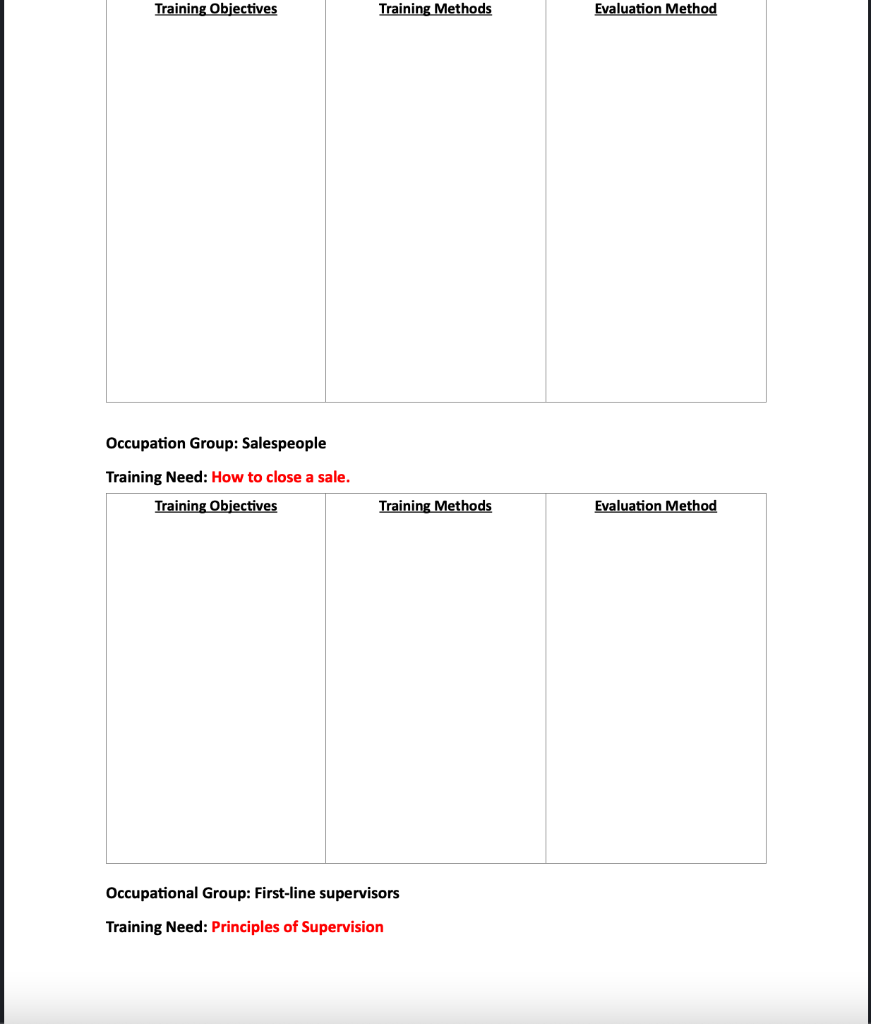
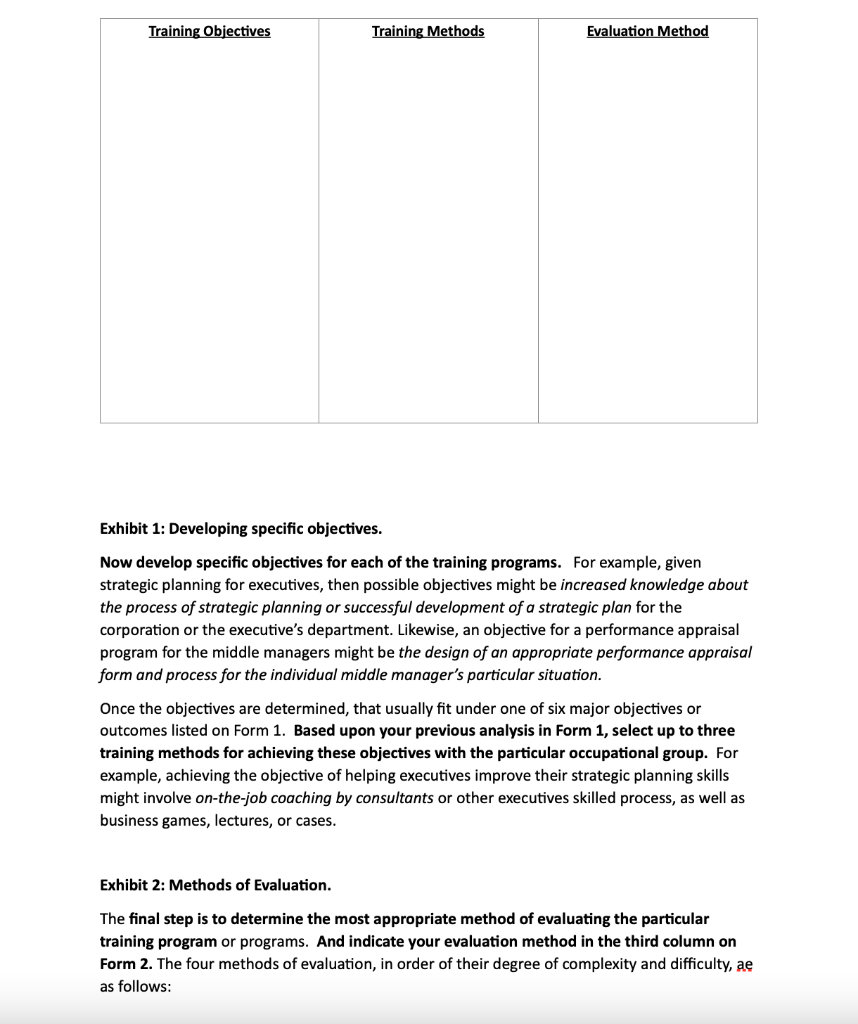
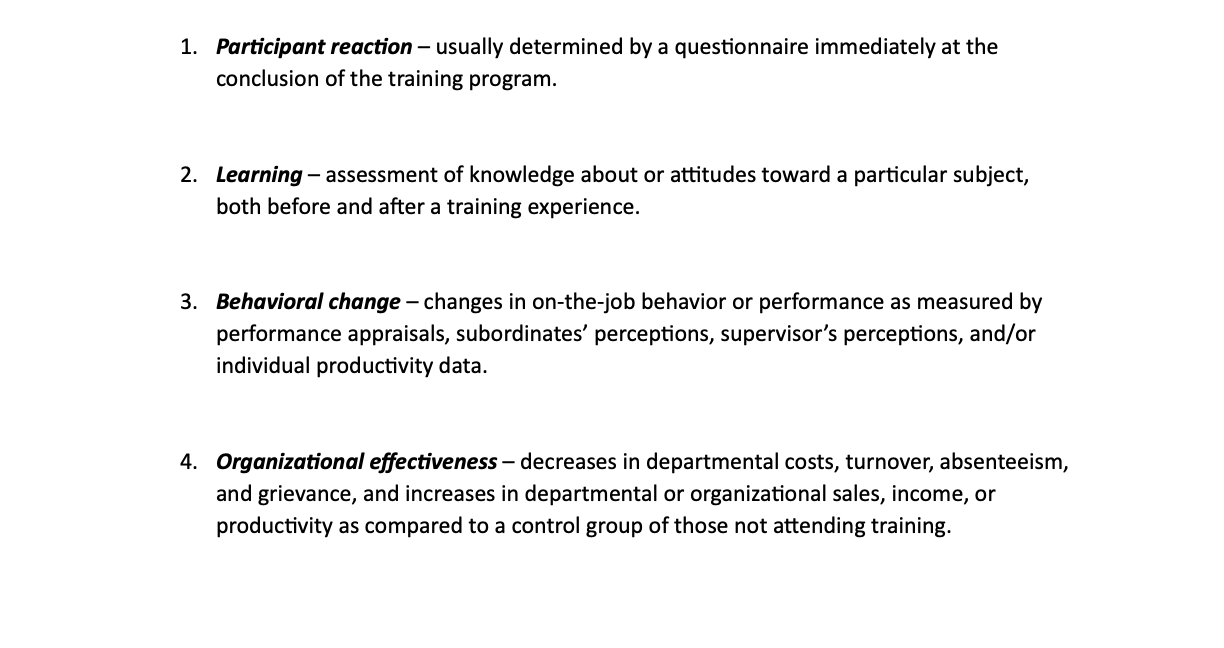
EXERCISE: Design and Evaluation of Training Programs 1. OBJECTIVES To help you determine which training methods are most appropriate for achieving objectives. . To show linkages between training objectives, training methods, and training evaluation. To help you learn how to identify and write objectives. To build skill in the evaluation of training objectives. II. OUT-OF-CLASS PREPARTATION TIME: 1 hour to include familiarizing yourself with any of the training methods listed. If you are unfamiliar with any of the training methods, consult Chapter 8 in your text or research any of the training method(s) listed. III. IN-CLASS PREPARATION TIME: 25 minutes IV. PROCEDURES: 1. Prior to the class meeting, read the entire exercise and use a pencil to complete Forms 1 and 2. 2. At the beginning of the class period, each team should work toward reaching a consensus regarding completion of Form 1 based on their own selections. Look at each training objective/outcome to determine which training methods would be most appropriate for achieving each of the six (6) training objectives. 3. Put an "X" beside the method that seems most appropriate for achieving each training objective. For example, for "Attitude Change", the most effective training methods might include sensitivity training, role playing and incidents. For each of the six training objectives, you should have at least three, but no more than eight, training methods identified. 4. Next, look at the data in Form 2. The form shows four Occupational Groups targeted for training: Middle Managers, Executives, Salespeople, and First-time Supervisors. 5. Your Task: a. What training objectives should I set for each occupational group and training need? See Exhibit 1 b. What training methods should I use to meet these objectives? c. What training evaluation method should I use to evaluate the effectiveness of the training method or program? See Exhibit 2 Form 1 The Effectiveness of Alternative Training Methods for Achieving Various Training Objectives/Outcomes TRAINING OBJECTIVES Training Method Knowledge Acquisition Attitude Change Problem Solving Interpersonal Skills Participant Acceptance Knowledge Retention Skills Information Processing Lecture (w Q's) Conference Discussion) Sensitivity Training Laboratory Training Observation Closed-circuit TV Programmed instruction Correspondence courses Videos Reading lists Simulation Cases Incidents Role playing Business games In-Basket exercises On-the-Job: Job rotation Committee assignments On-the-job coaching Feedback from Performance appraisal Apprenticeships Form 2 The Relationship between Training Objectives and Training Methods Occupation Group: Middle Managers Training Need: Teach performance appraisal techniques Training Objectives Training Methods Evaluation Method Occupational Group: Executives Training Need: Strategic Planning Training Objectives Training Methods Evaluation Method Occupation Group: Salespeople Training Need: How to close a sale. Training Objectives Training Methods Evaluation Method Occupational Group: First-line supervisors Training Need: Principles of Supervision Training Objectives Training Methods Evaluation Method Exhibit 1: Developing specific objectives. Now develop specific objectives for each of the training programs. For example, given strategic planning for executives, then possible objectives might be increased knowledge about the process of strategic planning or successful development of a strategic plan for the corporation or the executive's department. Likewise, an objective for a performance appraisal program for the middle managers might be the design of an appropriate performance appraisal form and process for the individual middle manager's particular situation. Once the objectives are determined, that usually fit under one of six major objectives or outcomes listed on Form 1. Based upon your previous analysis in Form 1, select up to three training methods for achieving these objectives with the particular occupational group. For example, achieving the objective of helping executives improve their strategic planning skills might involve on-the-job coaching by consultants or other executives skilled process, as well as business games, lectures, or cases. Exhibit 2: Methods of Evaluation. The final step is to determine the most appropriate method of evaluating the particular training program or programs. And indicate your evaluation method in the third column on Form 2. The four methods of evaluation, in order of their degree of complexity and difficulty, ae as follows: 1. Participant reaction - usually determined by a questionnaire immediately at the conclusion of the training program. 2. Learning - assessment of knowledge about or attitudes toward a particular subject, both before and after a training experience. 3. Behavioral change - changes in on-the-job behavior or performance as measured by performance appraisals, subordinates' perceptions, supervisor's perceptions, and/or individual productivity data. 4. Orga izational effectiveness - decreases in departmental costs, turnover, absenteeism, and grievance, and increases in departmental or organizational sales, income, or productivity as compared to a control group of those not attending training. EXERCISE: Design and Evaluation of Training Programs 1. OBJECTIVES To help you determine which training methods are most appropriate for achieving objectives. . To show linkages between training objectives, training methods, and training evaluation. To help you learn how to identify and write objectives. To build skill in the evaluation of training objectives. II. OUT-OF-CLASS PREPARTATION TIME: 1 hour to include familiarizing yourself with any of the training methods listed. If you are unfamiliar with any of the training methods, consult Chapter 8 in your text or research any of the training method(s) listed. III. IN-CLASS PREPARATION TIME: 25 minutes IV. PROCEDURES: 1. Prior to the class meeting, read the entire exercise and use a pencil to complete Forms 1 and 2. 2. At the beginning of the class period, each team should work toward reaching a consensus regarding completion of Form 1 based on their own selections. Look at each training objective/outcome to determine which training methods would be most appropriate for achieving each of the six (6) training objectives. 3. Put an "X" beside the method that seems most appropriate for achieving each training objective. For example, for "Attitude Change", the most effective training methods might include sensitivity training, role playing and incidents. For each of the six training objectives, you should have at least three, but no more than eight, training methods identified. 4. Next, look at the data in Form 2. The form shows four Occupational Groups targeted for training: Middle Managers, Executives, Salespeople, and First-time Supervisors. 5. Your Task: a. What training objectives should I set for each occupational group and training need? See Exhibit 1 b. What training methods should I use to meet these objectives? c. What training evaluation method should I use to evaluate the effectiveness of the training method or program? See Exhibit 2 Form 1 The Effectiveness of Alternative Training Methods for Achieving Various Training Objectives/Outcomes TRAINING OBJECTIVES Training Method Knowledge Acquisition Attitude Change Problem Solving Interpersonal Skills Participant Acceptance Knowledge Retention Skills Information Processing Lecture (w Q's) Conference Discussion) Sensitivity Training Laboratory Training Observation Closed-circuit TV Programmed instruction Correspondence courses Videos Reading lists Simulation Cases Incidents Role playing Business games In-Basket exercises On-the-Job: Job rotation Committee assignments On-the-job coaching Feedback from Performance appraisal Apprenticeships Form 2 The Relationship between Training Objectives and Training Methods Occupation Group: Middle Managers Training Need: Teach performance appraisal techniques Training Objectives Training Methods Evaluation Method Occupational Group: Executives Training Need: Strategic Planning Training Objectives Training Methods Evaluation Method Occupation Group: Salespeople Training Need: How to close a sale. Training Objectives Training Methods Evaluation Method Occupational Group: First-line supervisors Training Need: Principles of Supervision Training Objectives Training Methods Evaluation Method Exhibit 1: Developing specific objectives. Now develop specific objectives for each of the training programs. For example, given strategic planning for executives, then possible objectives might be increased knowledge about the process of strategic planning or successful development of a strategic plan for the corporation or the executive's department. Likewise, an objective for a performance appraisal program for the middle managers might be the design of an appropriate performance appraisal form and process for the individual middle manager's particular situation. Once the objectives are determined, that usually fit under one of six major objectives or outcomes listed on Form 1. Based upon your previous analysis in Form 1, select up to three training methods for achieving these objectives with the particular occupational group. For example, achieving the objective of helping executives improve their strategic planning skills might involve on-the-job coaching by consultants or other executives skilled process, as well as business games, lectures, or cases. Exhibit 2: Methods of Evaluation. The final step is to determine the most appropriate method of evaluating the particular training program or programs. And indicate your evaluation method in the third column on Form 2. The four methods of evaluation, in order of their degree of complexity and difficulty, ae as follows: 1. Participant reaction - usually determined by a questionnaire immediately at the conclusion of the training program. 2. Learning - assessment of knowledge about or attitudes toward a particular subject, both before and after a training experience. 3. Behavioral change - changes in on-the-job behavior or performance as measured by performance appraisals, subordinates' perceptions, supervisor's perceptions, and/or individual productivity data. 4. Orga izational effectiveness - decreases in departmental costs, turnover, absenteeism, and grievance, and increases in departmental or organizational sales, income, or productivity as compared to a control group of those not attending training









 Study Help