







Question: Please help For the demand function q = D(p) = nd the following (:2 + 5) ' a) The elasticity b) The elasticity at p
Please help
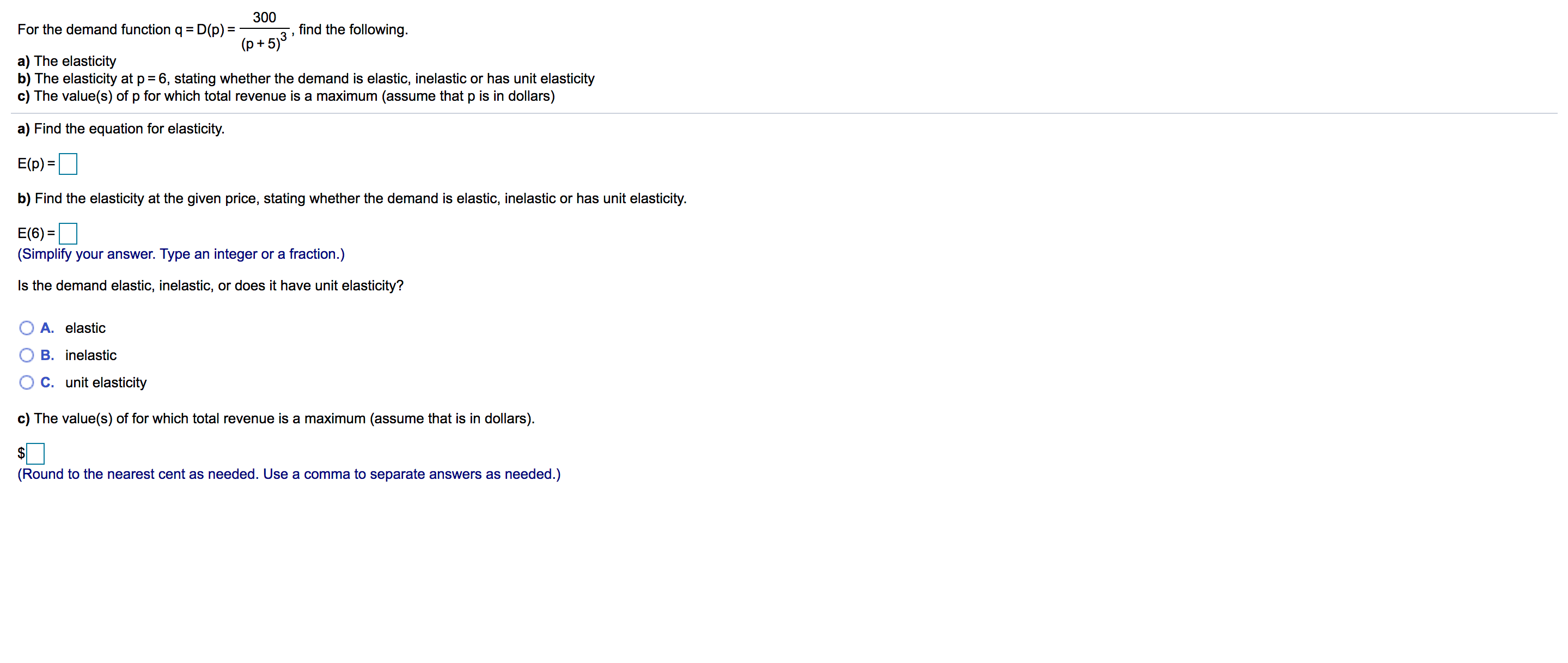
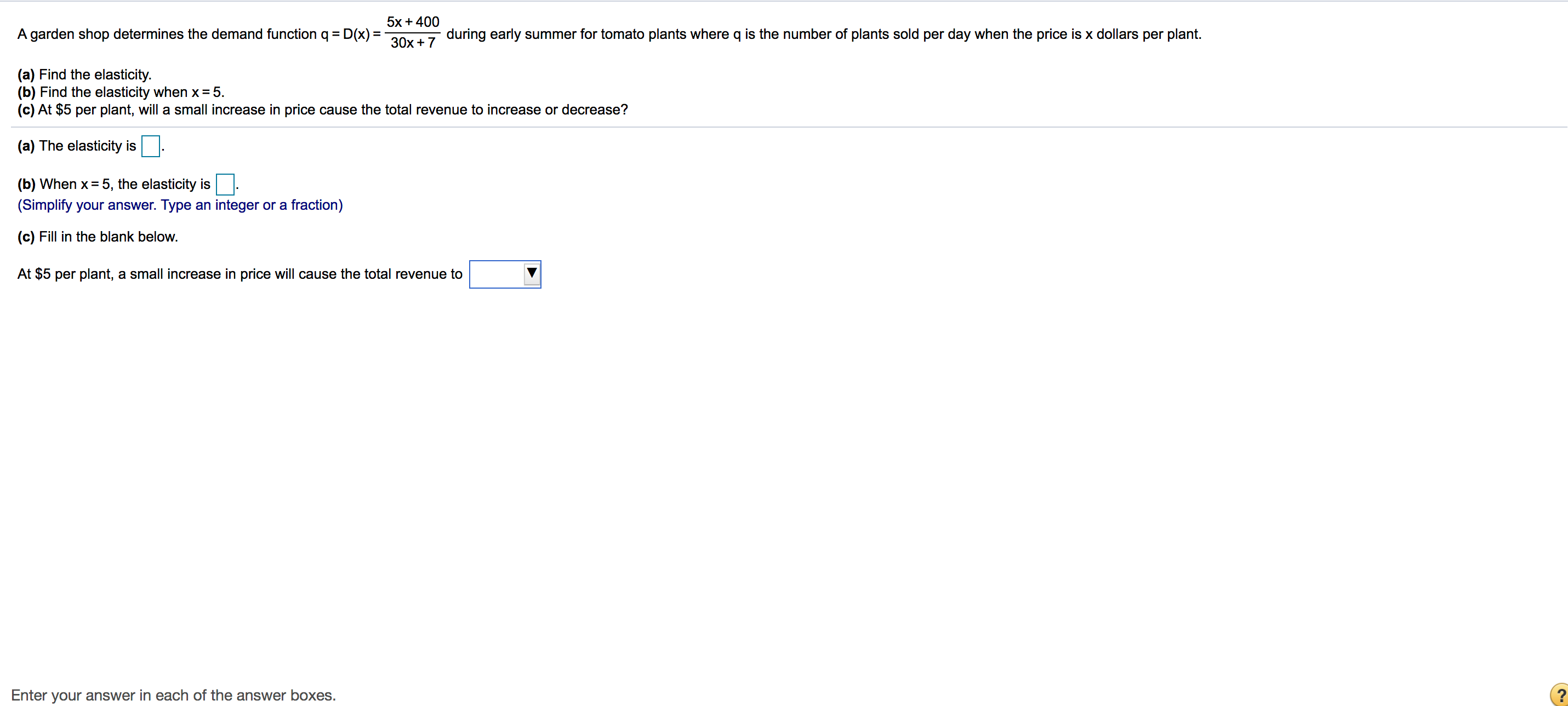
For the demand function q = D(p) = nd the following (:2 + 5)\" ' a) The elasticity b) The elasticity at p = 6, stating whether the demand is elastic, inelastic or has unit elasticity c) The value(s) at p for which total revenue is a maximum (assume that p is in dollars) a) Find the equation for elasticity. E(p) = h) Find the elasticity at the given price, stating whether the demand is elastic, inelastic or has unit elasticity. E(3) = (Simplify your answer, Type an integer or a fraction.) Is the demand elastic, inelastic, or does it have unit elasticity? O A. elastic O B. inelastic O C. unit elasticity c) The value(s) at for which total revenue is a maximum (assume that is in dollars). $ (Round tn the nearest cent as needed Use a comma to separate answers as needed.) 5x +400 A garden shop determines the demand function q = D(x) = m during early summer for tomato plants where q is the number of plants sold per day when the prioe is x dollars per plant. (a) Find the elasticity. ([1) Find the elasticity when x = 5. (c) At $5 per plant, will a small increase in price cause the total revenue to increase or decrease? (a) The elasticity is (b) When x = 5, the elasticity is (Simplify your answer. Type an integer or a fraction) (c) Fill in the blank below. At $5 per plant, a small increase in price will cause the total revenue to V Enter your answer in each of the answer boxes
Step by Step Solution
There are 3 Steps involved in it

Get step-by-step solutions from verified subject matter experts
 Study Help