



Question: PLEASE HELP! I will like answer! An investor with a required return of 16 percent for very risky investments in common stock has analyzed three
Firm
Current earnings
Current dividend
Expected annual growth rate in dividends and earnings
Current market price
$2.20
$2.10
7%
$2.80
$3.70
3%
C
$6.80
$7.50
-1%
$ 26
$ 35
$ 47
a. What is the maximum price that the investor should pay for each stock based on the dividend-growth model? Round your answers to the nearest
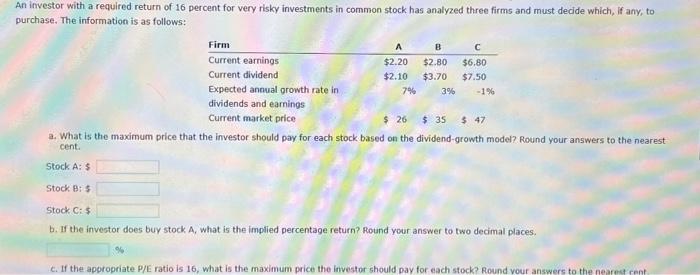
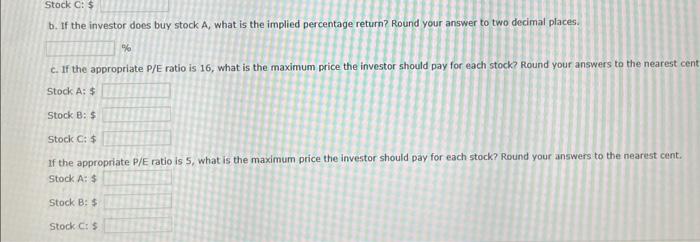
investor with a required return of 16 percent for very risky investments in common stock has analyzed three firms and must decide which, if any, to archase. The information is as follows: a. What is the maximum price that the investor should pay for each stock based on the dividend-growth model? Round your answers to the nearest cent. Stock A: $ Stock Bis Stock C:$ b. If the investor does buy stock. A, what is the implied percentage return? Round your answer to two decimal places. c. If the appropriate P/E ratio is 16 , what is the maximum price the investor should pay for each stock? Round vour answers to the nearest rent. b. If the investor does buy stock A, what is the implied percentage return? Round your answer to two decimal places. % c. If the appropriate P/E ratio is 16 , what is the maximum price the investor should pay for each stock? Round your answers to the nearest cen Stock A: \$ Stock B: 5 stock C:$ If the appropriate P/E ratio is 5 , what is the maximum price the investor should pay for each stock? Round your answers to the nearest cent. stock A: $ Stock B: \$ Stodk. Cis
Step by Step Solution
There are 3 Steps involved in it

Get step-by-step solutions from verified subject matter experts