







Question: Please help me find out what I'm missing or what is wrong. Thank you! You have just been hired as a new management trainee by

Please help me find out what I'm missing or what is wrong. Thank you!
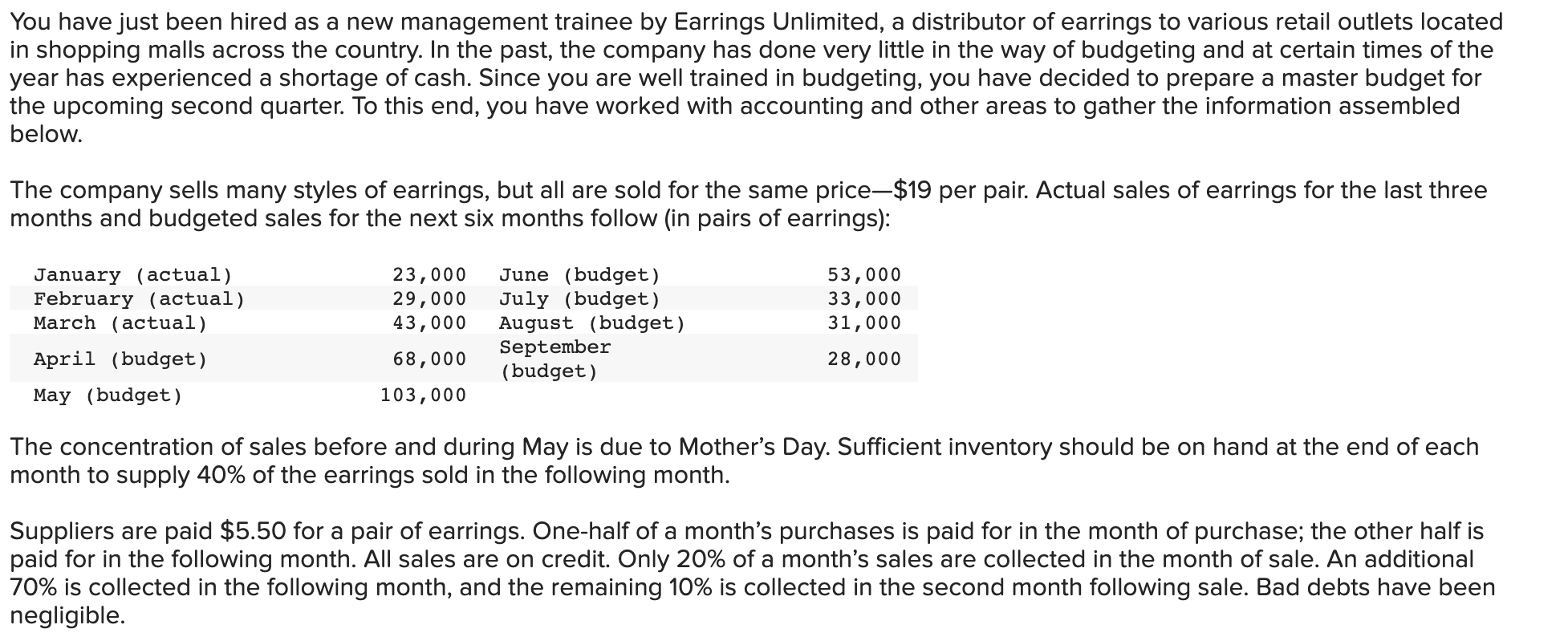
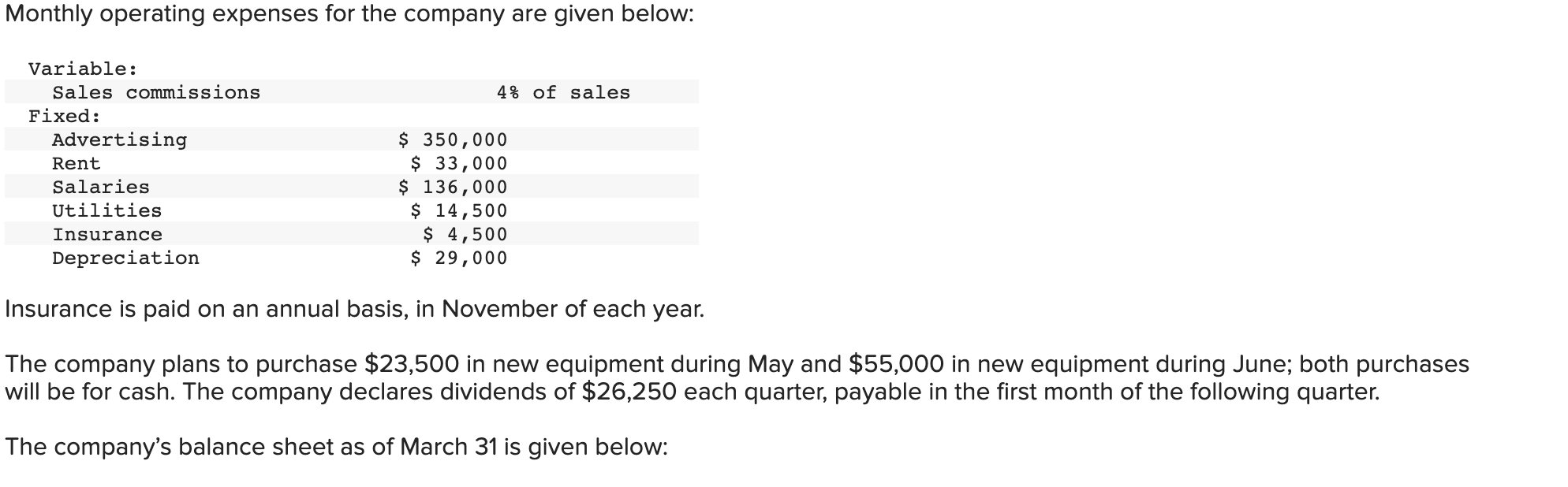
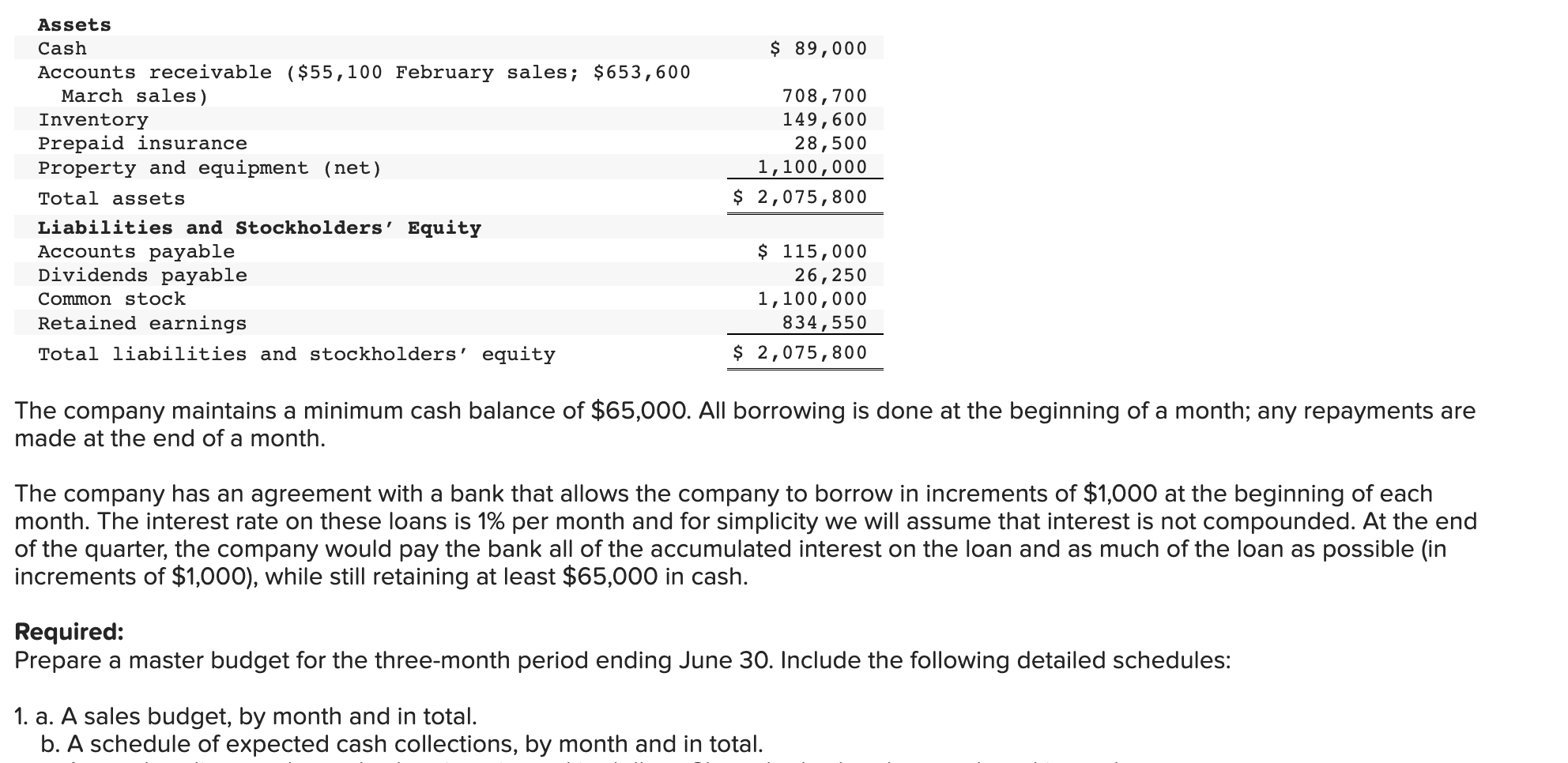
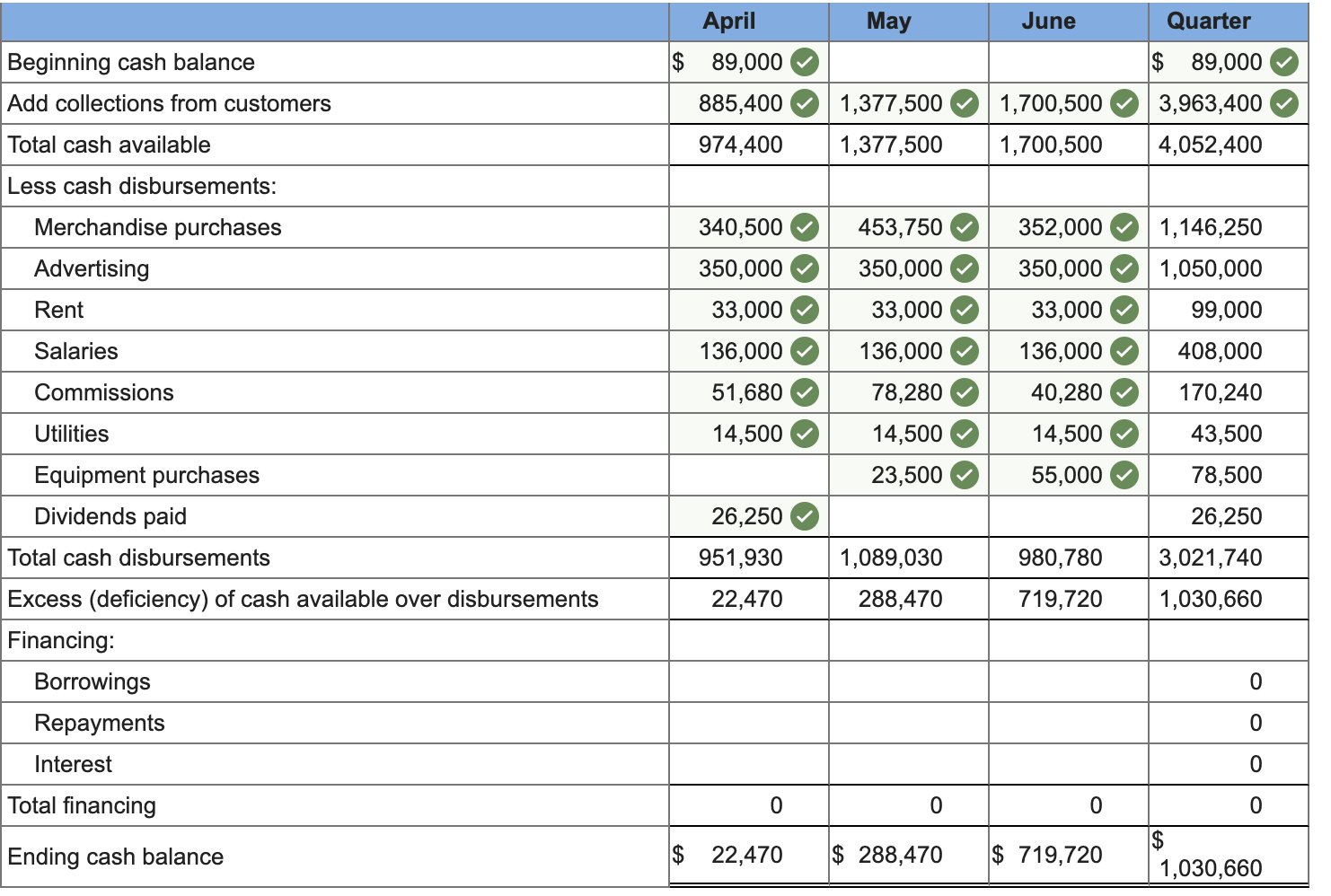
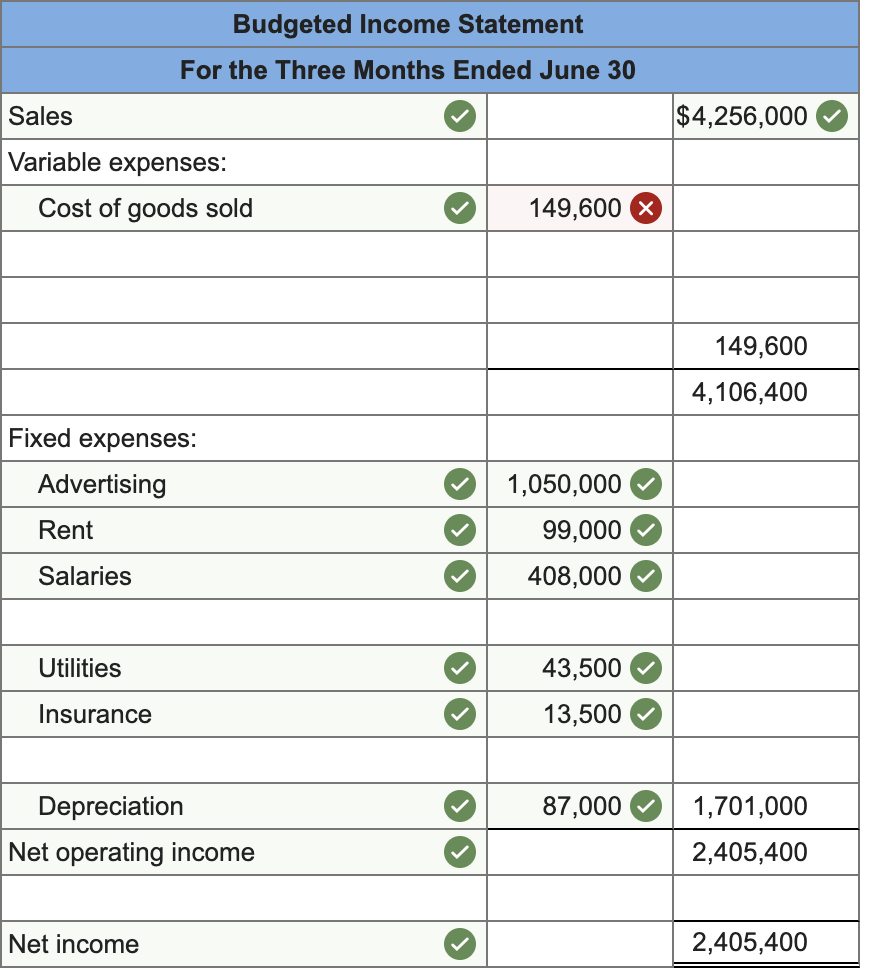
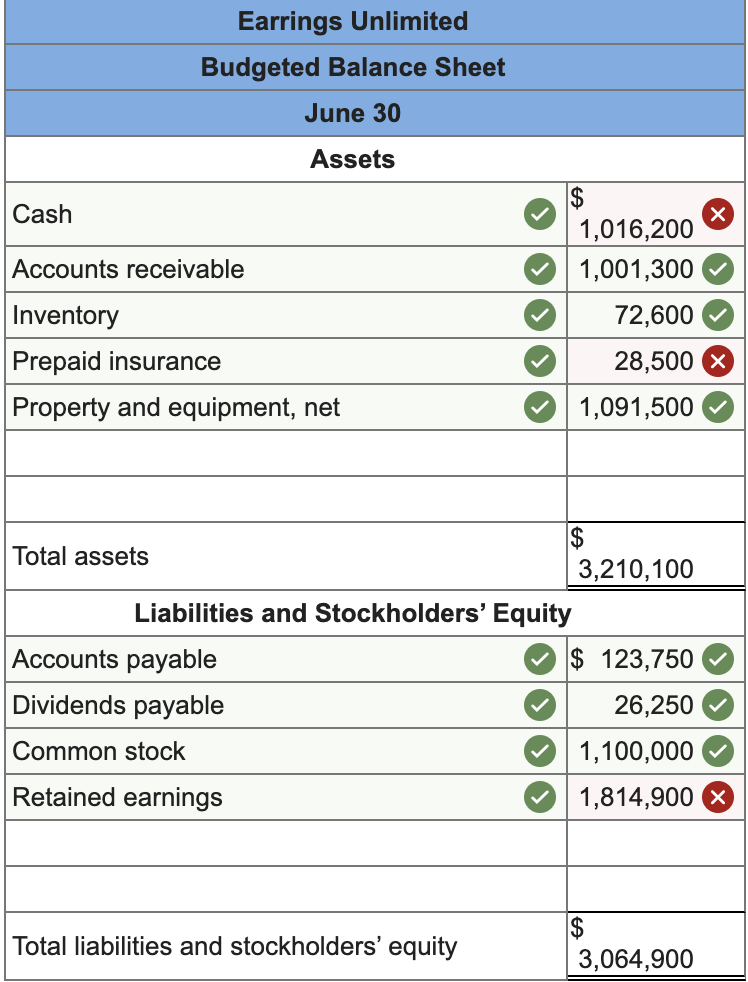
You have just been hired as a new management trainee by Earrings Unlimited, a distributor of earrings to various retail outlets located in shopping malls across the country. In the past, the company has done very little in the way of budgeting and at certain times of the year has experienced a shortage of cash. Since you are well trained in budgeting, you have decided to prepare a master budget for the upcoming second quarter. To this end, you have worked with accounting and other areas to gather the information assembled below. The company sells many styles of earrings, but all are sold for the same price-$19 per pair. Actual sales of earrings for the last three months and budgeted sales for the next six months follow (in pairs of earrings): 53,000 January (actual) February (actual) 23,000 29,000 June (budget) July (budget) 33,000 March (actual) 43,000 August (budget) 31,000 September April (budget) 68,000 28,000 (budget) May (budget) 103,000 The concentration of sales before and during May is due to Mother's Day. Sufficient inventory should be on hand at the end of each month to supply 40% of the earrings sold in the following month. Suppliers are paid $5.50 for a pair of earrings. One-half of a month's purchases is paid for in the month of purchase; the other half is paid for in the following month. All sales are on credit. Only 20% of a month's sales are collected in the month of sale. An additional 70% is collected in the following month, and the remaining 10% is collected in the second month following sale. Bad debts have been negligible. Monthly operating expenses for the company are given below: Variable: Sales commissions 4% of sales Fixed: Advertising $ 350,000 Rent $ 33,000 Salaries $ 136,000 Utilities $ 14,500 Insurance $ 4,500 Depreciation $ 29,000 Insurance is paid on an annual basis, in November of each year. both purchases The company plans to purchase $23,500 in new equipment during May and $55,000 in new equipment during Ju will be for cash. The company declares dividends of $26,250 each quarter, payable in the first month of the following quarter. The company's balance sheet as of March 31 is given below: Assets Cash $ 89,000 Accounts receivable ($55,100 February sales; $653,600 March sales) 708,700 149,600 Inventory Prepaid insurance 28,500 Property and equipment (net) 1,100,000 Total assets $ 2,075,800 Liabilities and Stockholders' Equity Accounts payable Dividends payable $ 115,000 26,250 1,100,000 834,550 Common stock Retained earnings Total liabilities and stockholders' equity $ 2,075,800 The company maintains a minimum cash balance of $65,000. All borrowing is done at the beginning of a month; any repayments are made at the end of a month. The company has an agreement with a bank that allows the company to borrow in increments of $1,000 at the beginning of each month. The interest rate on these loans is 1% per month and for simplicity we will assume that interest is not compounded. At the end of the quarter, the company would pay the bank all of the accumulated interest on the loan and as much of the loan as possible (in increments of $1,000), while still retaining at least $65,000 in cash. Required: Prepare a master budget for the three-month period ending June 30. Include the following detailed schedules: 1. a. A sales budget, by month and in total. b. A schedule of expected cash collections, by month and in total. 1. a. A sales budget, by month and in total. b. A schedule of expected cash collections, by month and in total. c. A merchandise purchases budget in units and in dollars. Show the budget by month and in total. d. A schedule of expected cash disbursements for merchandise purchases, by month and in total. 2. A cash budget. Show the budget by month and in total. Determine any borrowing that would be needed to maintain the minimum cash balance of $65,000. 3. A budgeted income statement for the three-month period ending June 30. Use the contribution approach. 4. A budgeted balance sheet as of June 30. Beginning cash balance Add collections from customers Total cash available Less cash disbursements: Merchandise purchases Advertising Rent Salaries Commissions Utilities Equipment purchases Dividends paid Total cash disbursements Excess (deficiency) of cash available over disbursements Financing: Borrowings Repayments Interest Total financing Ending cash balance April $ 89,000 885,400 974,400 340,500 350,000 33,000 136,000 51,680 14,500 26,250 951,930 22,470 0 $ 22,470 May 1,377,500 1,377,500 453,750 350,000 33,000 136,000 78,280 14,500 23,500 1,089,030 288,470 0 $ 288,470 June Quarter $ 89,000 1,700,500 3,963,400 1,700,500 4,052,400 352,000 1,146,250 350,000 1,050,000 33,000 99,000 136,000 408,000 40,280 170,240 14,500 43,500 55,000 78,500 26,250 980,780 3,021,740 719,720 1,030,660 0 0 0 0 0 $ $ 719,720 1,030,660 Budgeted Income Statement For the Three Months Ended June 30 149,600 1,050,000 99,000 408,000 43,500 13,500 87,000 Sales Variable expenses: Cost of goods sold Fixed expenses: Advertising Rent Salaries Utilities Insurance Depreciation Net operating income Net income $4,256,000 149,600 4,106,400 1,701,000 2,405,400 2,405,400 Earrings Unlimited Budgeted Balance Sheet June 30 Assets Cash Accounts receivable Inventory Prepaid insurance Property and equipment, net Total assets Accounts payable Dividends payable Common stock Retained earnings Total liabilities and stockholders' equity $ 1,016,200 1,001,300 72,600 28,500 1,091,500 $ 3,210,100 $ 123,750 26,250 1,100,000 1,814,900 x 3,064,900 Liabilities and Stockholders' Equity X
Step by Step Solution
There are 3 Steps involved in it

Get step-by-step solutions from verified subject matter experts
 Study Help