







Question: Please help me No Chatgpt No wrong answer i don't like Tammanting anamano Scenario: Supply Chain Disruption in the Food Industry In recent years, the
Please help me
No Chatgpt No wrong answer i don't like
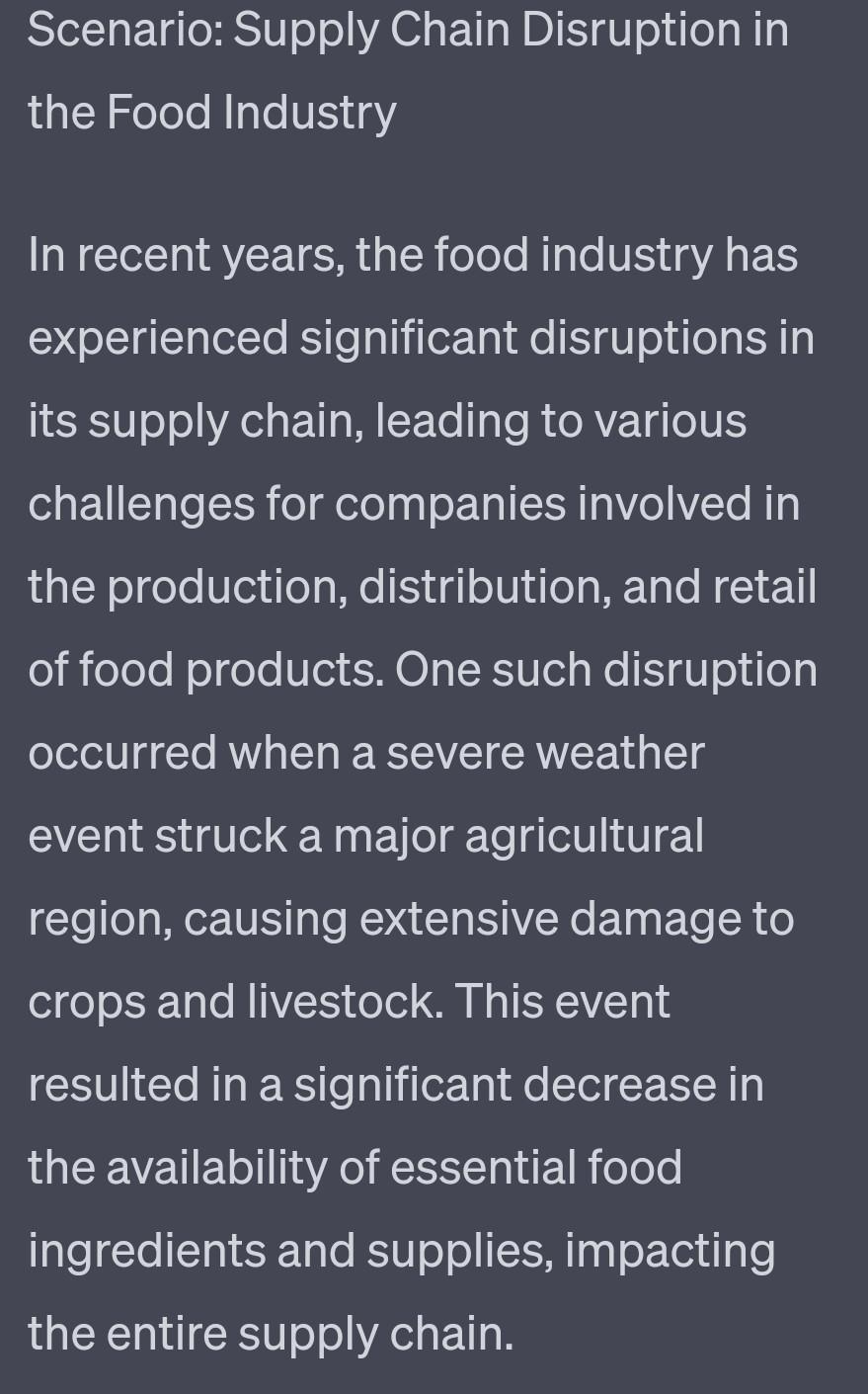
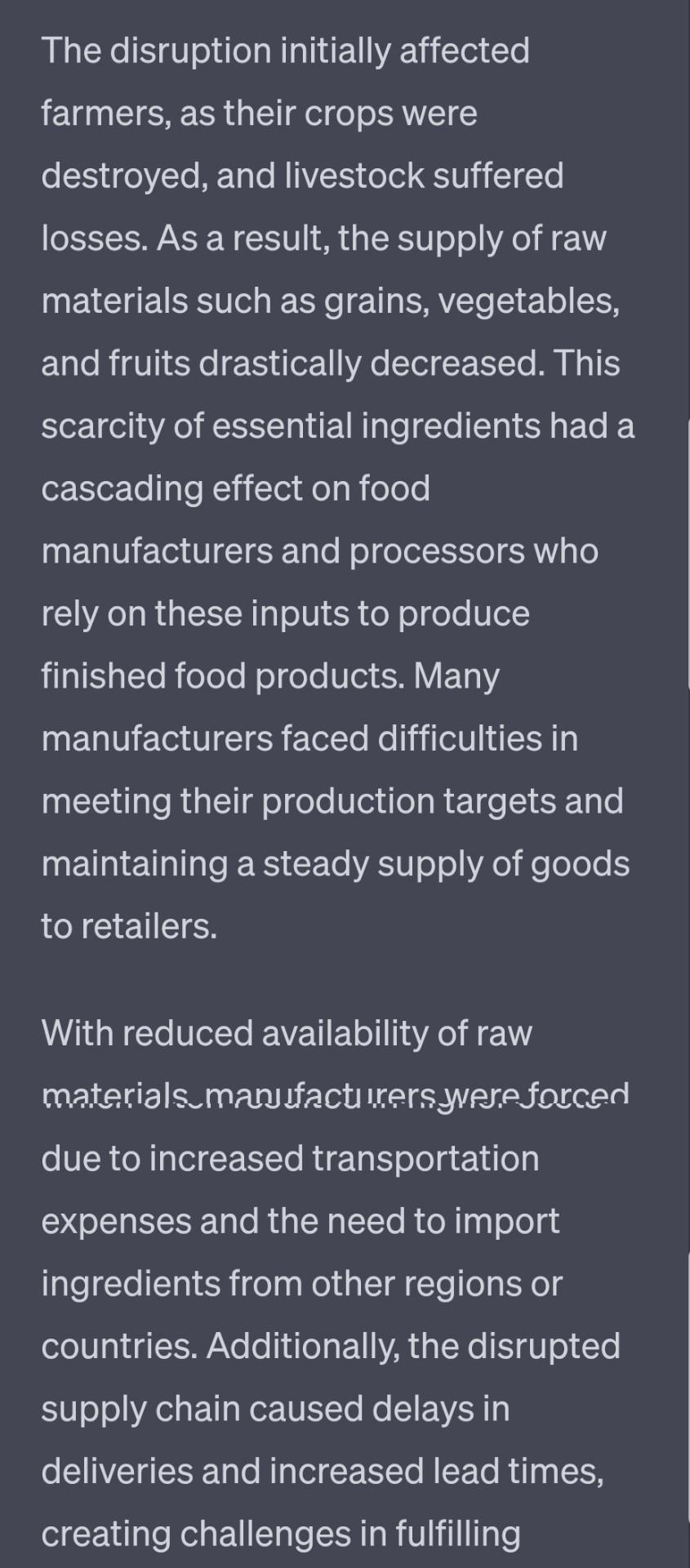
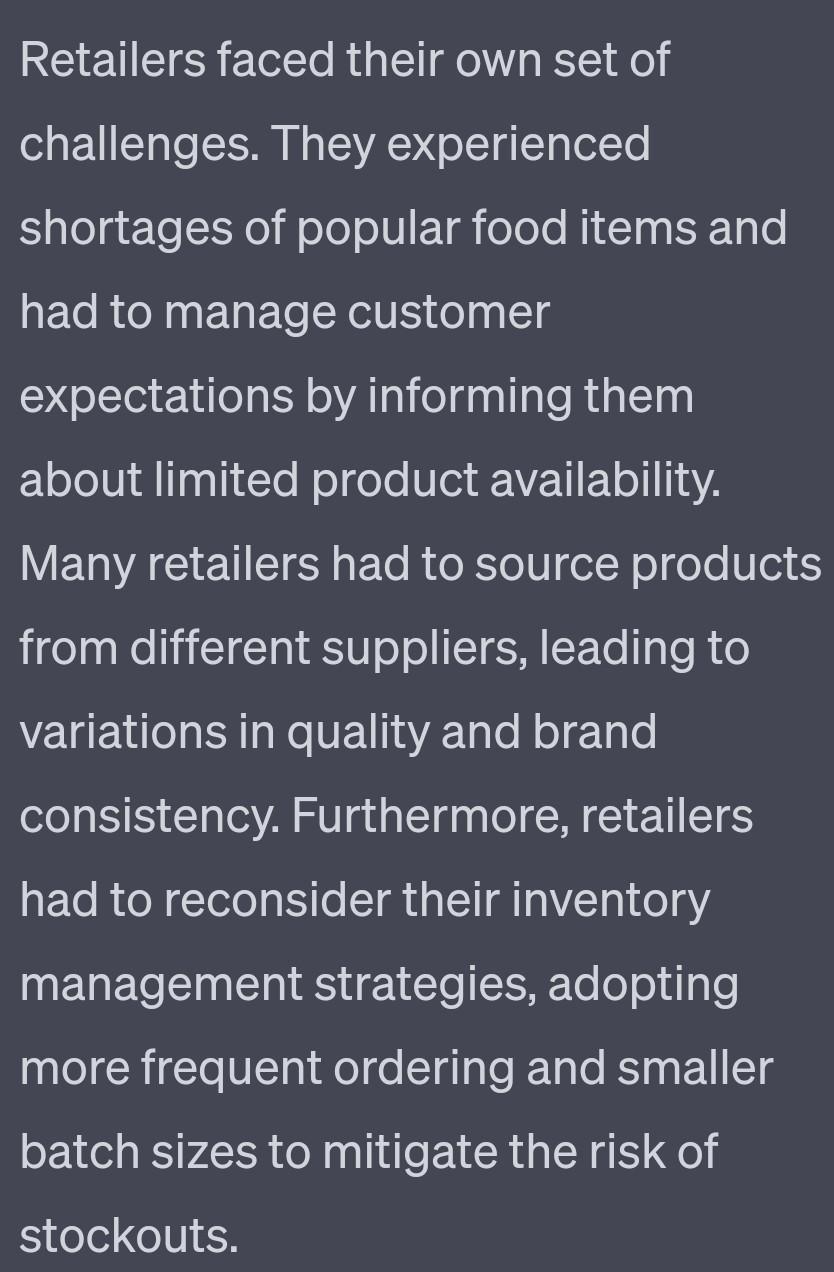
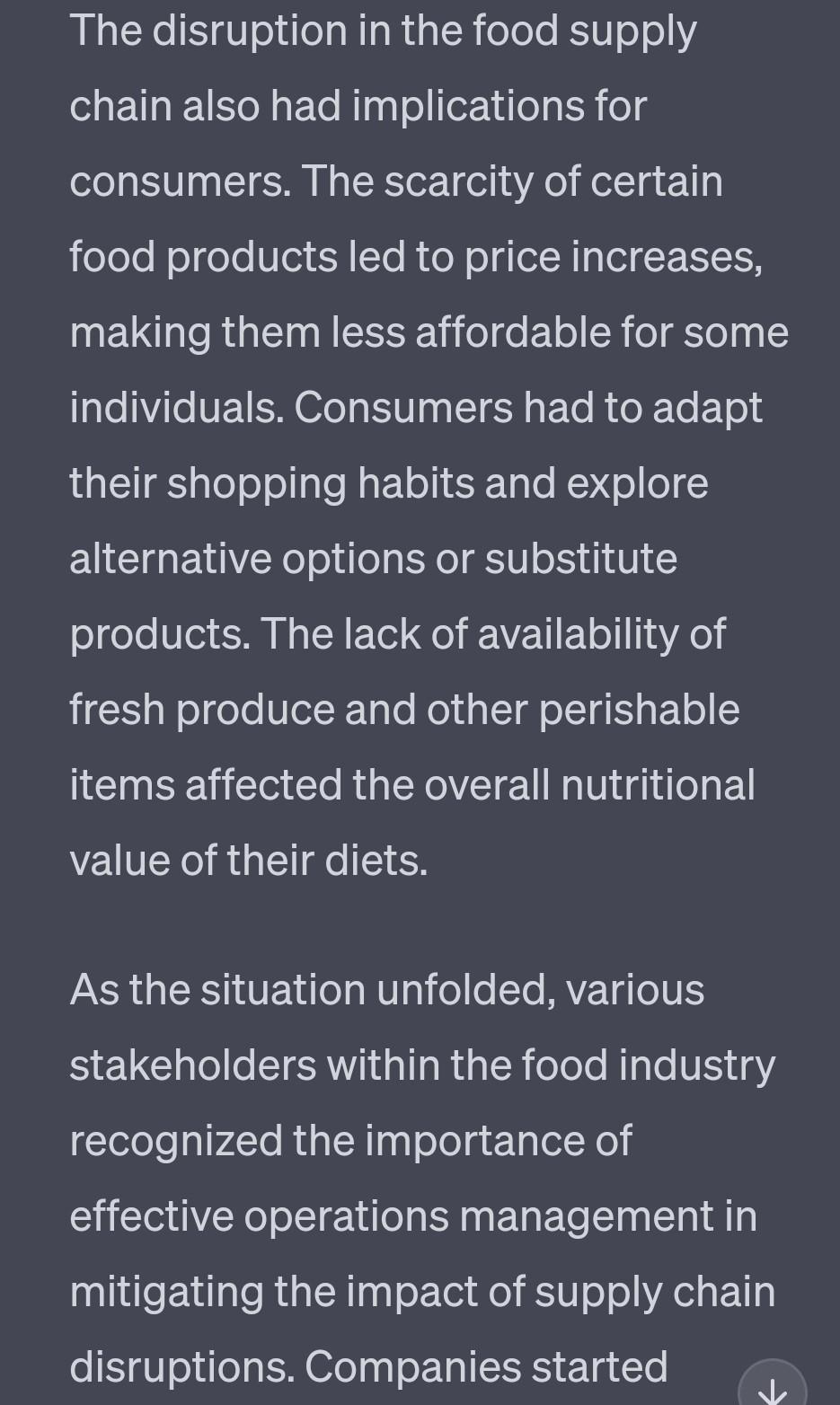
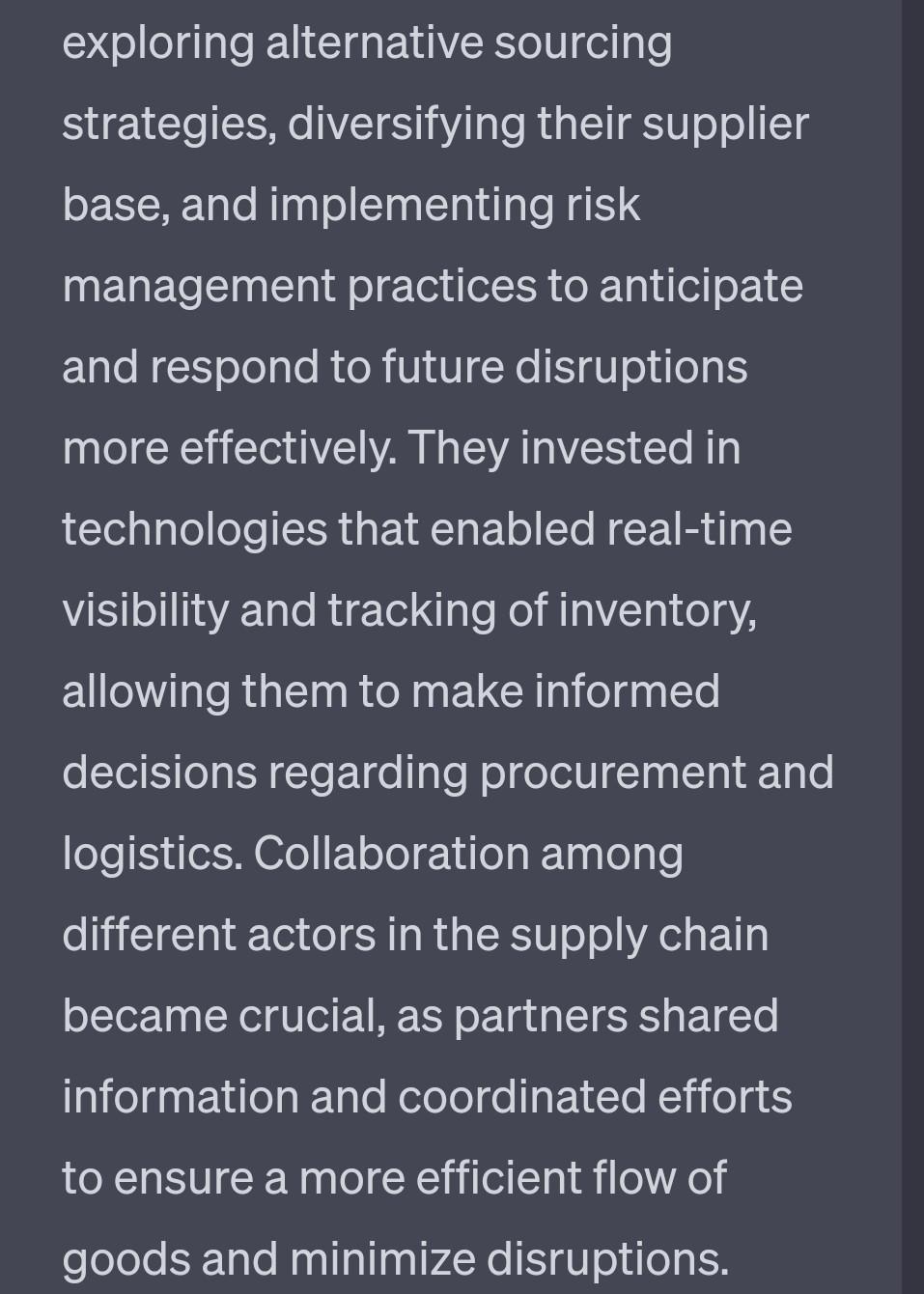
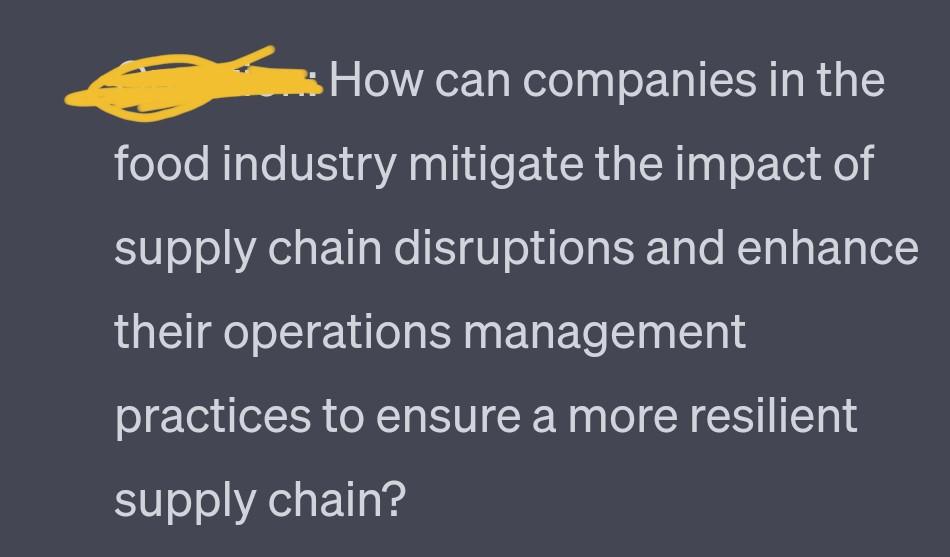
Tammanting anamano Scenario: Supply Chain Disruption in the Food Industry In recent years, the food industry has experienced significant disruptions in its supply chain, leading to various challenges for companies involved in the production, distribution, and retail of food products. One such disruption occurred when a severe weather event struck a major agricultural region, causing extensive damage to crops and livestock. This event resulted in a significant decrease in the availability of essential food ingredients and supplies, impacting the entire supply chain. The disruption initially affected farmers, as their crops were destroyed, and livestock suffered losses. As a result, the supply of raw materials such as grains, vegetables, and fruits drastically decreased. This scarcity of essential ingredients had a cascading effect on food manufacturers and processors who rely on these inputs to produce finished food products. Many manufacturers faced difficulties in meeting their production targets and maintaining a steady supply of goods to retailers. With reduced availability of raw materials manufactu irers were forced due to increased transportation expenses and the need to import ingredients from other regions or countries. Additionally, the disrupted supply chain caused delays in deliveries and increased lead times, creating challenges in fulfilling The disruption initially affected farmers, as their crops were destroyed, and livestock suffered losses. As a result, the supply of raw materials such as grains, vegetables, and fruits drastically decreased. This scarcity of essential ingredients had a cascading effect on food manufacturers and processors who rely on these inputs to produce finished food products. Many manufacturers faced difficulties in meeting their production targets and maintaining a steady supply of goods to retailers. With reduced availability of raw materials man ufactu urers yere forcen due to increased transportation expenses and the need to import ingredients from other regions or countries. Additionally, the disrupted supply chain caused delays in deliveries and increased lead times, creating challenges in fulfilling Retailers faced their own set of challenges. They experienced shortages of popular food items and had to manage customer expectations by informing them about limited product availability. Many retailers had to source products from different suppliers, leading to variations in quality and brand consistency. Furthermore, retailers had to reconsider their inventory management strategies, adopting more frequent ordering and smaller batch sizes to mitigate the risk of stockouts. The disruption in the food supply chain also had implications for consumers. The scarcity of certain food products led to price increases, making them less affordable for some individuals. Consumers had to adapt their shopping habits and explore alternative options or substitute products. The lack of availability of fresh produce and other perishable items affected the overall nutritional value of their diets. As the situation unfolded, various stakeholders within the food industry recognized the importance of effective operations management in mitigating the impact of supply chain disruptions. Companies started exploring alternative sourcing strategies, diversifying their supplier base, and implementing risk management practices to anticipate and respond to future disruptions more effectively. They invested in technologies that enabled real-time visibility and tracking of inventory, allowing them to make informed decisions regarding procurement and logistics. Collaboration among different actors in the supply chain became crucial, as partners shared information and coordinated efforts to ensure a more efficient flow of goods and minimize disruptions. How can companies in the food industry mitigate the impact of supply chain disruptions and enhance their operations management practices to ensure a more resilient supply chain
Step by Step Solution
There are 3 Steps involved in it

Get step-by-step solutions from verified subject matter experts
 Study Help