Question: Please help me. This is the only information I have on this case But I also provide a chapter summary that I think might help.
Please help me.
This is the only information I have on this case But I also provide a chapter summary that I think might help.
IRAC Case Analysis
Issue(s) - These issues are questions one might ask regarding how the law applies to the problem.
Rules What are the laws/rules that you think may apply to the issues.
Analysis This is where the writer either proves or disproves the application of the rules. This is a major focus of the paper.critical thinking must be applied.
Conclusion What do you think needs to be done, and why. What are the learnings from this case
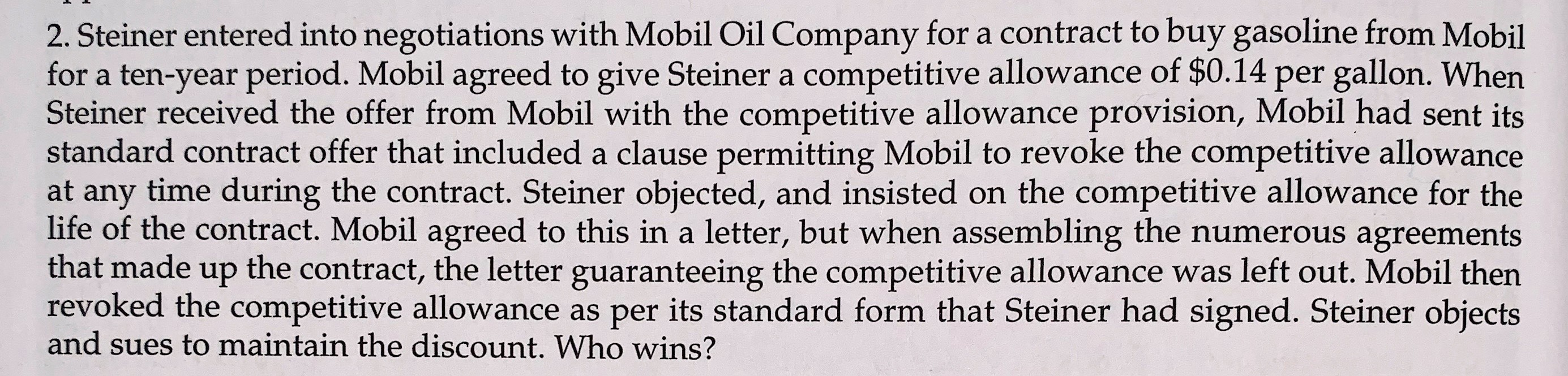
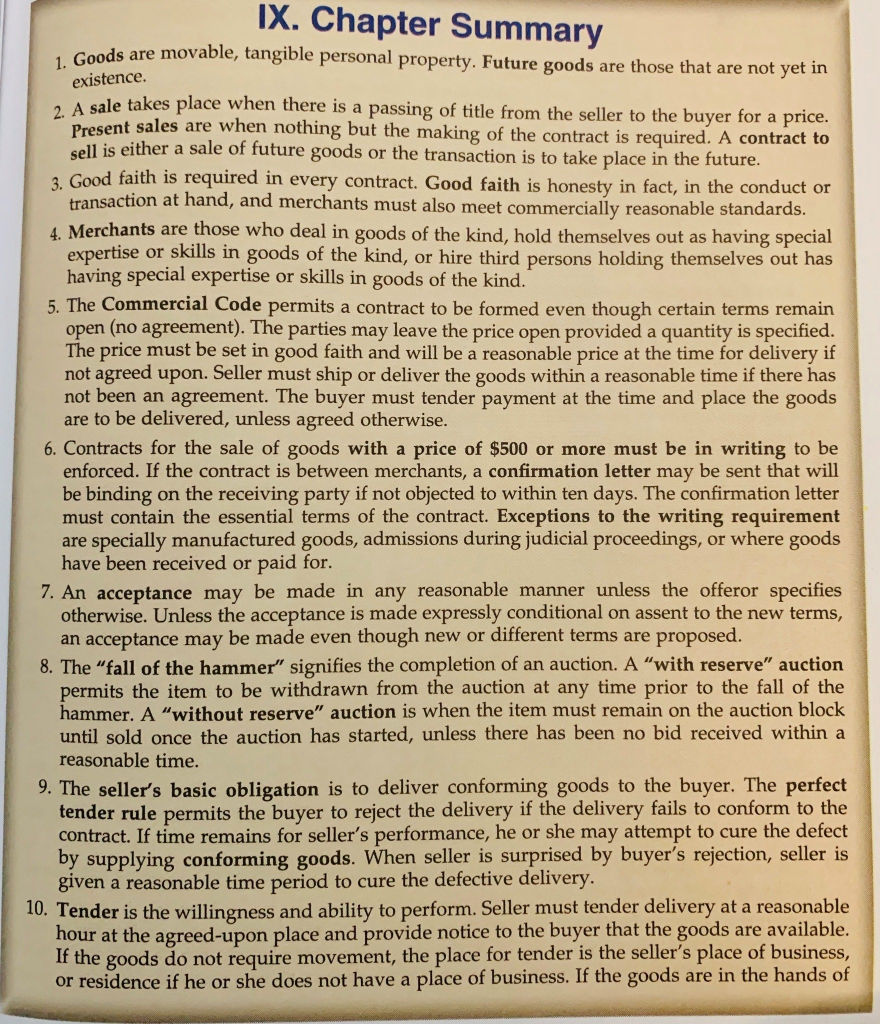
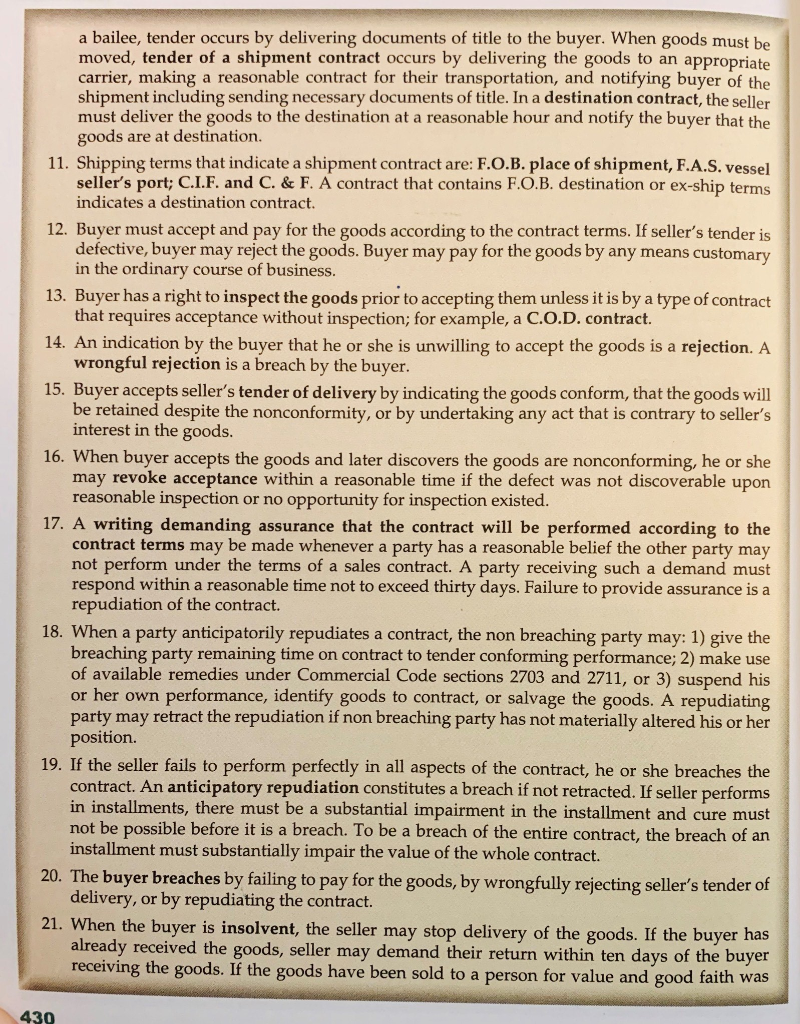
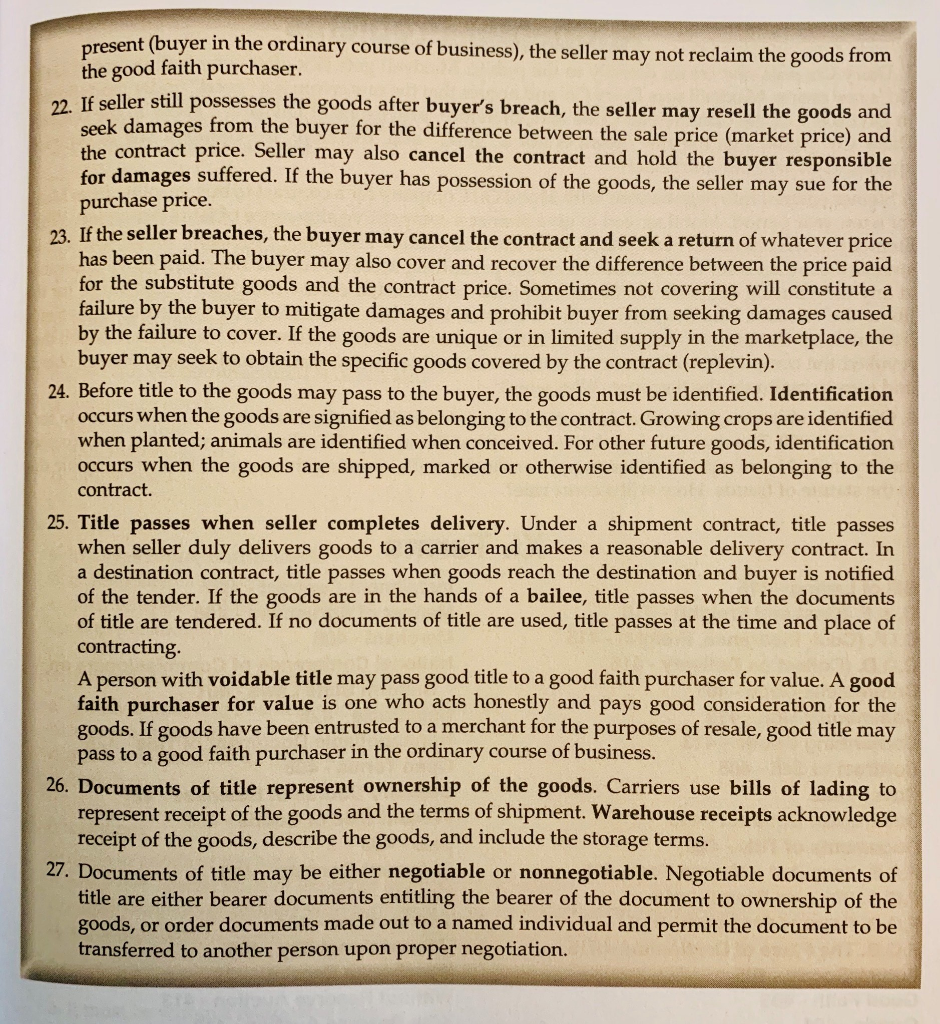
2. Steiner entered into negotiations with Mobil Oil Company for a contract to buy gasoline from Mobil for a ten-year period. Mobil agreed to give Steiner a competitive allowance of $0.14 per gallon. When Steiner received the offer from Mobil with the competitive allowance provision, Mobil had sent its standard contract offer that included a clause permitting Mobil to revoke the competitive allowance at any time during the contract. Steiner objected, and insisted on the competitive allowance for the life of the contract. Mobil agreed to this in a letter, but when assembling the numerous agreements that made up the contract, the letter guaranteeing the competitive allowance was left out. Mobil then revoked the competitive allowance as per its standard form that Steiner had signed. Steiner objects and sues to maintain the discount. Who wins? IX. Chapter Summary ods are movable, tangible personal property. Future goods are those that are not yet in existence. A sale takes place when there is a passing of title from the seller to the buyer for a price. Present sales are when nothing but the making of the contract is required. A contract to sell is either a sale of future goods or the transaction is to take place in the future. 3 Good faith is required in every contract. Good faith is honesty in fact, in the conduct or transaction at hand, and merchants must also meet commercially reasonable standards. 4. Merchants are those who deal in goods of the kind, hold themselves out as having special expertise or skills in goods of the kind, or hire third persons holding themselves out has having special expertise or skills in goods of the kind. 5. The Commercial Code permits a contract to be formed even though certain terms remain open (no agreement). The parties may leave the price open provided a quantity is specified. The price must be set in good faith and will be a reasonable price at the time for delivery if not agreed upon. Seller must ship or deliver the goods within a reasonable time if there has not been an agreement. The buyer must tender payment at the time and place the goods are to be delivered, unless agreed otherwise. 6. Contracts for the sale of goods with a price of $500 or more must be in writing to be enforced. If the contract is between merchants, a confirmation letter may be sent that will be binding on the receiving party if not objected to within ten days. The confirmation letter must contain the essential terms of the contract. Exceptions to the writing requirement are specially manufactured goods, admissions during judicial proceedings, or where goods have been received or paid for. 7. An acceptance may be made in any reasonable manner unless the offeror specifies otherwise. Unless the acceptance is made expressly conditional on assent to the new terms, an acceptance may be made even though new or different terms are proposed. 8. The "fall of the hammer" signifies the completion of an auction. A "with reserve" auction permits the item to be withdrawn from the auction at any time prior to the fall of the hammer. A "without reserve" auction is when the item must remain on the auction block until sold once the auction has started, unless there has been no bid received within a reasonable time. 9. The seller's basic obligation is to deliver conforming goods to the buyer. The perfect tender rule permits the buyer to reject the delivery if the delivery fails to conform to the contract. If time remains for seller's performance, he or she may attempt to cure the defect by supplying conforming goods. When seller is surprised by buyer's rejection, seller is given a reasonable time period to cure the defective delivery. 10. Tender is the willingness and ability to perform. Seller must tender delivery at a reasonable hour at the agreed-upon place and provide notice to the buyer that the goods are available. If the goods do not require movement, the place for tender is the seller's place of business, or residence if he or she does not have a place of business. If the goods are in the hands of a bailee, tender occurs by delivering documents of title to the buyer. When goods must be moved, tender of a shipment contract occurs by delivering the goods to an appropriate carrier, making a reasonable contract for their transportation, and notifying buyer of the shipment including sending necessary documents of title. In a destination contract, the seller must deliver the goods to the destination at a reasonable hour and notify the buyer that the goods are at destination. 11. Shipping terms that indicate a shipment contract are: F.O.B. place of shipment, F.A.S. vessel seller's port; C.I.F. and C. & F. A contract that contains F.O.B. destination or ex-ship terms indicates a destination contract. 12. Buyer must accept and pay for the goods according to the contract terms. If seller's tender is defective, buyer may reject the goods. Buyer may pay for the goods by any means customary in the ordinary course of business. 13. Buyer has a right to inspect the goods prior to accepting them unless it is by a type of contract that requires acceptance without inspection; for example, a C.O.D. contract. 14. An indication by the buyer that he or she is unwilling to accept the goods is a rejection. A wrongful rejection is a breach by the buyer. 15. Buyer accepts seller's tender of delivery by indicating the goods conform, that the goods will be retained despite the nonconformity, or by undertaking any act that is contrary to seller's interest in the goods. 16. When buyer accepts the goods and later discovers the goods are nonconforming, he or she may revoke acceptance within a reasonable time if the defect was not discoverable upon reasonable inspection or no opportunity for inspection existed. 17. A writing demanding assurance that the contract will be performed according to the contract terms may be made whenever a party has a reasonable belief the other party may not perform under the terms of a sales contract. A party receiving such a demand must respond within a reasonable time not to exceed thirty days. Failure to provide assurance is a repudiation of the contract. 18. When a party anticipatorily repudiates a contract, the non breaching party may: 1) give the breaching party remaining time on contract to tender conforming performance; 2) make use of available remedies under Commercial Code sections 2703 and 2711, or 3) suspend his or her own performance, identify goods to contract, or salvage the goods. A repudiating party may retract the repudiation if non breaching party has not materially altered his or her position. 19. If the seller fails to perform perfectly in all aspects of the contract, he or she breaches the contract. An anticipatory repudiation constitutes a breach if not retracted. If seller performs in installments, there must be a substantial impairment in the installment and cure must not be possible before it is a breach. To be a breach of the entire contract, the breach of an installment must substantially impair the value of the whole contract. 20. The buyer breaches by failing to pay for the goods, by wrongfully rejecting seller's tender of delivery, or by repudiating the contract. 21. When the buyer is insolvent, the seller may stop delivery of the goods. If the buyer has already received the goods, seller may demand their return within ten days of the buyer receiving the goods. If the goods have been sold to a person for value and good faith was 430 present (buyer in the ordinary course of business), the seller may not reclaim the goods from the good faith purchaser. 22. If seller still possesses the goods after buyer's breach, the seller may resell the goods and seek damages from the buyer for the difference between the sale price (market price) and the contract price. Seller may also cancel the contract and hold the buyer responsible for damages suffered. If the buyer has possession of the goods, the seller may sue for the purchase price. 23. If the seller breaches, the buyer may cancel the contract and seek a return of whatever price has been paid. The buyer may also cover and recover the difference between the price paid for the substitute goods and the contract price. Sometimes not covering will constitute a failure by the buyer to mitigate damages and prohibit buyer from seeking damages caused by the failure to cover. If the goods are unique or in limited supply in the marketplace, the buyer may seek to obtain the specific goods covered by the contract (replevin). 24. Before title to the goods may pass to the buyer, the goods must be identified. Identification occurs when the goods are signified as belonging to the contract. Growing crops are identified when planted; animals are identified when conceived. For other future goods, identification occurs when the goods are shipped, marked or otherwise identified as belonging to the contract. 25. Title passes when seller completes delivery. Under a shipment contract, title passes when seller duly delivers goods to a carrier and makes a reasonable delivery contract. In a destination contract, title passes when goods reach the destination and buyer is notified of the tender. If the goods are in the hands of a bailee, title passes when the documents of title are tendered. If no documents of title are used, title passes at the time and place of contracting. A person with voidable title may pass good title to a good faith purchaser for value. A good faith purchaser for value is one who acts honestly and pays good consideration for the goods. If goods have been entrusted to a merchant for the purposes of resale, good title may pass to a good faith purchaser in the ordinary course of business. 26. Documents of title represent ownership of the goods. Carriers use bills of lading to represent receipt of the goods and the terms of shipment. Warehouse receipts acknowledge receipt of the goods, describe the goods, and include the storage terms. 27. Documents of title may be either negotiable or nonnegotiable. Negotiable documents of title are either bearer documents entitling the bearer of the document to ownership of the goods, or order documents made out to a named individual and permit the document to be transferred to another person upon proper negotiation









 Study Help