







Question: please help me to create a java project assignment on eclipse. Please read the instructions carefully and make sure they will passed all the sanity
please help me to create a java project assignment on eclipse. Please read the instructions carefully and make sure they will passed all the sanity check on the website.
 this is the two given java pages please do not modify it.
this is the List.java
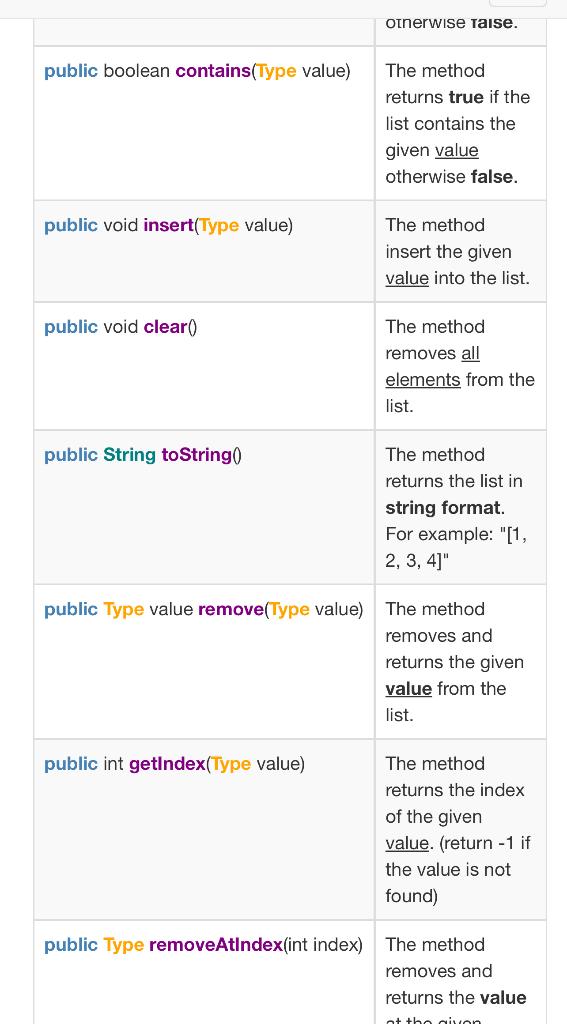
import java.util.Iterator; /** * Represents List interface. * * @author Varik Hoang * @version Sep 26, 2016 * @paramis of any object type. */ public interface List { /** * The method returns the current number of elements in the list. * * @return the current number of elements in the list greater than or equal 0 */ public int getSize(); /** * The method returns whether the list is empty. * * @return true if list is empty, false otherwise. */ public boolean isEmpty(); /** * The method returns whether value is in the list. * * @param value the value is assigned * @return true if value in the list, false otherwise. */ public boolean contains(Type value); /** * The method inserts an element into the list. * * @param value the value is assigned */ public void insert(Type value); /** * The method clears the list. */ public void clear(); /** * The method returns a string representation of list contents. * * @return a string representation of list contents. * @see Object#toString() */ @Override public String toString(); /** * /** * The method removes first element occurrence from the list. * * @param value the value is assigned * @return the removed value */ public Type remove(Type value); /** * The method returns the index of value. * * @param value the value is assigned. * @return the index of value if in the list, -1 otherwise. */ public int getIndex(Type value); /** * The method removes value at the given index. * * @param index the index must be in range of 0 and size * @return the removed value * @throws IndexOutOfBoundsException if index less than 0 or index greater than * or equal size */ public Type removeAtIndex(int index); /** * The method replaces the value at the given index with the given value. * * @param index the index must be in range of 0 and size * @param value the value is assigned * @throws IndexOutOfBoundsException if index less 0 or index greater than size */ public void set(int index, Type value); /** * Returns the value at the given index in the list. * * @param index the index must be in range of 0 and size * @throws IndexOutOfBoundsException if index less than 0 or greater size * @return the value at the given index in the list. */
The AbstractList.java
import java.util.Iterator; import java.util.NoSuchElementException; /** * The abstract class provides basic structure of the circular * linked list with the tail and size references * * @author Varik Hoang* * @param is any object type */ public abstract class AbstractList implements List { /** * The reference to the last element */ protected ListNode tail; /** * The size of the list */ protected int size; /** * The constructor that initiate the tail and size references */ public AbstractList() { tail = null; size = 0; } @Override public int getSize() { return size; } @Override public boolean isEmpty() { return size == 0; } @Override public int getIndex(final Type value) { if (value == null) throw new NullPointerException("The value could not be null"); if (tail == null) return -1; ListNode current = tail.next; // point to head for (int index = 0; index current = tail.next; // head node while (current != tail) { builder.append(current.data).append(",").append(" "); current = current.next; } builder.append(tail.data); builder.append("]"); return builder.toString(); } /** * Returns an iterator for this list. * * @return an iterator for the list. */ public Iterator iterator() { return new LinkedIterator(); } /** * Represents a list node. * * @author Building Java Programs 3rd ed. * @param is of any object type */ protected static class ListNode { /** * Data stored in this node. */ public final Type data; /** * Link to next node in the list. */ public ListNode next; /** * Constructs a node with given data and a null link. * * @param data assigned */ public ListNode(Type data) { this(data, null); } /** * Constructs a node with given data and given link. * * @param data assigned * @param next assigned */ public ListNode(Type data, ListNode next) { this.data = data; this.next = next; } /** * The method returns the generic data type as string */ public String toString() { return this.data.toString(); } } /** * The iterator class for the list. * * @author modified from BuildingJavaPrograms 3rd Edition */ public class LinkedIterator implements Iterator { /** * Location of current value to return. */ private ListNode current; /** * The flag that tells if the first node has been visited. */ private boolean visited; /** * Constructs an iterator for the given list. */ public LinkedIterator() { reset(); } /** * Returns whether there are more list elements. * * @return true if there are more elements left, false otherwise * @see java.util.Iterator#hasNext() */ public boolean hasNext() { if (tail != null) return !(current == tail.next && visited); else return false; } /** * Returns the next element in the iteration. * * @throws NoSuchElementException if no more elements. * @return the next element in the iteration. * @see java.util.Iterator#next() */ public Type next() { if (!hasNext()) { throw new NoSuchElementException(); } Type result = current.data; current = current.next; visited = true; return result; } /** * This method is not supported */ public void remove() { throw new IllegalStateException("This iterator does not support remove operation"); } /** * The method resets back to the beginning. */ public final void reset() { if (tail != null) current = tail.next; visited = false; } } }
Please help me make both of the unsortedList.java and the sortedList.java pages they both need to follow the TODO tags to implement the methods. Please make sure they all met with the requirements on the instructions.
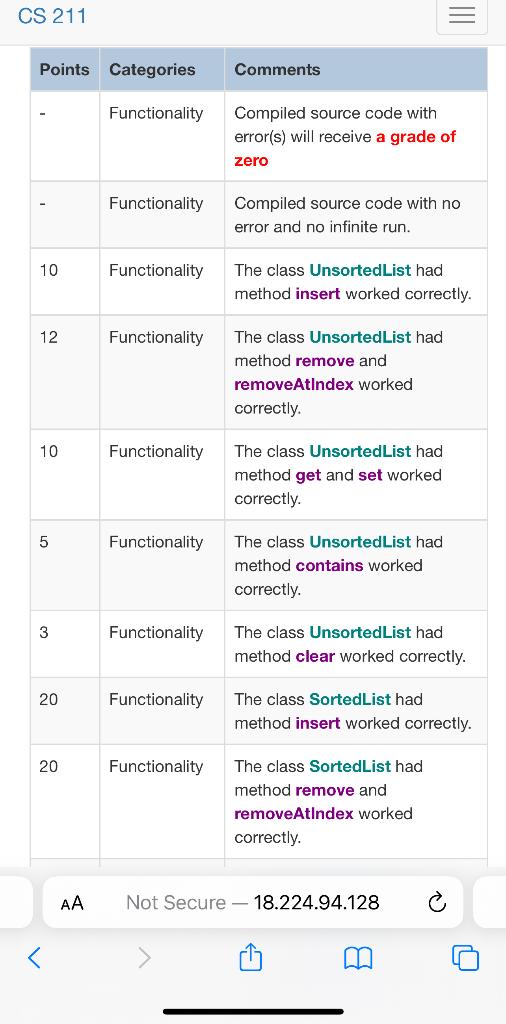
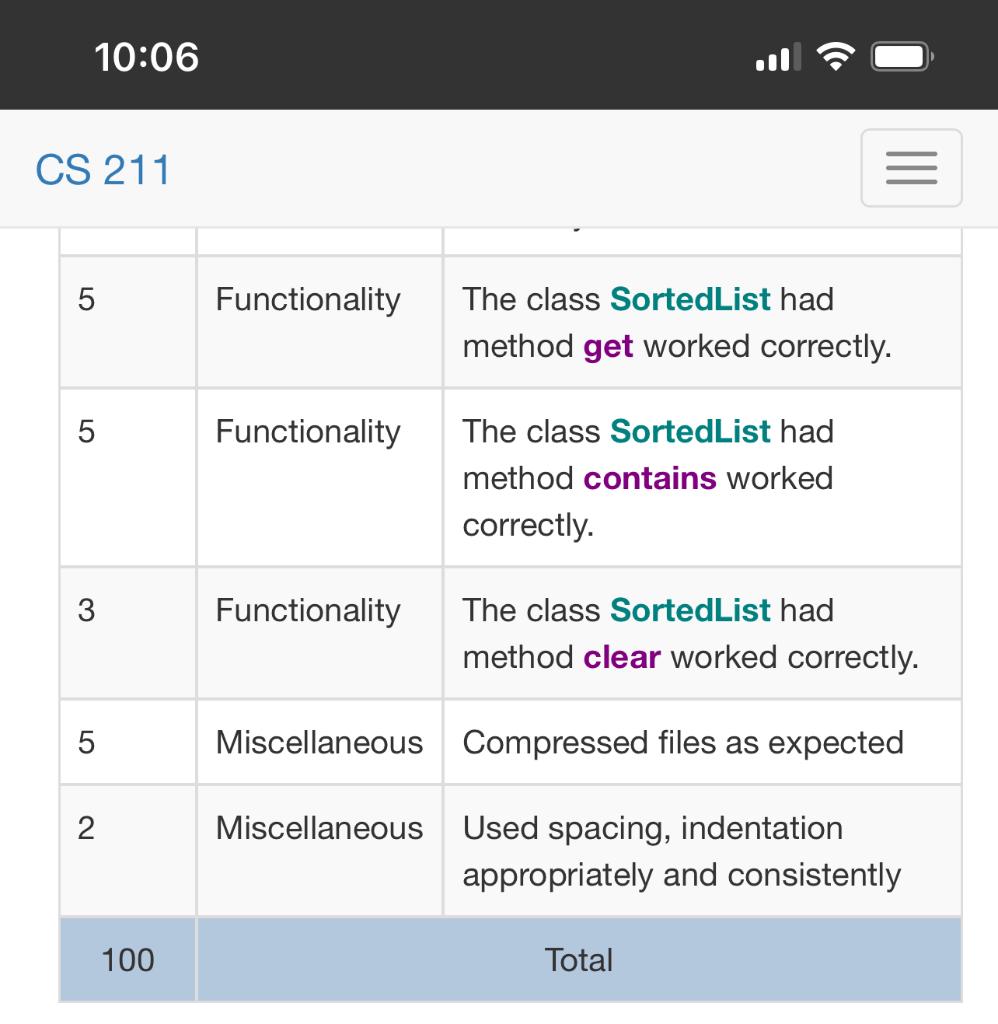
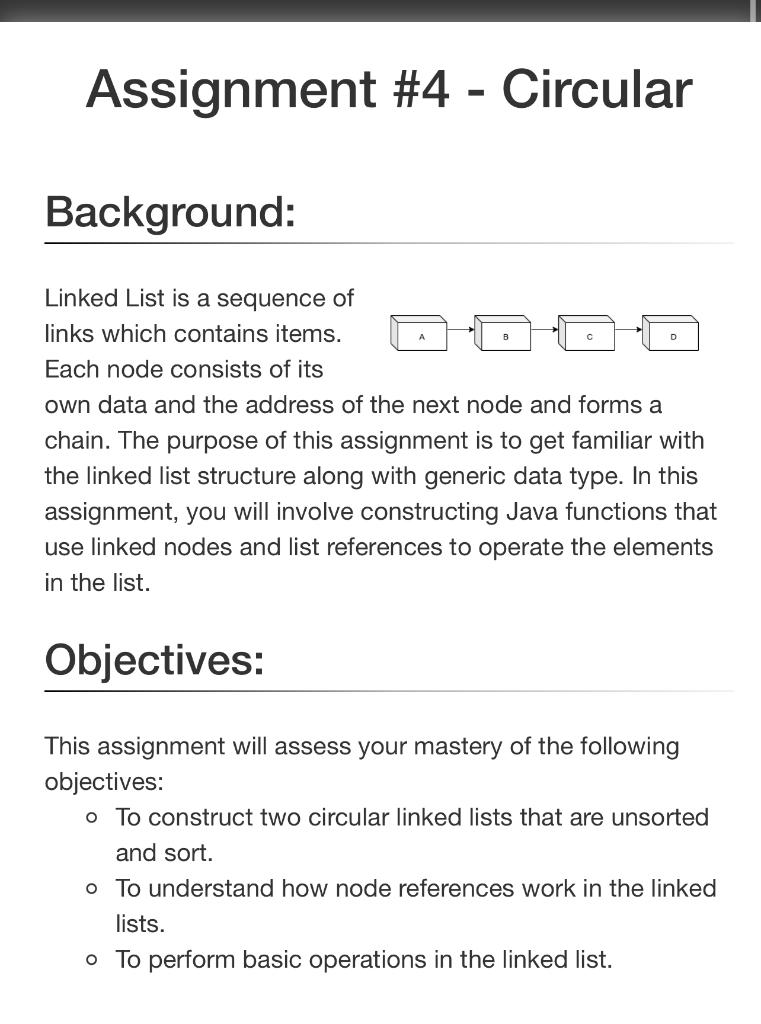
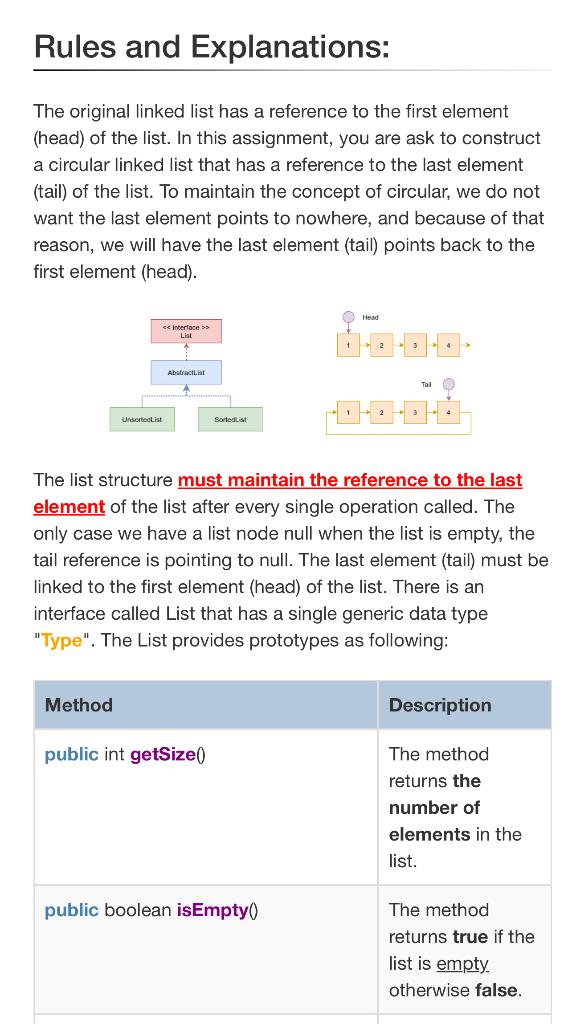
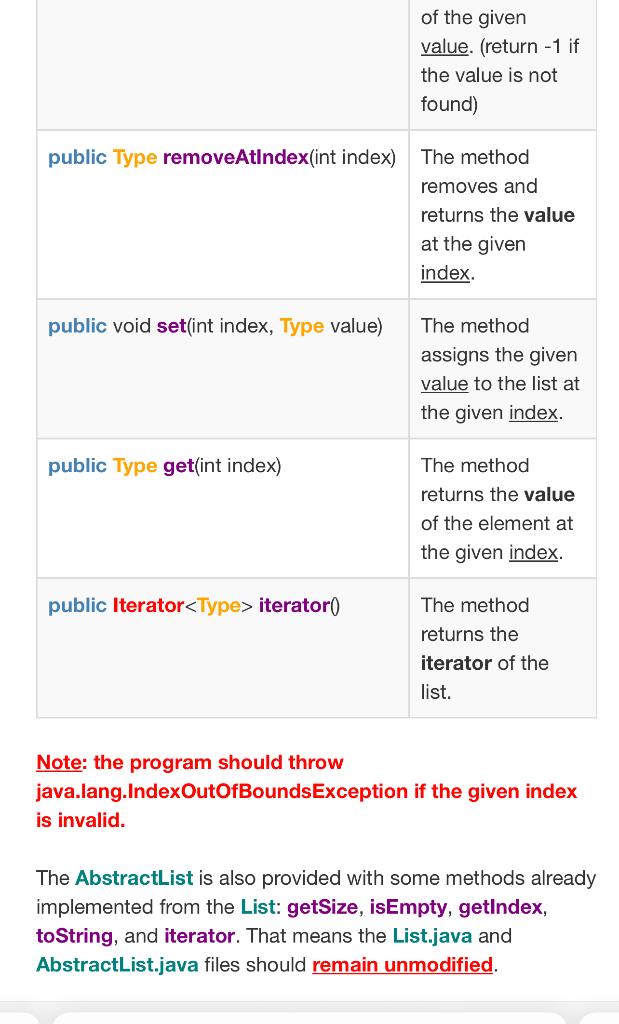
Assignment \#4 - Circular Background: Linked List is a sequence of links which contains items. Each node consists of its own data and the address of the next node and forms a chain. The purpose of this assignment is to get familiar with the linked list structure along with generic data type. In this assignment, you will involve constructing Java functions that use linked nodes and list references to operate the elements in the list. Objectives: This assignment will assess your mastery of the following objectives: - To construct two circular linked lists that are unsorted and sort. - To understand how node references work in the linked lists. - To perform basic operations in the linked list. The original linked list has a reference to the first element (head) of the list. In this assignment, you are ask to construct a circular linked list that has a reference to the last element (tail) of the list. To maintain the concept of circular, we do not want the last element points to nowhere, and because of that reason, we will have the last element (tail) points back to the first element (head). The list structure must maintain the reference to the last element of the list after every single operation called. The only case we have a list node null when the list is empty, the tail reference is pointing to null. The last element (tail) must be linked to the first element (head) of the list. There is an interface called List that has a single generic data type "Type". The List provides prototypes as following: of the given value. (return 1 if the value is not found) public Type removeAtindex(int index) The method removes and returns the value at the given index. public void set(int index, Type value) The method assigns the given value to the list at the given index. The method returns the value of the element at the given index. public Iterator iterator 0 The method returns the iterator of the list. Note: the program should throw java.lang.IndexOutOfBoundsException if the given index is invalid. The AbstractList is also provided with some methods already implemented from the List: getSize, isEmpty, getIndex, toString, and iterator. That means the List.java and AbstractList.java files should remain unmodified. CS211 AA Not Secure - 18.224.94.128 10:06 CS 211
Step by Step Solution
There are 3 Steps involved in it

Get step-by-step solutions from verified subject matter experts
 Study Help