please help me with 6,7,8
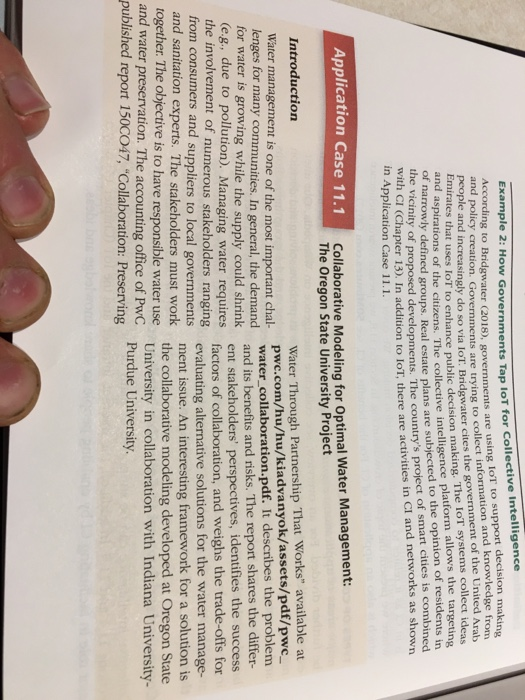
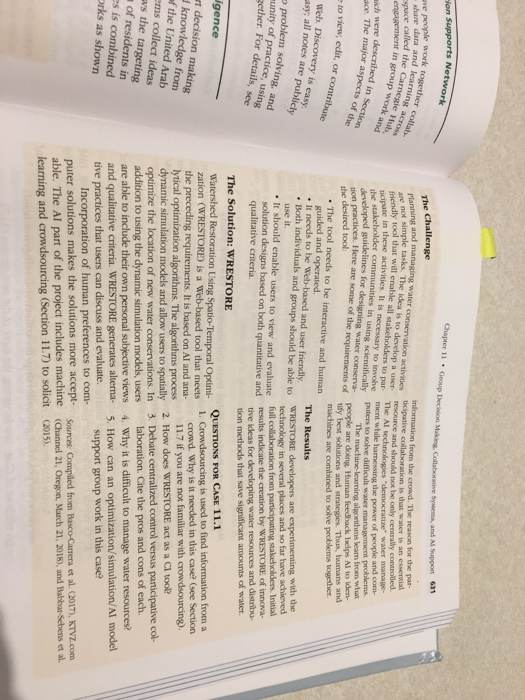
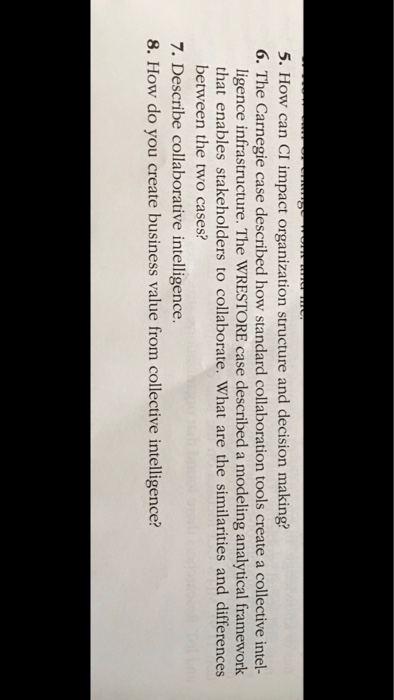
som 5. How can CI impact organization structure and decision making? 6. The Carnegie case described how standard collaboration tools create a collective intel- ligence infrastructure. The WRESTORE case described a modeling analytical framework that enables stakeholders to collaborate. What are the similarities and differences between the two cases? 7. Describe collaborative intelligence. 8. How do you create business value from collective intelligence? According to Bridgwater (2018), so Example 2: How Governments Tap lot for collective Intelligence to Bridgwater (2018), governments are using lot to support decision making y creation Governments are trying to collect information and knowledge from Pe and increasingly do so via IOT Bridgwater cites the government of the United Arab mat uses IoT to enhance public decision making. The IoT systems collect ideas pirations of the citizens. The collective intelligence platform allows the targeting o narrowly defined groups. Real estate plans are subjected to the opinio e opinion of residents in the vicinity of Licinity of proposed developments. The country's project of smart cities is combined (Chapter 13). In addition to loT, there are activities in CI and networks as shown in Application Case 11.1. Application Case 11.1 Collaborative Modeling for Optimal Water Management: The Oregon State University Project Introduction Water Through Partnership That Works" available at Water management is one of the most important chal- pwc.com/hu/hu/kiadvanyok/assets/pdf/pwc_ lenges for many communities. In general, the demand water_collaboration.pdf. It describes the problem for water is growing while the supply could shrink and its benefits and risks. The report shares the differ- (e.g., due to pollution). Managing water requires ent stakeholders' perspectives, identifies the success the involvement of numerous stakeholders ranging factors of collaboration, and weighs the trade-offs for from consumers and suppliers to local governments evaluating alternative solutions for the water manage- and sanitation experts. The stakeholders must work ment issue. An interesting framework for a solution is together. The objective is to have responsible water use the collaborative modeling developed at Oregon State and water preservation. The accounting office of PwC University in collaboration with Indiana University- published report 1500047, "Collaboration: Preserving Purdue University. on Supports Network Chapter 11 . Goup Deco Main Collabo n d Al Support The Challenge ve people people work together Coll share data and learning space called the Carnegie ment in group worl Carnegie Hub up work and ich were described in Sec ce The major aspects of the to view, edit, or contribute web. Discovery is easy sy, all notes are publictv problem solving, and unity of practice, using zether. For details, see igence urt decision making knowledge from of the United Arab ems collect ideas as the targeting of residents in es is combined orks as shown planning and information from the crowd. The reason for the par o simple tasks. The idea is to develop a user mong water conservation activities ticipative collaboration t han wat is endly tool that will enable all stakeholders to par ce and should not be only centrally controlled sipate in these activities. It is necessary to involve The Al technologies "democratie water manage stakeholder communities in using scientifically ment while harnessing the power of people and com- cloped guidelines for designing water conserva- puters to solve difficult wwer management problems practices. Here are some of the requirements of The machine learning algorithms leam from w people are doing Human feedback helps Al to iden- the desired tool: may best solutions and strategies. Thus, tuumans and . The tool needs to be interactive and human machines are combined to solve problems together. guided and operated It needs to be Web-based and user friendly. The Results . Both individuals and groups should be able to WRESTORE developers are experimenting with the use it technology in several places and so far have achieved . It should enable users to view and evaluate full collaboration from participating make olders. Initial soom designs based on both quantitative and results indicate the creation by WRESTORE o no qualitative criteria. tive ideas for developing water resources and distri tion methods that save signilicant amounts of water. The Solution: WRESTORE Watershed Restoration Using Spatio-Temporal Optimi- QUESTIONS FOR CASE 11.1 zation (WRESTORE) is a Web-based tool that meets 1. Crowdsourcing is used to find information from a crowd. Why is it needed in this case? (see Section the preceding requirements. It is based on Al and ana- 11.7 if you are not familiar with crowdsourcing). lytical optimization algorithms. The algorithms process dynamic simulation models and allow users to spatially 2. How does WRESTORE act as a Cl tool? optimize the location of new water conservations. In 3. Debate centralized control versus participative col- addition to using the dynamic simulation models, users laboration. Cite the pros and cons of each. are able to include their own personal subjective views 4. Why it is difficult to manage water resources? and qualitative criteria. WRESTORE generates alterna- 5. How can an optimization/simulation/Al model tive practices that users can discuss and evaluate. support group work in this case? Incorporation of human preferences to com- puter solutions makes the solutions more accept Sources Compiled from Basco-Carrera et al. (2017), KTVZ.com able. The Al part of the project includes machine (Channel 21, Oregon, March 21, 2018), and Baba Sebens et al (2015). learning and crowdsourcing (Section 11.7) to solicit som 5. How can CI impact organization structure and decision making? 6. The Carnegie case described how standard collaboration tools create a collective intel- ligence infrastructure. The WRESTORE case described a modeling analytical framework that enables stakeholders to collaborate. What are the similarities and differences between the two cases? 7. Describe collaborative intelligence. 8. How do you create business value from collective intelligence? According to Bridgwater (2018), so Example 2: How Governments Tap lot for collective Intelligence to Bridgwater (2018), governments are using lot to support decision making y creation Governments are trying to collect information and knowledge from Pe and increasingly do so via IOT Bridgwater cites the government of the United Arab mat uses IoT to enhance public decision making. The IoT systems collect ideas pirations of the citizens. The collective intelligence platform allows the targeting o narrowly defined groups. Real estate plans are subjected to the opinio e opinion of residents in the vicinity of Licinity of proposed developments. The country's project of smart cities is combined (Chapter 13). In addition to loT, there are activities in CI and networks as shown in Application Case 11.1. Application Case 11.1 Collaborative Modeling for Optimal Water Management: The Oregon State University Project Introduction Water Through Partnership That Works" available at Water management is one of the most important chal- pwc.com/hu/hu/kiadvanyok/assets/pdf/pwc_ lenges for many communities. In general, the demand water_collaboration.pdf. It describes the problem for water is growing while the supply could shrink and its benefits and risks. The report shares the differ- (e.g., due to pollution). Managing water requires ent stakeholders' perspectives, identifies the success the involvement of numerous stakeholders ranging factors of collaboration, and weighs the trade-offs for from consumers and suppliers to local governments evaluating alternative solutions for the water manage- and sanitation experts. The stakeholders must work ment issue. An interesting framework for a solution is together. The objective is to have responsible water use the collaborative modeling developed at Oregon State and water preservation. The accounting office of PwC University in collaboration with Indiana University- published report 1500047, "Collaboration: Preserving Purdue University. on Supports Network Chapter 11 . Goup Deco Main Collabo n d Al Support The Challenge ve people people work together Coll share data and learning space called the Carnegie ment in group worl Carnegie Hub up work and ich were described in Sec ce The major aspects of the to view, edit, or contribute web. Discovery is easy sy, all notes are publictv problem solving, and unity of practice, using zether. For details, see igence urt decision making knowledge from of the United Arab ems collect ideas as the targeting of residents in es is combined orks as shown planning and information from the crowd. The reason for the par o simple tasks. The idea is to develop a user mong water conservation activities ticipative collaboration t han wat is endly tool that will enable all stakeholders to par ce and should not be only centrally controlled sipate in these activities. It is necessary to involve The Al technologies "democratie water manage stakeholder communities in using scientifically ment while harnessing the power of people and com- cloped guidelines for designing water conserva- puters to solve difficult wwer management problems practices. Here are some of the requirements of The machine learning algorithms leam from w people are doing Human feedback helps Al to iden- the desired tool: may best solutions and strategies. Thus, tuumans and . The tool needs to be interactive and human machines are combined to solve problems together. guided and operated It needs to be Web-based and user friendly. The Results . Both individuals and groups should be able to WRESTORE developers are experimenting with the use it technology in several places and so far have achieved . It should enable users to view and evaluate full collaboration from participating make olders. Initial soom designs based on both quantitative and results indicate the creation by WRESTORE o no qualitative criteria. tive ideas for developing water resources and distri tion methods that save signilicant amounts of water. The Solution: WRESTORE Watershed Restoration Using Spatio-Temporal Optimi- QUESTIONS FOR CASE 11.1 zation (WRESTORE) is a Web-based tool that meets 1. Crowdsourcing is used to find information from a crowd. Why is it needed in this case? (see Section the preceding requirements. It is based on Al and ana- 11.7 if you are not familiar with crowdsourcing). lytical optimization algorithms. The algorithms process dynamic simulation models and allow users to spatially 2. How does WRESTORE act as a Cl tool? optimize the location of new water conservations. In 3. Debate centralized control versus participative col- addition to using the dynamic simulation models, users laboration. Cite the pros and cons of each. are able to include their own personal subjective views 4. Why it is difficult to manage water resources? and qualitative criteria. WRESTORE generates alterna- 5. How can an optimization/simulation/Al model tive practices that users can discuss and evaluate. support group work in this case? Incorporation of human preferences to com- puter solutions makes the solutions more accept Sources Compiled from Basco-Carrera et al. (2017), KTVZ.com able. The Al part of the project includes machine (Channel 21, Oregon, March 21, 2018), and Baba Sebens et al (2015). learning and crowdsourcing (Section 11.7) to solicit