Question: Please help me with the following question based on the given article, there is only one option that is correct. Please also explain why is
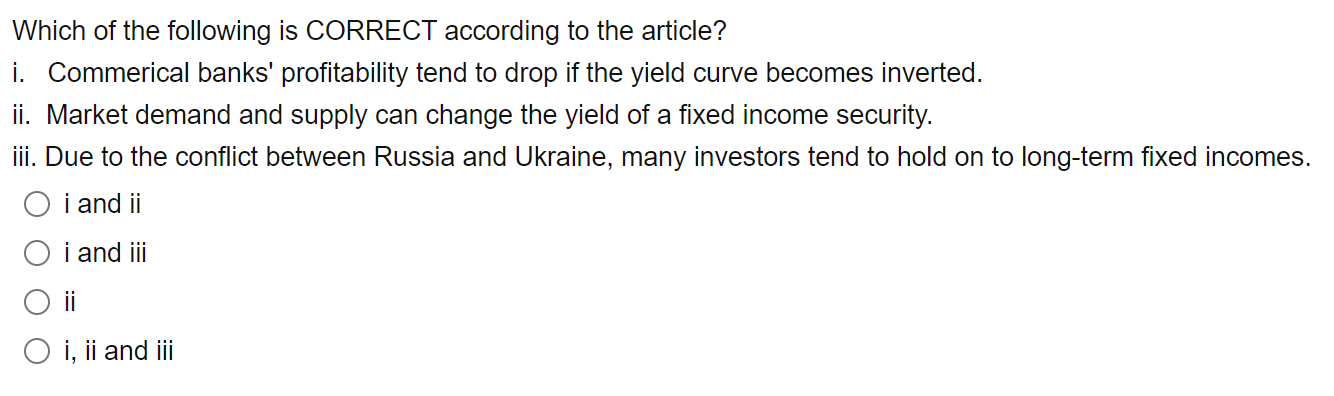
Please help me with the following question based on the given article, there is only one option that is correct. Please also explain why is the option correct and other options are wrong.
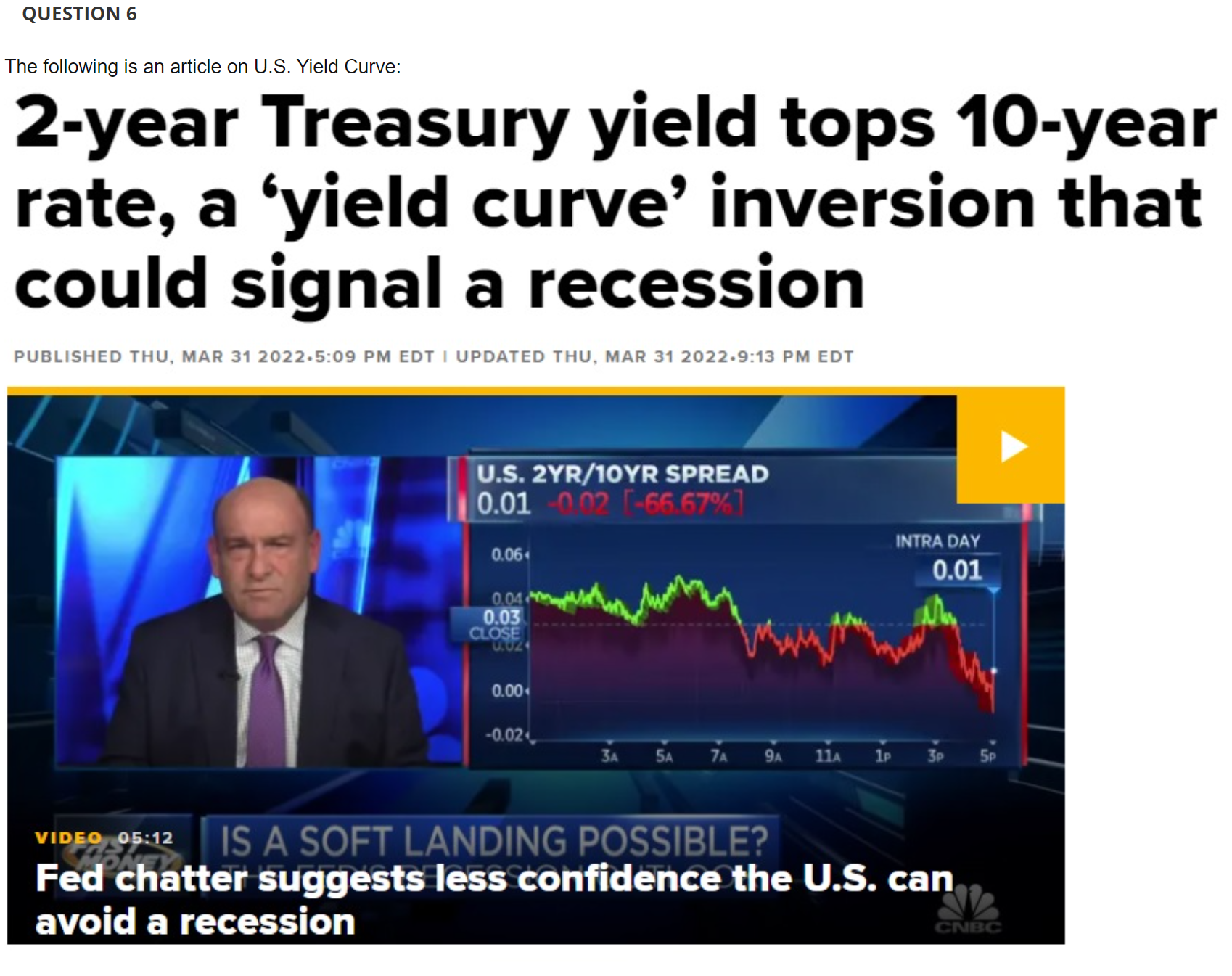
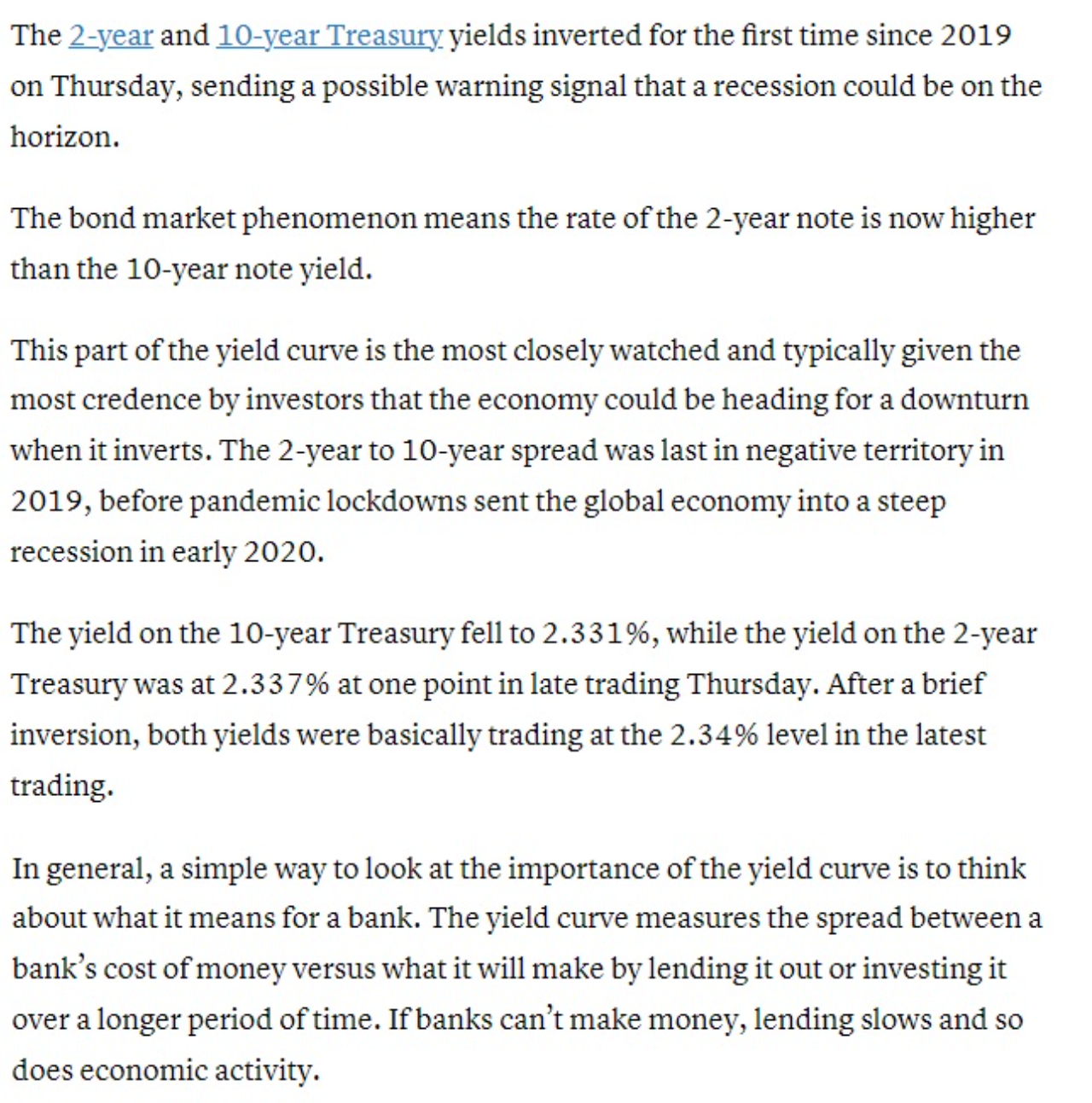
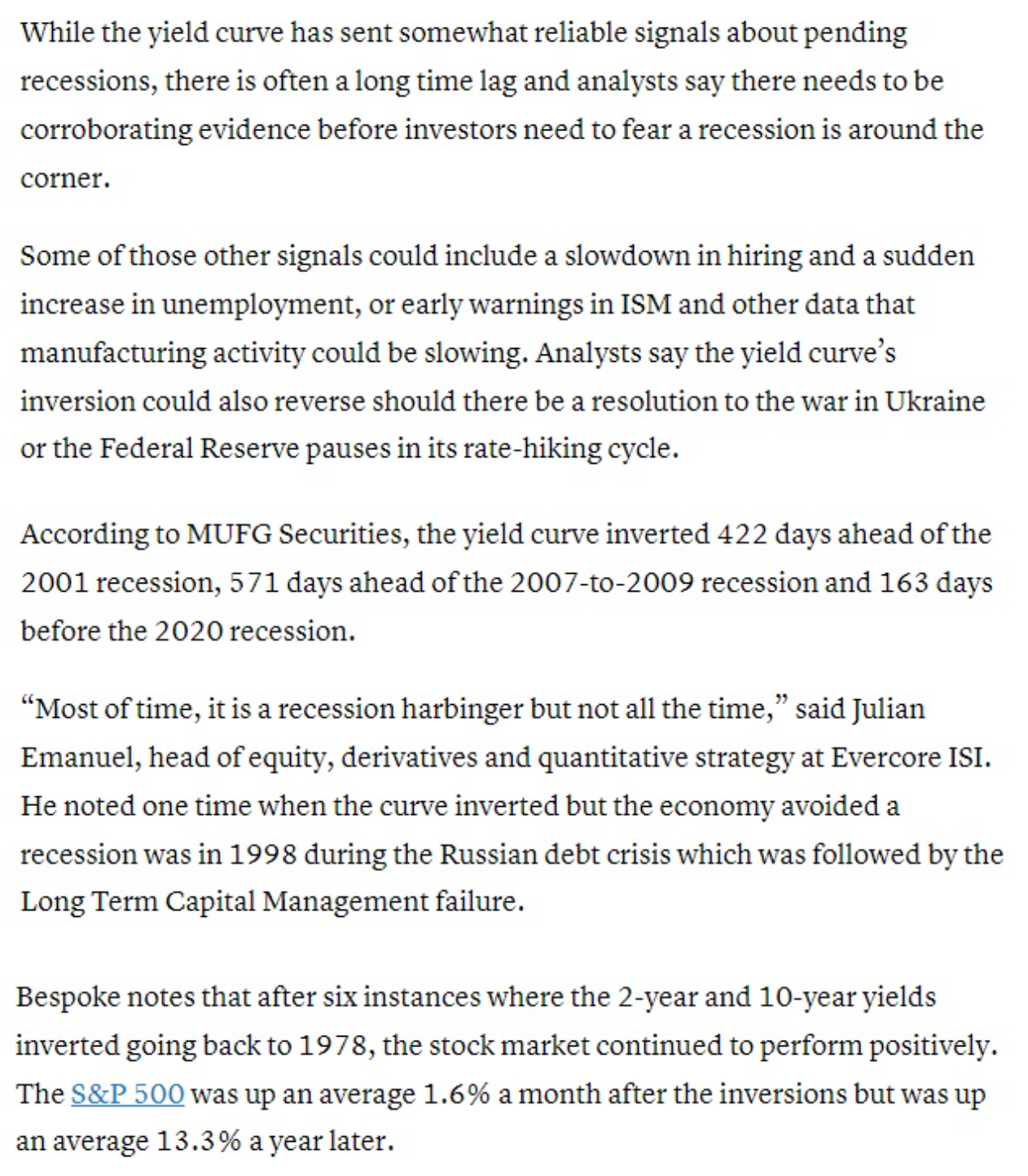
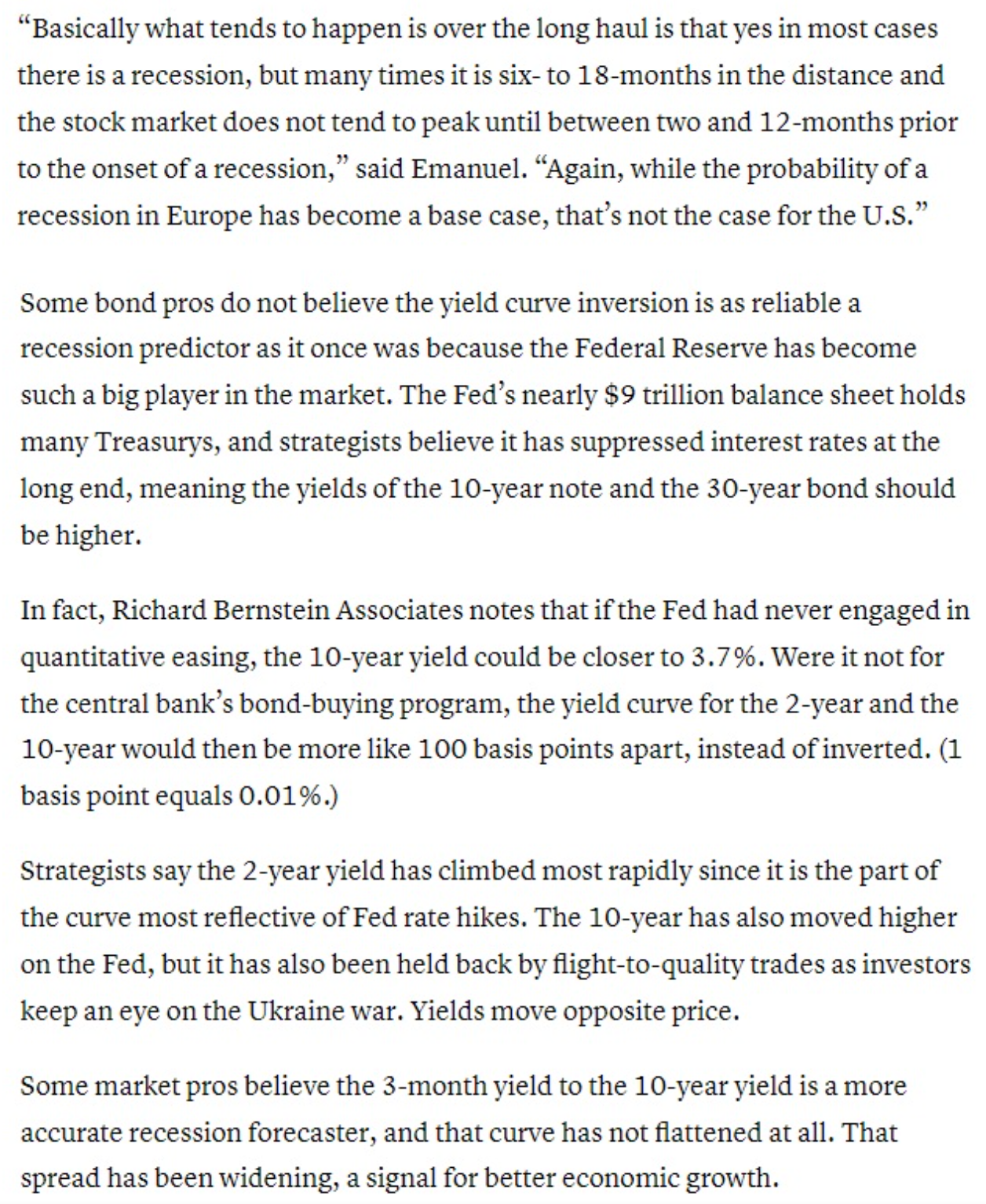
\fThe gear and 10year Treasury yields inverted for the rst time since 2019 on Thursday, sending a possible warning signal that a recession could be on the horizon. The bond market phenomenon means the rate of the 2-year note is now higher than the 10-year note yield. This part of the yield curve is the most closely watched and typically given the most credence by investors that the economy could be heading for a downturn when it inverts. The 2-year to 10-year spread was last in negative territory in 2019, before pandemic lockdowns sent the global economy into a steep recession in early 2020. The yield on the 10-year Treasury fell to 2 . 3 3 1 96, while the yield on the 2year Treasury was at 2 .3 3 7% at one point in late trading Thursday. After a brief inversion, both yields were basically trading at the 2. 34% level in the latest trading. In general, a simple way to look at the importance of the yield curve is to think about what it means for a bank. The yield curve measures the spread between a bank's cost of money versus what it will make by lending it out or investing it over a longer period of time. If banks can't make money, lending slows and so does economic activity. While the yield curve has sent somewhat reliable signals about pending recessions, there is often a long time lag and analysts say there needs to be corroborating evidence before investors need to fear a recession is around the corner. Some of those other signals could include a slowdown in hiring and a sudden increase in unemployment, or early warnings in ISM and other data that manufacturing activity could be slowing. Analysts say the yield curve's inversion could also reverse should there be a resolution to the war in Ukraine or the Federal Reserve pauses in its rate-hiking cycle. According to MUFG Securities, the yield curve inverted 422 days ahead of the 2001 recession, 5 71 days ahead of the 2007-to-2009 recession and 163 days before the 2020 recession. \"Most of time, it is a recession harbinger but not all the time,\" said Julian Emanuel, head of equity, derivatives and quantitative strategy at Evercore 181. He noted one time when the curve inverted but the economy avoided a recession was in 199 8 during the Russian debt crisis which was followed by the Long Term Capital Management failure. Bespoke notes that after six instances where the 2-year and 10-year yields inverted going back to 19 78, the stock market continued to perform positively. The S&P 500 was up an average 1.6% a month after the inversions but was up an average 1 3 .3 96 a year later. \"Basically what tends to happen is over the long haul is that yes in most cases there is a recession, but many times it is six to 18-months in the distance and the stock market does not tend to peak until between two and 12-months prior to the onset of a recession,\" said Emanuel. \"Again, while the probability of a recession in Europe has become a base case, that's not the case for the U.S.\" Some bond pros do not believe the yield curve inversion is as reliable a recession predictor as it once was because the Federal Reserve has become such a big player in the market. The Fed's nearly $9 trillion balance sheet holds many Treasurys, and strategists believe it has suppressed interest rates at the long end, meaning the yields of the 10-year note and the 30-year bond should be higher. In fact, Richard Bernstein Associates notes that if the Fed had never engaged in quantitative easing, the 10-year yield could be closer to 3 . 7 96. Were it not for the central bank's bond-buying program, the yield curve for the 2-year and the 10-year would then be more like 100 basis points apart, instead of inverted. (1 basis point equals 0.0196.) Strategists say the 2year yield has climbed most rapidly since it is the part of the curve most reective of Fed rate hikes. The 10-year has also moved higher on the Fed, but it has also been held back by ight-toquality trades as investors keep an eye on the Ukraine war. Yields move opposite price. Some market pros believe the 3-month yield to the 10year yield is a more accurate recession forecaster, and that curve has not attened at all. That spread has been widening, a signal for better economic growth. Which of the following is CORRECT according to the article? i. Commerical banks' profitability tend to drop it the yield curve becomes inverted. ii. Market demand and supply can change the yield of a xed income security. iii. Due to the conict between Russia and Ukraine, many investors tend to hold on to longterm xed incomes. 0 land ii 0 land iii 0 ii 0 i, ii and
Step by Step Solution
There are 3 Steps involved in it
1 Expert Approved Answer
Step: 1 Unlock
Question Has Been Solved by an Expert!
Get step-by-step solutions from verified subject matter experts
Step: 2 Unlock
Step: 3 Unlock
Students Have Also Explored These Related Finance Questions!









 Study Help