







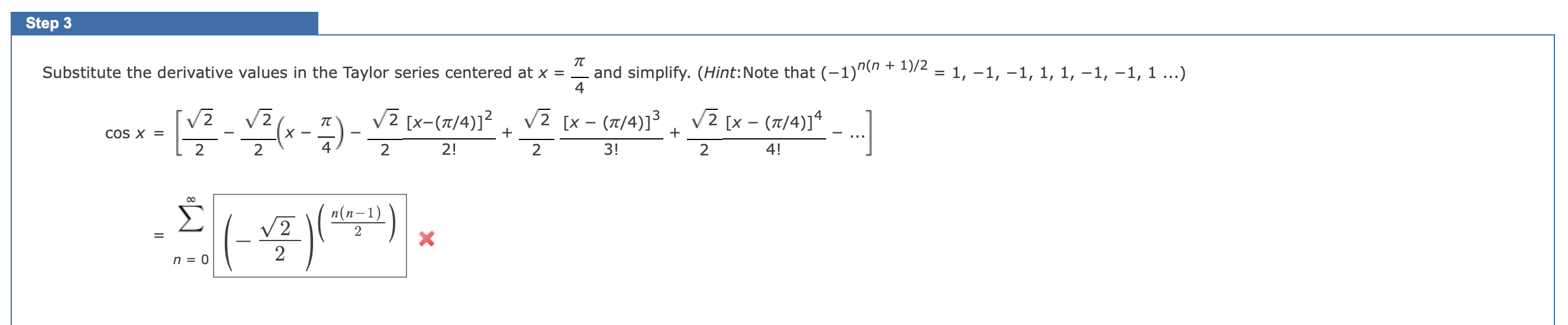
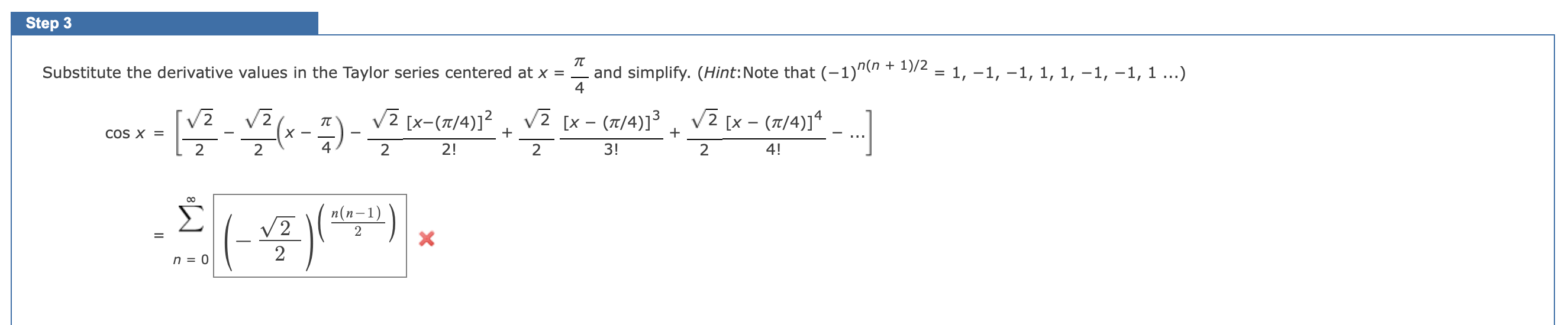
Question: please help me with the question it posted below thanks n(n + 1)/2 = 1 7! Substitute the derivative values in the Taylor series centered
please help me with the question it posted below
thanks
![7r) _ \\/5 [X-(/4)]2 + [x (M4)]3 + '5 [x (7r/4)]4 _](https://s3.amazonaws.com/si.experts.images/answers/2024/06/666367b7d53cc_647666367b7b54ee.jpg)
![] 2 2 4 2 2! 2 3! 2 4! 6. [112](https://s3.amazonaws.com/si.experts.images/answers/2024/06/666367b87574d_648666367b8576c5.jpg)
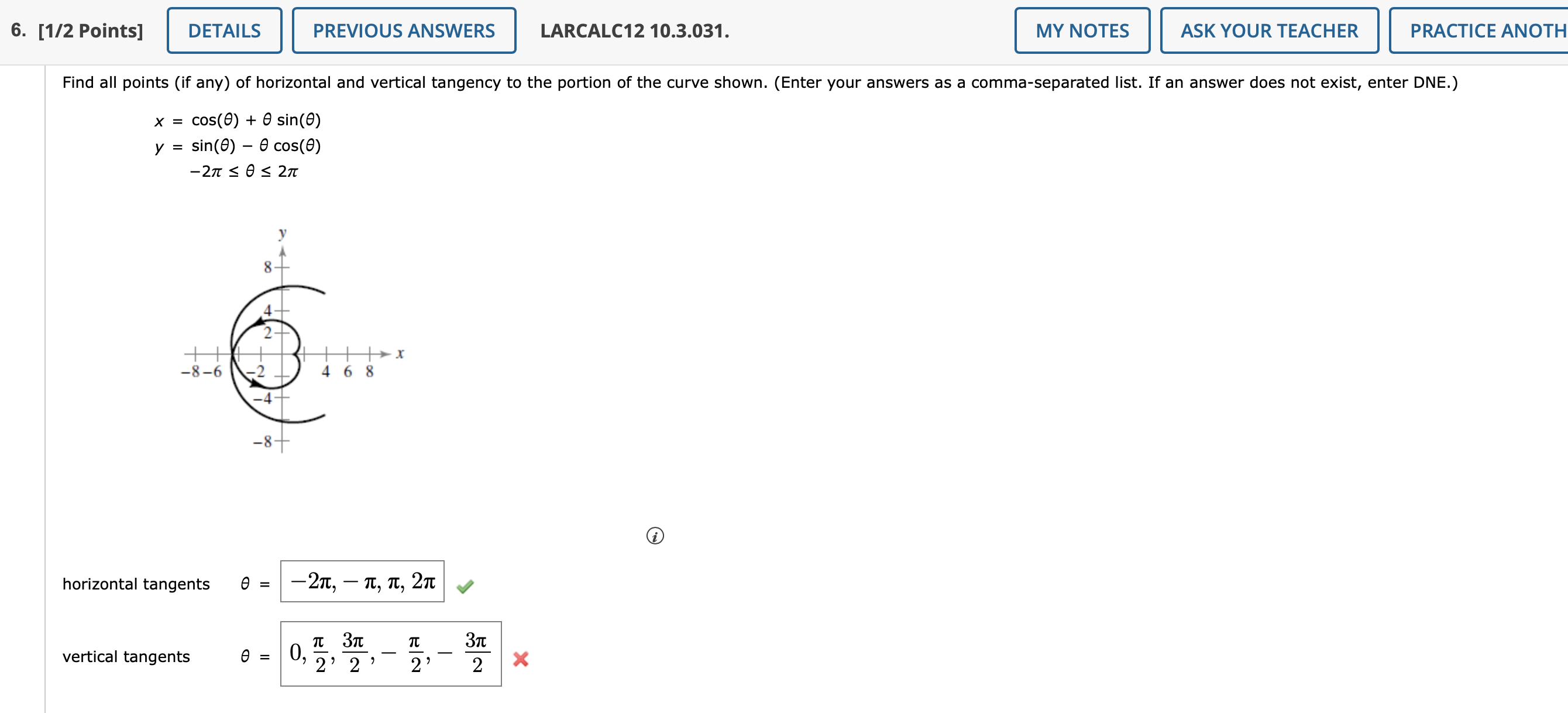
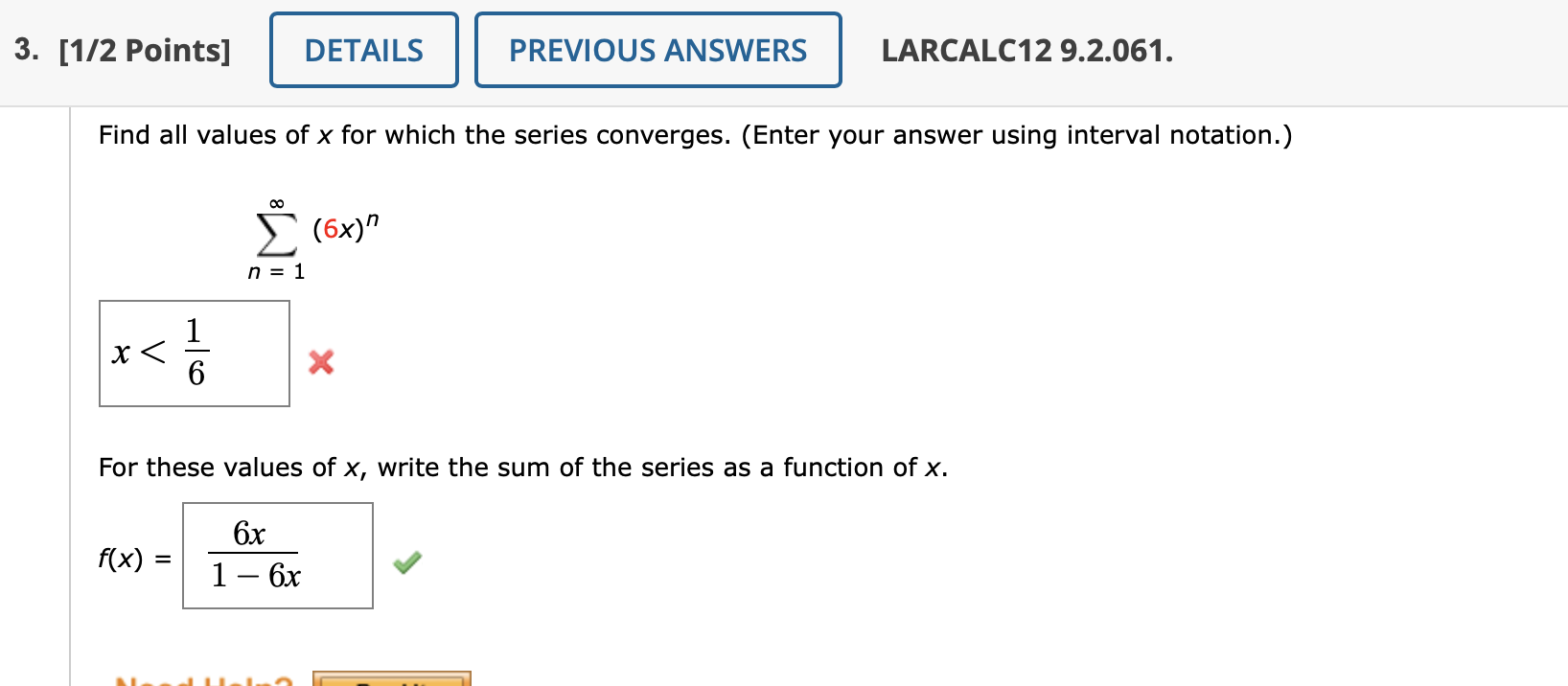
n(n + 1)/2 = 1 7! Substitute the derivative values in the Taylor series centered at x = 7 and simplify. (Hint:Note that (1) , 1, 1, 1, 1, 1, 1, 1 ...) COS X [V3 _ (x_ 7r) _ \\/5 [X-(/4)]2 + [x (M4)]3 + '5 [x (7r/4)]4 _ ] 2 2 4 2 2! 2 3! 2 4! 6. [112 Points] DETAILS PREVIOUS ANSWERS LARCALC12 10.3.031. MY NOTES ASK YOUR TEACHER | PRACTICE ANOTH Find all points (if any) of horizontal and vertical tangency to the portion of the curve shown. (Enter your answers as a comma-separated list. If an answer does not exist, enter DNE.) x = cos(6) + 9 sin(6) y = sin(9) 9 cos(9) 27r s 6 s 27: horizontal tangents 6 27I, 11?, 1C, 211? y vertical tangents (D II .0 txgl \"I VI [3| l \"I x 3. \"/2 Points] DETAILS PREVIOUS ANSWERS LARCALC12 9.2.061. Find all values of X for which the series converges. (Enter your answer using interval notation.) co 2 (6X)" n=1 x
Step by Step Solution
There are 3 Steps involved in it

Get step-by-step solutions from verified subject matter experts
 Study Help