Question: Please help me with this case study. The Fine Wine Rack Company Introduction Welcome to the wine cellar business. As Production Manager of the Fine
Please help me with this case study.
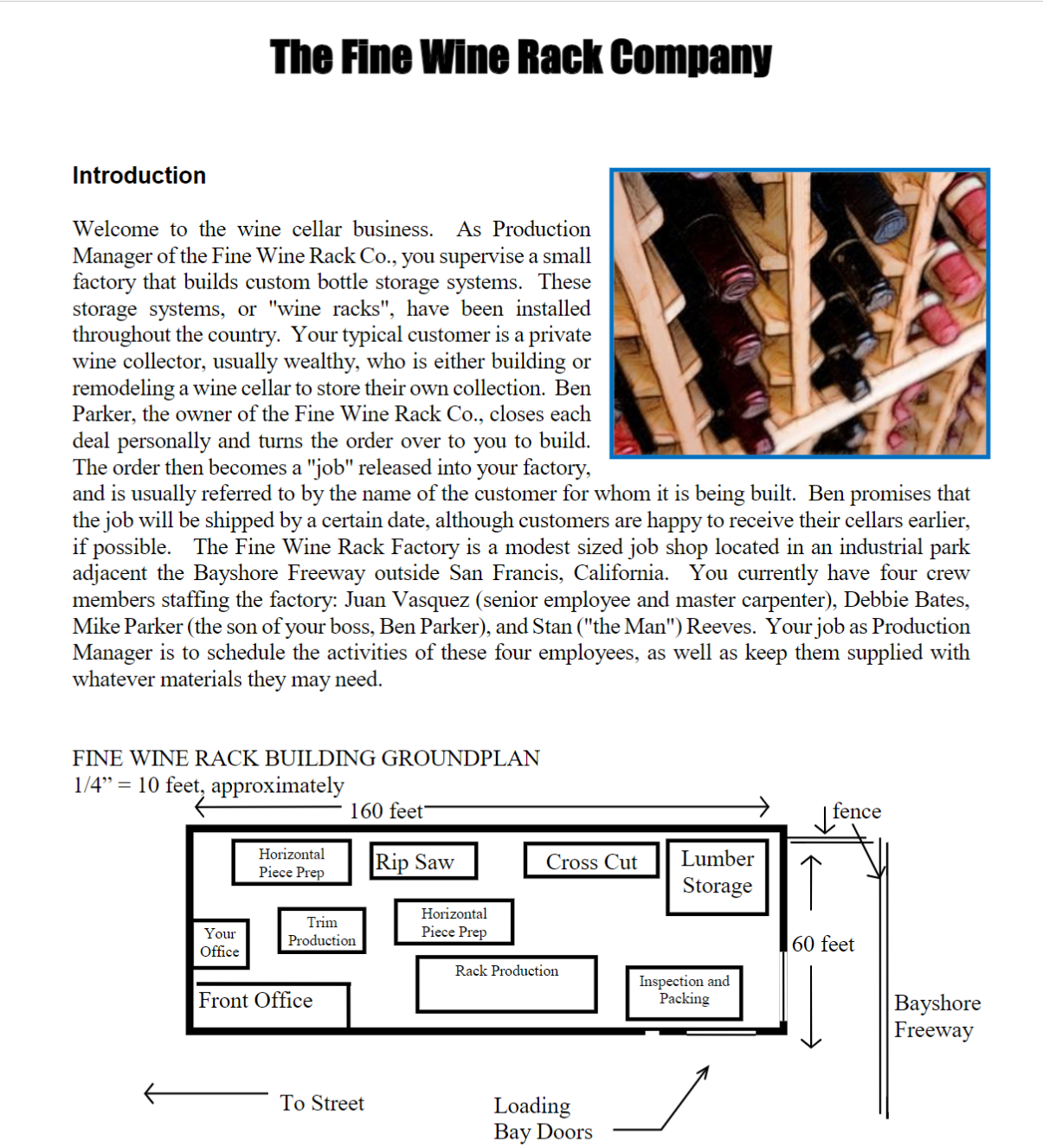
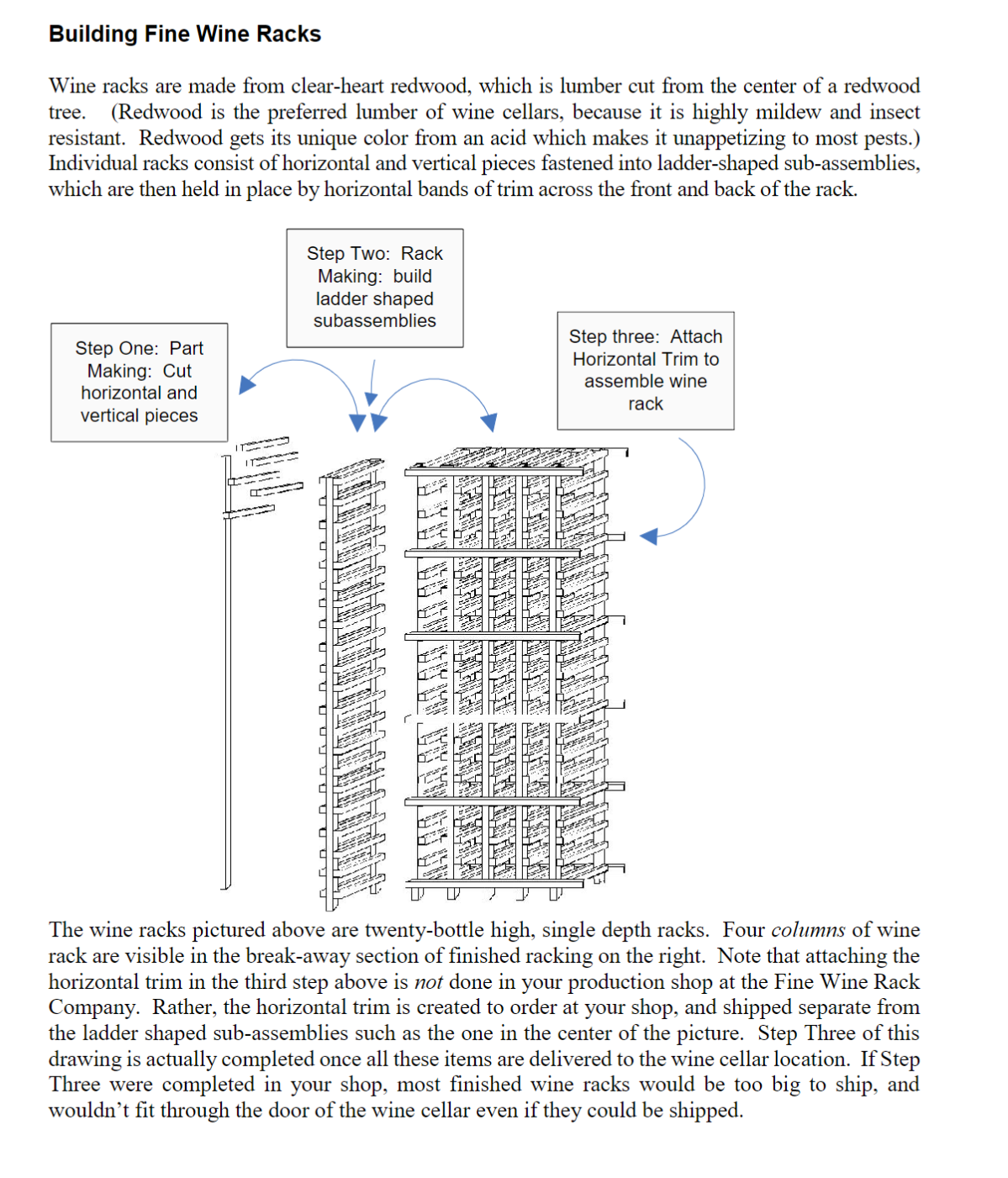
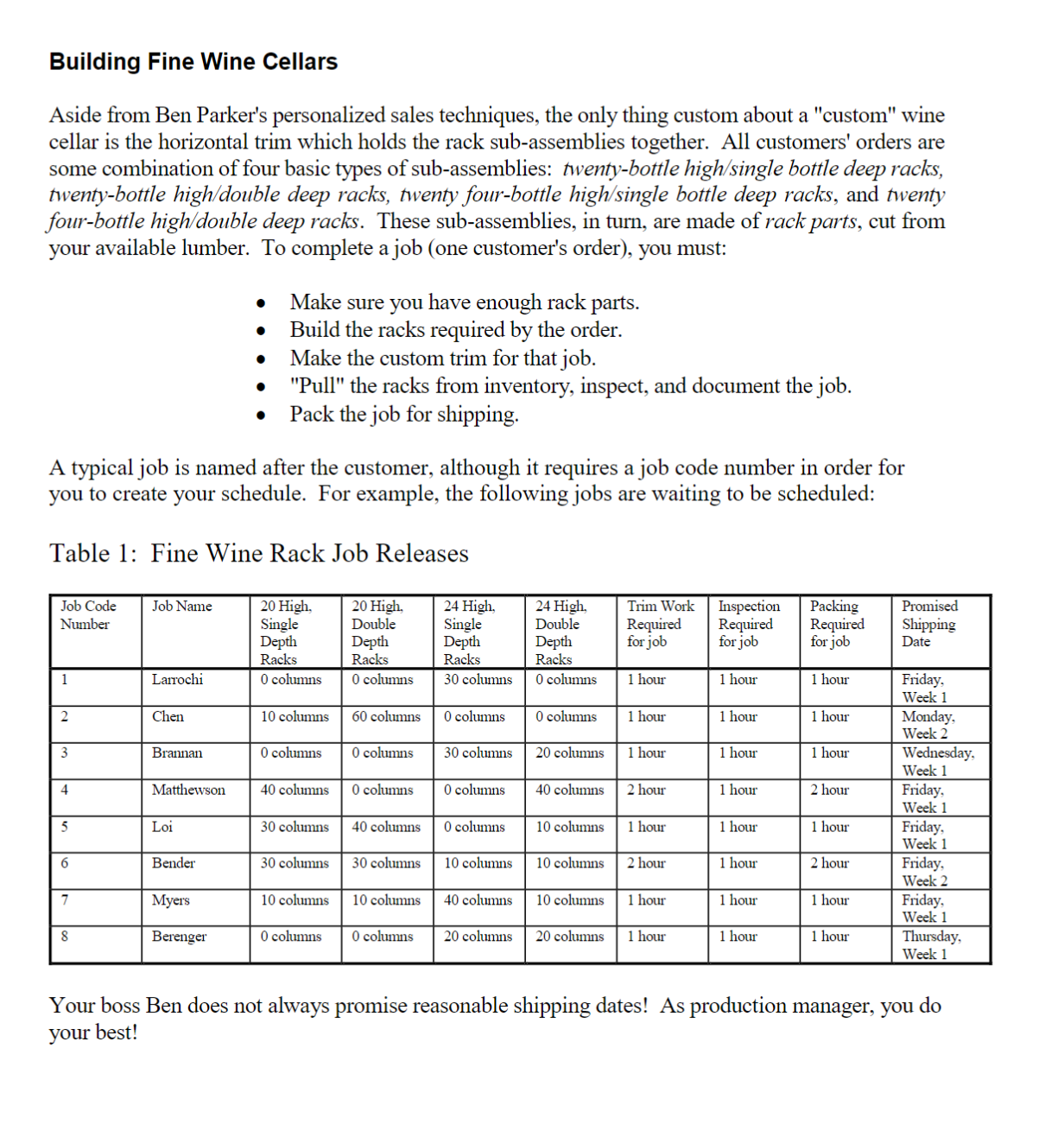
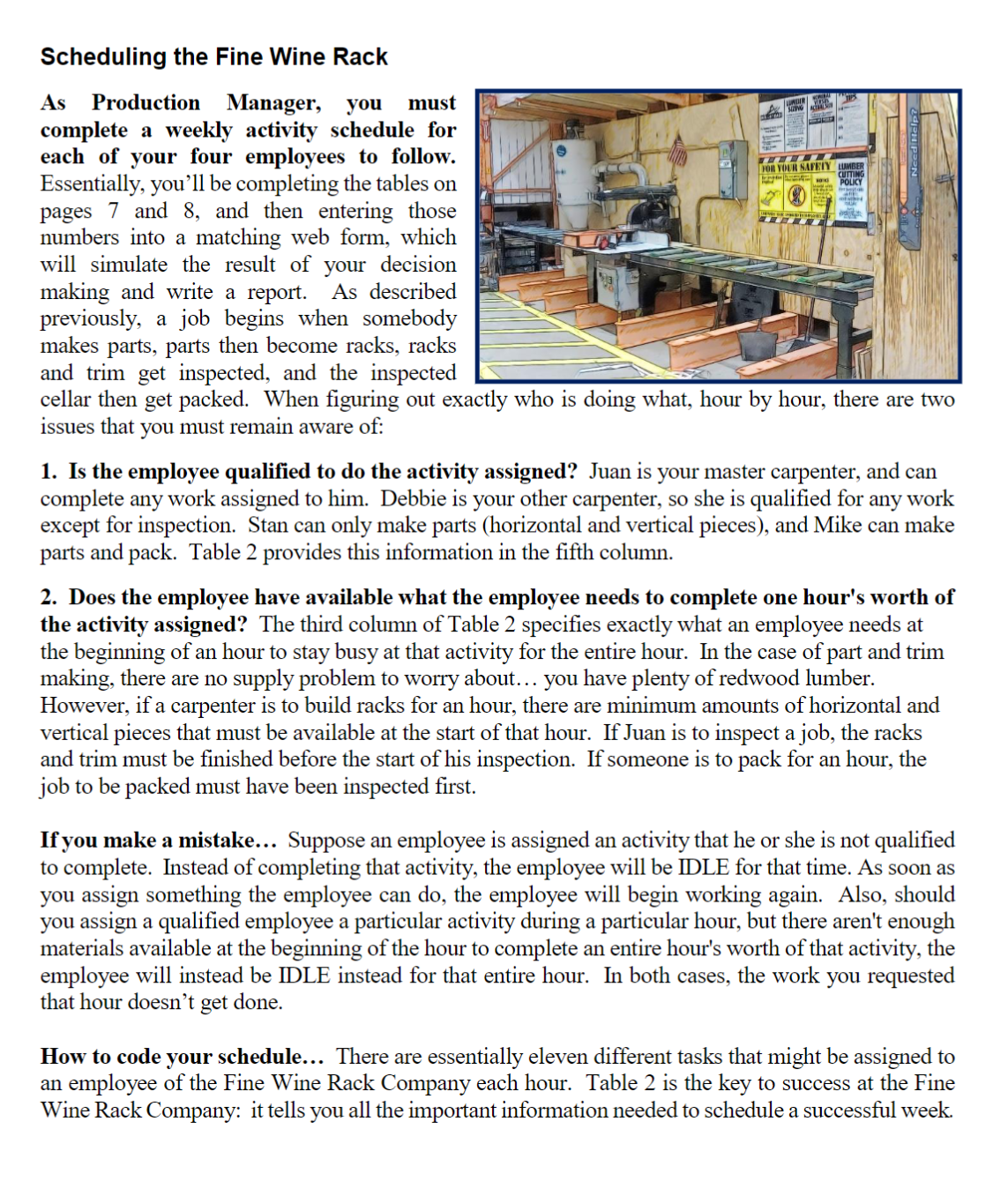
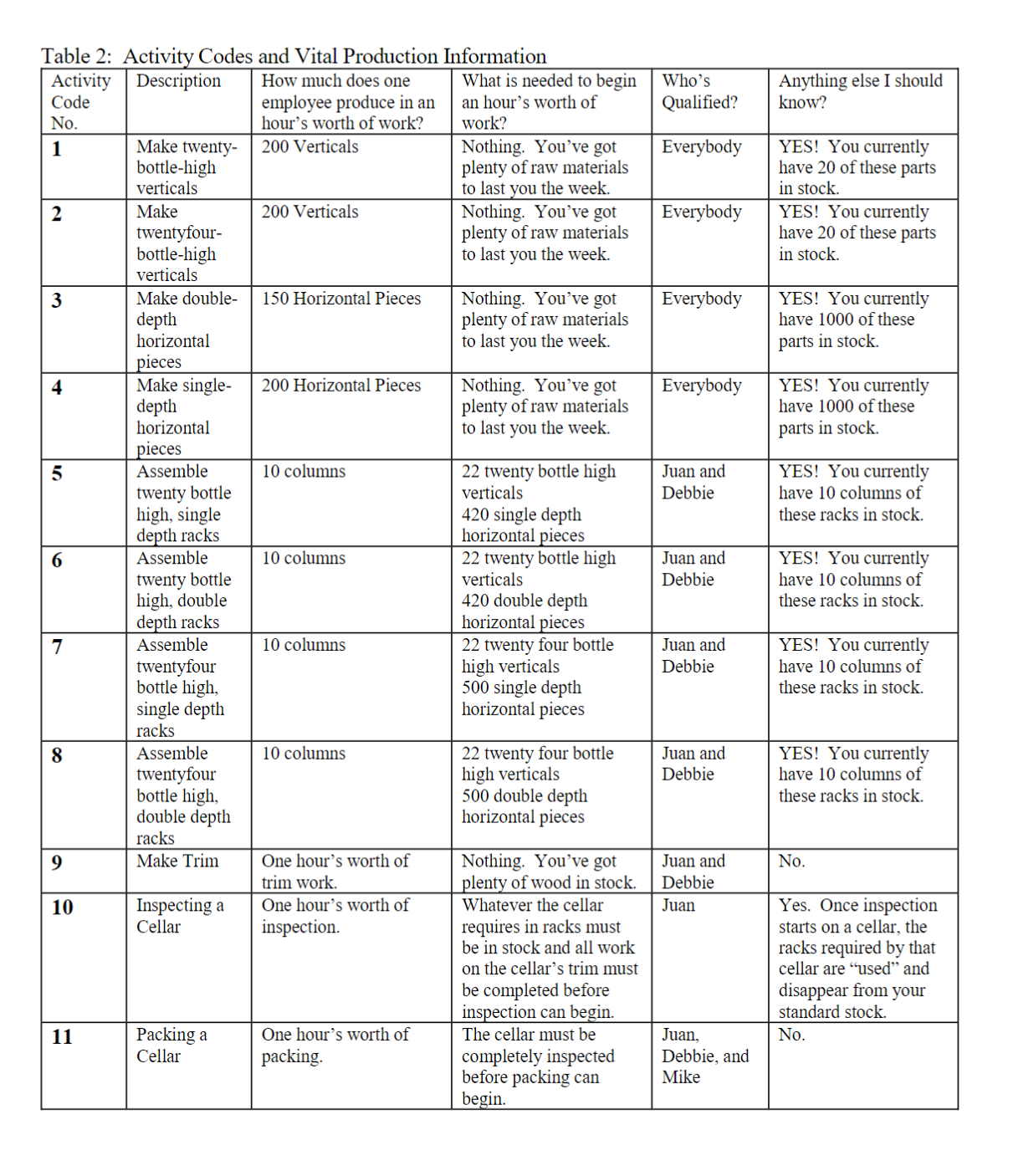
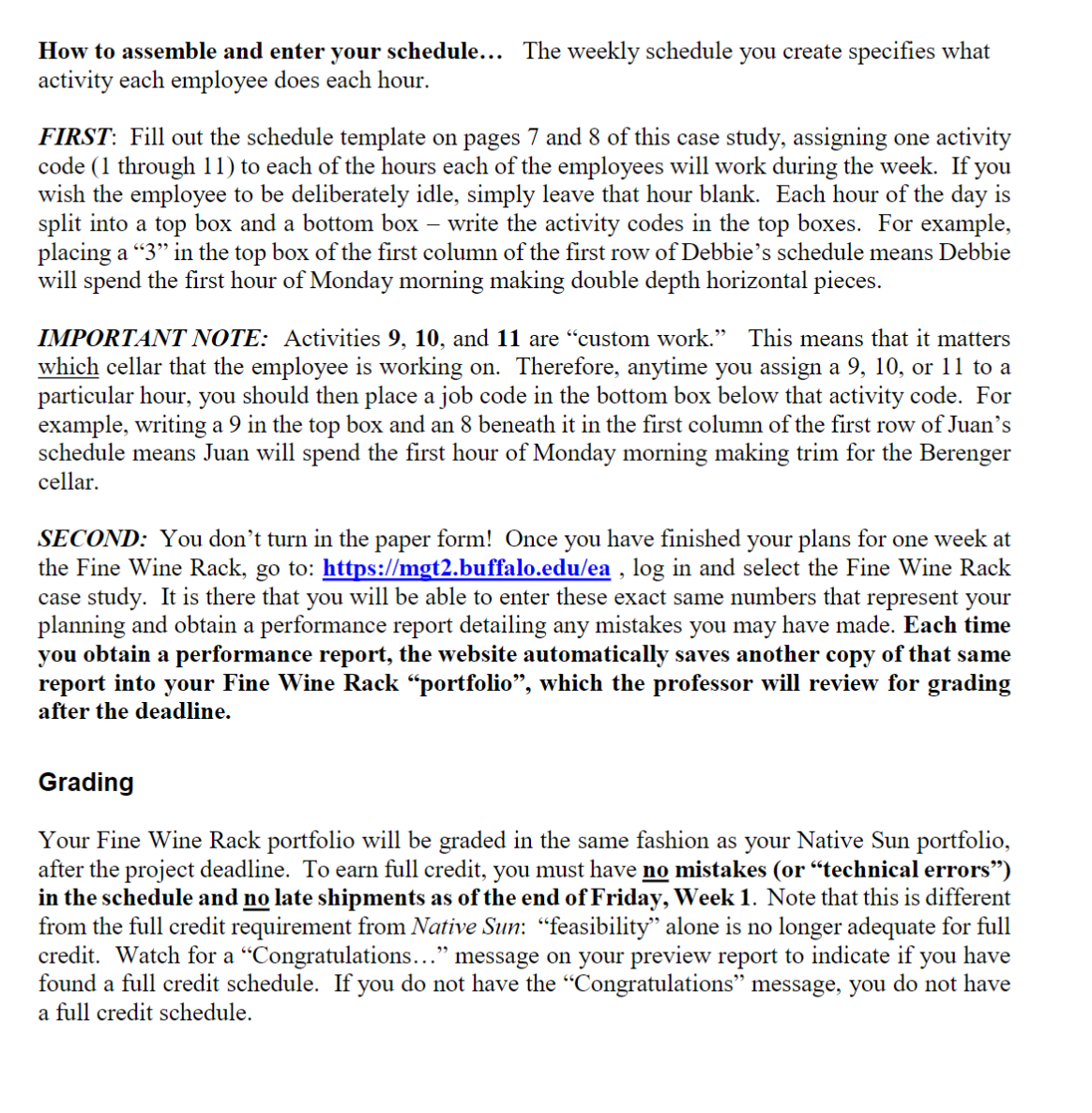
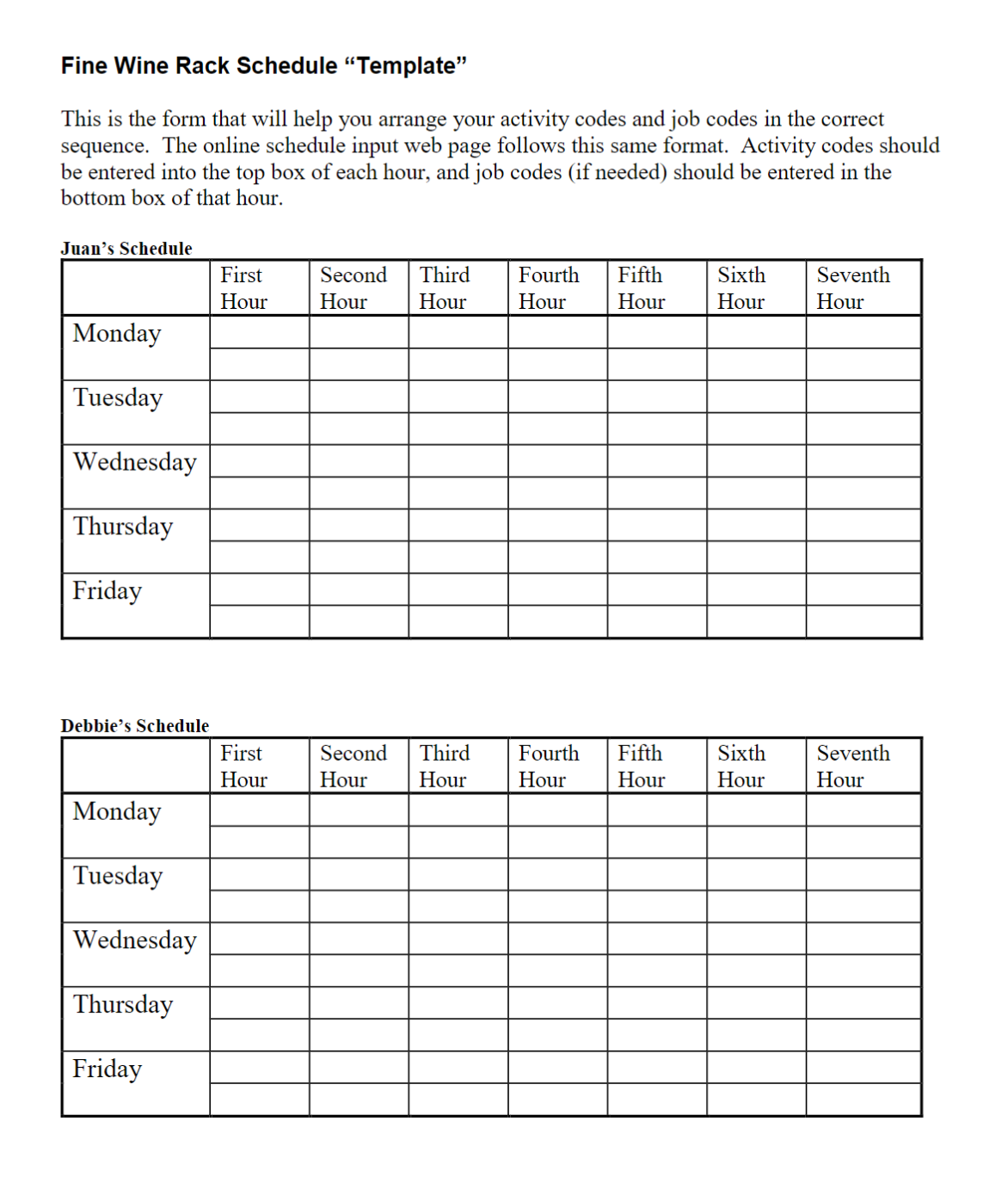
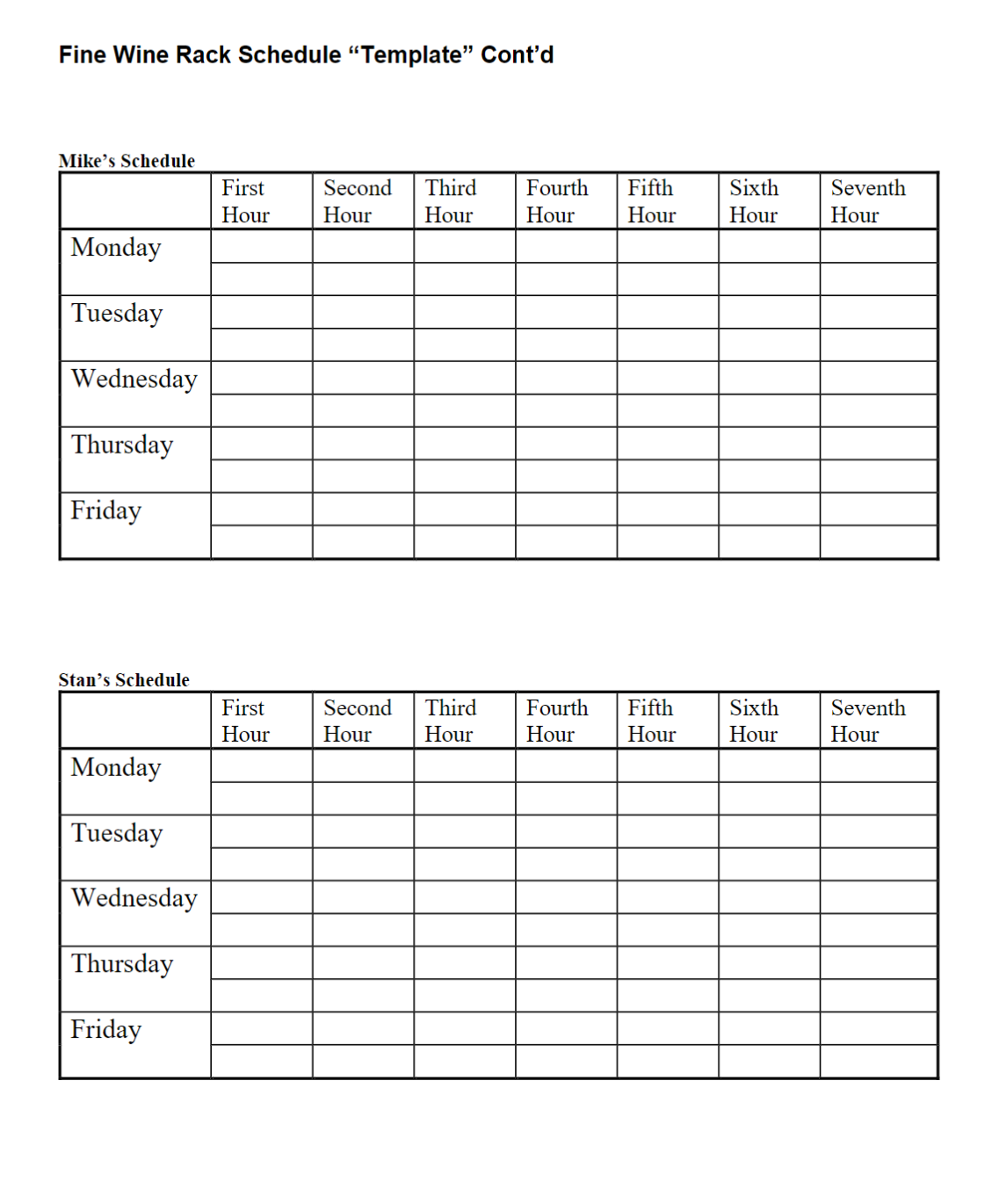
The Fine Wine Rack Company Introduction Welcome to the wine cellar business. As Production Manager of the Fine Wine Rack Co., you supervise a small factory that builds custom bottle storage systems. These storage systems, or "wine racks", have been installed throughout the country. Your typical customer is a private wine collector, usually wealthy, who is either building or remodeling a wine cellar to store their own collection. Ben Parker, the owner of the Fine Wine Rack Co., closes each deal personally and turns the order over to you to build. The order then becomes a "job" released into your factory, and is usually referred to by the name of the customer for whom it is being built. Ben promises that the job will be shipped by a certain date, although customers are happy to receive their cellars earlier, if possible. The Fine Wine Rack Factory is a modest sized job shop located in an industrial park adjacent the Bayshore Freeway outside San Francis, California. You currently have four crew members staffing the factory: Juan Vasquez (senior employee and master carpenter), Debbie Bates, Mike Parker (the son of your boss, Ben Parker), and Stan ("the Man") Reeves. Your job as Production Manager is to schedule the activities of these four employees, as well as keep them supplied with whatever materials they may need. FINE WINE RACK BUILDING GROUNDPLAN 1/4" = 10 feet, approximately 160 feet | fence Horizontal Cross Cut Lumber Piece Prep Rip Saw Storage Trim Horizontal Your Production Piece Prep Office 60 feet Rack Production Inspection and Front Office Packing Bayshore Freeway To Street Loading Bay DoorsBuilding Fine Wine Racks Wine racks are made from clear-heart redwood, which is lumber cut from the center ofa redwood tree. (Redwood is the preferred lumber of wine cellars, because it is highly mildew and insect resistant. Redwood gets its unique color from an acid which makes it unappetizing to most pests.) Individual racks consist ofhorizontal and vertical pieces fastened into laddershaped sub-assemblies, which are then held in place by horizontal bands of trim across the front and back of the rack. Step Two: Rack Making: build ladder shaped subassemblies Step three: Attach Horizontal Trim to assemble wine Step One: Part Making: Out horizontal and vertical pieces The wine racks pictured above are twenty-bottle high, single depth racks. Four columns of wine rack are visible in the break-away section of finished racking on the right. Note that attaching the horizontal trim in the third step above is not done in your production shop at the Fine Wine Rack Company. Rather, the horizontal trim is created to order at your shop, and shipped separate from the ladder shaped sub-assemblies such as the one in the center of the picture. Step Three of this drawing is actually completed once all these items are delivered to the wine cellar location. If Step Three were completed in your shop. most nished wine racks would be too big to ship. and wouldn't t through the door of the wine cellar even if they could be shipped. Building Fine Wine Cellars Aside from Ben Parker's personalized sales techniques, the only thing custom about a "custom" wine cellar is the horizontal trim which holds the rack sub-assemblies together. All customers' orders are some combination of four basic types of sub-assemblies: twenty-bottle high/single bottle deep racks, twenty-bottle high/double deep racks, twenty four-bottle high/single bottle deep racks, and twenty four-bottle high/double deep racks. These sub-assemblies, in turn, are made of rack parts, cut from your available lumber. To complete a job (one customer's order), you must: Make sure you have enough rack parts. Build the racks required by the order. . . . Make the custom trim for that job. "Pull" the racks from inventory, inspect, and document the job. . Pack the job for shipping. A typical job is named after the customer, although it requires a job code number in order for you to create your schedule. For example, the following jobs are waiting to be scheduled: Table 1: Fine Wine Rack Job Releases Job Code Job Name 20 High. 20 High, 24 High, 24 High, Trim Work Inspection Packing Promised Number Single Double Single Double Required Required Required Shipping Depth Depth Depth Depth for job for job for job Date Racks Racks Racks Racks Larrochi 0 columns 0 columns 30 columns 0 columns 1 hour 1 hour 1 hour Friday, Week 1 2 Chen 10 columns 60 columns 0 columns 0 columns 1 hour 1 hour 1 hour Monday, Week 2 Brannan 0 columns 0 columns 30 columns 20 columns 1 hour 1 hour 1 hour Wednesday, Week 1 Matthewson 40 columns 0 columns 0 columns 40 columns 2 hour 1 hour 2 hour Friday, Week Lo 30 columns 40 columns 0 columns 10 columns 1 hour 1 hour 1 hour Friday, Week Bender 30 columns 30 columns 10 columns 10 columns 2 hour 1 hour 2 hour Friday, Week 2 Myers 10 columns 10 columns 40 columns 10 columns 1 hour 1 hour 1 hour Friday Week 1 Berenger U columns 0 columns 20 columns 20 columns 1 hour 1 hour 1 hour Thursday, Week 1 Your boss Ben does not always promise reasonable shipping dates! As production manager, you do your best!Scheduling the Fine Wine Rack As Production Manager, you must complete a weekly activity schedule for each of your four employees to follow. Essentially, you'll be completing the tables on pages 7 and 8, and then entering those numbers into a matching web form, which will simulate the result of your decision making and write a report. As described previously, a job begins when somebody makes parts, parts then become racks. racks and trim get inspected and the inspected . - - - -- cellar then get packed. When guring out exactly who IS doing what. hour by hour thele are two issues that you must 1emain aware of: 1. Is the employee qualified to do the activity assigned? Juan is your master carpenter. and can complete any work assigned to him. Debbie is your other carpenter, so she is qualied for any work except for inspection. Stan can only make parts (horizontal and vertical pieces), and Mike can make parts and pack. Table 2 provides this information in the fth column. 2. Does the employee have available what the employee needs to complete one hour's worth of the activity assigned? The third column of Table 2 species exactly what an employee needs at the beginning of an hour to stay busy at that activity for the entire hour. In the case of part and trim making, there are no supply problem to worry about\" .you have plenty oi redwood lumber. However, if a carpenter is to build racks for an hour, there are minimum amounts of horizontal and vertical pieces that must be available at the start of that hour. IfJuan 13 to inspect a job, the racks and trim must be nished before the start of his inspection. If someone is to pack for an hour, the job to be packed must have been inspected rst. If you make a mistake... Suppose an employee is assigned an activity that he or she is not qualified to complete. Instead of completing that activity, the employee will be IDLE for that time. As soon as you assign something the employee can do. the employee will begin working again. Also, should you assign a qualied employee a particular activity during a particular hour. but there aren't enough materials available at the beginning of the hour to complete an entire hour's worth of that activity. the employee will instead be IDLE instead for that entire hour. In both cases. the work you requested that hour doesn't get done. How to code your schedule. . . There are essentially eleven different tasks that might be assigned to an employee of the Fine Wine Rack Company each hour. Table 2 is the key to success at the Fine Wine Rack Company: it tells you all the important information needed to schedule a successful week. Table 2: Activit Codes and Vital Production Information Activity Description Code -0. Make twenty- bottle-high verticals Make twentyfour- bottle-high verticals Make double- depth horizontal ieces Make single depth horizontal nieces Assemble twenty bottle high! single de th racks Assemble twenty bottle high, double deth racks Assemble twentyfour bottle high. single depth racks Assemble twentyfour bottle high. double depth racks Inspecting a Cellar D pl pn How much does one employee produce in an hour's worth of work? 200 Verticals an hour's worth of work? Nothing. You've got plenty of raw materials to last on the week. Nothing. You've got plenty of raw materials to last you the week. 200 Verticals 150 Horizontal Pieces Nothing. You've got plenty of raw materials to last you the week. 200 Horizontal Pieces Nothing. You've got plenty of raw materials to last you the week. 10 columns 10 columns 22 twenty bottle high verticals 420 single depth horizontal ieces 22 twenty bottle high verticals 420 double depth horizontal a ieces 22 twenty four bottle high verticals 500 single depth horizontal pieces 22 twenty four bottle high verticals 500 double depth horizontal pieces One hour's wonh of trim work. One hour's worth of inspection. Whatever the cellar requires in racks must be in stock and all work on the cellar's trim must be completed before ins nection can begin. The cellar must be completely inspected before packing can begin. One hour's worth of packing. What is needed to begin Who '5 Qualied? Everybody Everybody Everybody Everybody Juan. Debbie. and Mike Anything else I should know? YES! You c1urently have 20 of these parts in stock. YES! You currently have 20 of these parts in stock. YES! You currently have 1000 ofthese parts in stock. YES! You currently have 1000 of these pans in stock, YES! You currently have 10 columns of these racks in stock. YES! You currently have 10 columns of these racks in stock. YES! You currently have 10 columns of these racks in stock. YES! You currently have 10 columns of these racks in stock. dent of wood in stock. Debbie Yes. Once inspection starts on a cellar. the racks required by that cellar are \"used\" and disappear from your standard stock. How to assemble and enter your schedule... The weekly schedule you create specifies what activity each employee does each hour. FIRST: Fill out the schedule template on pages 7 and 8 of this case study. assigning one activity code (1 through 11) to each ofthe hours each of the employees will work during the week. If you wish the employee to be deliberately idle. simply leave that hour blank. Each hour of the day is split into a top box and a bottom box write the activity codes in the top boxes. For example. placing a "'3" in the top box of the first column of the rst row of Debbie's schedule means Debbie will spend the rst hour of Monday morning making double depth horizontal pieces. LWPORTANT NOTE: Activities 9. 10, and 11 are \"custom work.\" This means that it matters which cellar that the employee is working on. Therefore. anytime you assign a 9, 10. or 11 to a particular hour, you should then place a job code in the bottom box below that activity code. For example. writing a 9 in the top box and an 8 beneath it in the rst column of the first row of Juan's schedule means Juan will spend the rst hour of Monday morning making trim for the Berenger cellar. SECOND: You don't turn in the paper form! Once you have nished your plans for one week at the Fine Wine Rack. go to: https:ngthuffalmeduXea . log in and select the Fine Wine Rack case study. It is there that you will be able to enter these exact same numbers that represent your planning and obtain a performance report detailing any mistakes you may have made. Each time you obtain a performance report, the website automatically saves another copy of that same report into your Fine Wine Rack \"portfolio\Fine Wine Rack Schedule "Template" This is the form that will help you arrange your activity codes and job codes in the correct sequence. The online schedule input web page follows this same format. Activity codes should be entered into the top box of each hour, and job codes (if needed) should be entered in the bottom box of that hour. Juan's Schedule First Second Third Fourth Fifth Sixth Seventh Hour Hour Hour Hour Hour Hour Hour Monday Tuesday Wednesday Thursday Friday Debbie's Schedule First Second Third Fourth Fifth Sixth Seventh Hour Hour Hour Hour Hour Hour Hour Monday Tuesday Wednesday Thursday FridayFine Wine Rack Schedule "Template" Cont'd Mike's Schedule First Second Third Fourth Fifth Sixth Seventh Hour Hour Hour Hour Hour Hour Hour Monday Tuesday Wednesday Thursday Friday Stan's Schedule First Second Third Fourth Fifth Sixth Seventh Hour Hour Hour Hour Hour Hour Hour Monday Tuesday Wednesday Thursday Friday
Step by Step Solution
There are 3 Steps involved in it
1 Expert Approved Answer
Step: 1 Unlock
Question Has Been Solved by an Expert!
Get step-by-step solutions from verified subject matter experts
Step: 2 Unlock
Step: 3 Unlock
Students Have Also Explored These Related General Management Questions!









 Study Help