







Question: Please help me with this case: What is the key problem or challenge? Conduct a Porter Five Forces analysis and assess the competitive dynamics of
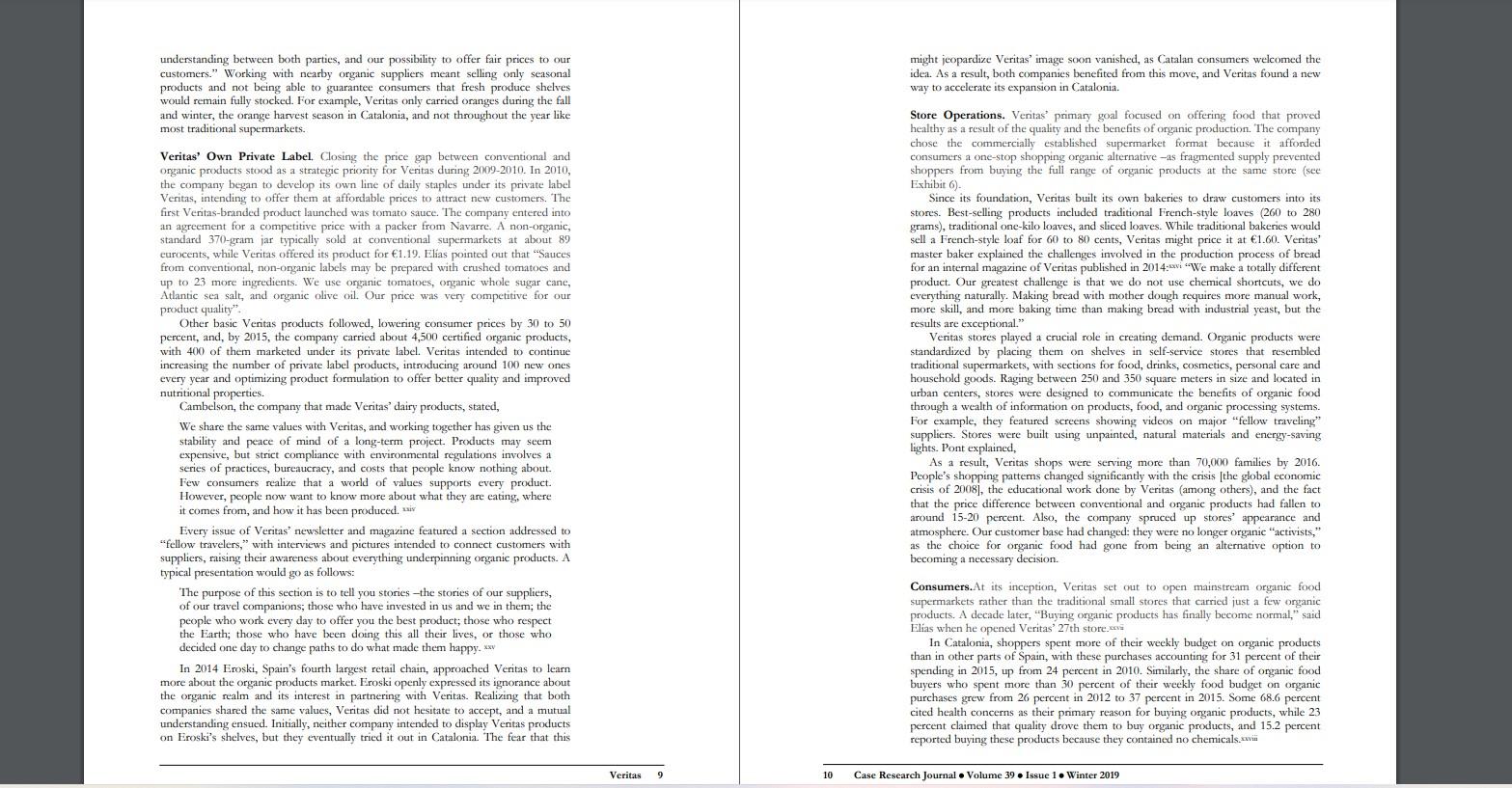
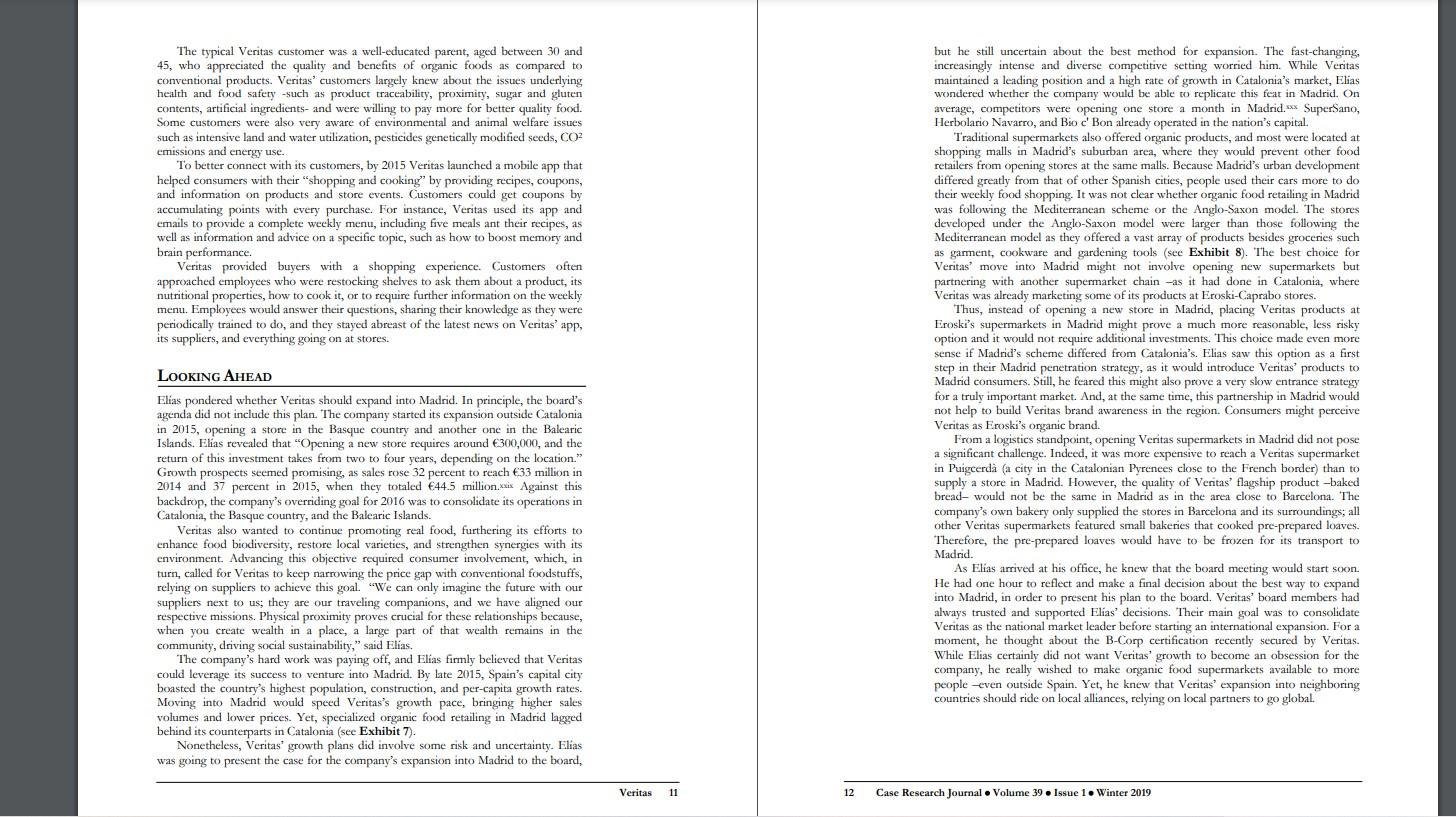
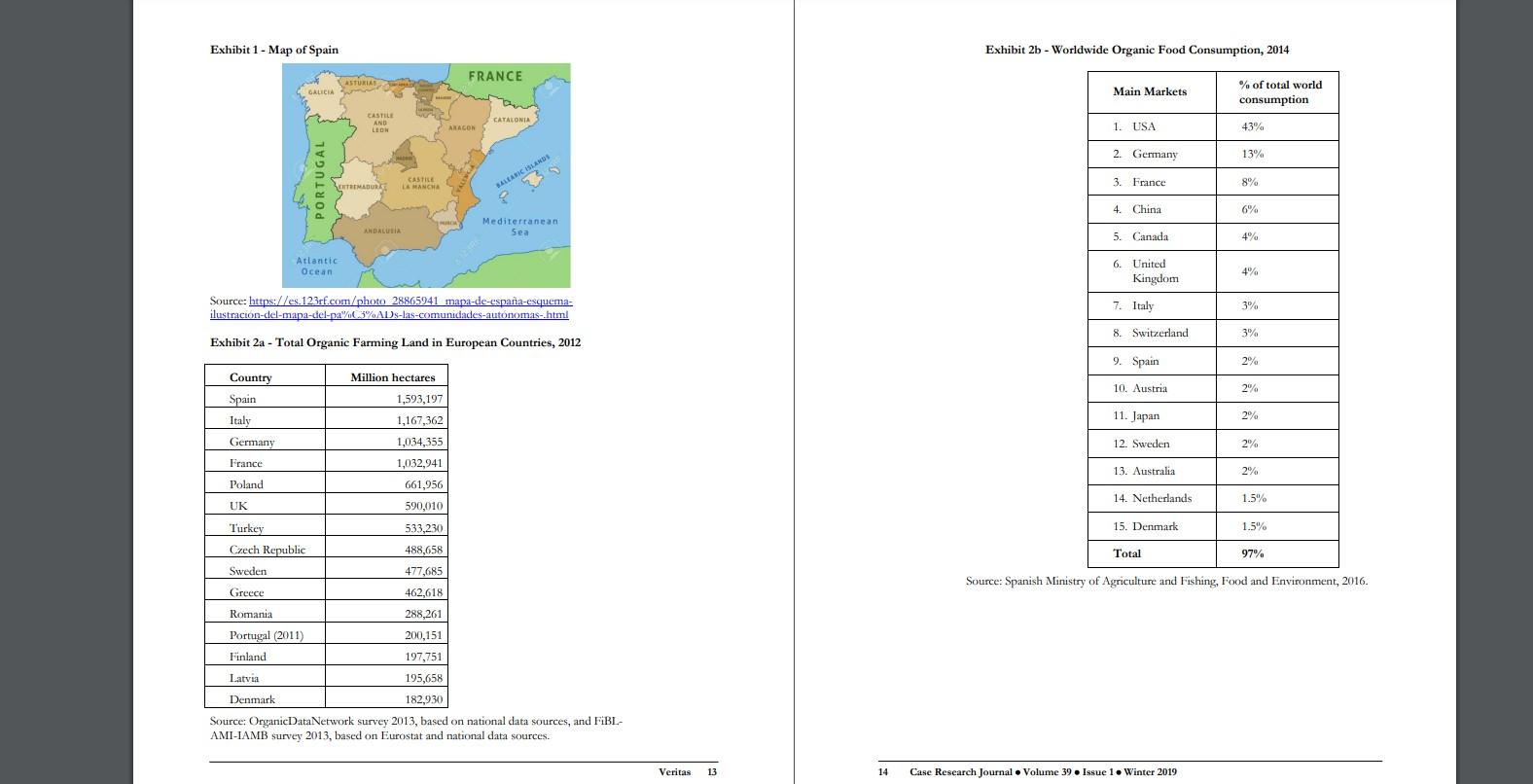
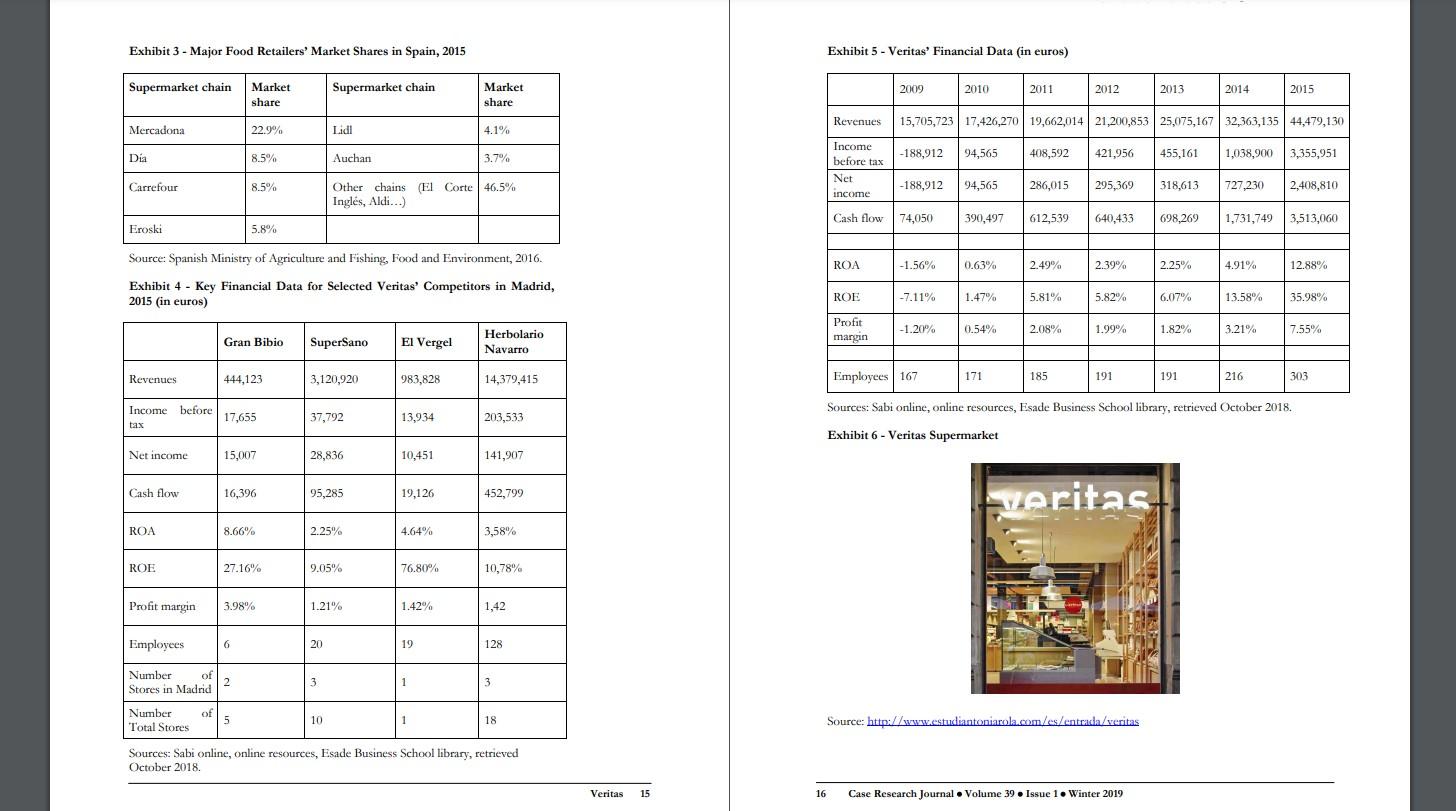
 Please help me with this case:
- What is the key problem or challenge?
- Conduct a Porter Five Forces analysis and assess the competitive dynamics of the organic food retailing sector in 2015.
- Conduct a VRIO analysis for Veritas. What strategic capabilities does Veritas have?
- Can these strategic capabilities contribute to creating a competitive advantage? If so, how? Should Veritas expand into Madrid by opening a new stiore or by parterning with Eroski?
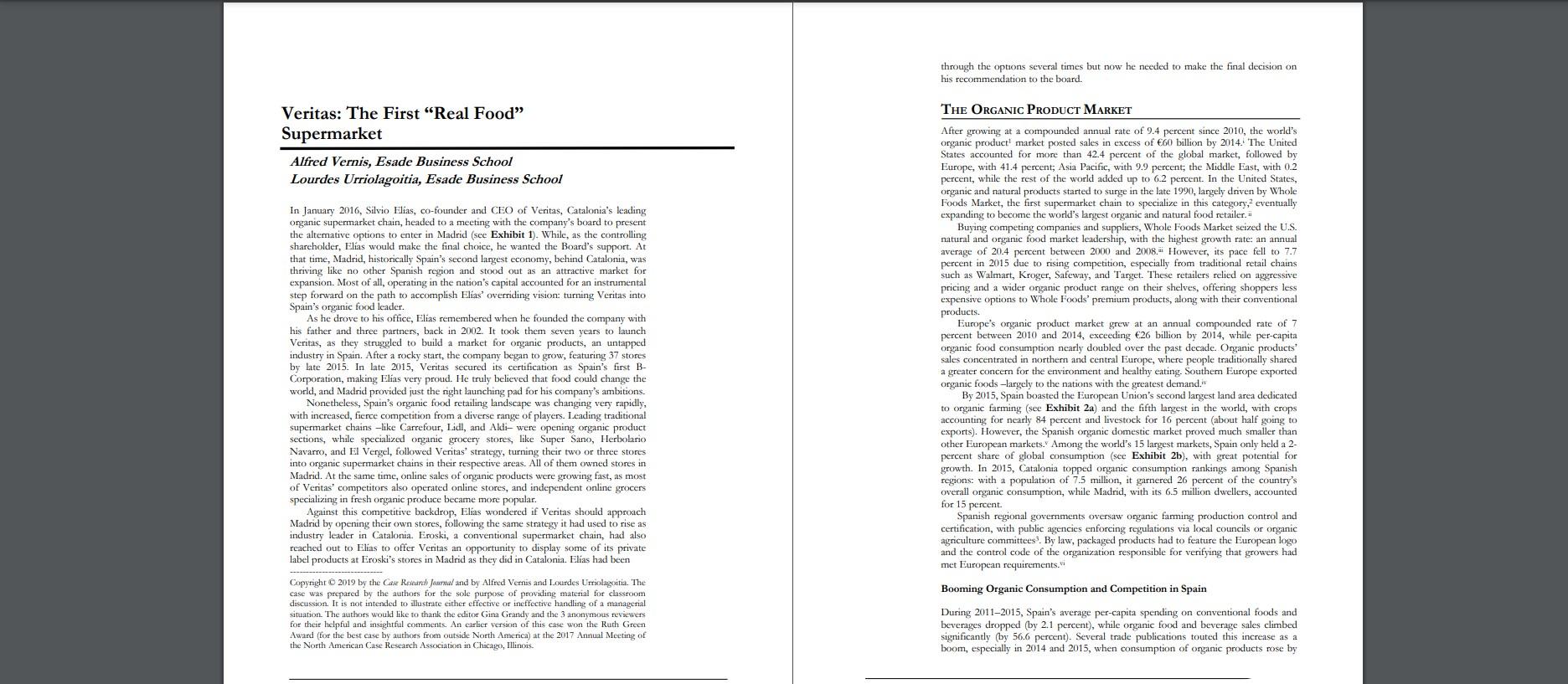
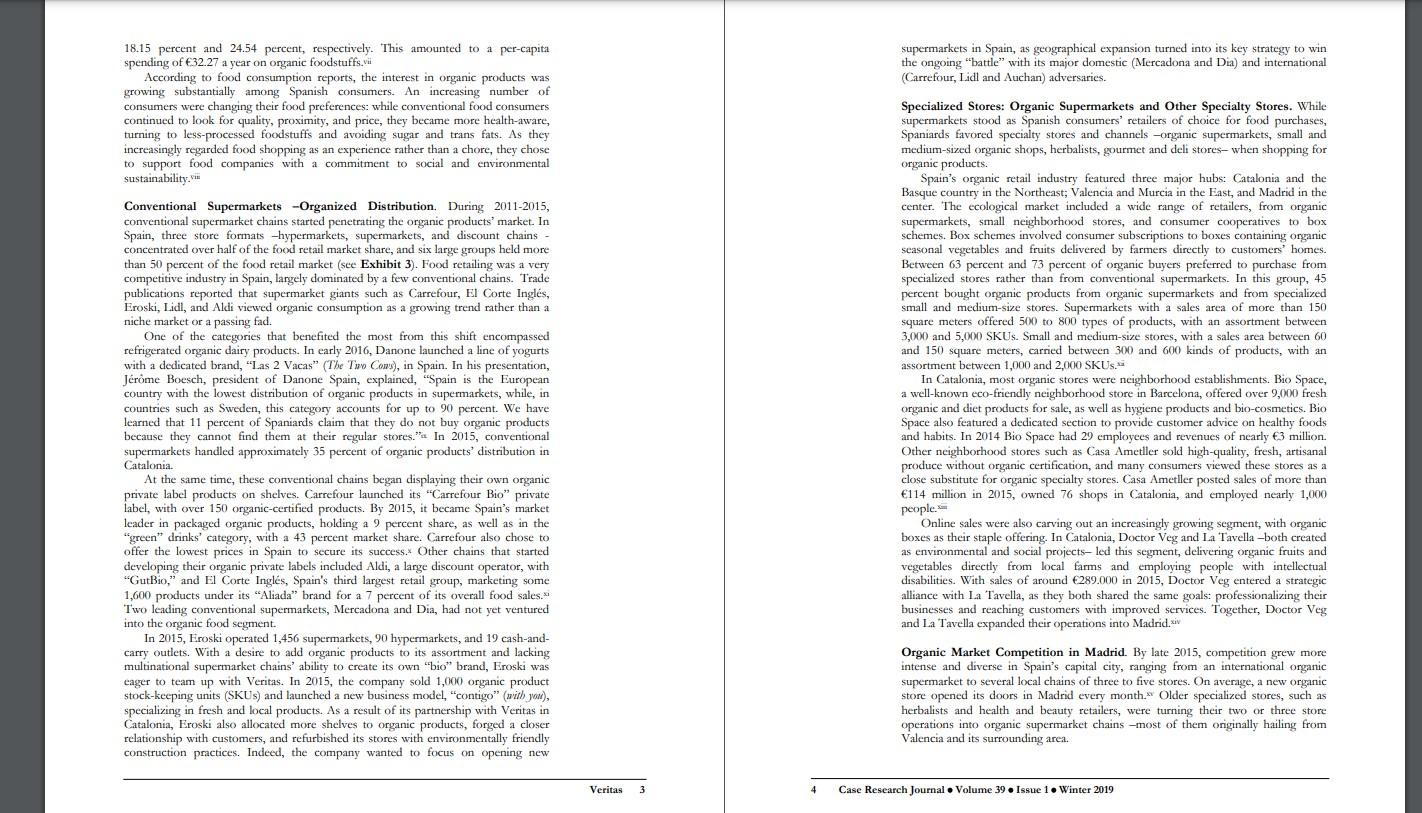
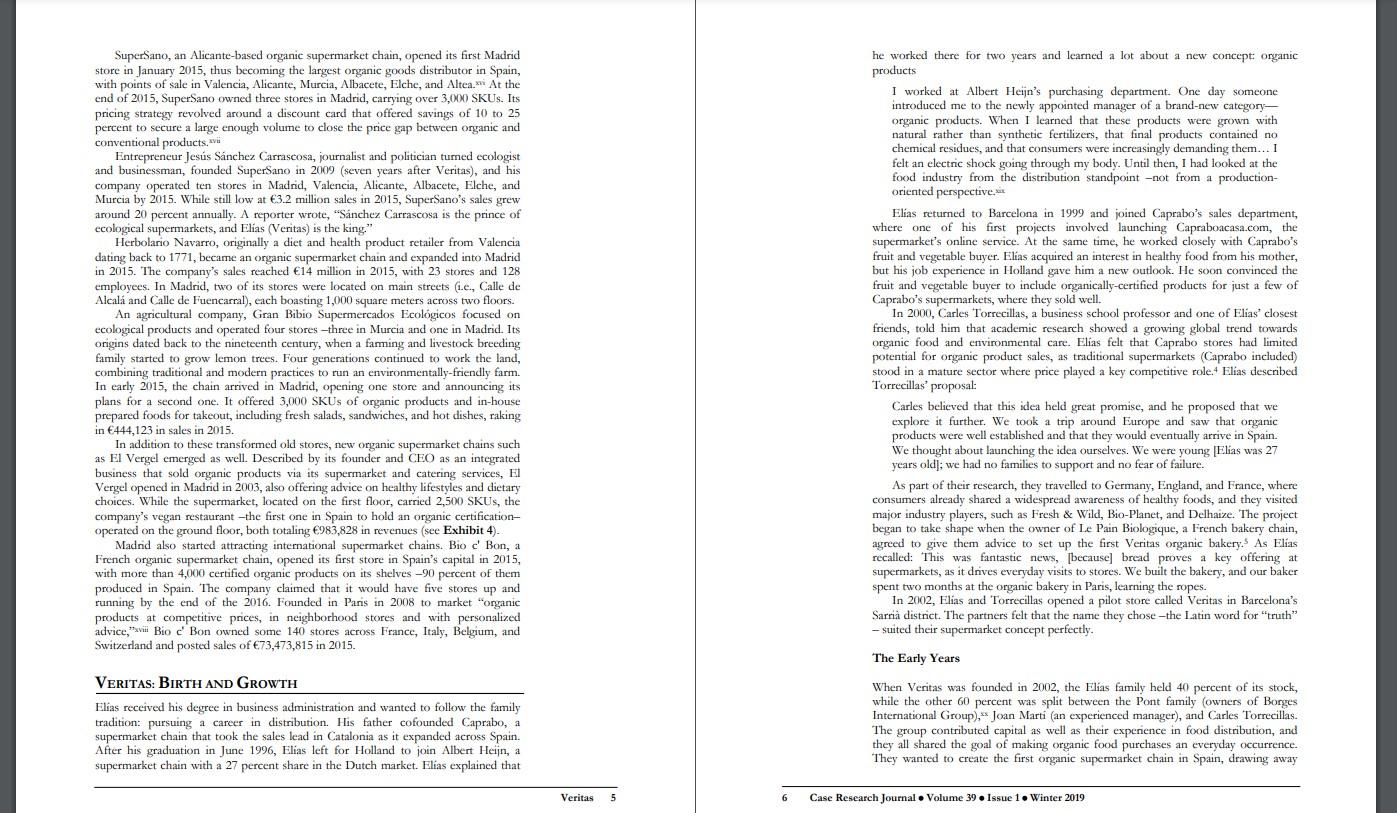
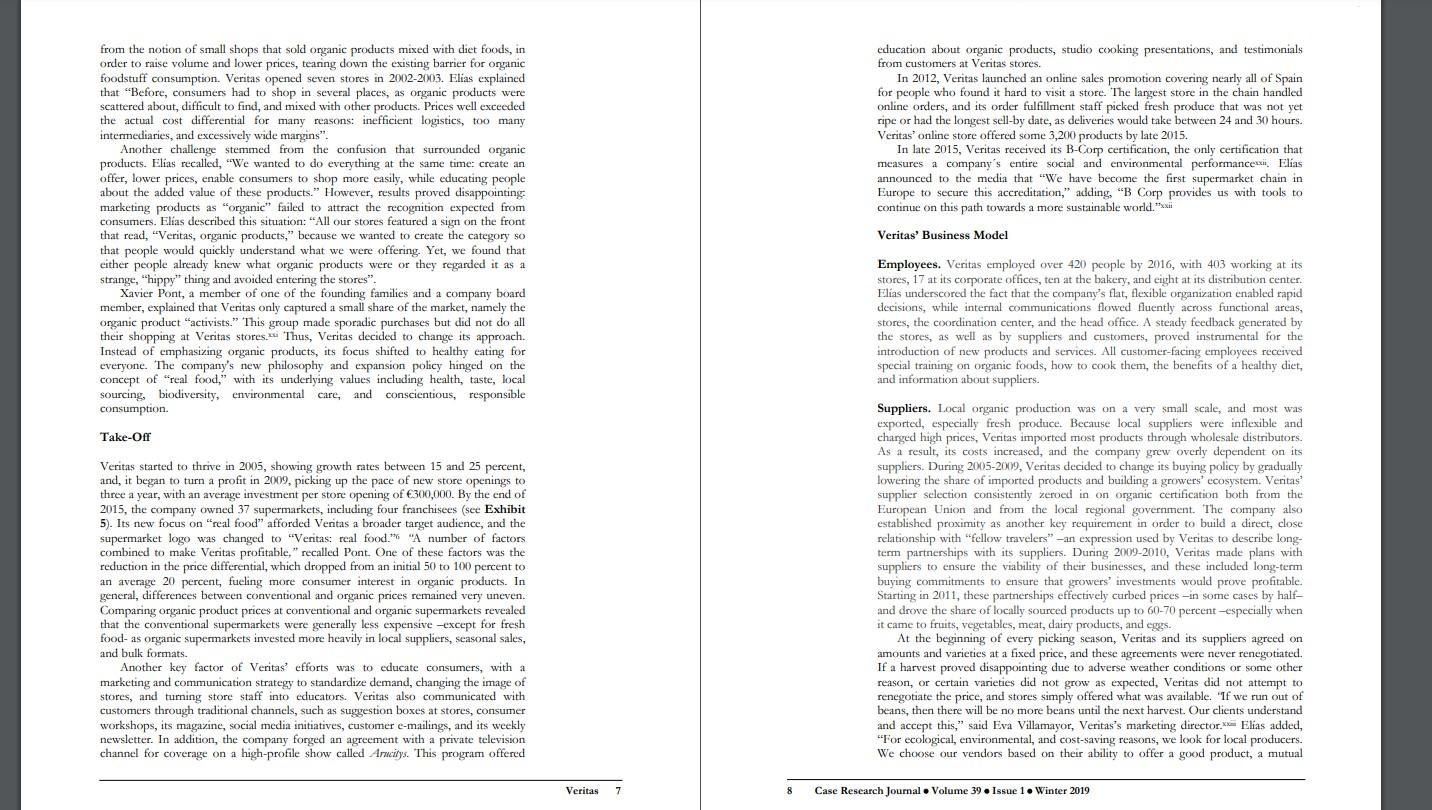
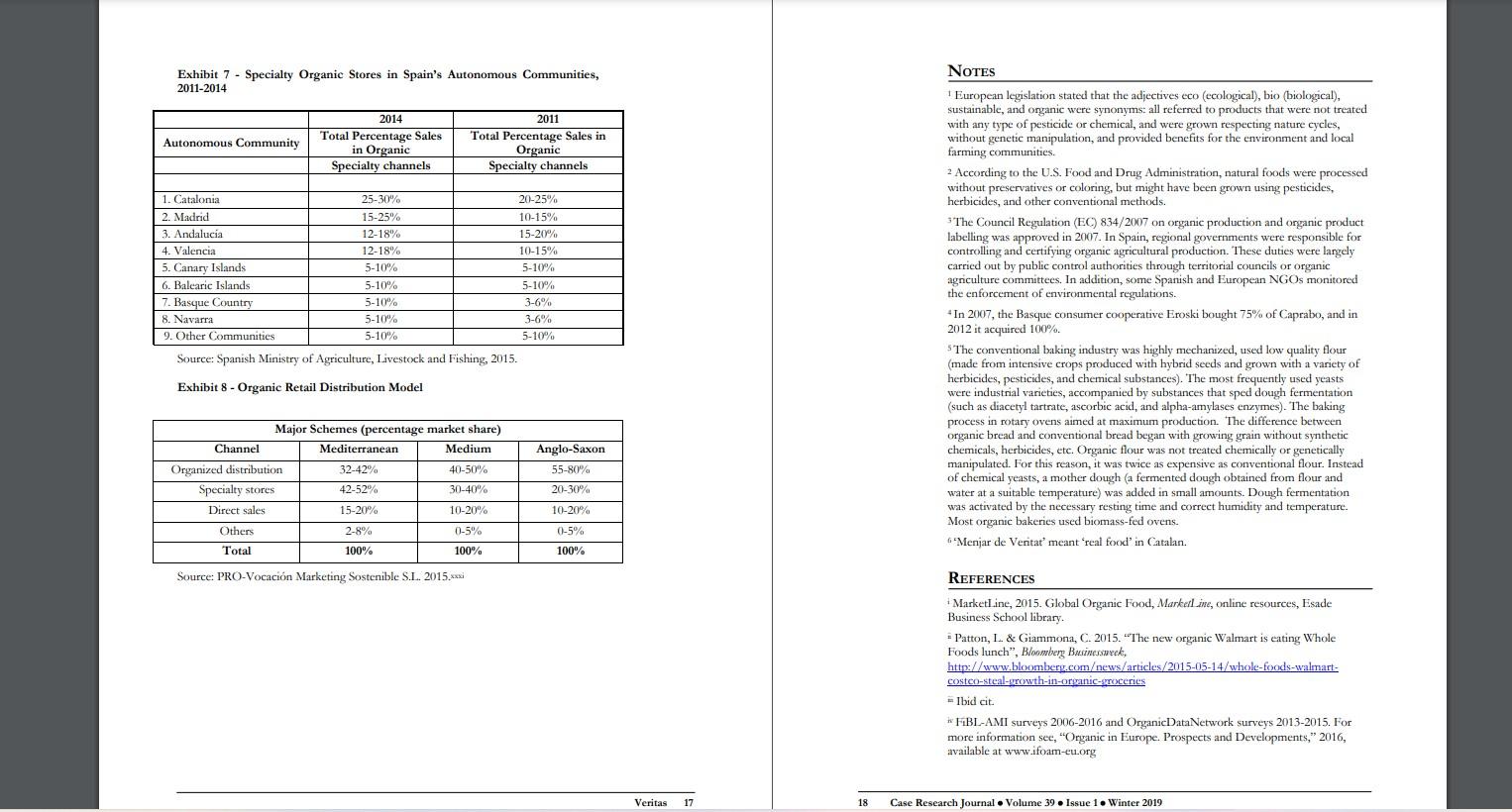
\begin{tabular}{ll} \hline \end{tabular} from the notion of small shops that sold organic products mixed with diet foods, in order to raise volume and lower prices, teaning down the existing barrier for onganic foodstuff consumption. Veritas opened seven stores in 2002-2003. Elias explained that "Before, consumers had to shop in several places, as organic products were that "Before, consumers had to shop in several places, as organic products were scattered about, difficult to find, and mixed with other products. Prices well exceeded the actual cost differential for many reasons: inefficient Iogistics, too many intermediaries, and excessively wide margins". intemediaries, and excessively wide margins". Another challenge stemmed from the confusion that surrounded organic Another challenge stemmed from the confusion that surrounded onganic products. Elias recalled, "We wanted to do everything at the same time: create an offer, lower prices, enable consumers to shop more easily, while educating people about the added value of these products." However, results proved disappointing: about the added value of these products." However, results proved disappointing: marketing products as "organic" failed to attract the recognition expected from marketing products as "organic" failed to attract the recognition expected from consumers. Elias described this situation: "All our stores featured a sign on the front consumers. Elias described this situation: "All our stores featured a sign on the front that read, "Veritas, organic products," because we wanted to create the category so that read, "Veritas, organic products," because we wanted to create the category 50 that people would quickly understand what we were offering. Yet, we found that either people already knew what organic products were or they regarded it as a either people already knew what organic products were or they regarded it as a strange, "hippy" thing and avoided entering the stores". Xavier Pont, a member of one of the founding families and a company board strange, "hippy" thing and avoided entering the stores". Xavier Pont, a member of one of the founding families and a company board member, explained that Veritas only captured a small share of the market, namely the member, explained that Veritas only captured a small share of the market, namely the onganic product "activists." This group made sporadic purchases but did not do all their shopping at Veritas stores. za 'Thus, Veritas decided to change its approach. Instead of emphasizing organic products, its focus shifted to healthy eating for Instead of emphasizing organic products, its focus shifted to healthy eating for everyone. The company's new philosophy and expansion policy hinged on the concept of "real food," with its underlying values including health, taste, local everyone. The company's new philosophy and expansion policy hinged on the concept of "real food," with its underlying values including health, taste, local sourcing, biodiversity, environmental care, and conscientious, responsible sourcing, bi a consumption. Exhibit 2b - Worldwide Organic Food Consumption, 2014 Exhibit 1 - Map of Spain Source: https:// es. 1 Latt.com/photo sxobyy 41 mapa-de-espana-esquema- ilustracion-del-mapa-del-pa\% %(.3%Als-las-comunidades-autonomas-.html Exhibit 2a - Total Organic Farming Land in European Countries, 2012 Source: Spanish Ministry of Agriculture and Fishing, Food and Environment, 2016. Source: OrganicDataNetwork survey 2013, based on national data sources, and FiBL- AMI-IAMB survey 2013, based on Eurostat and national data sources. Exhibit 3 - Major Food Retailers' Market Shares in Spain, 2015 Exhibit 5 - Veritas' Financial Data (in euros) Source: Spanish Ministry of Agriculture and Fishing, Food and Environment, 2016. Exhibit 4 - Key Financial Data for Selected Veritas' Competitors in Madrid, 2015 (in euros) Sources: Sabi online, online resources, Esade Business School library, retrieved October 2018. Exhibit 6 - Veritas Supermarket Sources: Sabi online, online resources, Esade Business School library, retrieved October 2018. Source: http://www.estudiantoniarola,com/es/entrada/veritas Veritas 15 16 Case Research Journal Volume 39 Issue 1 Winter 2019 European legislation stated that the adjectives eco (ecological), bio (biologeal), sustainable, and organic were synonyms: all referred to products that were not tr with any type of pesticide or chemical, and were grown respecting nature cycles, without genetic manip 2 According to the U.S. Food and Drug Administration, natural foods were processed without preservatives or coloring, but might havis herbicides, and other conventional methods. The Council Regulation (EC.) 834/2007 on organic production and onganic produc controlling and certifying organic agricultural production. These duties were largely carried out by public control authorities through agniculture committees. In addition, some Spani the enforcement of envirommental regulations. 4 In 2007 , the Basque con 2012 it acquired 100% Source: PRO-Vocacin Marketing Sostenible S.I. 2015.xxsi 5 The conventional baking industry was highly mechanized, used low quality flour (made from intensive crops produced with hybrid seeds and grown with a variety of herbicides, pesticides, and chemical substances). The most frequently used yeasts were industrial varieties, accompanied by substances that sped dough fermentation were industrial varieties, accompanied by substances that sped dough fermentation (such as diacetyl tartrate, ascorbic acid, and alpha-amylases enzymes). The baking process in rotary ovens aimed at maximum production. The difference between organic bread and conventional bread began with growing grain without synthetic organic bread and conventional bread began with growing grain without synthetic chemicals, herbicides, etc. Organic flour was not treated chemically or genetically chemicals, herbicides, etc. Organic flour was not treated chemically or genetically manipulated. For this reason, it was twice as expensive as conventional flour. Instead of chemical yeasts, a mother dough (a fermented dough obtained from flour and water at a suitable temperature) was added in smat was activated by the necessary resting time and Most organic bakeries used biomass-fed ovens. ' 'Menjar de Ventat REFERENCES - Marketline, 2015. Global Business School library. " Patton, I. \& Giammona, C. 2015. "The new organic Walmart is eating Whole Foods lunch", Bloombere Buimessurek, http://www.bloombers.comews/articles/2015-05-14/whole-foods-walmart- costco-ster Ibid cit. "FiBL-AMI surveys 2006-2016 and OrganicDataNetwork surveys 2013-2015. For more information see, "Organic in available at www ifoam-euorg available at wwwifoam-eusorg 18 Case Research Journal Volume 39 - Issue 1 - Winter 2019 \begin{tabular}{ll} \hline \end{tabular} from the notion of small shops that sold organic products mixed with diet foods, in order to raise volume and lower prices, teaning down the existing barrier for onganic foodstuff consumption. Veritas opened seven stores in 2002-2003. Elias explained that "Before, consumers had to shop in several places, as organic products were that "Before, consumers had to shop in several places, as organic products were scattered about, difficult to find, and mixed with other products. Prices well exceeded the actual cost differential for many reasons: inefficient Iogistics, too many intermediaries, and excessively wide margins". intemediaries, and excessively wide margins". Another challenge stemmed from the confusion that surrounded organic Another challenge stemmed from the confusion that surrounded onganic products. Elias recalled, "We wanted to do everything at the same time: create an offer, lower prices, enable consumers to shop more easily, while educating people about the added value of these products." However, results proved disappointing: about the added value of these products." However, results proved disappointing: marketing products as "organic" failed to attract the recognition expected from marketing products as "organic" failed to attract the recognition expected from consumers. Elias described this situation: "All our stores featured a sign on the front consumers. Elias described this situation: "All our stores featured a sign on the front that read, "Veritas, organic products," because we wanted to create the category so that read, "Veritas, organic products," because we wanted to create the category 50 that people would quickly understand what we were offering. Yet, we found that either people already knew what organic products were or they regarded it as a either people already knew what organic products were or they regarded it as a strange, "hippy" thing and avoided entering the stores". Xavier Pont, a member of one of the founding families and a company board strange, "hippy" thing and avoided entering the stores". Xavier Pont, a member of one of the founding families and a company board member, explained that Veritas only captured a small share of the market, namely the member, explained that Veritas only captured a small share of the market, namely the onganic product "activists." This group made sporadic purchases but did not do all their shopping at Veritas stores. za 'Thus, Veritas decided to change its approach. Instead of emphasizing organic products, its focus shifted to healthy eating for Instead of emphasizing organic products, its focus shifted to healthy eating for everyone. The company's new philosophy and expansion policy hinged on the concept of "real food," with its underlying values including health, taste, local everyone. The company's new philosophy and expansion policy hinged on the concept of "real food," with its underlying values including health, taste, local sourcing, biodiversity, environmental care, and conscientious, responsible sourcing, bi a consumption. Exhibit 2b - Worldwide Organic Food Consumption, 2014 Exhibit 1 - Map of Spain Source: https:// es. 1 Latt.com/photo sxobyy 41 mapa-de-espana-esquema- ilustracion-del-mapa-del-pa\% %(.3%Als-las-comunidades-autonomas-.html Exhibit 2a - Total Organic Farming Land in European Countries, 2012 Source: Spanish Ministry of Agriculture and Fishing, Food and Environment, 2016. Source: OrganicDataNetwork survey 2013, based on national data sources, and FiBL- AMI-IAMB survey 2013, based on Eurostat and national data sources. Exhibit 3 - Major Food Retailers' Market Shares in Spain, 2015 Exhibit 5 - Veritas' Financial Data (in euros) Source: Spanish Ministry of Agriculture and Fishing, Food and Environment, 2016. Exhibit 4 - Key Financial Data for Selected Veritas' Competitors in Madrid, 2015 (in euros) Sources: Sabi online, online resources, Esade Business School library, retrieved October 2018. Exhibit 6 - Veritas Supermarket Sources: Sabi online, online resources, Esade Business School library, retrieved October 2018. Source: http://www.estudiantoniarola,com/es/entrada/veritas Veritas 15 16 Case Research Journal Volume 39 Issue 1 Winter 2019 European legislation stated that the adjectives eco (ecological), bio (biologeal), sustainable, and organic were synonyms: all referred to products that were not tr with any type of pesticide or chemical, and were grown respecting nature cycles, without genetic manip 2 According to the U.S. Food and Drug Administration, natural foods were processed without preservatives or coloring, but might havis herbicides, and other conventional methods. The Council Regulation (EC.) 834/2007 on organic production and onganic produc controlling and certifying organic agricultural production. These duties were largely carried out by public control authorities through agniculture committees. In addition, some Spani the enforcement of envirommental regulations. 4 In 2007 , the Basque con 2012 it acquired 100% Source: PRO-Vocacin Marketing Sostenible S.I. 2015.xxsi 5 The conventional baking industry was highly mechanized, used low quality flour (made from intensive crops produced with hybrid seeds and grown with a variety of herbicides, pesticides, and chemical substances). The most frequently used yeasts were industrial varieties, accompanied by substances that sped dough fermentation were industrial varieties, accompanied by substances that sped dough fermentation (such as diacetyl tartrate, ascorbic acid, and alpha-amylases enzymes). The baking process in rotary ovens aimed at maximum production. The difference between organic bread and conventional bread began with growing grain without synthetic organic bread and conventional bread began with growing grain without synthetic chemicals, herbicides, etc. Organic flour was not treated chemically or genetically chemicals, herbicides, etc. Organic flour was not treated chemically or genetically manipulated. For this reason, it was twice as expensive as conventional flour. Instead of chemical yeasts, a mother dough (a fermented dough obtained from flour and water at a suitable temperature) was added in smat was activated by the necessary resting time and Most organic bakeries used biomass-fed ovens. ' 'Menjar de Ventat REFERENCES - Marketline, 2015. Global Business School library. " Patton, I. \& Giammona, C. 2015. "The new organic Walmart is eating Whole Foods lunch", Bloombere Buimessurek, http://www.bloombers.comews/articles/2015-05-14/whole-foods-walmart- costco-ster Ibid cit. "FiBL-AMI surveys 2006-2016 and OrganicDataNetwork surveys 2013-2015. For more information see, "Organic in available at www ifoam-euorg available at wwwifoam-eusorg 18 Case Research Journal Volume 39 - Issue 1 - Winter 2019
Step by Step Solution
There are 3 Steps involved in it
1 Expert Approved Answer
Step: 1 Unlock

Question Has Been Solved by an Expert!
Get step-by-step solutions from verified subject matter experts
Step: 2 Unlock
Step: 3 Unlock
 Study Help