







Question: Please help with drawing graph as well 1. Specialization and production possibilities Suppose Armenia produces only scooters and pressure cookers. The resources that are used
Please help with drawing graph as well
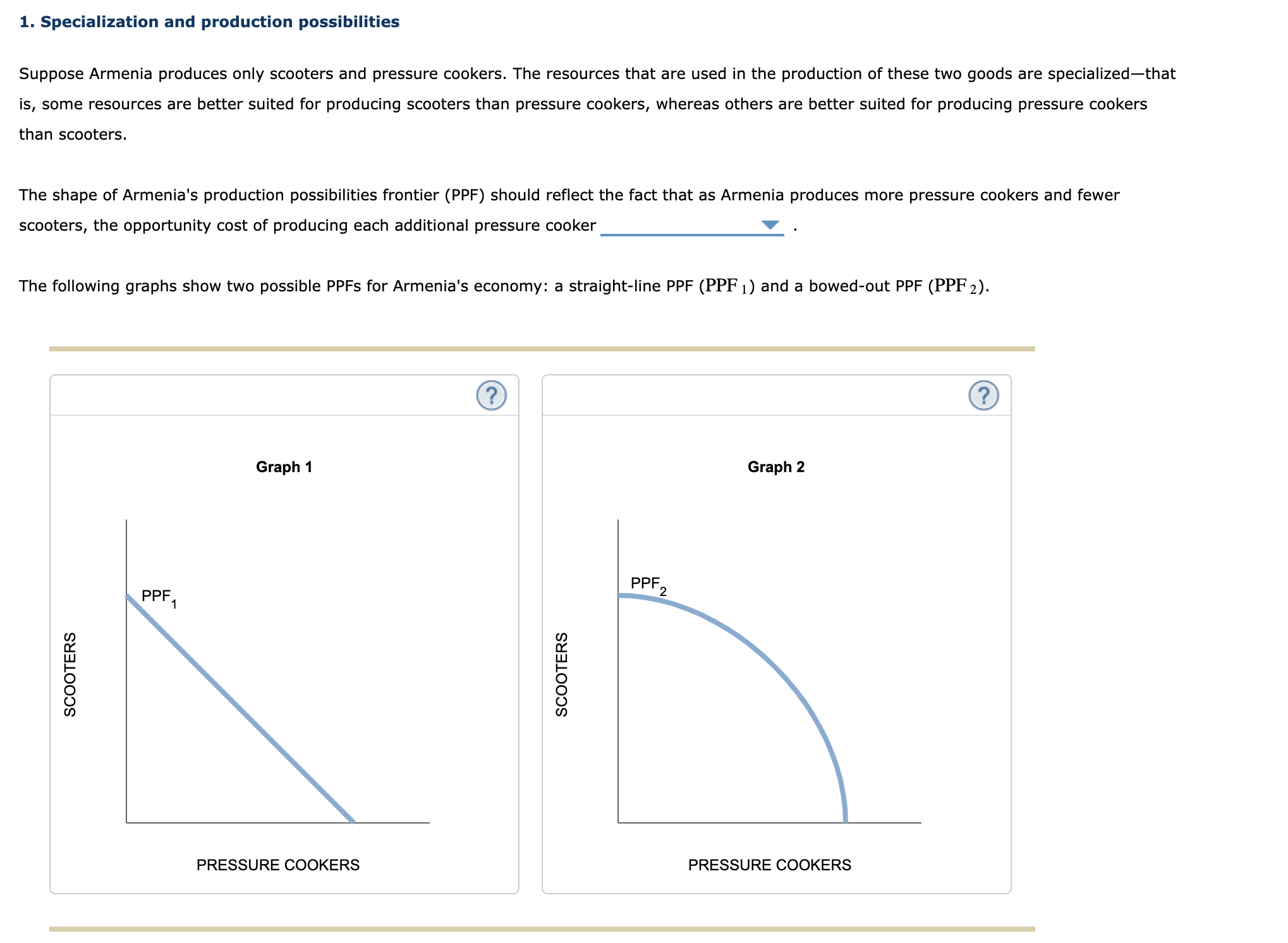

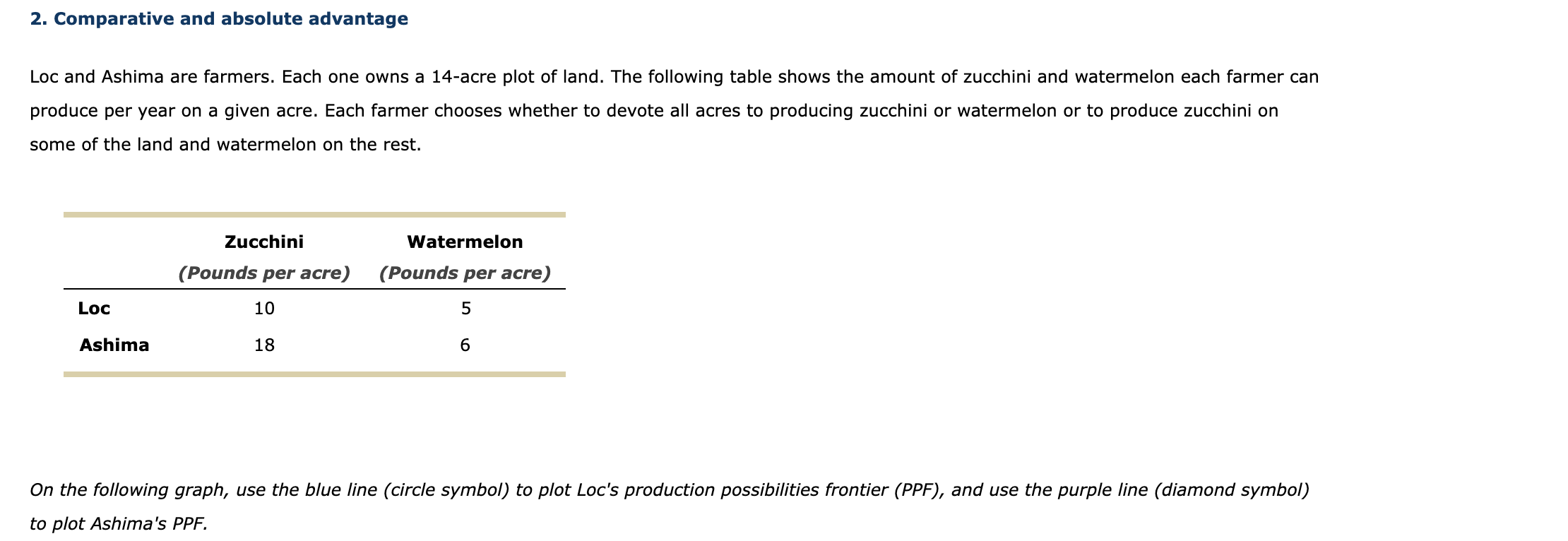
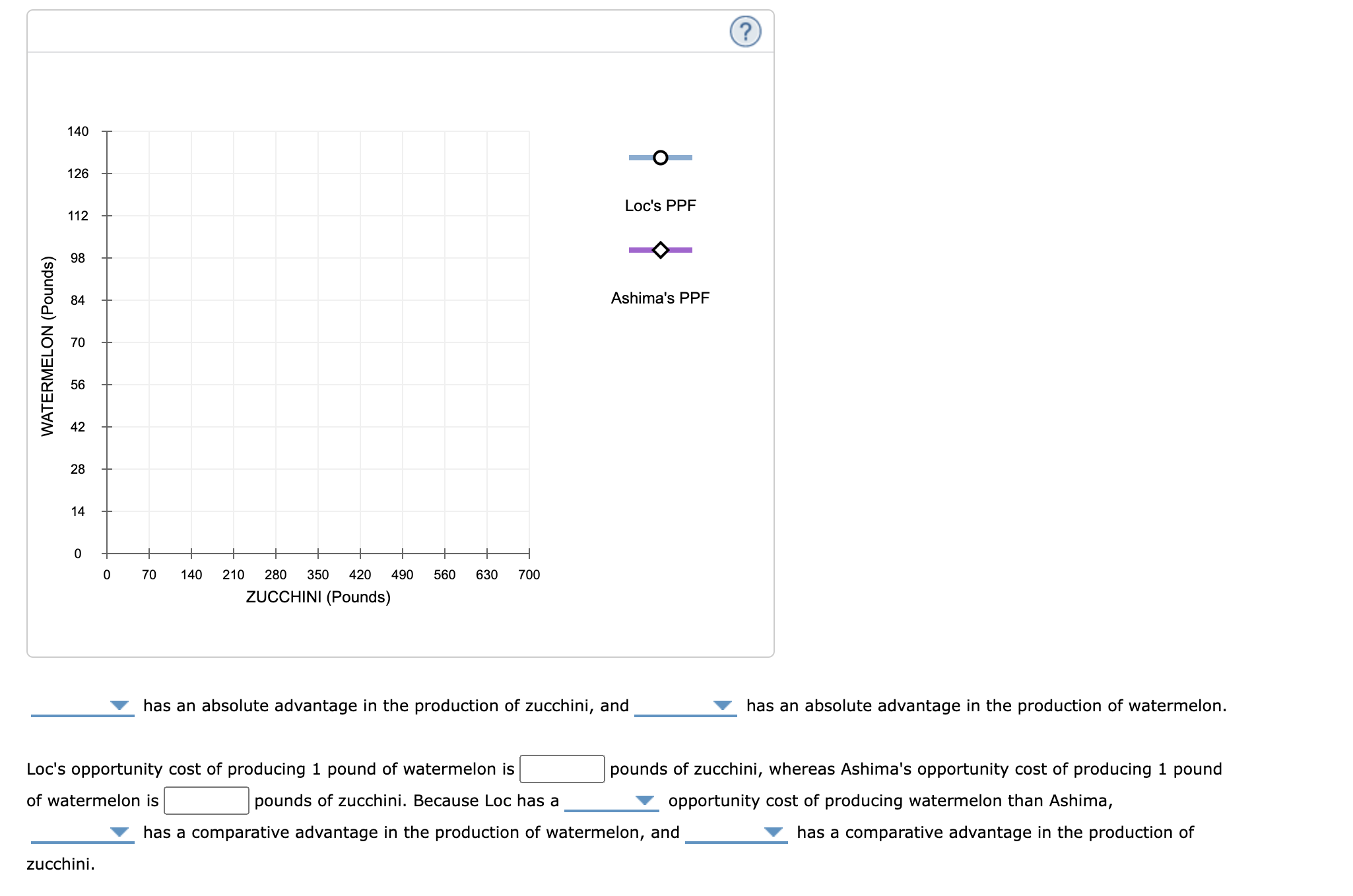
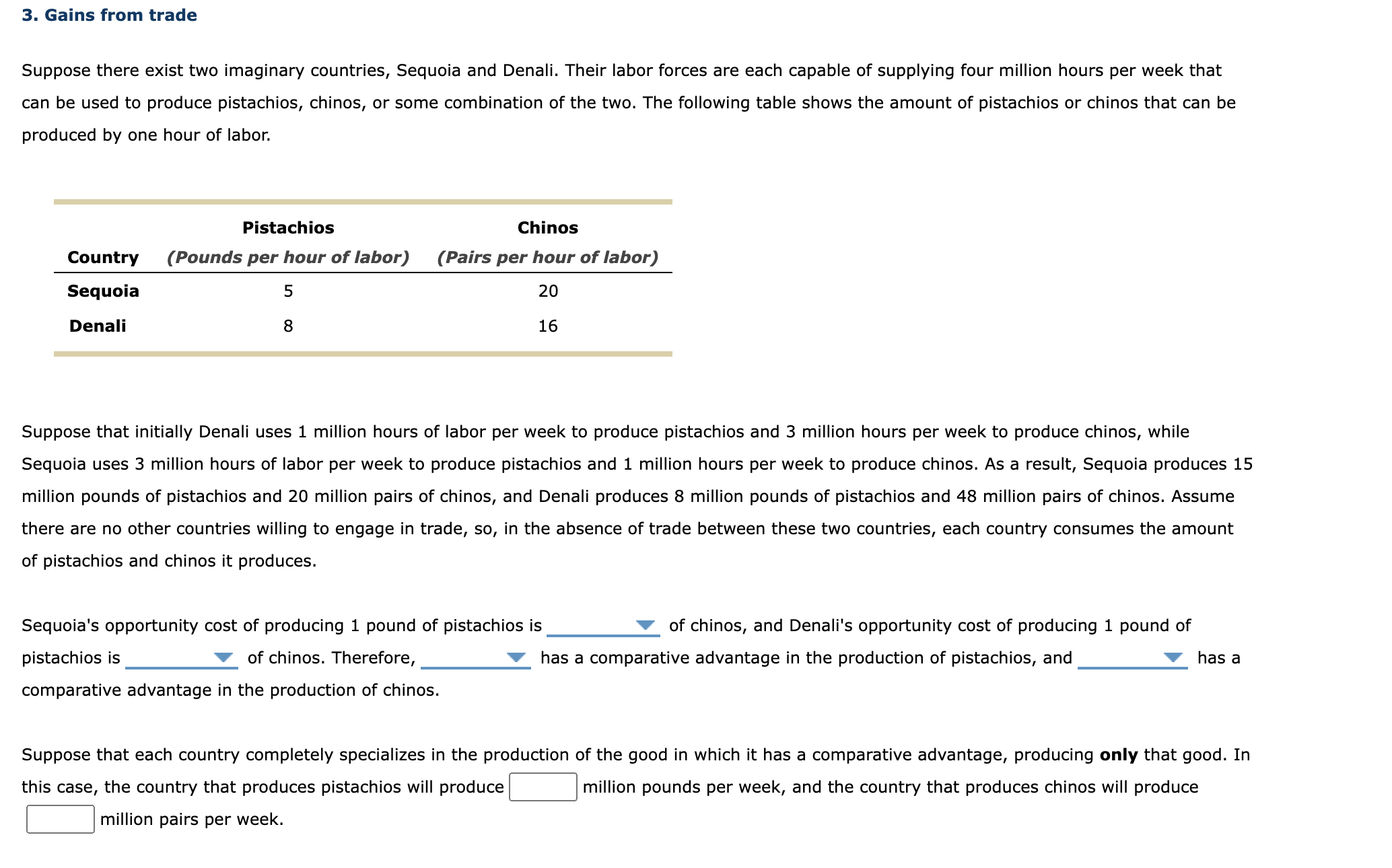
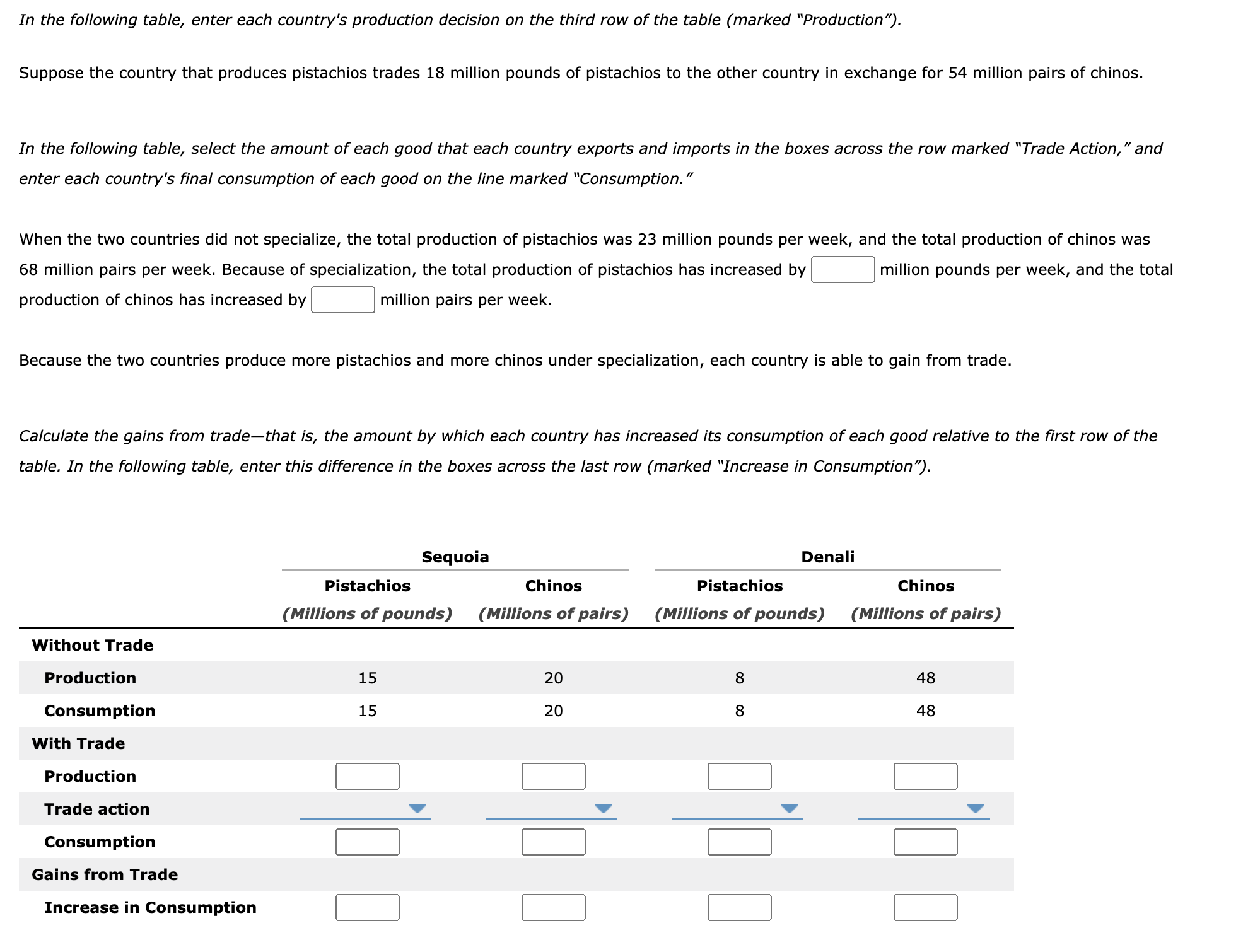
1. Specialization and production possibilities Suppose Armenia produces only scooters and pressure cookers. The resources that are used in the production of these two goods are specializedthat is, some resources are better suited for producing scooters than pressure cookers, whereas others are better suited for producing pressure cookers than scooters. The shape of Armenia's production possibilities frontier (PPF) should reflect the fact that as Armenia produces more pressure cookers and fewer scooters, the opportunity cost of producing each additional pressure cooker V . The following graphs show two possible PPFs for Armenia's economy: a straightline PPF (PPF 1) and a bowedout PPF (PPFZ). r? ('2': Graph 1 Graph 2 PPF PPF SCOOTERS SCOOTERS PRESSURE COOKERS PRESSURE COOKERS Based on the previous description, the tradeoff Armenia faces between producing pressure cookers and scooters is best represented by V 2. Comparative and absolute advantage Loc and Ashima are farmers. Each one owns a 14acre plot of land. The following table shows the amount of zucchini and watermelon each farmer can produce per year on a given acre. Each farmer chooses whether to devote all acres to producing zucchini or watermelon or to produce zucchini on some of the land and watermelon on the rest. Zucchini Watermelon (Pounds per acre) (Pounds per acre) Loc 10 5 Ashima 18 6 On the following graph, use the blue line (circle symbol) to plot Loc's production possibilities frontier (PPF), and use the purple line (diamond symbol) to plot Ashima's PPF. 140 O 126 Loc's PPF 112 98 84 Ashima's PPF 70 WATERMELON (Pounds) 56 42 28 14 0 0 70 140 210 280 350 420 490 560 630 700 ZUCCHINI (Pounds) has an absolute advantage in the production of zucchini, and has an absolute advantage in the production of watermelon. Loc's opportunity cost of producing 1 pound of watermelon is pounds of zucchini, whereas Ashima's opportunity cost of producing 1 pound of watermelon is pounds of zucchini. Because Loc has a opportunity cost of producing watermelon than Ashima, has a comparative advantage in the production of watermelon, and has a comparative advantage in the production of zucchini.3. Gains from trade Suppose there exist two imaginary countries, Sequoia and Denali. Their labor forces are each capable of supplying four million hours per week that can be used to produce pistachios, chinos, or some combination of the two. The following table shows the amount of pistachios or chinos that can be produced by one hour of labor. Pistachios Chinos Country (Pounds per hour of labor) (Pairs per hour of labor) Sequoia 5 20 Denali 8 16 Suppose that initially Denali uses 1 million hours of labor per week to produce pistachios and 3 million hours per week to produce chinos, while Sequoia uses 3 million hours of labor per week to produce pistachios and 1 million hours per week to produce chinos. As a result, Sequoia produces 15 million pounds of pistachios and 20 million pairs of chinos, and Denali produces 8 million pounds of pistachios and 48 million pairs of chinos. Assume there are no other countries willing to engage in trade, so, in the absence of trade between these two countries, each country consumes the amount of pistachios and chinos it produces. Sequoia's opportunity cost of producing 1 pound of pistachios is Y of chinos, and Denali's opportunity cost of producing 1 pound of pistachios is Y of chinos. Therefore, Y has a comparative advantage in the production of pistachios, and Y has a comparative advantage in the production of chinos. Suppose that each country completely specializes in the production of the good in which it has a comparative advantage, producing only that good. In this case, the country that produces pistachios will produce C] million pounds per week, and the country that produces chinos will produce million pairs per week. In the following table, enter each country's production decision on the third row of the table (marked \"Production\"). Suppose the country that produces pistachios trades 18 million pounds of pistachios to the other country in exchange for 54 million pairs of chinos. In the following table, select the amount of each good that each country exports and imports in the boxes across the row marked \"Trade Action, \" and enter each country's nal consumption of each good on the line marked \"Consumption. \" When the two countries did not specialize, the total production of pistachios was 23 million pounds per week, and the total production of chinos was 68 million pairs per week. Because of specialization, the total production of pistachios has increased by C] million pounds per week, and the total production of chinos has increased by |:] million pairs per week. Because the two countries produce more pistachios and more chinos under specialization, each country is able to gain from trade. Calculate the gains from tradethat is, the amount by which each country has increased its consumption of each good relative to the rst row of the table. In the following table, enter this difference in the boxes across the last row (marked \"Increase in Consumption \"). Sequoia Denali Pistachios Chinos Pistachios Chinos (Millions of pounds) (Millions of pairs) (Millions of pounds) (Millions of pairs) Without Trade Production 1 5 20 48 Consumption 15 20 48 With Trade Production Trade action V Consumption Gains from Trade |w m|u Increase in Consumption
Step by Step Solution
There are 3 Steps involved in it

Get step-by-step solutions from verified subject matter experts
 Study Help