Question: Please help with part e.) Efficency and Idle percentage As part of a major plant renovation project, the industrial engineering department has been asked to

Please help with part e.) Efficency and Idle percentagePlease help with part e.) Efficency and IdlePlease help with part e.) Efficency and IdlePlease help with part e.) Efficency and Idle
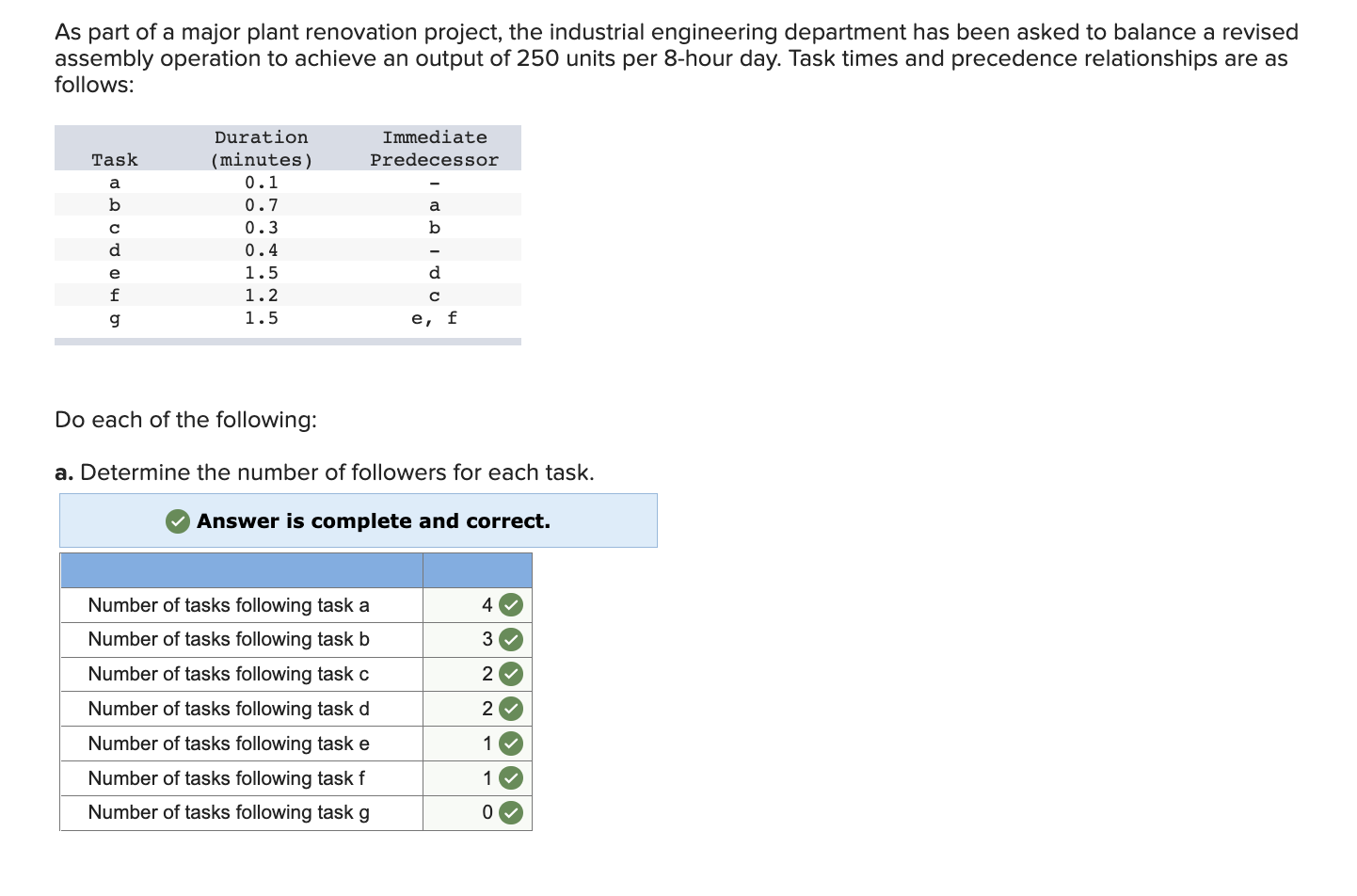
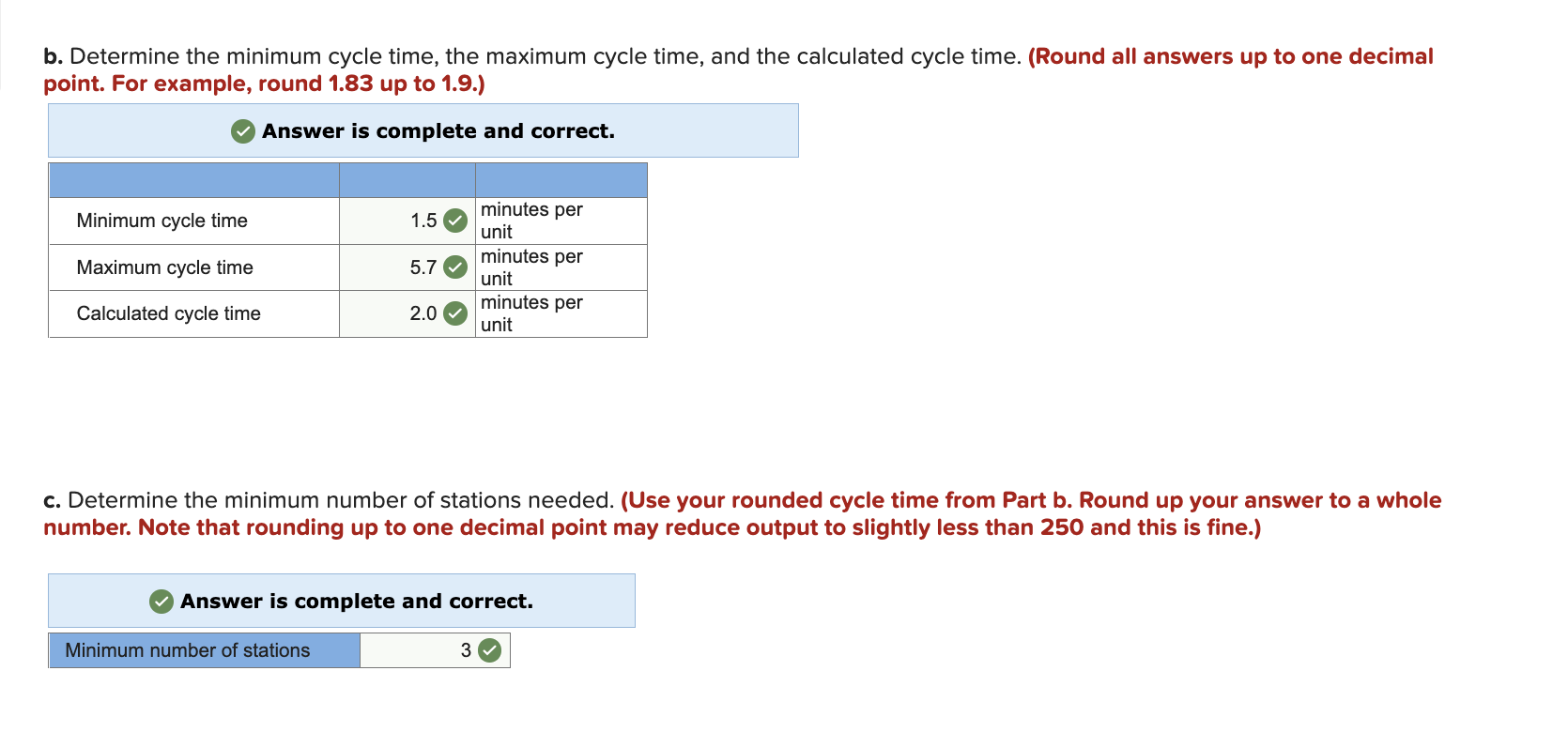
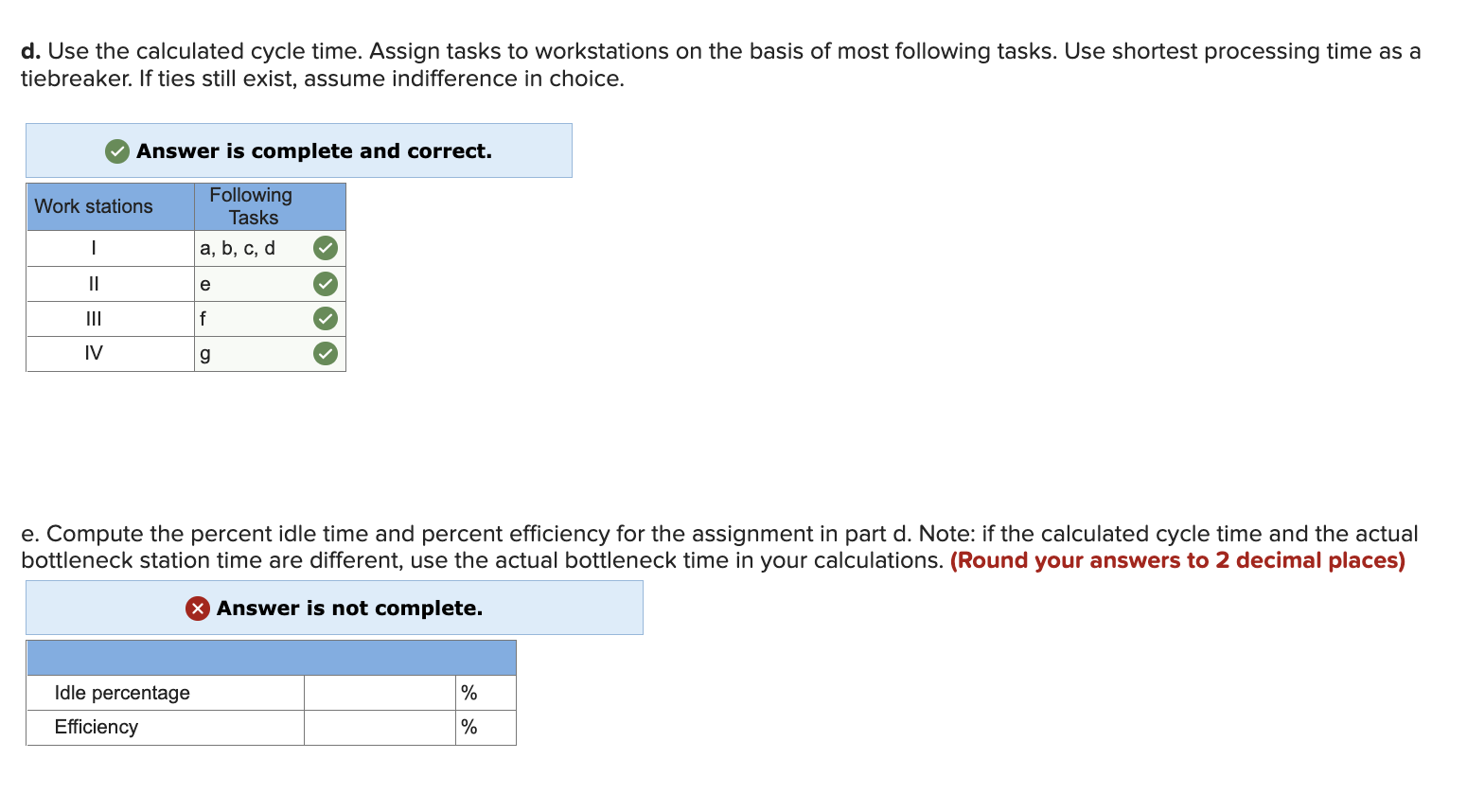
As part of a major plant renovation project, the industrial engineering department has been asked to balance a revised assembly operation to achieve an output of 250 units per 8-hour day. Task times and precedence relationships are as follows: Immediate Predecessor Task Duration (minutes) 0.1 0.7 0.3 0.4 1.5 1.2 a b 0 00041 d 1.5 e, f Do each of the following: a. Determine the number of followers for each task. Answer is complete and correct. 4 3 2 Number of tasks following task a Number of tasks following task b Number of tasks following task c Number of tasks following task d Number of tasks following task e Number of tasks following task f Number of tasks following task g 2 1 1 0 b. Determine the minimum cycle time, the maximum cycle time, and the calculated cycle time. (Round all answers up to one decimal point. For example, round 1.83 up to 1.9.) Answer is complete and correct. Minimum cycle time 1.5 Maximum cycle time 5.7 minutes per unit minutes per unit minutes per unit Calculated cycle time 2.0 c. Determine the minimum number of stations needed. (Use your rounded cycle time from Part b. Round up your answer to a whole number. Note that rounding up to one decimal point may reduce output to slightly less than 250 and this is fine.) Answer is complete and correct. Minimum number of stations 3 d. Use the calculated cycle time. Assign tasks to workstations on the basis of most following tasks. Use shortest processing time as a tiebreaker. If ties still exist, assume indifference in choice. Answer is complete and correct. Work stations Following Tasks a, b, c, d I Il e III f IV g e. Compute the percent idle time and percent efficiency for the assignment in part d. Note: if the calculated cycle time and the actual bottleneck station time are different, use the actual bottleneck time in your calculations. (Round your answers to 2 decimal places) Answer is not complete. % Idle percentage Efficiency %

Step by Step Solution

There are 3 Steps involved in it

1 Expert Approved Answer
Step: 1 Unlock blur-text-image

Question Has Been Solved by an Expert!

Get step-by-step solutions from verified subject matter experts

Step: 2 Unlock
Step: 3 Unlock

Students Have Also Explored These Related General Management Questions!