







Question: Please help with Qa 1. Consider a game where player 1 choose an action in {T, 3}, player 2 simultaneously chm an action in {L,M,
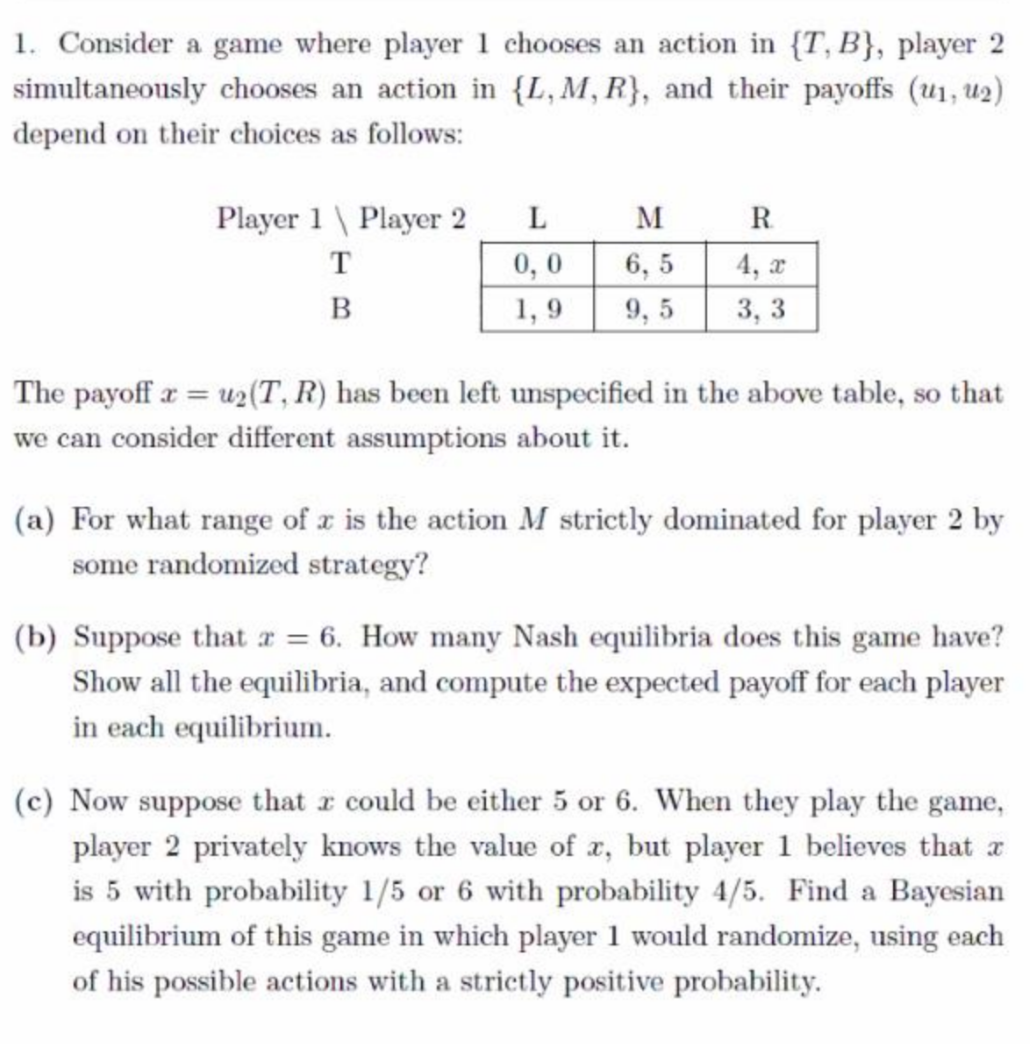
Please help with Qa
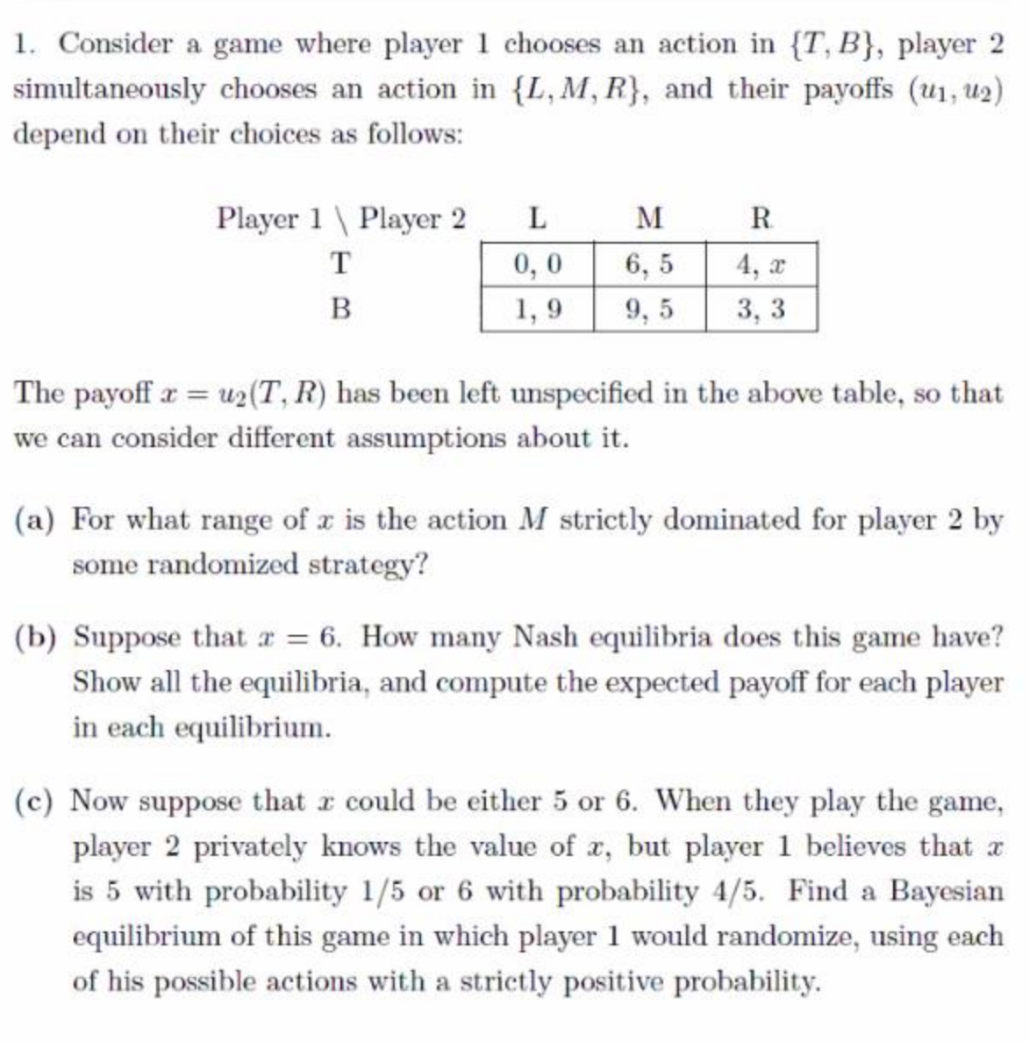
1. Consider a game where player 1 choose an action in {T, 3}, player 2 simultaneously chm an action in {L,M, R}, and their payoffs (111,112) depend on their choices as follows: Player 1 \\ Player 2 L M R B museum The payoffs: = u2(T, R) has been left unspecied in the above table, so that we can consider dilferent assumptions about it. (a) For what range of z: is the action M strictly dominated for player 2 by some randomized strategy? (h) Suppose that a: = 6. How many Nash equilibria does this game have? Show all the equilibria. and compute the expected payoff for each player in each equilibrium. (c) Now suppose that .1: could be either 5 or 6. When they play the game, player 2 privately knows the value of 2:, but player 1 believes that a: is 5 with probability [/5 or 6 with probability 4/5. Find a Bayesian equilibrium of this game in which player 1 would randomize, using each of his pomible actions with a strictly positive probability
Step by Step Solution
There are 3 Steps involved in it

Get step-by-step solutions from verified subject matter experts
 Study Help