







Question: Please help with questions 1-7 on case study Attempt 1 IN PROGRESS Next Up: Submit Assignment View Feedback Step 1: Please read the following: Triumph
Please help with questions 1-7 on case study 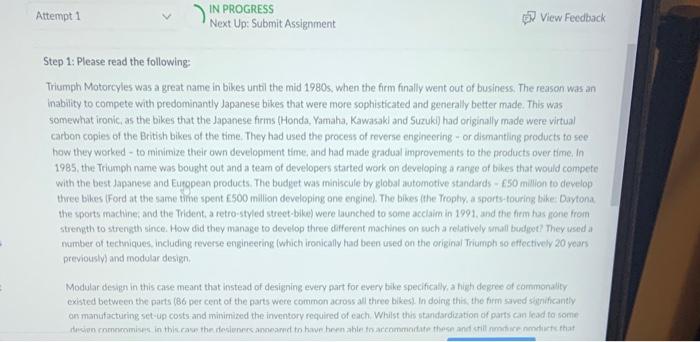
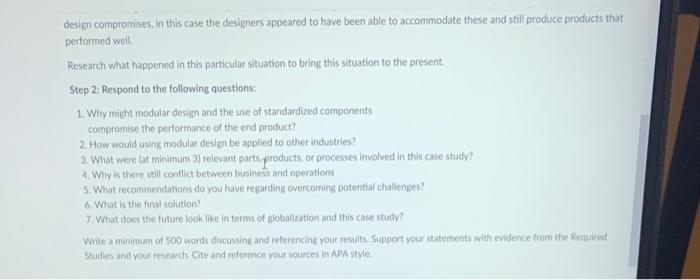
Attempt 1 IN PROGRESS Next Up: Submit Assignment View Feedback Step 1: Please read the following: Triumph Motorcyles was a great name in bikes until the mid 1980s, when the firm finally went out of business. The reason was an Inability to compete with predominantly Japanese bikes that were more sophisticated and generally better made. This was somewhat ironic, as the bikes that the Japanese firms (Honda, Yamaha, Kawasaki and Suzuki) had originally made were virtual carbon copies of the British bikes of the time. They had used the process of reverse engineering or dismanting products to see how they worked - to minimize their own development time, and had made gradual improvements to the products over time. In 1985, the Triumph name was bought out and a team of developers started work on developing a range of bikes that would compete with the best Japanese and European products. The budget was miniscule by global automotive standards - 50 million to develop three bikes Ford at the same time spent E500 million developing one engine). The bikes (the Trophy, a sports-touring bike Daytona the sports machine, and the Trident, a retro-styled street-bike) were tiunched to some acclaim in 1991, and the firm has one from strength to strengthy since. How did they manage to develop three different machines on such a relatively wral buckpot? They used number of techniques, including reverse engineering (which ironically had been used on the original Triumph so effectively 20 years previously and modular design, Modular design in this case meant that instead of designing every part for every bike specifically, a high degree of commonally existed between the parts (86 per cent of the parts were common across all the bikes. In doing this, the fire saved sinificantly on manufacturing set-up costs and minimized the inventory required of each. Whilst this standardization of parts can lead to some din comises in this thesis and to have been able to commute these and critice that design compromises, in this case the designers appeared to have been able to accommodate these and still produce products that performed well Research what happened in this particular situation to bring this situation to the present, Step 2: Respond to the following questions: 1. Why might modular design and the use of standardized components compromise the performance of the end product? 2. How would using modular design be applied to other industries? 3. What were lat minimum 3) relevant parts, products, or processes involved in this case study? 4. Why is there still conflict between business and operations 5. What recommendations do you have regarding overcoming potential challenges? 6. What is the final solution! 7. What does the future look like in terms of globalization and this case study? Write a minimum of 500 words discussing and referencing your results. Support your statements with evidence from the Required Studies and your research Cite and reference your sources in APA style Step by Step Solution
There are 3 Steps involved in it
1 Expert Approved Answer
Step: 1 Unlock

Question Has Been Solved by an Expert!
Get step-by-step solutions from verified subject matter experts
Step: 2 Unlock
Step: 3 Unlock
 Study Help