



Question: Please help with these questions, i found the subject quite complicated . Thanks in advance the actual homework is in your site as well under
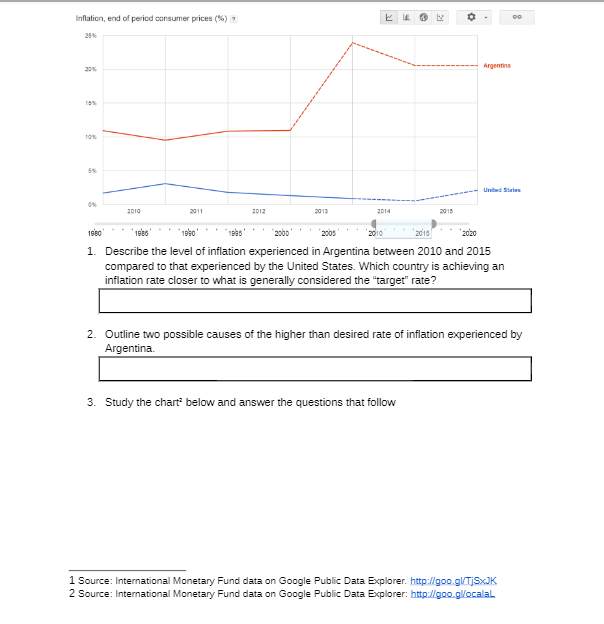
Please help with these questions, i found the subject quite complicated . Thanks in advance the actual homework is in your site as well under contractionary fiscal policy 04.02.01 name
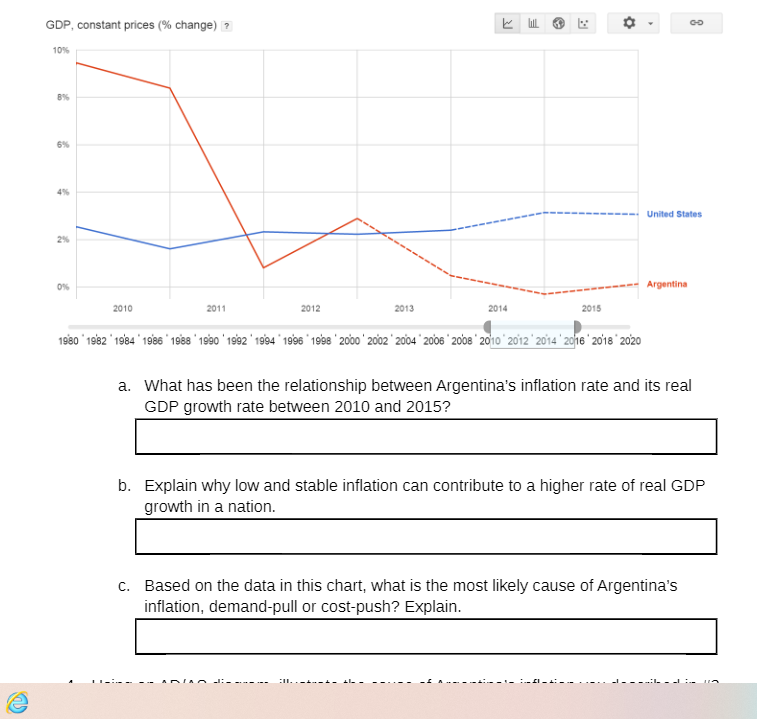
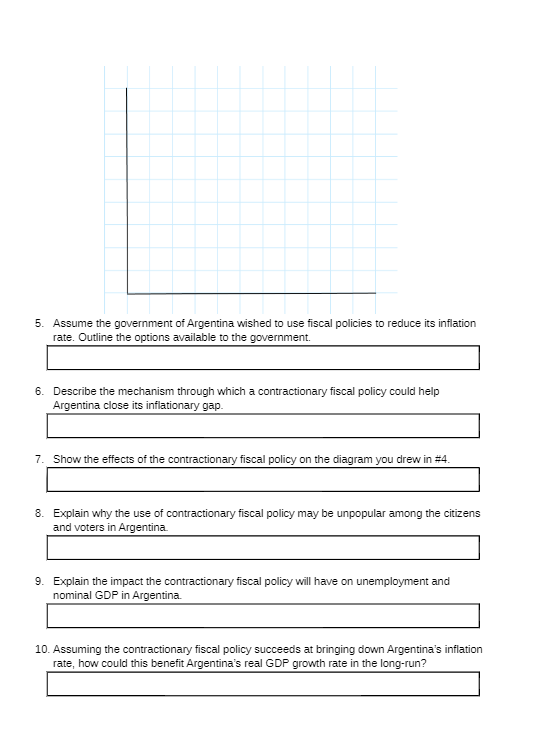
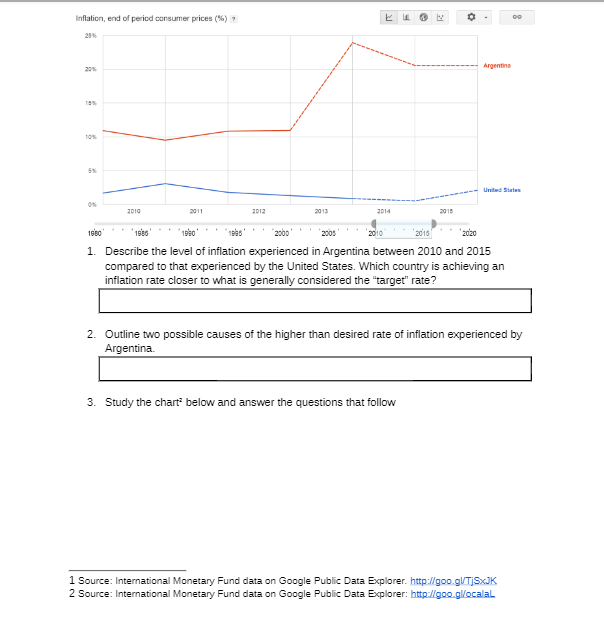
GDP, constant prices (% change) ? 10% United States 2% Argentina 2010 2011 2012 2013 2014 2015 1980 1982 1984 1986 1988 1990 1992 1994 1996 1998 2000 2002 2004 2006 2008 2010 2012 2014 2016 2018 2020 a. What has been the relationship between Argentina's inflation rate and its real GDP growth rate between 2010 and 2015? b. Explain why low and stable inflation can contribute to a higher rate of real GDP growth in a nation. c. Based on the data in this chart, what is the most likely cause of Argentina's inflation, demand-pull or cost-push? Explain.5. Assume the government of Argentina wished to use fiscal policies to reduce its inflation rate. Outline the options available to the government. 6. Describe the mechanism through which a contractionary fiscal policy could help Argentina close its inflationary gap 7. Show the effects of the contractionary fiscal policy on the diagram you drew in #4. 8. Explain why the use of contractionary fiscal policy may be unpopular among the citizens and voters in Argentina 9. Explain the impact the contractionary fiscal policy will have on unemployment and nominal GDP in Argentina. 10. Assuming the contractionary fiscal policy succeeds at bringing down Argentina's inflation rate, how could this benefit Argentina's real GDP growth rate in the long-run?Inflation, end of period consumer prices (%) ? Argentina United States 301 1 1012 3013 2015 1980 "2060' '2005' '2010 2015 *2020 1. Describe the level of inflation experienced in Argentina between 2010 and 2015 compared to that experienced by the United States. Which country is achieving an inflation rate closer to what is generally considered the "target" rate? 2. Outline two possible causes of the higher than desired rate of inflation experienced by Argentina. 3. Study the chart' below and answer the questions that follow 1 Source: International Monetary Fund data on Google Public Data Explorer. http:/goo.gl/TjSxJK 2 Source: International Monetary Fund data on Google Public Data Explorer: http:/goo.gl/ocalaL
Step by Step Solution
There are 3 Steps involved in it

Get step-by-step solutions from verified subject matter experts