



Question: Please help with these questions! Measuring Distance You'll need a tape measure or scale. Your tape measure has millimeter (mm) divisions, which means you should
Please help with these questions!
Measuring Distance
You'll need a tape measure or scale. Your tape measure has millimeter (mm) divisions, which means you should make your best estimate to sub-millimeter accuracy. While that may seem excessive, you have more information than just the lines; you can see which line it's closer to. If the thing you're measuring is between the 7th and 8th line (i.e. between 7 mm and 8 mm), which is it closer to? Is it 7.4 mm or 7.8 mm? Different people may come up with a slightly different number at the end, and that last digit represents the uncertainty in the measurement.
While it is uncertain, it is still worth including when reporting. The measurement 7.2 mm gives more information than 7 mm. 7.2 mm implies 7.2 +/- 0.1 mm, whereas 7 mm implies 7 +/- 1 mm.
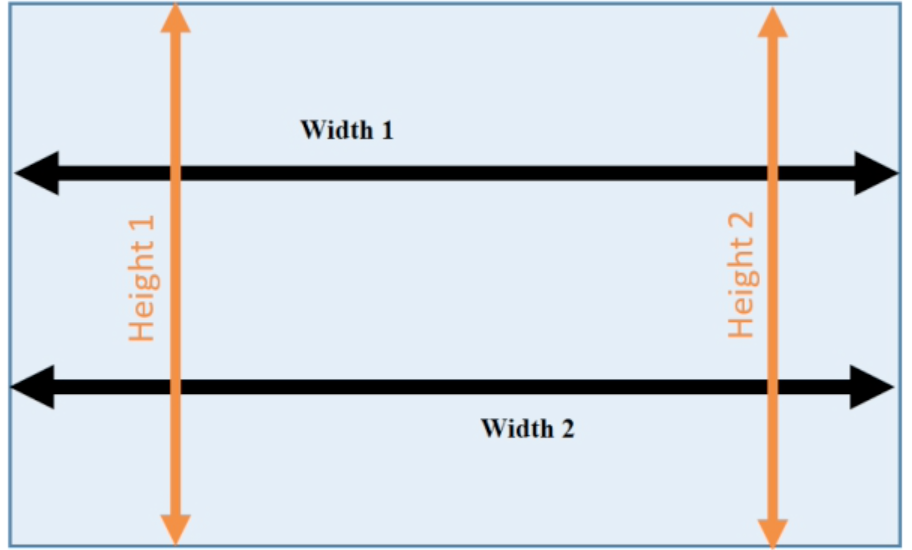
1) Pick a notebook or table, anything square or rectangle in shape, and use your tape measure to take six different width measurements and six different height measurements. Each width measurement should be in a different place (see the figure below, showing Width 1 and Width 2 in different spots), and the same for each height measurement.
\f
Step by Step Solution
There are 3 Steps involved in it

Get step-by-step solutions from verified subject matter experts