







Question: please if you know you cant answer all dont attempt it because this is my last question of the month continuation of number 3 2.
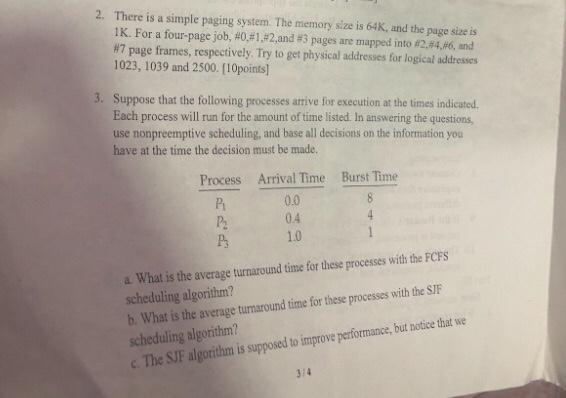
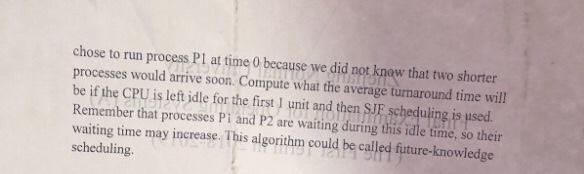
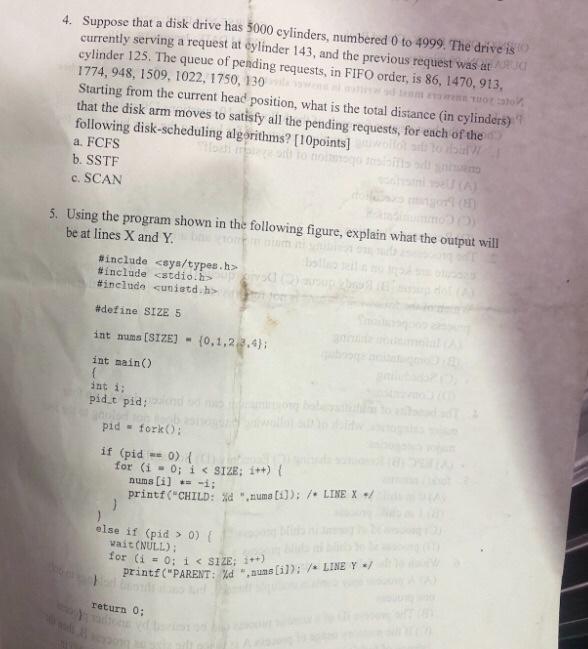
2. There is a simple paging system. The memory size is 64K, and the page size is IK. For a four-page job, #0#1.22 and 13 pages are mapped into 2.74,6, and #7 page frames, respectively. Try to get physical addresses for logical addresses 1023, 1039 and 2500. [10points) 3. Suppose that the following processes arrive for execution at the times indicated. Each process will run for the amount of time listed. In answering the questions, use nonpreemptive scheduling, and base all decisions on the information you have at the time the decision must be made. Process Arrival Time Burst Time 0.0 P2 04 P3 1.0 a What is the average turnaround time for these processes with the FCFS scheduling algorithm? b. What is the average tumaround time for these processes with the SIF scheduling algorithm c. The SJF algorithm is supposed to improve performance, but notice that we chose to run process Pl at time 0 because we did not know that two shorter processes would arrive soon. Compute what the average turnaround time will be if the CPU is left idle for the first 1 unit and then SJF scheduling is used. P2 waiting time may increase. This algorithm could be called future-knowledge scheduling. for (i = 0; i #include
Step by Step Solution
There are 3 Steps involved in it

Get step-by-step solutions from verified subject matter experts
 Study Help