Please include a class diagram and
change the linked list implementation of class List2 in the following way:
Convert it to a circular list. The node after the last node should be the first node. The node before the first node should be the last node. Do not change the implementation of class Node.
Implement all operations currently available in the class List. Do not change file list2.h.
Add a method empty(), which should return true if the circular list is empty and false otherwise.
Add a method print() to print the values in the nodes of the circular list, from the first to the last node.
Then:
Use your circular list implementation to implement a circular queue in the following three ways:
Using composition
Overriding selected public methods with private methods
Using private inheritance.
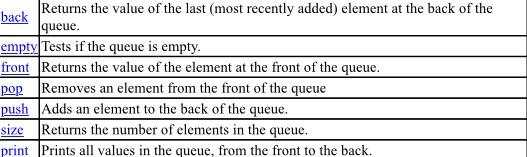
The circular queue should expose only the following methods in picture:
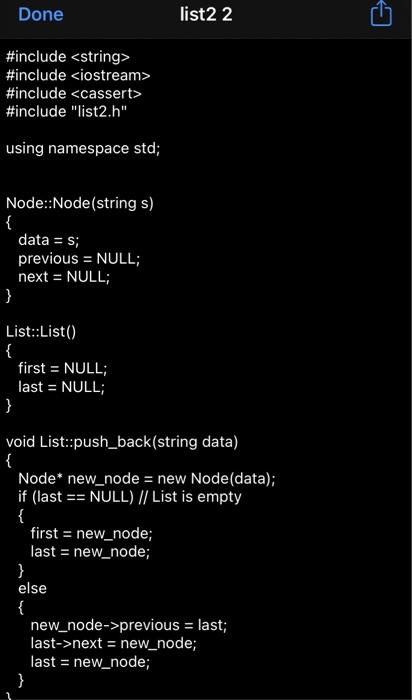
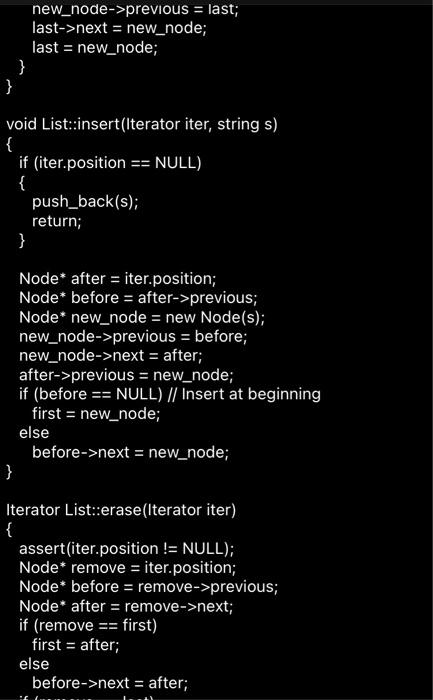
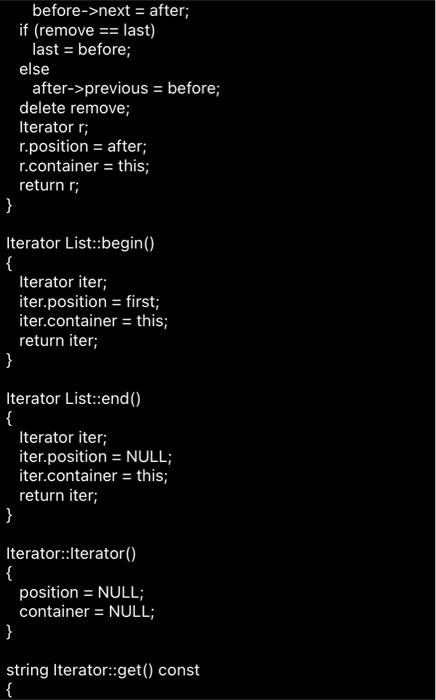
List2.cpp--------------------------
List2.h------------------
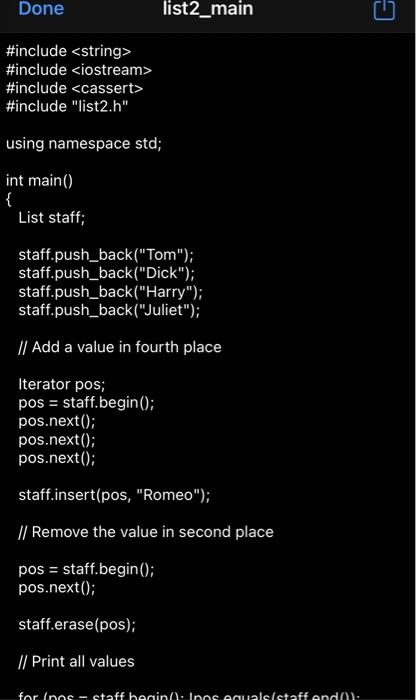
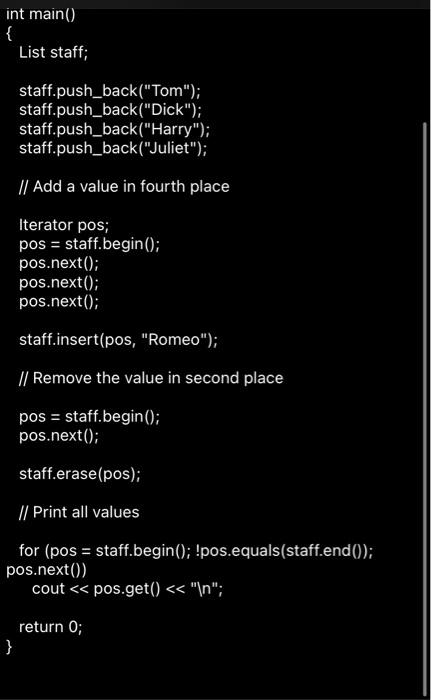
List2_main.cpp------------------
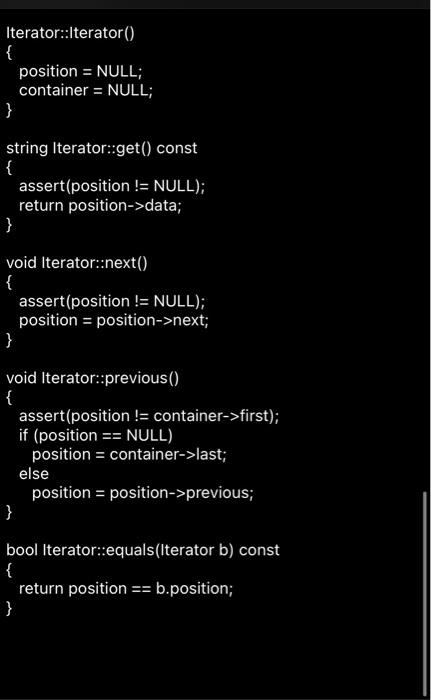
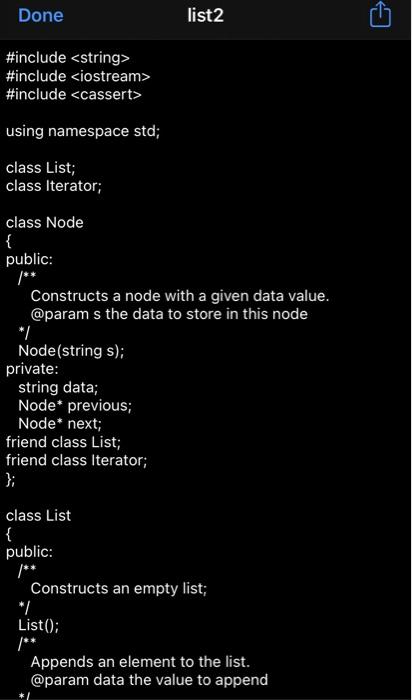
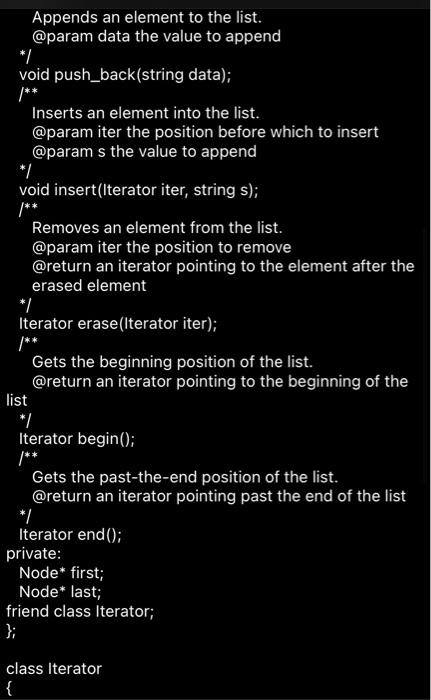
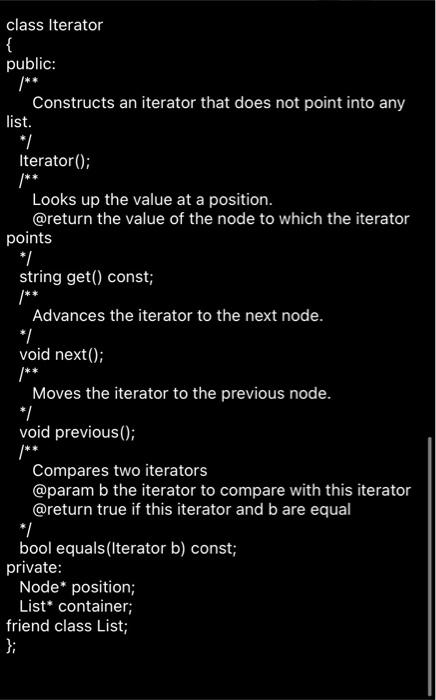
back Returns the value of the last (most recently added) element at the back of the queue. empty Tests if the queue is empty. front Returns the value of the element at the front of the queue. pop Removes an element from the front of the queue push Adds an element to the back of the queue. size Returns the number of elements in the queue. print Prints all values in the queue, from the front to the back. Done list2 2 f #include #include #include #include "list2.h" using namespace std; Node::Node(string s) { data = s; previous = NULL; next = NULL; List::List() { first = NULL; last = NULL; } void List::push_back(string data) { Node* new_node = new Node(data); if (last == NULL) // List is empty { first = new_node; last = new_node; } else { new_node->previous = last; last->next = new_node; last = new_node; } new_node->previous = last; last->next = new_node; last = new_node; } } void List::insert(Iterator iter, string s) { if (iter.position == NULL) { push_back(s); return; } Node* after = iter.position; Node* before = after->previous; Node* new_node = new Node(s); new_node->previous = before; new_node->next = after; after->previous = new_node; if (before == NULL) // Insert at beginning first = new_node; else before->next = new_node; } Iterator List::erase(Iterator iter) { assert(iter.position != NULL); Node* remove = iter.position; Node* before = remove->previous; Node* after = remove->next; if (remove == first) first = after; else before->next = after; before->next = after; if (remove == last) last = before; else after->previous = before; delete remove; Iterator r; r.position = after; r.container = this; return r; } Iterator List::begin() { Iterator iter; iter.position = first; iter.container = this; return iter; Iterator List::end() { Iterator iter; iter.position = NULL; iter.container = this; return iter; } Iterator::Iterator() { position = NULL; container = NULL; } string Iterator::get() const { Iterator::Iterator() { position = NULL; container = NULL; string Iterator::get() const { assert(position != NULL); return position->data; } void Iterator::next() { assert(position != NULL); position = position->next; } void Iterator::previous() { assert(position != container->first); if (position == NULL) position = container->last; else position = position->previous; } bool Iterator::equals(Iterator b) const { return position b.position; } Done list2 1 #include #include #include using namespace std; class List; class Iterator; class Node public: Constructs a node with a given data value. @param s the data to store in this node * Node(string s); private: string data; Node* previous; Node* next; friend class List; friend class Iterator; }; class List { public: Constructs an empty list; */ List(); Appends an element to the list. @param data the value to append * Appends an element to the list. @param data the value to append */ void push_back(string data); Inserts an element into the list. @param iter the position before which to insert @param s the value to append */ void insert(Iterator iter, string s); Removes an element from the list. @param iter the position to remove @return an iterator pointing to the element after the erased element */ Iterator erase(Iterator iter); Gets the beginning position of the list. @return an iterator pointing to the beginning of the list *1 Iterator begin(); Gets the past-the-end position of the list. @return an iterator pointing past the end of the list * Iterator end(); private: Node* first; Node* last; friend class Iterator; }; class Iterator { class Iterator { public: Constructs an iterator that does not point into any list. */ Iterator(); Looks up the value at a position. @return the value of the node to which the iterator points * string get() const; Advances the iterator to the next node. */ void next(); Moves the iterator to the previous node. */ void previous(); Compares two iterators @param b the iterator to compare with this iterator @return true if this iterator and b are equal */ bool equals(Iterator b) const; private: Node* position; List* container; friend class List; }; Done list2_main #include #include #include #include "list2.h" using namespace std; int main() List staff; staff.push_back("Tom"); staff.push_back("Dick"); staff.push_back("Harry"); staff.push_back("Juliet"); // Add a value in fourth place Iterator pos; pos = staff.begin(); pos.next(); pos.next(); pos.next(); staff.insert(pos, "Romeo"); // Remove the value in second place pos = staff.begin(); pos.next(); staff.erase(pos); // Print all values for Ines-stoff begin(). Inos equals(staff and/- int main() { List staff; staff.push_back("Tom"); staff.push_back("Dick"); staff.push_back("Harry"); staff.push_back("Juliet"); || Add a value in fourth place Iterator pos; pos = staff.begin(); pos.next(); pos.next(); pos.next(); staff.insert(pos, "Romeo"); // Remove the value in second place pos = staff.begin(); pos.next(); staff.erase (pos); // Print all values for (pos = staff.begin(); !pos.equals(staff.end(); pos.next()) cout









 Study Help