







Question: Please include all text and figures in a SINGLE file. Do not upload multiple files. Late work will not be accepted, but your lowest problem
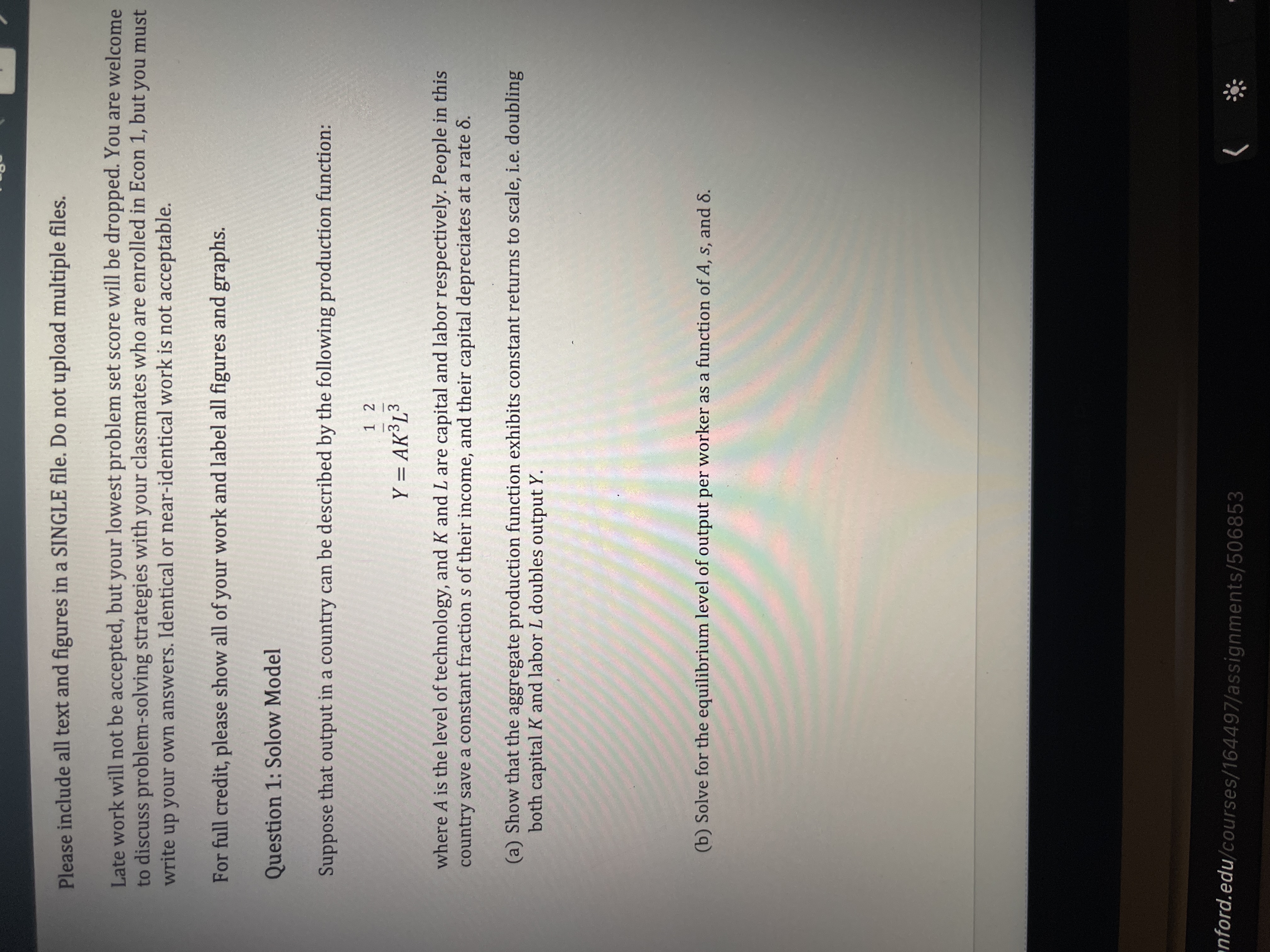
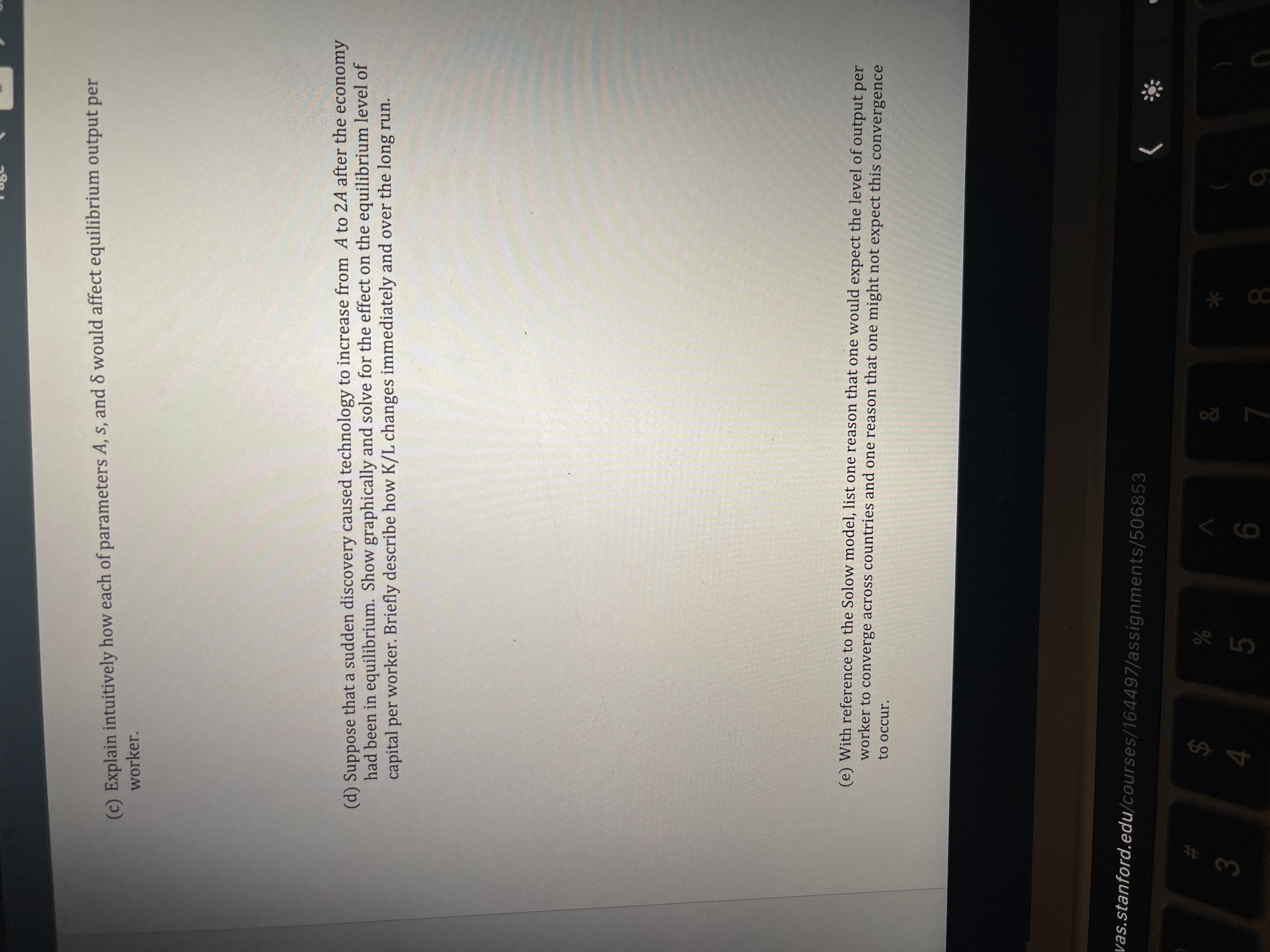
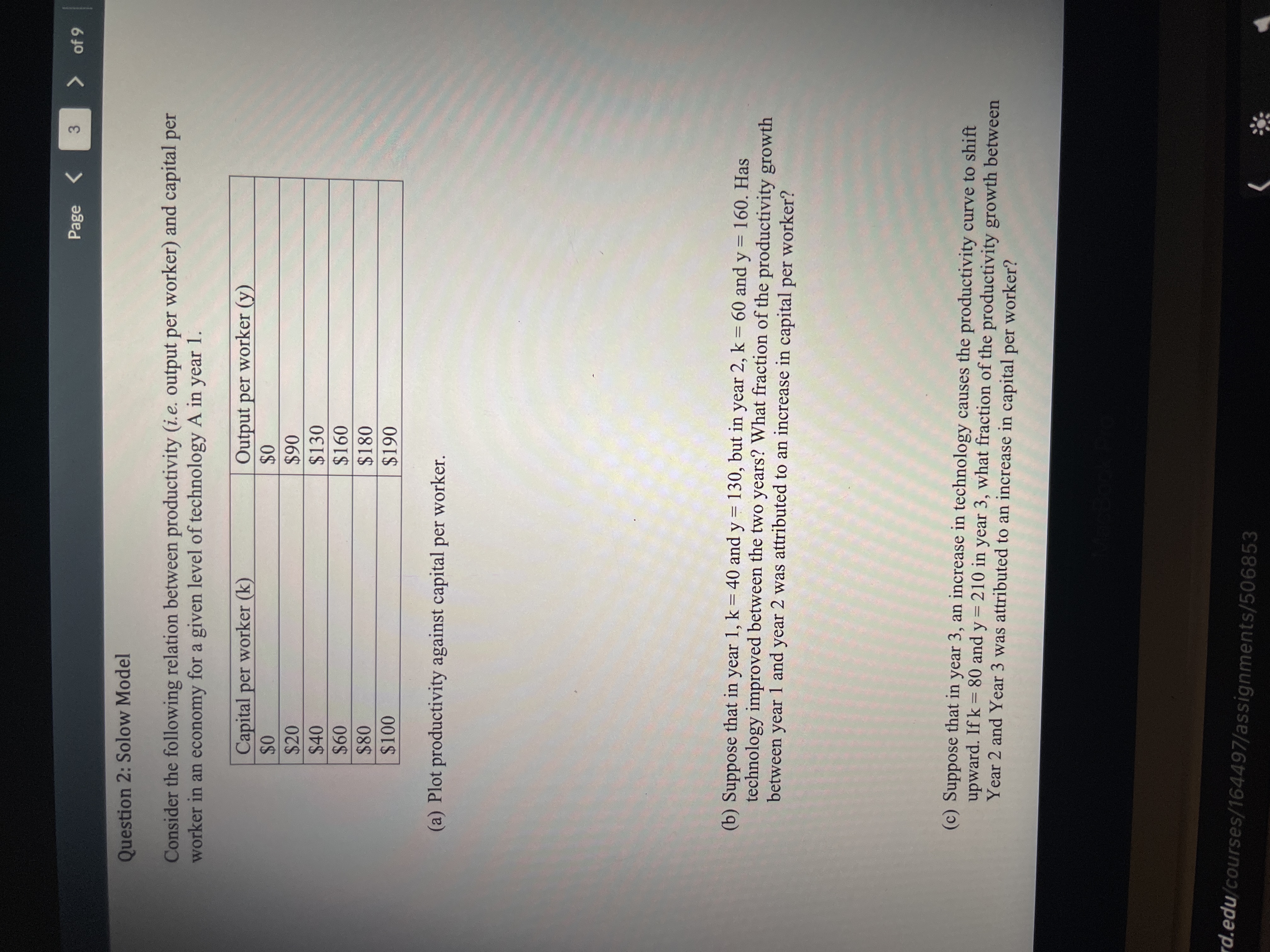
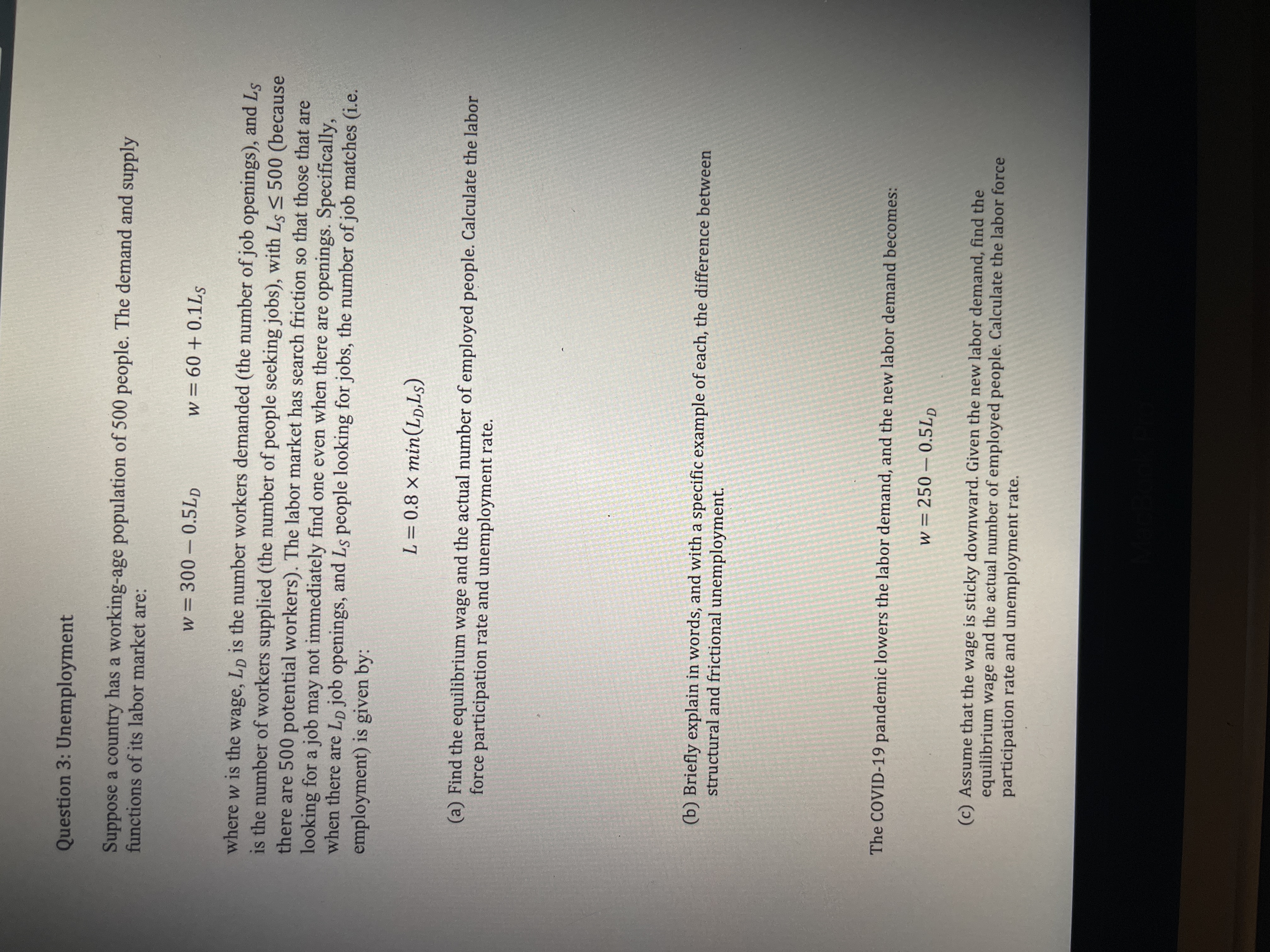

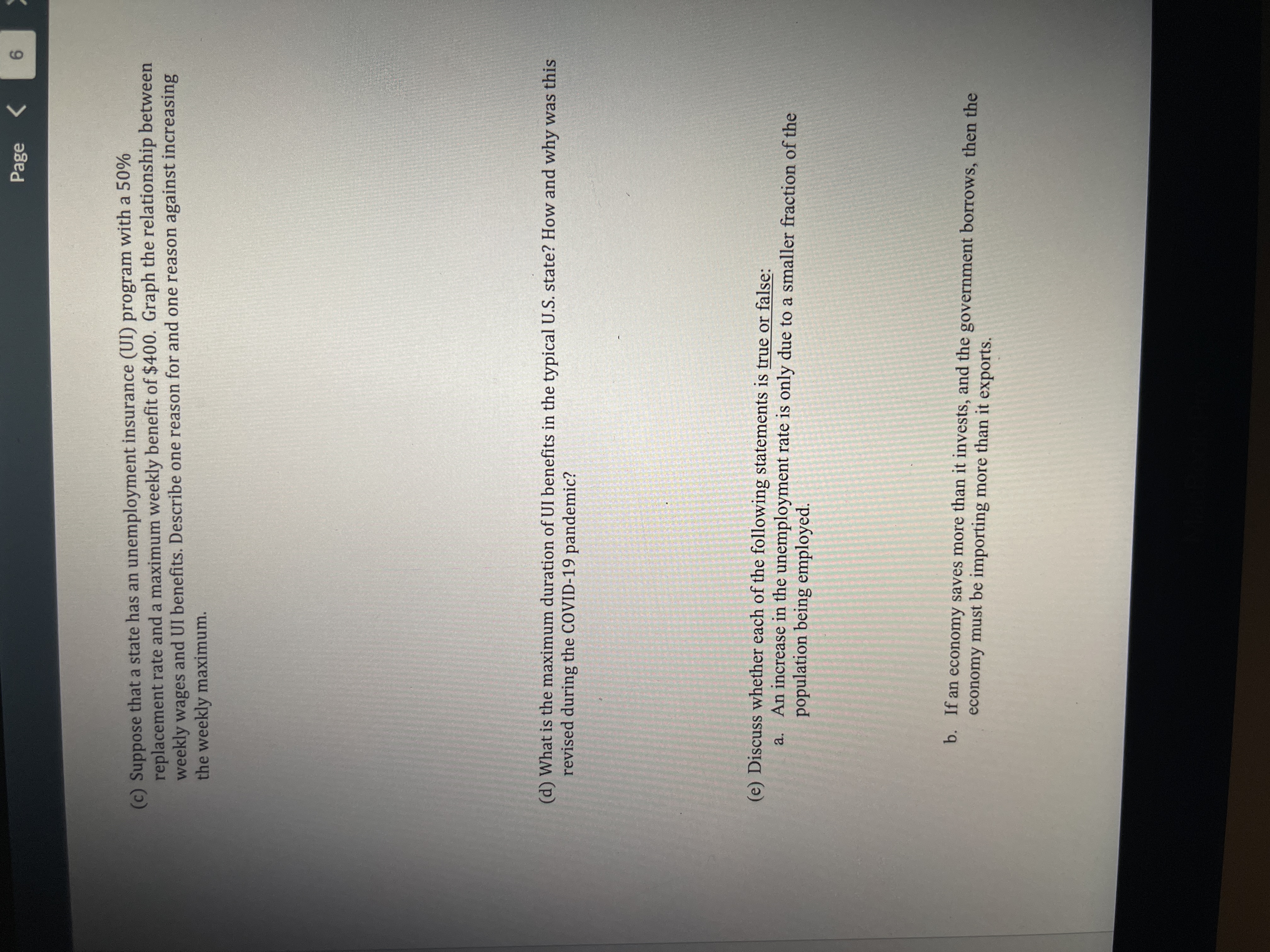
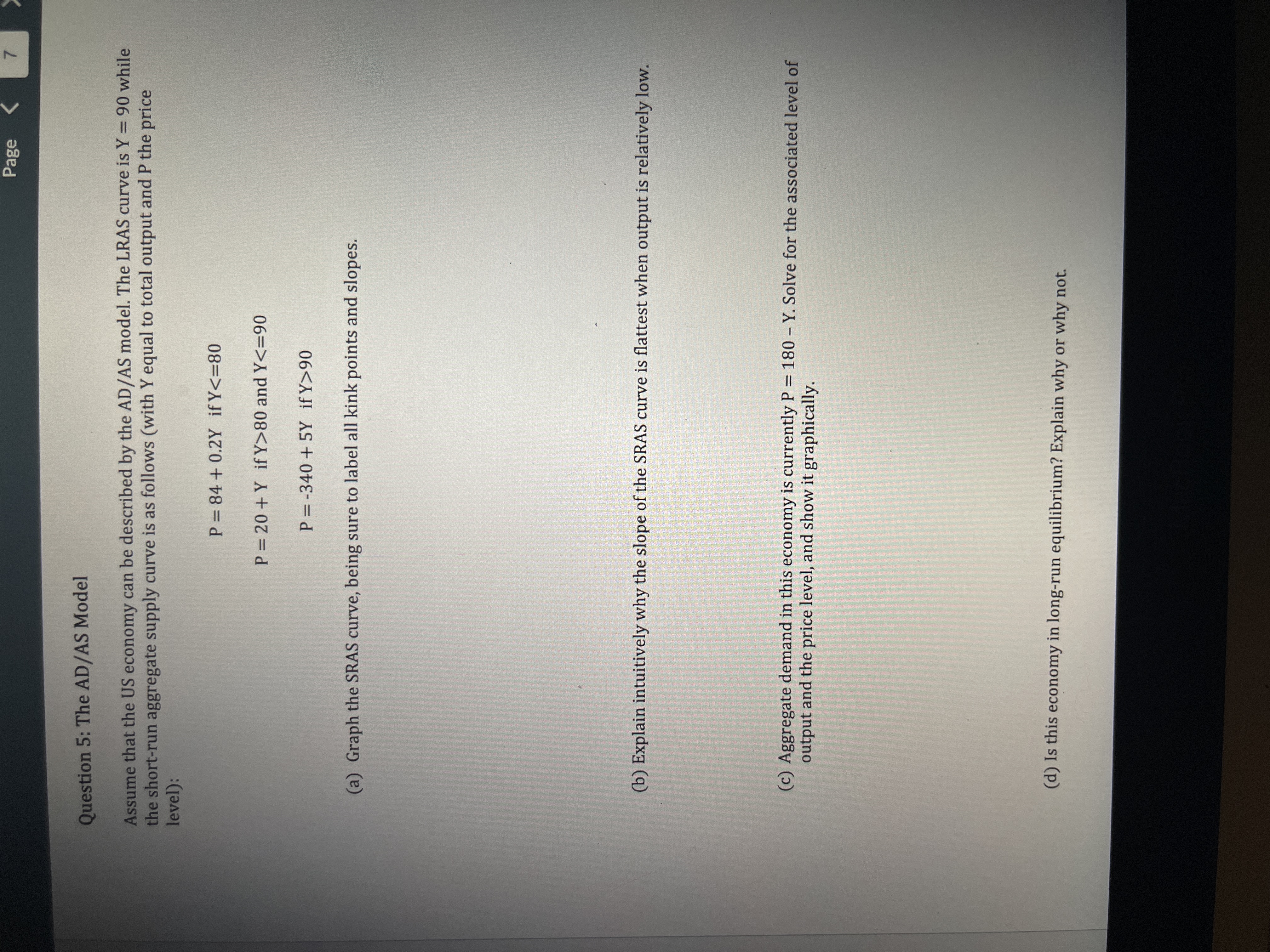
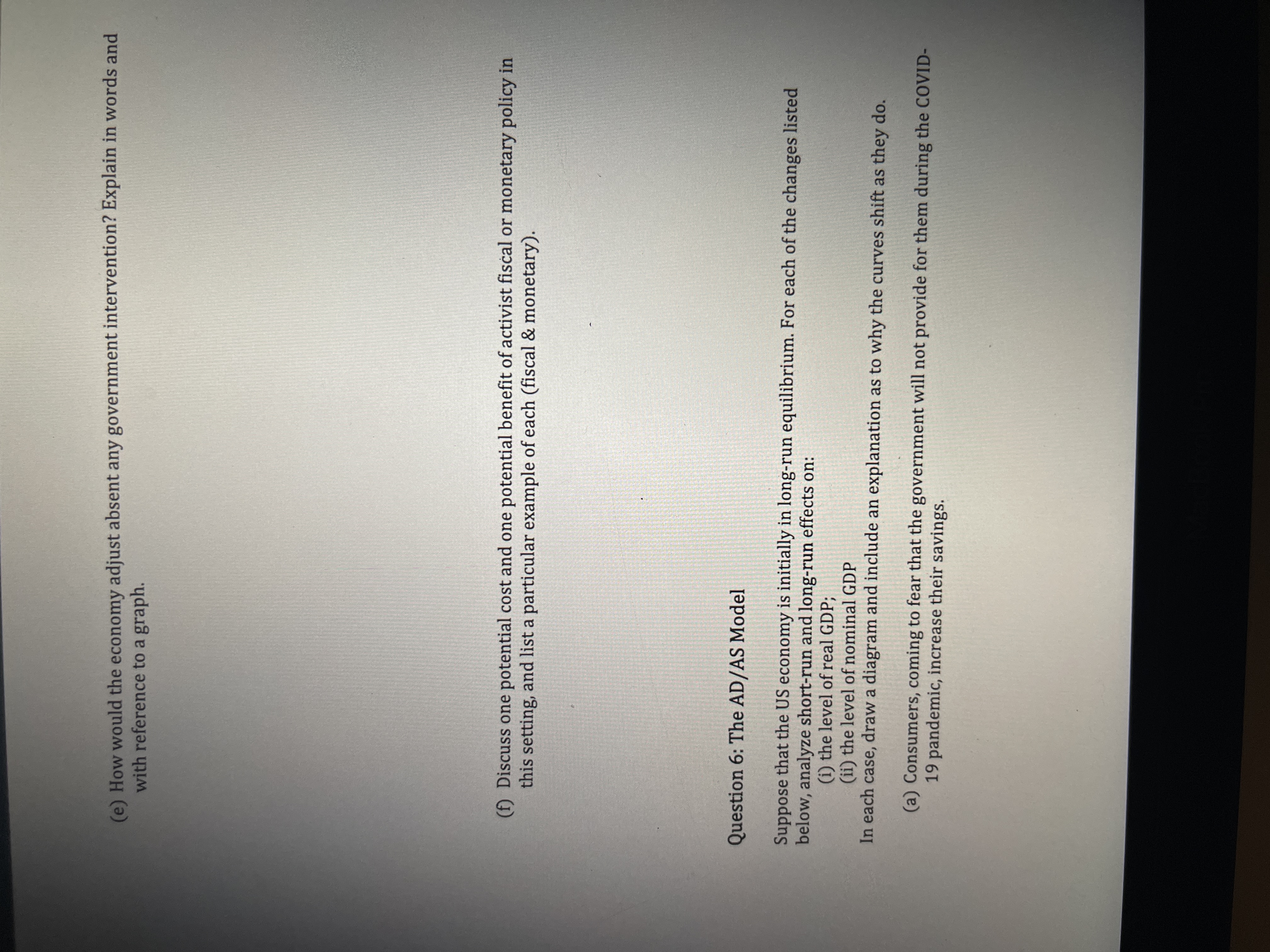

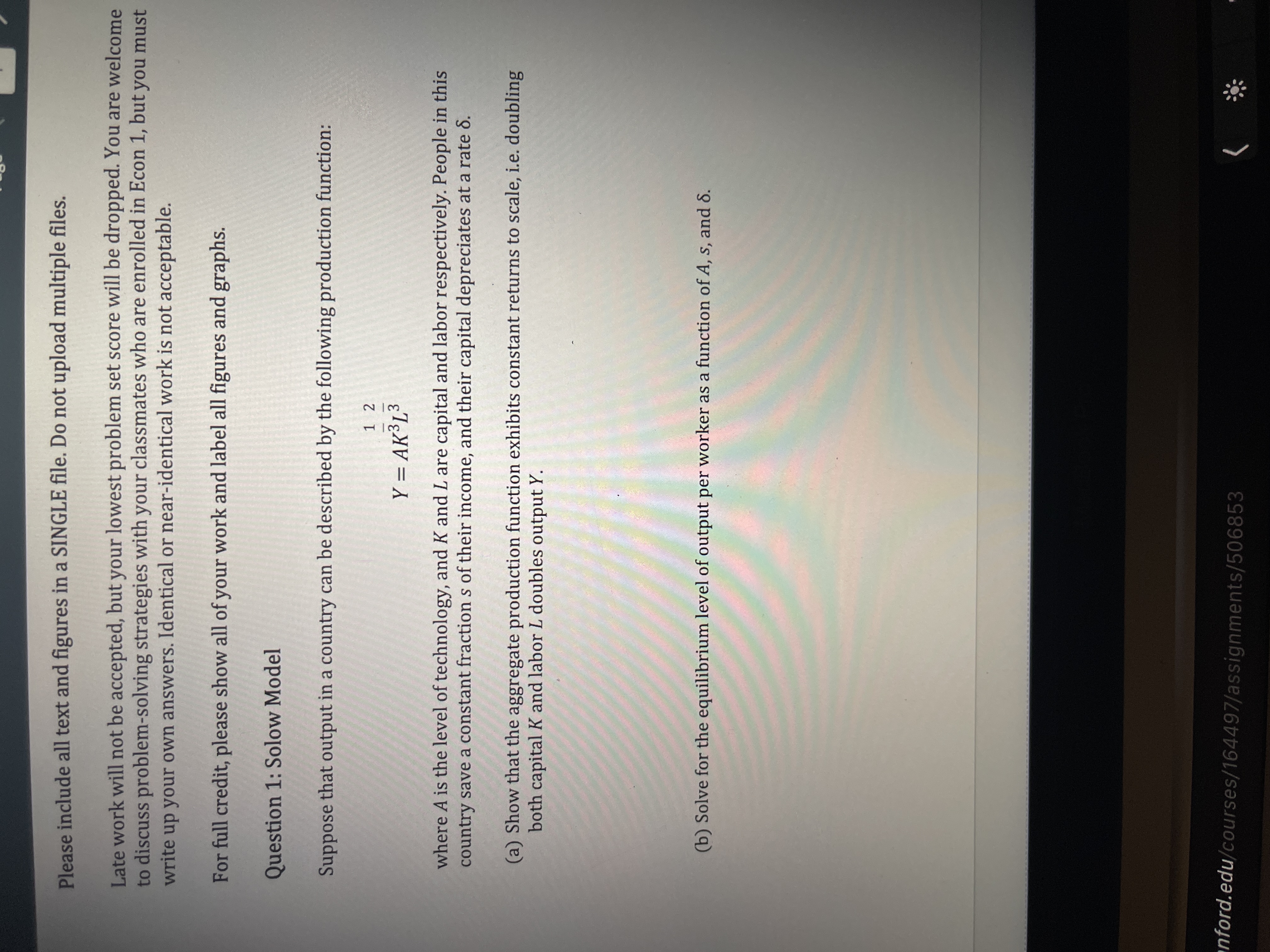
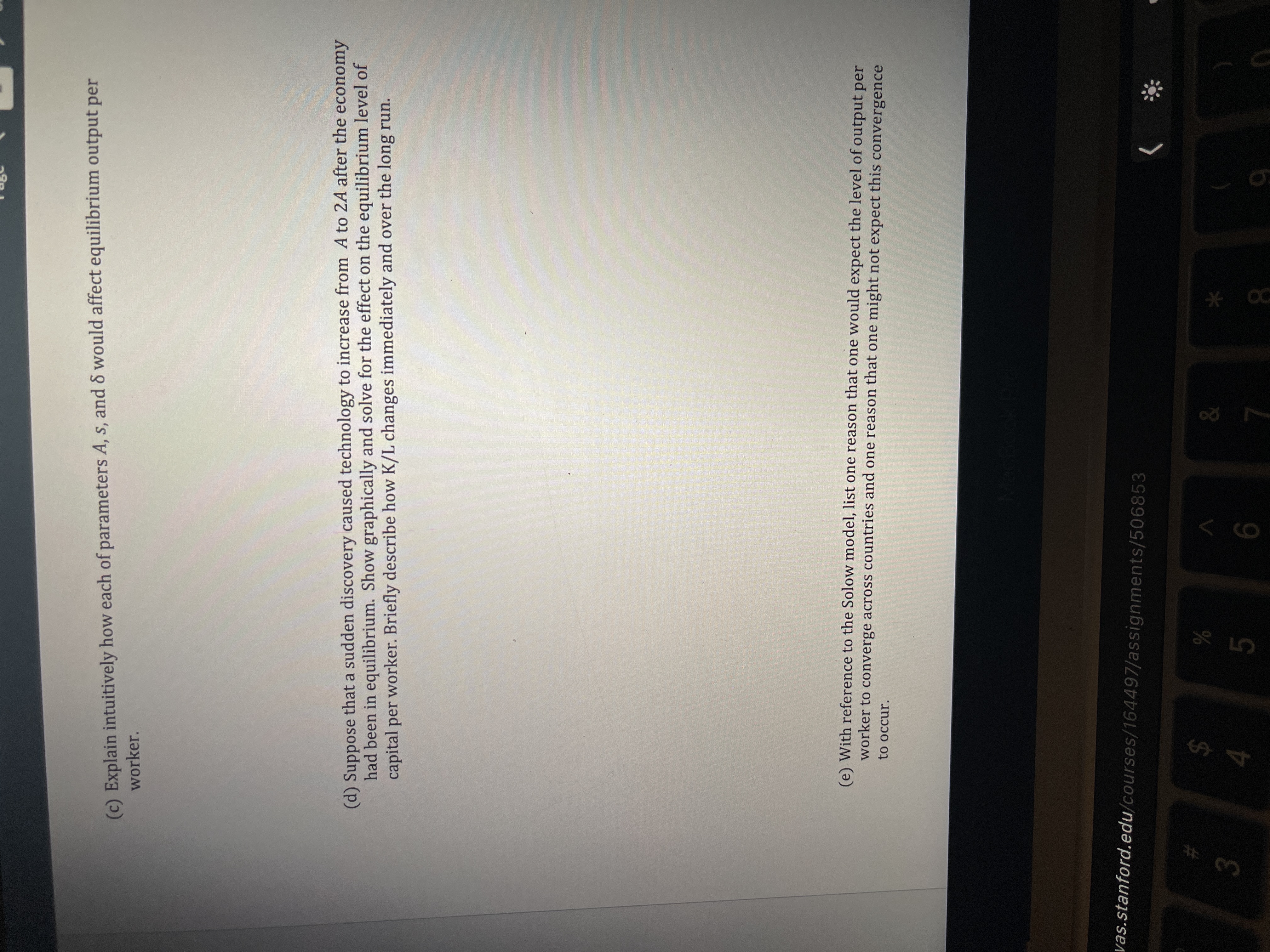
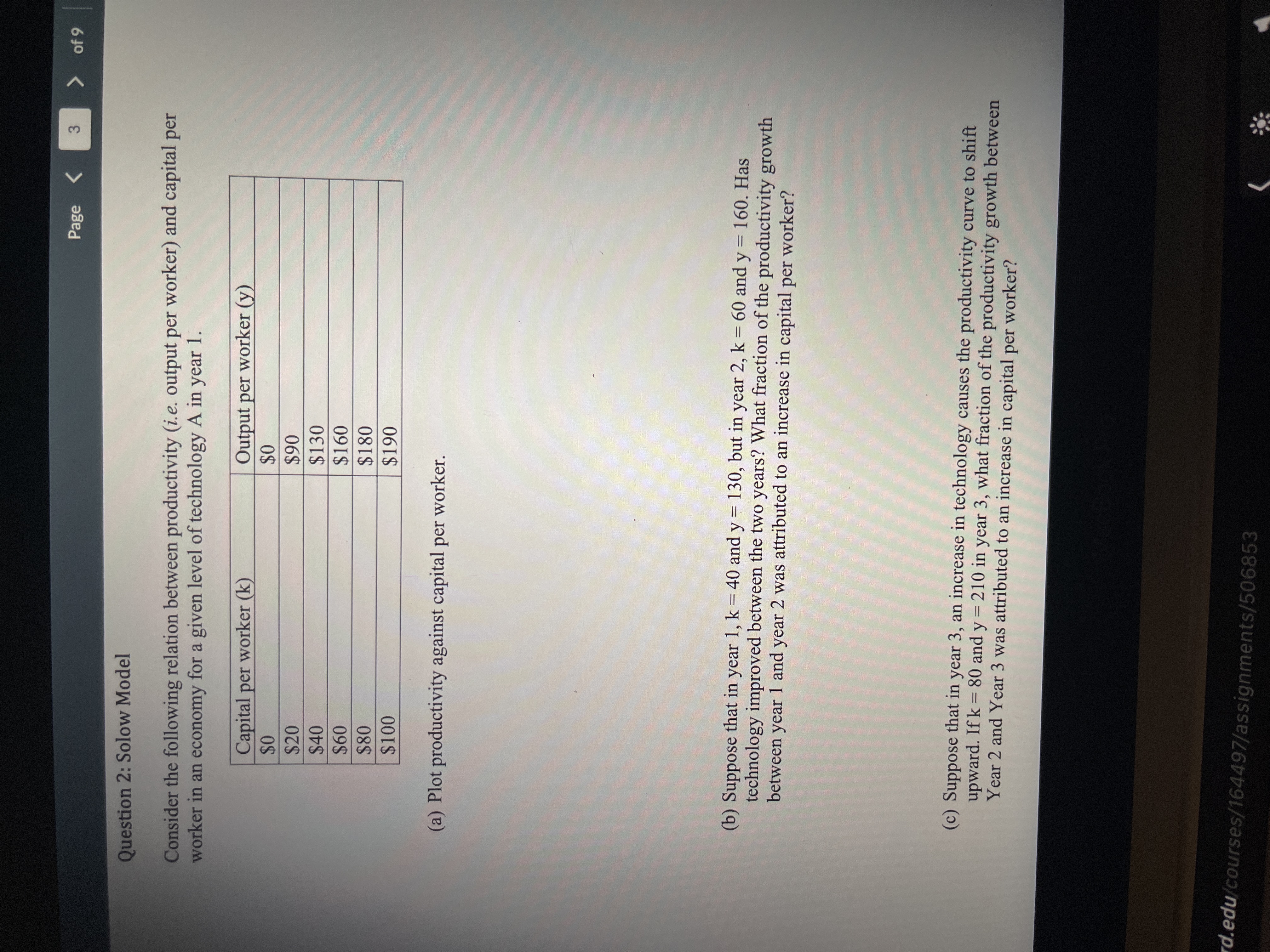
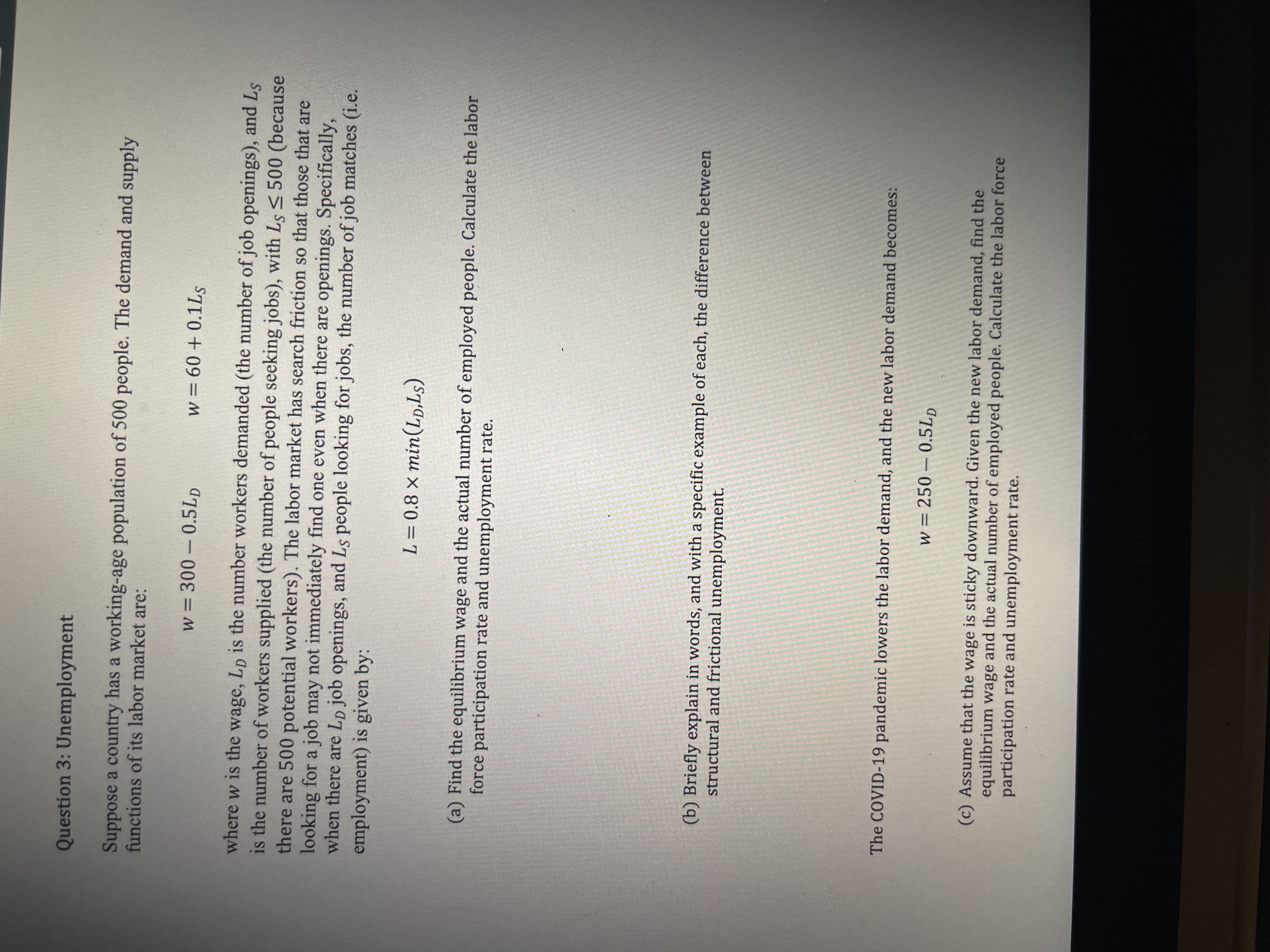

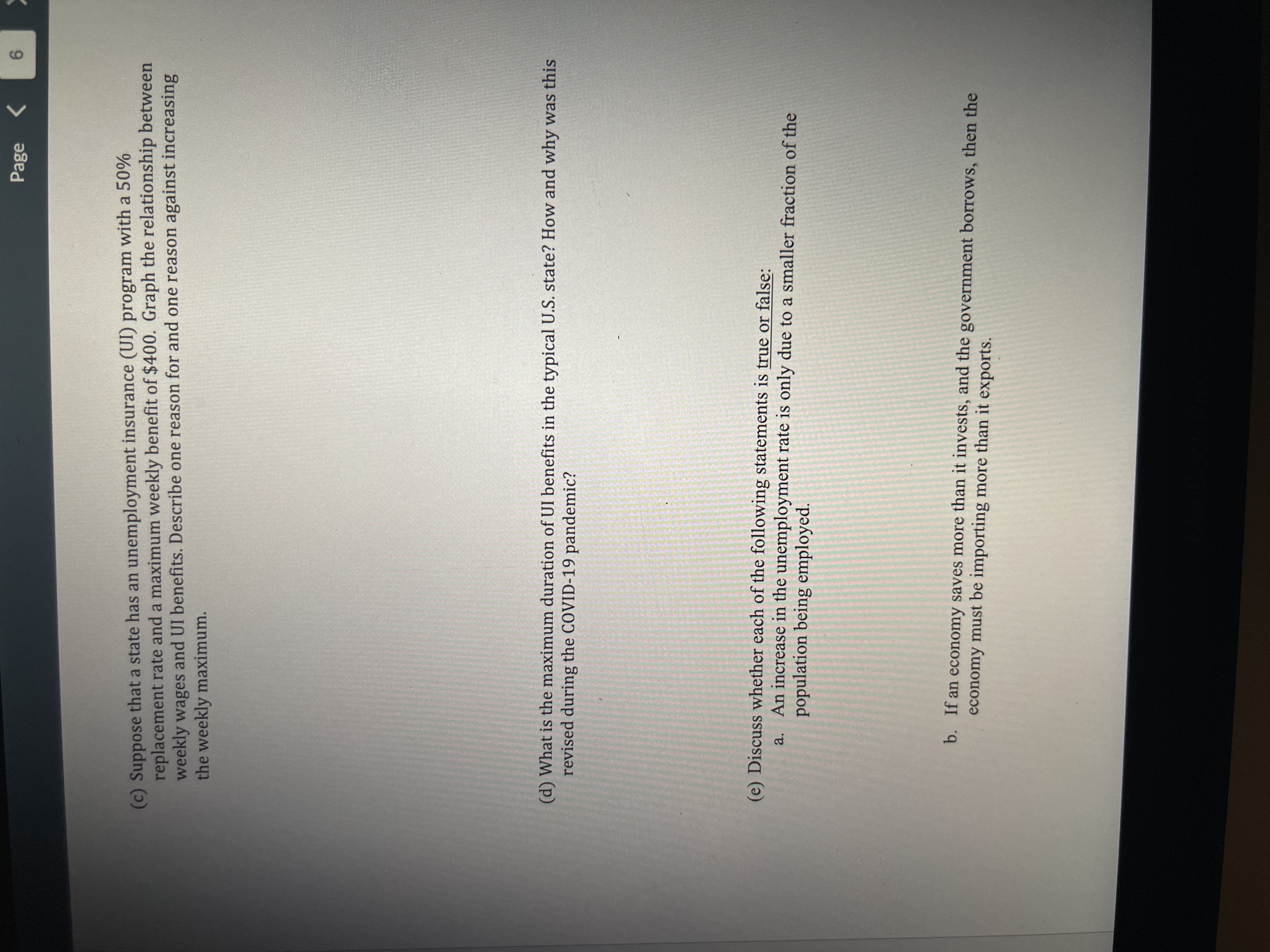
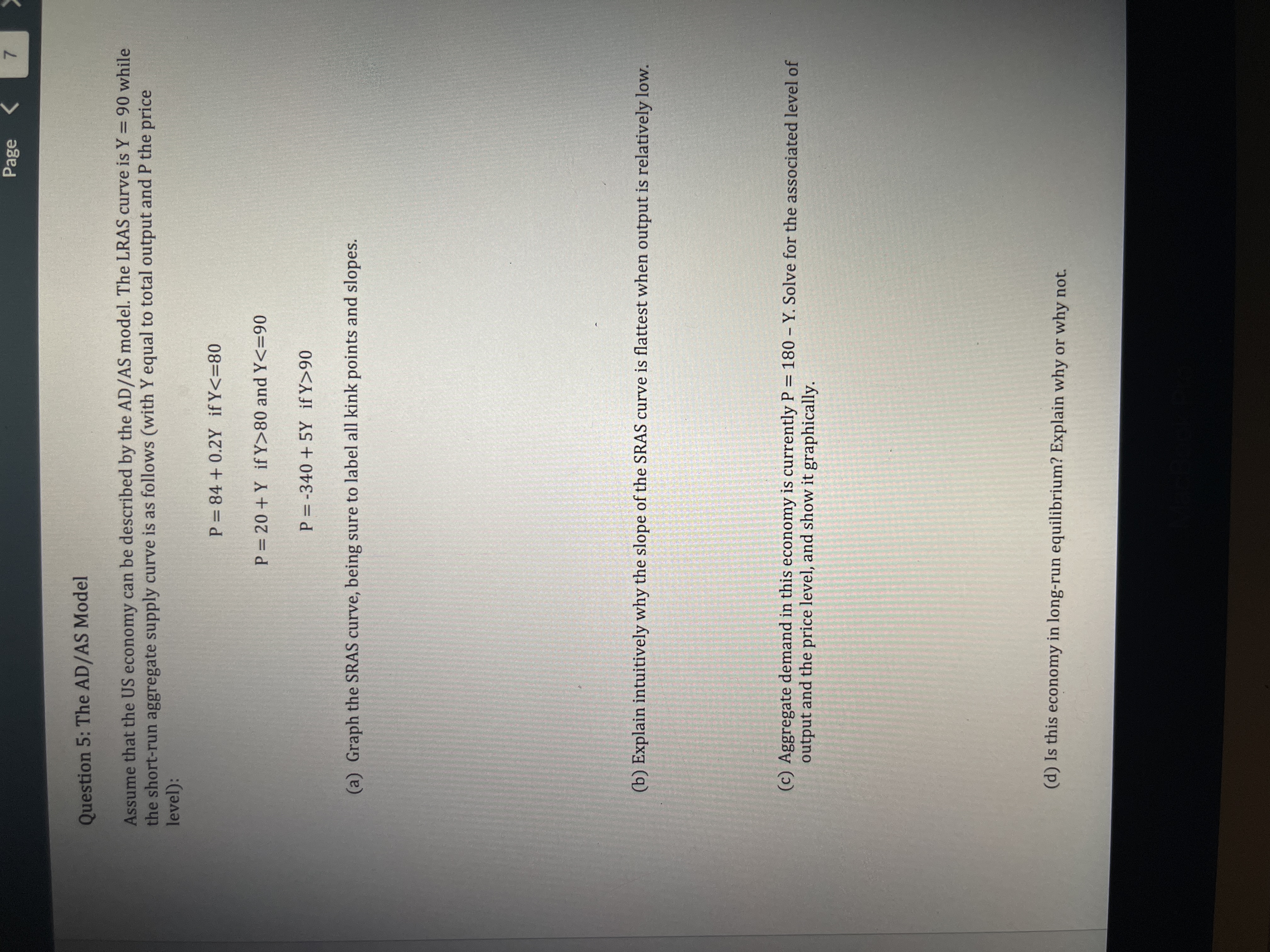
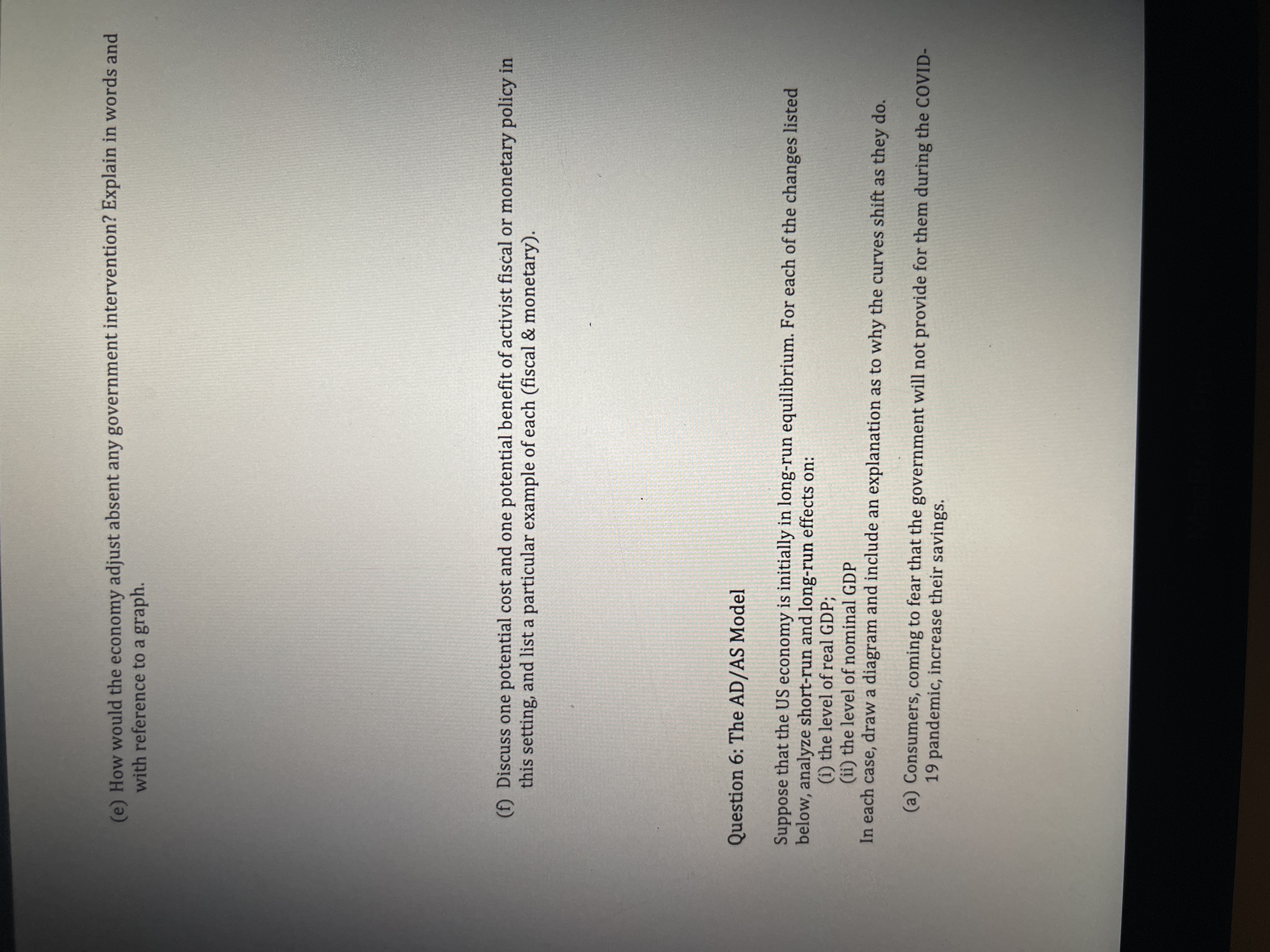

Please include all text and figures in a SINGLE file. Do not upload multiple files. Late work will not be accepted, but your lowest problem set score will be dropped. You are welcome to discuss problem-solving strategies with your classmates who are enrolled in Econ 1, but you must write up your own answers. Identical or near-identical work is not acceptable. For full credit, please show all of your work and label all figures and graphs. Question 1: Solow Model Suppose that output in a country can be described by the following production function: 2 Y = AK3L3 where A is the level of technology, and K and L are capital and labor respectively. People in this country save a constant fraction s of their income, and their capital depreciates at a rate S. (a) Show that the aggregate production function exhibits constant returns to scale, i.e. doubling both capital K and labor L doubles output Y. (b) Solve for the equilibrium level of output per worker as a function of A, S, and S. nford.edu/courses/164497/assignments/506853(c) Explain intuitively how each of parameters A, s, and 8 would affect equilibrium output per worker. (d) Suppose that a sudden discovery caused technology to increase from A to 2A after the economy had been in equilibrium. Show graphically and solve for the effect on the equilibrium level of capital per worker. Briefly describe how K/L changes immediately and over the long run. (e) With reference to the Solow model, list one reason that one would expect the level of output per worker to converge across countries and one reason that one might not expect this convergence to occur. vas. stanford.edu/courses/164497/assignments/506853 $ % & 5 6Page 80 and Y90 (a) Graph the SRAS curve, being sure to label all kink points and slopes. (b) Explain intuitively why the slope of the SRAS curve is flattest when output is relatively low. (c) Aggregate demand in this economy is currently P = 180 - Y. Solve for the associated level of output and the price level, and show it graphically. (d) Is this economy in long-run equilibrium? Explain why or why not.(e) How would the economy adjust absent any government intervention? Explain in words and with reference to a graph. (f) Discuss one potential cost and one potential benefit of activist fiscal or monetary policy in this setting, and list a particular example of each (fiscal & monetary). Question 6: The AD/AS Model Suppose that the US economy is initially in long-run equilibrium. For each of the changes listed below, analyze short-run and long-run effects on: (i) the level of real GDP; (ii) the level of nominal GDP In each case, draw a diagram and include an explanation as to why the curves shift as they do. (a) Consumers, coming to fear that the government will not provide for them during the COVID- 19 pandemic, increase their savings.(b) In a quest for re-election, the president pushes for more tax cuts. (c) Optimism about future economic performance causes businesses to increase domestic fixed investment. (d) An increase in the price of oil used in production
Step by Step Solution
There are 3 Steps involved in it

Get step-by-step solutions from verified subject matter experts
 Study Help