







Question: please include Compares to Number above section and a breif explanation IEN MISTAKES TO AVOID WHEN STARTING A BUSINESS Apply your critical thinking skills to
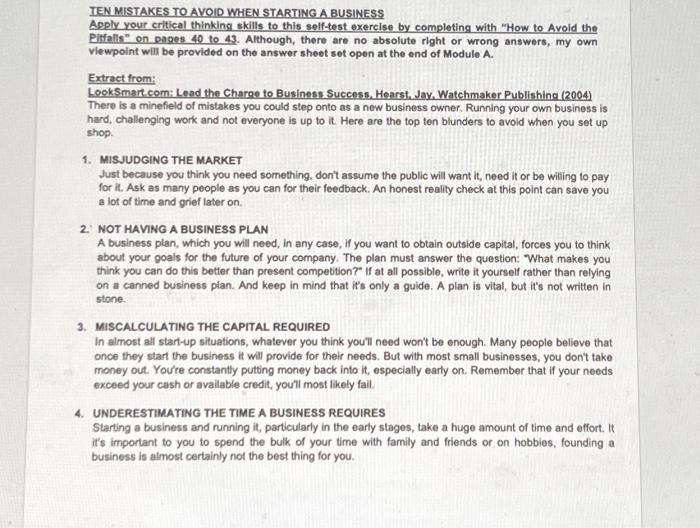
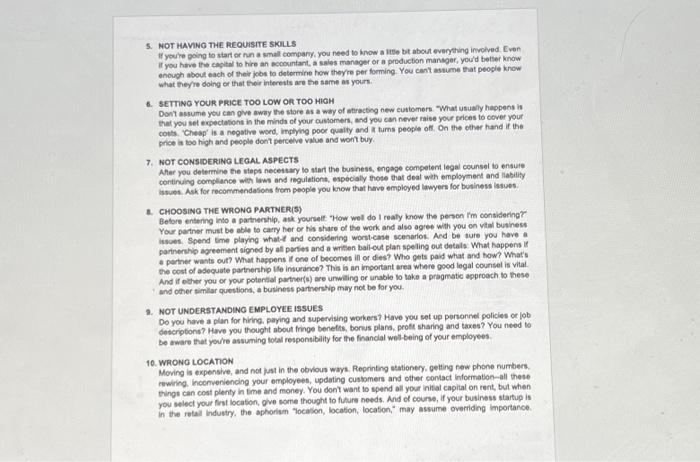
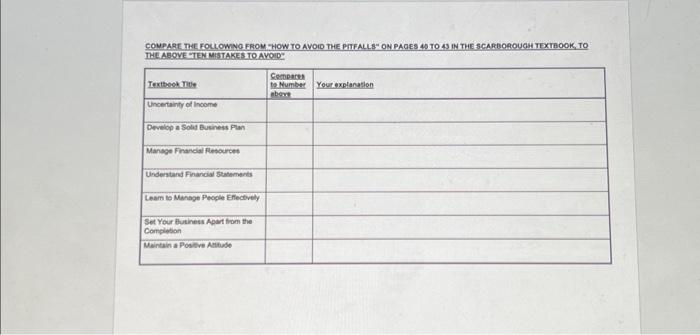
IEN MISTAKES TO AVOID WHEN STARTING A BUSINESS Apply your critical thinking skills to this self-test exercise by completing with "How to Avold the Pitfalls" on pages 40 to 43 . Although, there are no absolute right or wrong answers, my own viewpoint will be provided on the answer sheot set open at the end of Module A. Extract from: LookSmart com: Lead the Charge to Business Success. Hearst. Jay. Watchmaker Publlishing (2004) There is a minefield of mistakes you could step onto as a new business owner. Running your own business is hard, challenging work and not everyone is up to it. Here are the top ten blunders to avoid when you set up shop. 1. MISJUDGING THE MARKET Just because you think you need something, don't assume the public will want it, need it or be willing to pay for it. Ask as many people as you can for their feedback. An honest reality check at this point can save you a lot of time and grief later on. 2. NOT HAVING A BUSINESS PLAN A business plan, which you will need, in any case, if you want to obtain outside capital, forces you to think about your goals for the future of your company. The plan must answer the question: What makes you think you can do this better than present competition? If at all possible, write it yourself rather than relying on a canned business plan. And keep in mind that if's only a guide. A plan is vital, but it's not written in stone. 3. MISCALCULATING THE CAPITAL REQUIRED In almost all start-up situations, whatever you think you'll need won't be enough. Many people believe that once they start the business it will provide for their needs. But with most small businesses, you don't take money out. You're constantly putting money back into it, especially early on. Remember that if your needs exceed your cash or available credit, youll most likely fail. 4. UNDERESTIMATING THE TIME A BUSINESS REQUIRES Starting a business and running it, particularly in the early stages, take a huge amount of time and effort. It if's important to you to spend the bulk of your time with family and friends or on hobbies, founding a business is almost certainly not the best thing for you. 5. NOT HAVNG THE REQUISTE SKOLLS if youte going to start or hn a small company, you need to know a ule bt about everyeting involved. Even if you have the cepital to hire an acoountant, a sales manager or a production manager, you'd beber know enough about each of their jobs to detormine how theyre per forming. You cant asuime that peogle know what theyre doing of that their interests ave the same as yours. 6. SETTINO YOUR PRICE TOO LOW OR TOO HIOH Dont assume you can owe away the store as a wry of atiracting new eustomers. What usualy happens in that you set expectabons in the minds of your customen, and you can never naise your prices to oever your cotbs. 'Chesp' is a nepstive woed, imptyng poor qualty and If turns people off. On the other hand if the price is teo high and people doen percelve value and wont buy. 7. NOT CONSIDERING LEQAL ASPECTS Aher you determine the steps necestary to start the business, engage competent legal counsol to ensuite continuing complance wen liws and roguiationa, especialy those that deal whth employment and liability issues. Ask for recommendasioes frem people you know that hever employed lawyers for butiness issues. 2. CHOOSING THE WRONG PARTNER(S) Betore entering imto a parthership, ask yourseit. How wet do I reaty know the persen im considering? You pertiner must be able to cary her of his share of the work and also agree with you on vital businest lasces. Spend tme playing what t and consisering worstease scenariot. And be sure you have a parnership agreement signed by at pertes and a writion bail-out plan speling ous dotals. What happens if - porther wants out? What haspens if one of becomes if of des? Who gets paid what and how? What's the cost of adequate partnersho Ito insurance? This is an important area where good legal counsel is vital And if ecther you or your potensal partwer(s) are unwiaing of unable to take a pragmatic approsch to these and other simllar questions, a business parthersip may not be for you. 2. NOT UNDERSTANDINO EMPLOYEE ISSUES Do you have a plan for hiring. paying and supervising workers? Have you sot up pornonnel policles of job descriptons? Hewe you thought about fringe benefts, bonus plans, prots sharing and taxes? You need to be aware that yourre assuming lotal responsibility for the finandal wel being of your employess. 10. WRONG LOCATION Moving is expensive, and not just in the obvous ways. Reprinting stationery. getting new phone numbers. eawiring. inconveniencing your omployees, updating cusbomens and other contact informaton-all these things can cost plenty in tme and money. You dont want to spend all your inital capitat on rent, but when you select your fint locaton, give some thought to floure needs. And of course, if your business startup is in the retal industry, the sphorian "locasion, location, location," may assume overriding importance. COUPARE TAE FOLLOWNO FROM -HOW TO AVOIO THE PITFALL" ON PAOES 45 TO 49 NA THE SCARBOBOUGH TEXTBOOK, TO THE ABGVE "TENIM:STAKES TO AVOID
Step by Step Solution
There are 3 Steps involved in it

Get step-by-step solutions from verified subject matter experts
 Study Help