







Question: Please let me know in the comments if anything is missing. Thanks! 1. In a cross-sectional study, 9,000 persons were identied as the source population,
Please let me know in the comments if anything is missing. Thanks!
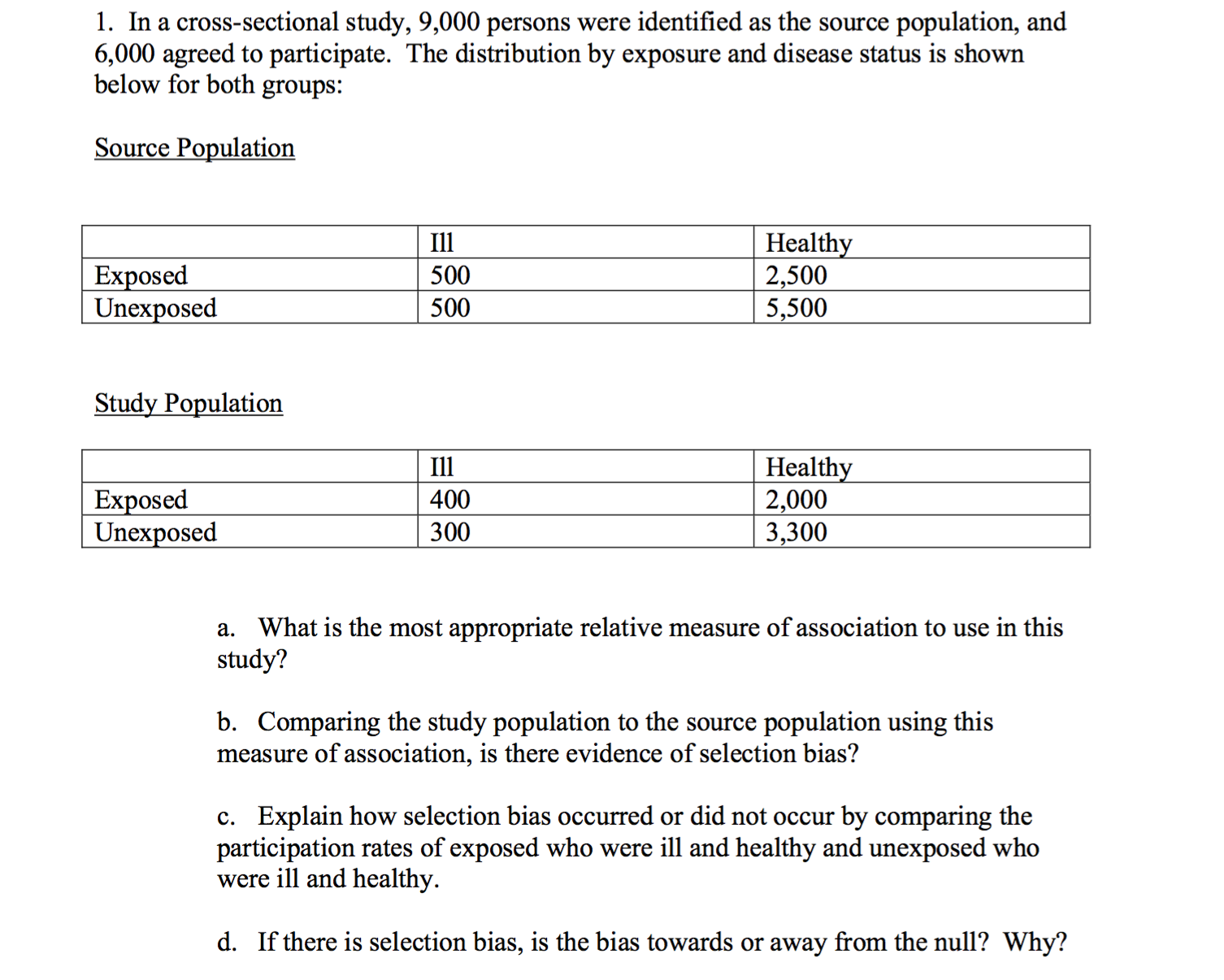
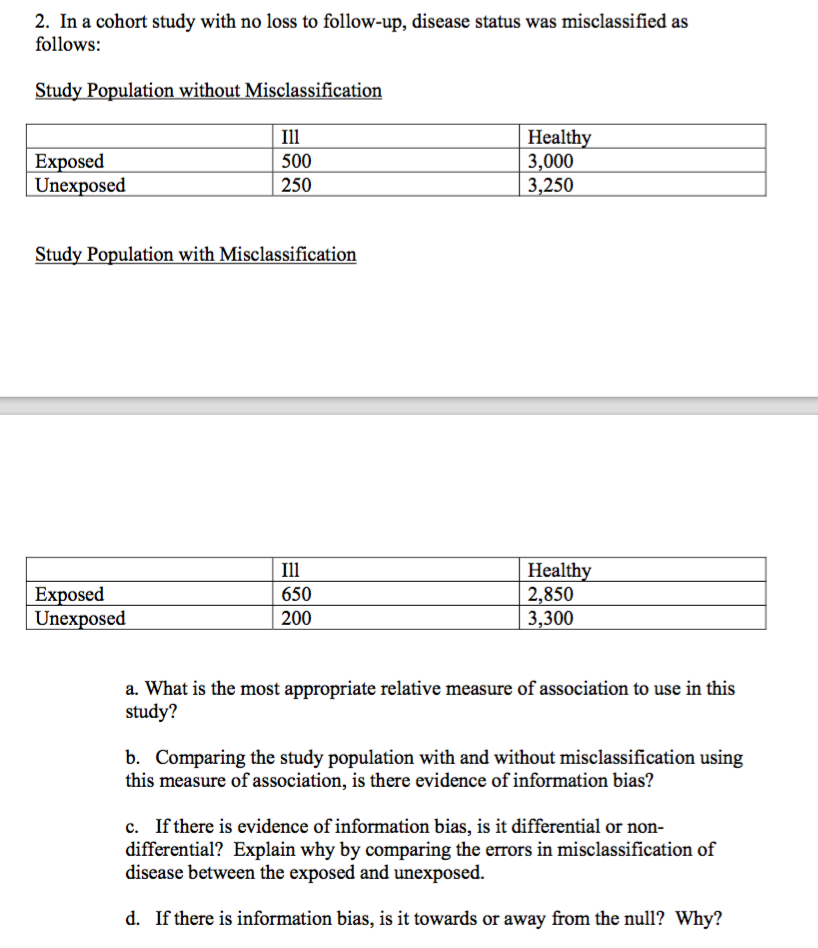
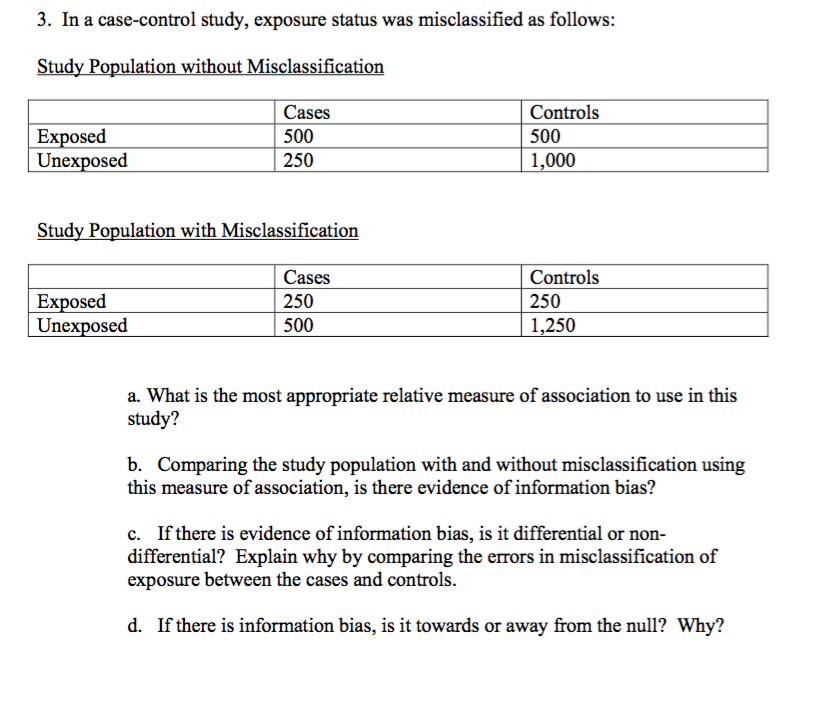
1. In a cross-sectional study, 9,000 persons were identied as the source population, and 6,000 agreed to participate. The distribution by exposure and disease status is shown below for both groups: Source Population II@_ 5500 Study Population Unexposed 300 3,300 a. What is the most appropriate relative measure of association to use in this study? b. Comparing the study population to the source population using this measure of association, is there evidence of selection bias? 0. Explain how selection bias occurred or did not occur by comparing the participation rates of exposed who were ill and healthy and unexposed who were ill and healthy. (1. If there is selection bias, is the bias towards or away from the null? Why? 2. In a cohort study with no loss to follow-up, disease status was misclassified as follows: Study Population without Misclassification Healthy Exposed 500 3,000 Unexposed 250 3,250 Study Population with Misclassification Healthy Exposed 650 2,850 Unexposed 200 3,300 a. What is the most appropriate relative measure of association to use in this study? b. Comparing the study population with and without misclassification using this measure of association, is there evidence of information bias? c. If there is evidence of information bias, is it differential or non- differential? Explain why by comparing the errors in misclassification of disease between the exposed and unexposed. d. If there is information bias, is it towards or away from the null? Why?3. In a case-control study, exposure status was misclassified as follows: Study Population without Misclassification Cases Controls Exposed 500 500 Unexposed 250 1,000 Study Population with Misclassification Cases Controls Exposed 250 250 Unexposed 500 1,250 a. What is the most appropriate relative measure of association to use in this study? b. Comparing the study population with and without misclassification using this measure of association, is there evidence of information bias? c. If there is evidence of information bias, is it differential or non- differential? Explain why by comparing the errors in misclassification of exposure between the cases and controls. d. If there is information bias, is it towards or away from the null? Why
Step by Step Solution
There are 3 Steps involved in it

Get step-by-step solutions from verified subject matter experts
 Study Help