







Question: PLEASE NO HANDWRITTEN ANSWERS. PLEASE FORMAT THE SAME AS REQUIRED QUESTIONS. Problem 10-36 Variance Calculation; Analysis; Service Business (LO 10-1, 10-3) 18 1.1 points 8
PLEASE NO HANDWRITTEN ANSWERS. PLEASE FORMAT THE SAME AS REQUIRED QUESTIONS.
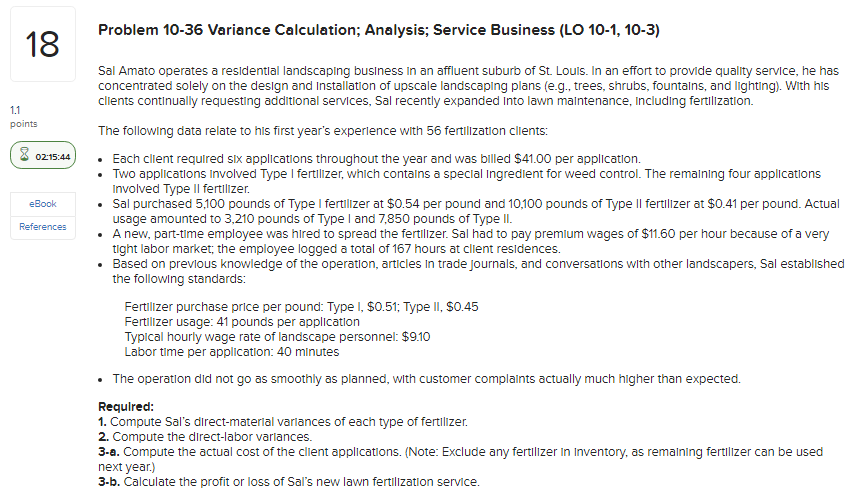
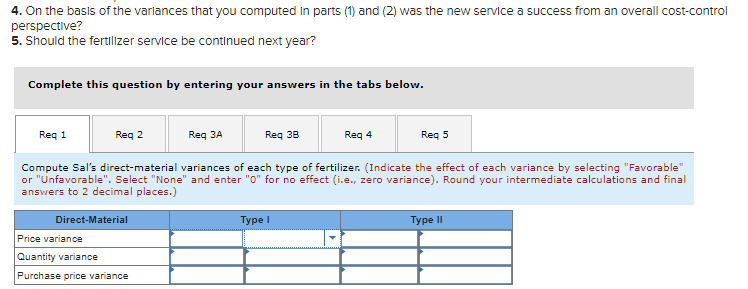
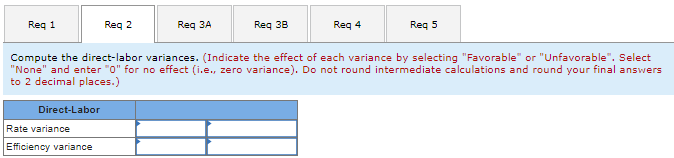



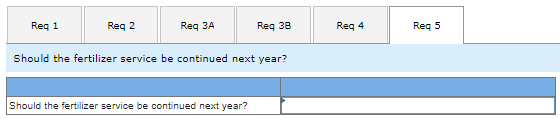
Problem 10-36 Variance Calculation; Analysis; Service Business (LO 10-1, 10-3) 18 1.1 points 8 0215:44 eBook References Sal Amato operates a residential landscaping business in an affluent suburb of St. Louis. In an effort to provide quality service, he has concentrated solely on the design and Installation of upscale landscaping plans (e.g., trees, shrubs, fountains, and lighting). With his clients continually requesting additional services, Sal recently expanded into lawn maintenance, including fertilization. The following data relate to his first year's experience with 56 fertilization clients: Each client required six applications throughout the year and was billed $41.00 per application. Two applications Involved Type I fertilizer, which contains a special Ingredient for weed control. The remaining four applications Involved Type Il fertilizer. Sal purchased 5,100 pounds of Type I fertilizer at $0.54 per pound and 10,100 pounds of Type II fertilizer at $0.41 per pound. Actual usage amounted to 3,210 pounds of Type I and 7,850 pounds of Type II. A new, part-time employee was hired to spread the fertilizer. Sal had to pay premium wages of $11.60 per hour because of a very tight labor market, the employee logged a total of 167 hours at client residences. Based on previous knowledge of the operation, articles in trade journals, and conversations with other landscapers, Sal established the following standards: Fertilizer purchase price per pound: Type 1, $0.51; Type II, S0.45 Fertilizer usage: 41 pounds per application Typical hourly wage rate of landscape personnel: $9.10 Labor time per application: 40 minutes The operation did not go as smoothly as planned, with customer complaints actually much higher than expected. Required: 1. Compute Sal's direct-material variances of each type of fertilizer. 2. Compute the direct-labor varlances. 3-a. Compute the actual cost of the client applications. (Note: Exclude any fertilizer In Inventory, as remaining fertilizer can be used next year.) 3-b. Calculate the profit or loss of Sal's new lawn fertilization service. 4. On the basis of the varlances that you computed in parts (1) and (2) was the new service a success from an overall cost-control perspective? 5. Should the fertilizer service be continued next year? Complete this question by entering your answers in the tabs below. Reg 1 Reg 2 Req 3A Reg 38 Req 4 Reg 5 Compute Sal's direct-material variances of each type of fertilizer. (Indicate the effect of each variance by selecting "Favorable" or "Unfavorable". Select "None" and enter "O" for no effect (i.e., zero variance). Round your intermediate calculations and final answers to 2 decimal places.) Type I Type 11 Direct-Material Price variance Quantity variance Purchase price variance Reg 1 Reg 2 Reg 3A Reg 3B Reg 4 Reg 5 Compute the direct-labor variances. (Indicate the effect of each variance by selecting "Favorable" or "Unfavorable". Select "None" and enter "O" for no effect (i.e., zero variance). Do not round intermediate calculations and round your final answers to 2 decimal places.) Direct-Labor Rate variance Efficiency variance Reg 1 Reg 2 Reg 3A Reg 3B Reg 4 Reg 5 Compute the actual cost of the client applications. (Note: Exclude any fertilizer in inventory, as remaining fertilizer can be used next year.) (Do not round intermediate calculations. Round your answer to 2 decimal places.) Actual cost Reg 1 Reg 2 Reg 3A Req 3B Reg 4 Reg 5 Calculate the profit or loss of Sal's new lawn fertilization service. (Do not round intermediate calculations. Round your answer to 2 decimal places.) Reg 1 Reg 2 Reg 3A Reg 3B Reg 4 Reg 5 On the basis of the variances that you computed in parts (1) and (2) was the new service a success from an overall cost- control perspective? (Indicate the effect of each variance by selecting "Favorable" or "Unfavorable". Select "None" and enter "O" for no effect (i.e., zero variance). Do not round intermediate calculations. Round your answer to 2 decimal places.) Total Variance Reg 1 Reg 2 Reg 3A Req 3B Reg 4 Reg 5 Should the fertilizer service be continued next year? Should the fertilizer service be continued next year
Step by Step Solution
There are 3 Steps involved in it

Get step-by-step solutions from verified subject matter experts
 Study Help