



Question: Please please help me out! The following are audit procedures from different transaction cycles: (Click the icon to view the audit procedures.) Read the requirements.
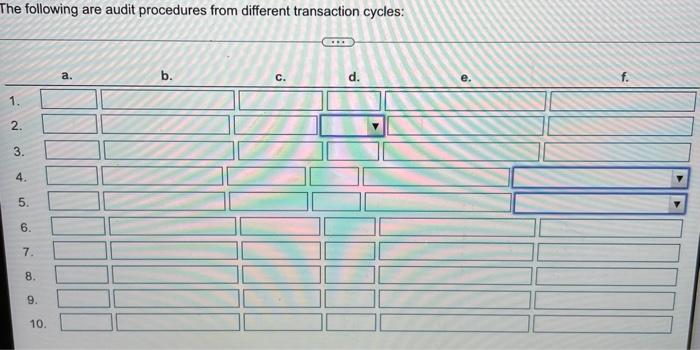
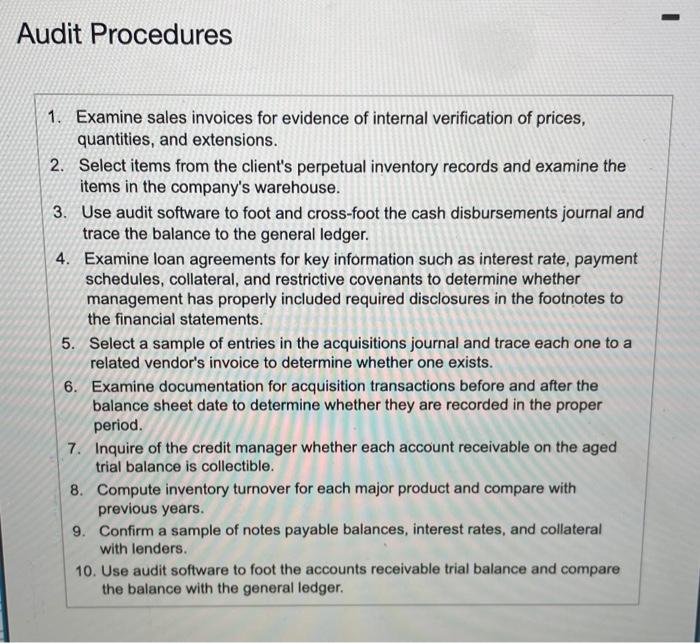
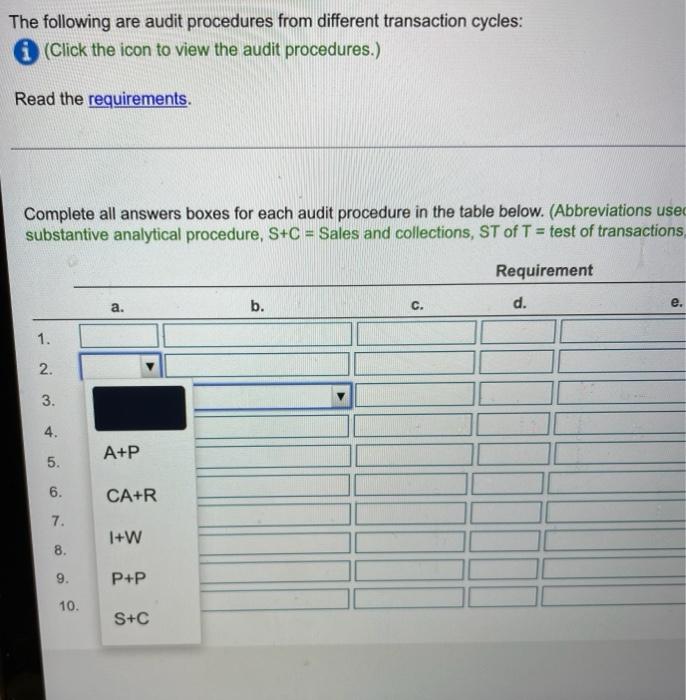
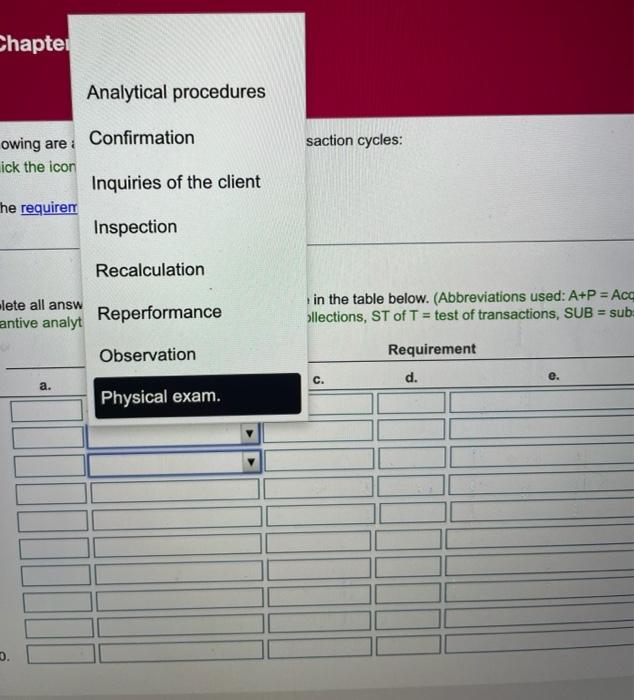
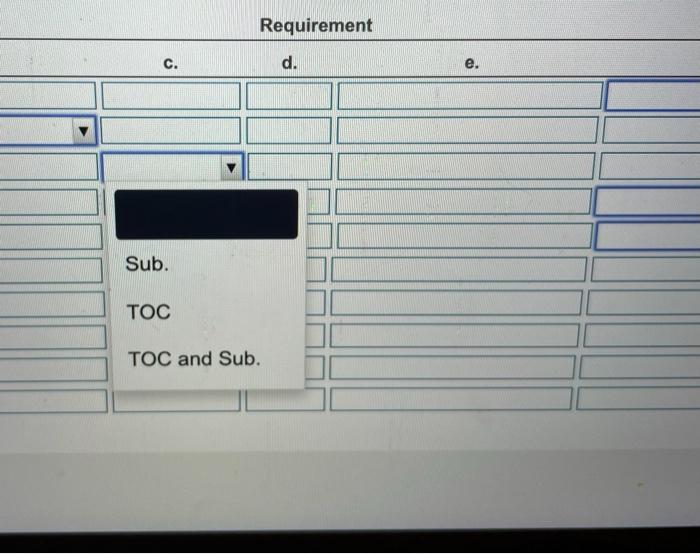
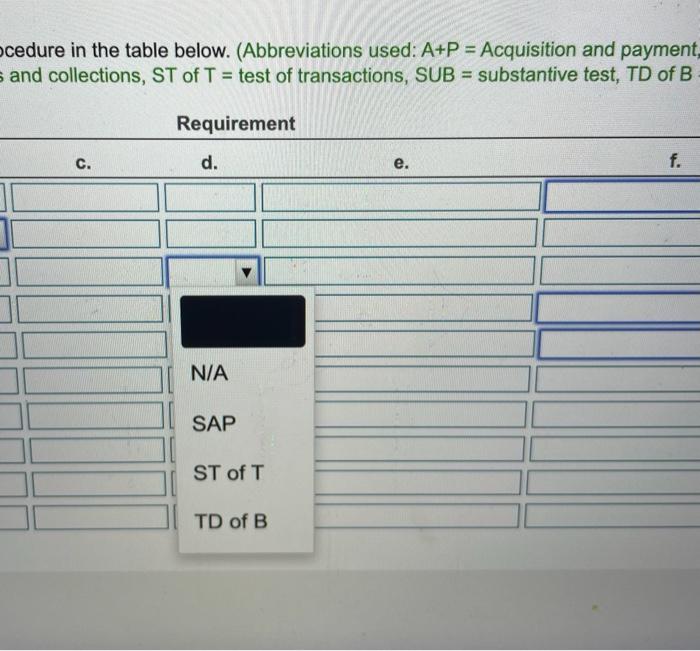
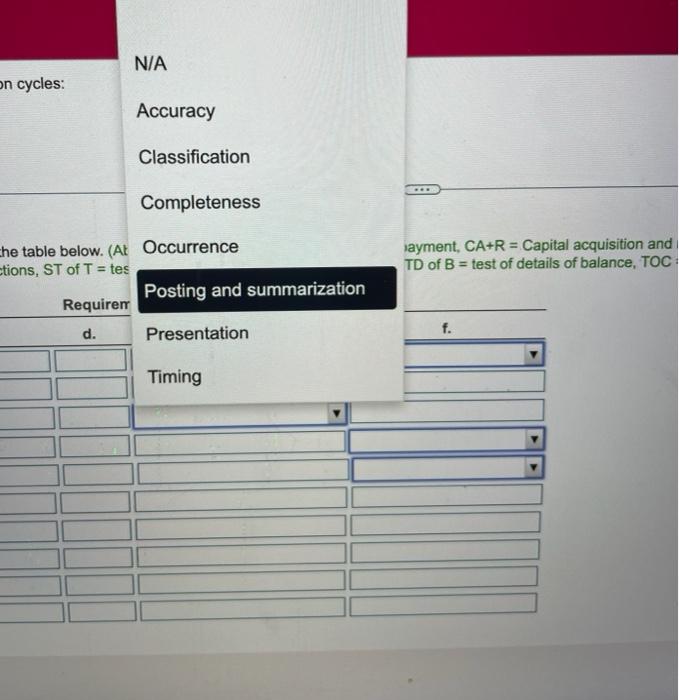
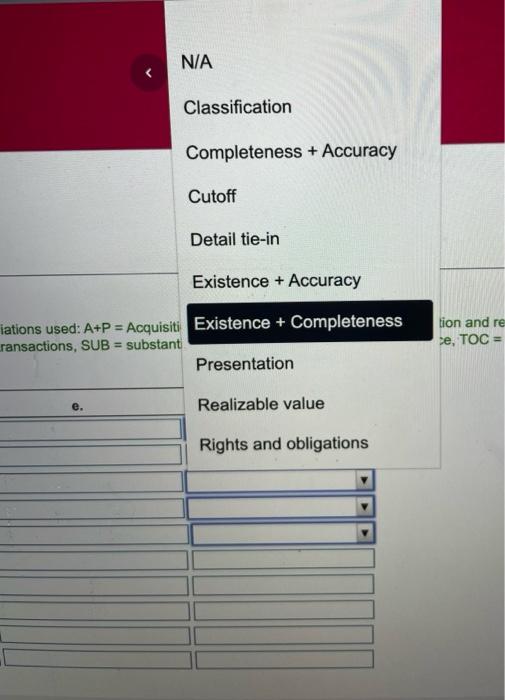
The following are audit procedures from different transaction cycles: (Click the icon to view the audit procedures.) Read the requirements. Complete all answers boxes for each audit procedure in the table below. (Abbreviations used: A+P = Acquisition and payment, CA+R = Capital acquisition and repayment, 14W = Inventory and warehousing, P+P = Payroll and personnel, SAP = substantive analytical procedure, S+C = Sales and collections, ST of T = test of transactions, SUB = substantive test, TD of B = test of details of balance, TOC = test of control.) The following are audit procedures from different transaction cycles: b. C. d. e f. 1. 2. 3. 4. 5. 6. 7. . 8. 9. 10. - Audit Procedures 1. Examine sales invoices for evidence of internal verification of prices, quantities, and extensions. 2. Select items from the client's perpetual inventory records and examine the items in the company's warehouse. 3. Use audit software to foot and cross-foot the cash disbursements journal and trace the balance to the general ledger. 4. Examine loan agreements for key information such as interest rate, payment schedules, collateral, and restrictive covenants to determine whether management has properly included required disclosures in the footnotes to the financial statements. 5. Select a sample of entries in the acquisitions journal and trace each one to a related vendor's invoice to determine whether one exists. 6. Examine documentation for acquisition transactions before and after the balance sheet date to determine whether they are recorded in the proper period. 7. Inquire of the credit manager whether each account receivable on the aged trial balance is collectible. 8. Compute inventory turnover for each major product and compare with previous years. 9. Confirm a sample of notes payable balances, interest rates, and collateral with lenders. 10. Use audit software to foot the accounts receivable trial balance and compare the balance with the general ledger. The following are audit procedures from different transaction cycles: (Click the icon to view the audit procedures.) Read the requirements. Complete all answers boxes for each audit procedure in the table below. (Abbreviations used substantive analytical procedure, S+C = Sales and collections, ST of T = test of transactions Requirement a. b. C. d. 1. 2. 3. 4. A+P 5. 6. CA+R 7. I+W 8. 9. P+P 10. S+C Chapter Analytical procedures Confirmation saction cycles: owing are: ick the icon Inquiries of the client he requiren Inspection Recalculation lete all answ antive analyt Reperformance in the table below. (Abbreviations used: A+P = Acc ollections, ST of T = test of transactions, SUB = sub- Observation Requirement C. d. a. Physical exam. 3. Requirement c. d. e. Sub. TOC TOC and Sub. cedure in the table below. (Abbreviations used: A+P = Acquisition and payment, and collections, ST of T = test of transactions, SUB = substantive test, TD of B Requirement C. d. e. f. N/A SAP ST of T TD of B N/A on cycles: Accuracy Classification Completeness jayment, CA+R = Capital acquisition and TD of B = test of details of balance, TOC che table below. (A Occurrence ctions, ST of T = tes Posting and summarization Requirer d. Presentation f. Timing N/A Classification Completeness + Accuracy Cutoff Detail tie-in Existence + Accuracy lations used: A+P = Acquisiti Existence + Completeness ransactions, SUB = substanti Presentation tion and re re, TOC = e. Realizable value Rights and obligations
Step by Step Solution
There are 3 Steps involved in it

Get step-by-step solutions from verified subject matter experts