







Question: please please help me with this. I don't know why I have this wrong. Please please. Its due today One Trick Pony (OTP) incorporated and
 please please help me with this. I don't know why I have this wrong. Please please. Its due today
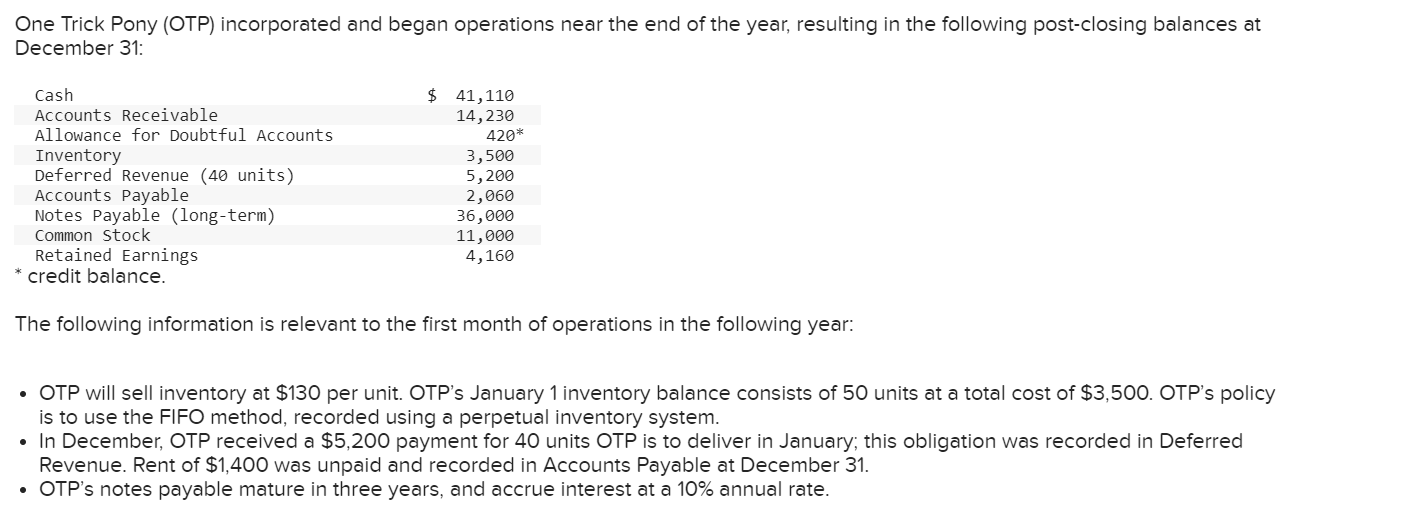
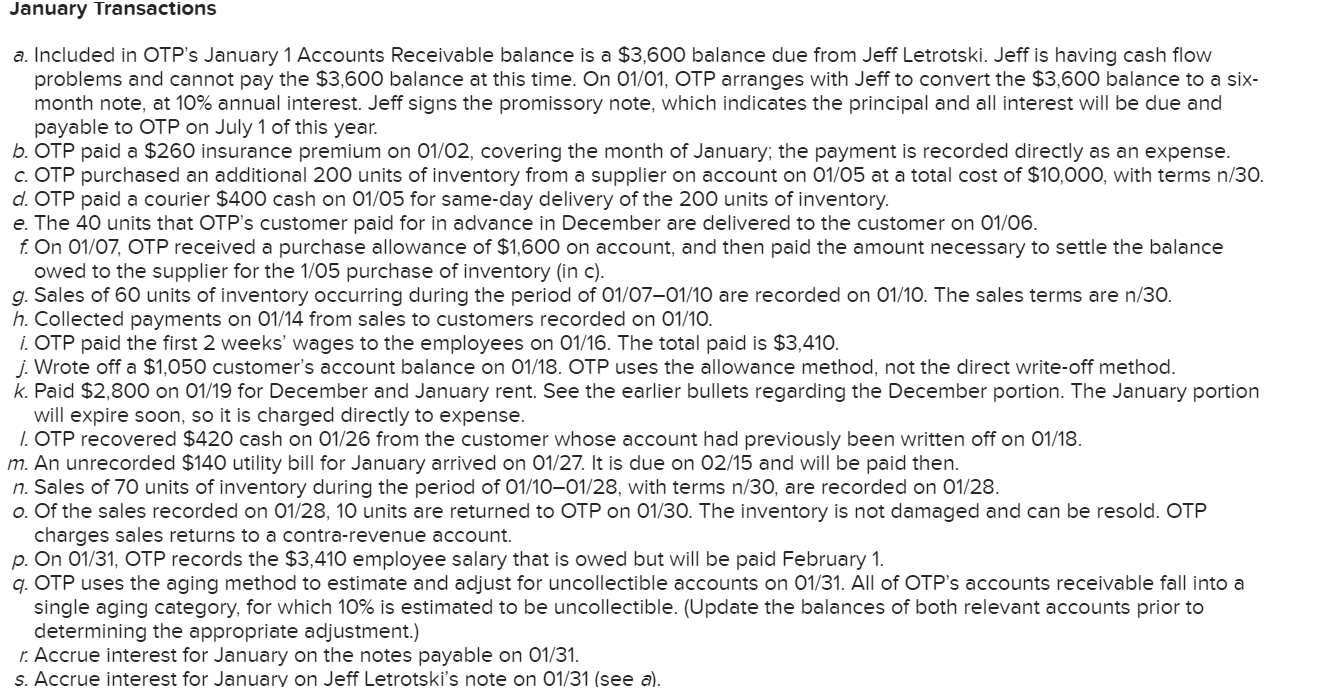
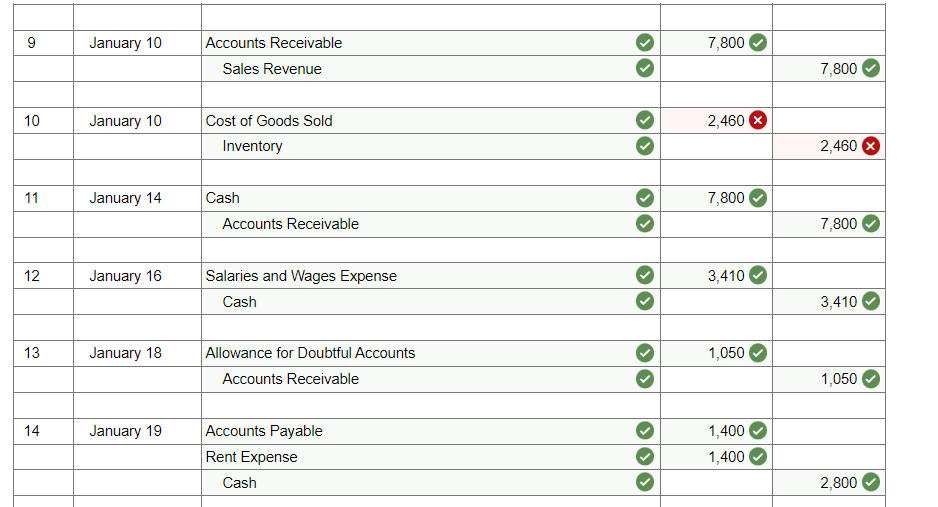
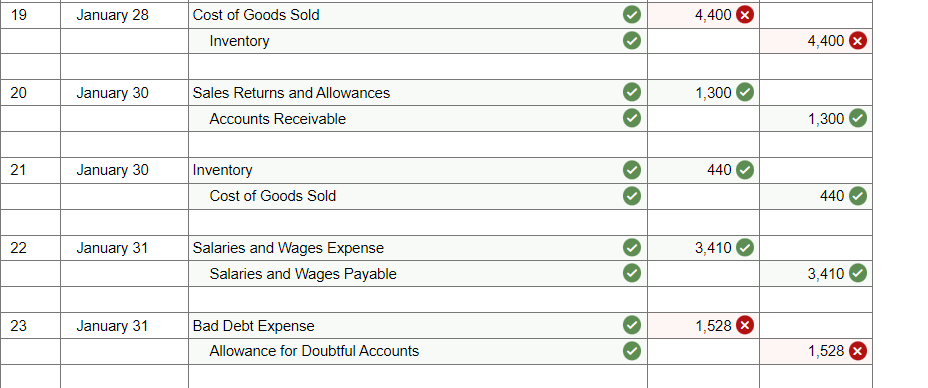
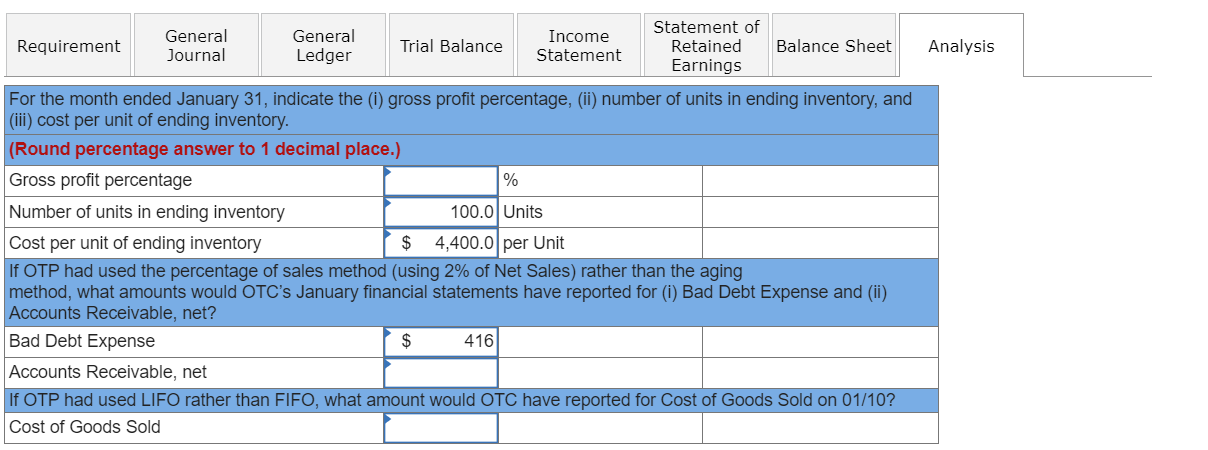
One Trick Pony (OTP) incorporated and began operations near the end of the year, resulting in the following post-closing balances at December 31: The following information is relevant to the first month of operations in the following year: - OTP will sell inventory at $130 per unit. OTP's January 1 inventory balance consists of 50 units at a total cost of $3,500. OTP's policy is to use the FIFO method, recorded using a perpetual inventory system. - In December, OTP received a $5,200 payment for 40 units OTP is to deliver in January; this obligation was recorded in Deferred Revenue. Rent of $1,400 was unpaid and recorded in Accounts Payable at December 31 . - OTP's notes payable mature in three years, and accrue interest at a 10% annual rate. a. Included in OTP's January 1 Accounts Receivable balance is a $3,600 balance due from Jeff Letrotski. Jeff is having cash flow problems and cannot pay the $3,600 balance at this time. On 01/01, OTP arranges with Jeff to convert the $3,600 balance to a sixmonth note, at 10% annual interest. Jeff signs the promissory note, which indicates the principal and all interest will be due and payable to OTP on July 1 of this year. b. OTP paid a $260 insurance premium on 01/02, covering the month of January; the payment is recorded directly as an expense. c. OTP purchased an additional 200 units of inventory from a supplier on account on 01/05 at a total cost of $10,000, with terms n/30. d. OTP paid a courier $400 cash on 01/05 for same-day delivery of the 200 units of inventory. e. The 40 units that OTP's customer paid for in advance in December are delivered to the customer on 01/06. f. On 01/07, OTP received a purchase allowance of $1,600 on account, and then paid the amount necessary to settle the balance owed to the supplier for the 1/05 purchase of inventory (in c). g. Sales of 60 units of inventory occurring during the period of 01/07-01/10 are recorded on 01/10. The sales terms are n/30. h. Collected payments on 01/14 from sales to customers recorded on 01/10. i. OTP paid the first 2 weeks' wages to the employees on 01/16. The total paid is $3,410. j. Wrote off a $1,050 customer's account balance on 01/18. OTP uses the allowance method, not the direct write-off method. k. Paid $2,800 on 01/19 for December and January rent. See the earlier bullets regarding the December portion. The January portion will expire soon, so it is charged directly to expense. 1. OTP recovered $420 cash on 01/26 from the customer whose account had previously been written off on 01/18. m. An unrecorded $140 utility bill for January arrived on 01/27. It is due on 02/15 and will be paid then. n. Sales of 70 units of inventory during the period of 01/10-01/28, with terms n/30, are recorded on 01/28. o. Of the sales recorded on 01/28,10 units are returned to OTP on 01/30. The inventory is not damaged and can be resold. OTP charges sales returns to a contra-revenue account. p. On 01/31, OTP records the $3,410 employee salary that is owed but will be paid February 1 . q. OTP uses the aging method to estimate and adjust for uncollectible accounts on 01/31. All of OTP's accounts receivable fall into a single aging category, for which 10% is estimated to be uncollectible. (Update the balances of both relevant accounts prior to determining the appropriate adjustment.) r. Accrue interest for January on the notes payable on 01/31. s. Accrue interest for January on Jeff Letrotski's note on 01/31 (see a). Eor the month ended January 31 , indicate the (i) gross profit percentage, (ii) number of units in ending inventory, and iii) cost per unit of ending inventory. f OTP had used the percentage of sales method (using 2% of Net Sales) rather than the aging nethod, what amounts would OTC's January financial statements have reported for (i) Bad Debt Expense and (ii) Accounts Receivable, net? One Trick Pony (OTP) incorporated and began operations near the end of the year, resulting in the following post-closing balances at December 31: The following information is relevant to the first month of operations in the following year: - OTP will sell inventory at $130 per unit. OTP's January 1 inventory balance consists of 50 units at a total cost of $3,500. OTP's policy is to use the FIFO method, recorded using a perpetual inventory system. - In December, OTP received a $5,200 payment for 40 units OTP is to deliver in January; this obligation was recorded in Deferred Revenue. Rent of $1,400 was unpaid and recorded in Accounts Payable at December 31 . - OTP's notes payable mature in three years, and accrue interest at a 10% annual rate. a. Included in OTP's January 1 Accounts Receivable balance is a $3,600 balance due from Jeff Letrotski. Jeff is having cash flow problems and cannot pay the $3,600 balance at this time. On 01/01, OTP arranges with Jeff to convert the $3,600 balance to a sixmonth note, at 10% annual interest. Jeff signs the promissory note, which indicates the principal and all interest will be due and payable to OTP on July 1 of this year. b. OTP paid a $260 insurance premium on 01/02, covering the month of January; the payment is recorded directly as an expense. c. OTP purchased an additional 200 units of inventory from a supplier on account on 01/05 at a total cost of $10,000, with terms n/30. d. OTP paid a courier $400 cash on 01/05 for same-day delivery of the 200 units of inventory. e. The 40 units that OTP's customer paid for in advance in December are delivered to the customer on 01/06. f. On 01/07, OTP received a purchase allowance of $1,600 on account, and then paid the amount necessary to settle the balance owed to the supplier for the 1/05 purchase of inventory (in c). g. Sales of 60 units of inventory occurring during the period of 01/07-01/10 are recorded on 01/10. The sales terms are n/30. h. Collected payments on 01/14 from sales to customers recorded on 01/10. i. OTP paid the first 2 weeks' wages to the employees on 01/16. The total paid is $3,410. j. Wrote off a $1,050 customer's account balance on 01/18. OTP uses the allowance method, not the direct write-off method. k. Paid $2,800 on 01/19 for December and January rent. See the earlier bullets regarding the December portion. The January portion will expire soon, so it is charged directly to expense. 1. OTP recovered $420 cash on 01/26 from the customer whose account had previously been written off on 01/18. m. An unrecorded $140 utility bill for January arrived on 01/27. It is due on 02/15 and will be paid then. n. Sales of 70 units of inventory during the period of 01/10-01/28, with terms n/30, are recorded on 01/28. o. Of the sales recorded on 01/28,10 units are returned to OTP on 01/30. The inventory is not damaged and can be resold. OTP charges sales returns to a contra-revenue account. p. On 01/31, OTP records the $3,410 employee salary that is owed but will be paid February 1 . q. OTP uses the aging method to estimate and adjust for uncollectible accounts on 01/31. All of OTP's accounts receivable fall into a single aging category, for which 10% is estimated to be uncollectible. (Update the balances of both relevant accounts prior to determining the appropriate adjustment.) r. Accrue interest for January on the notes payable on 01/31. s. Accrue interest for January on Jeff Letrotski's note on 01/31 (see a). Eor the month ended January 31 , indicate the (i) gross profit percentage, (ii) number of units in ending inventory, and iii) cost per unit of ending inventory. f OTP had used the percentage of sales method (using 2% of Net Sales) rather than the aging nethod, what amounts would OTC's January financial statements have reported for (i) Bad Debt Expense and (ii) Accounts Receivable, net
Step by Step Solution
There are 3 Steps involved in it

Get step-by-step solutions from verified subject matter experts
 Study Help