







Question: Please! Please! read all the below information carefully before creating Field Report . please don't skip any questions. Make a Collaborative Informational Field Report. Incorporate
Please! Please! read all the below information carefully before creating Field Report. please don't skip any questions.
Make a Collaborative Informational Field Report. Incorporate the necessary sections and level headings, along with any information you've gathered for those sections. your document should include the following elements:
Front Matter:
Letter of Transmittal: This section formally introduces the report to its intended recipient and may offer additional context or explanations.
Table of Contents
List of Figures
Executive Summary: An executive summary provides a concise overview of the report's key findings, recommendations, and conclusions. It's particularly important for lengthy reports or when readers require a quick summary before diving into the details.
Body:
Introduction: In this section, provide background information on the topic, outline the report's objectives, and often include a statement of the problem or research question.
Methodology: the methodology section describes the research methods and techniques used for data collection and analysis.
Data Analysis - Primary and secondary research.
Incorporate Visuals: Include various types of visuals such as photographs, tables, charts, etc. (don't worry about the visuals until the final draft)
Findings/Results
Application of Findings (so what?): This section might also include recommendations.
Conclusions
Back Matter:
Appendix (any supplementary material)
References
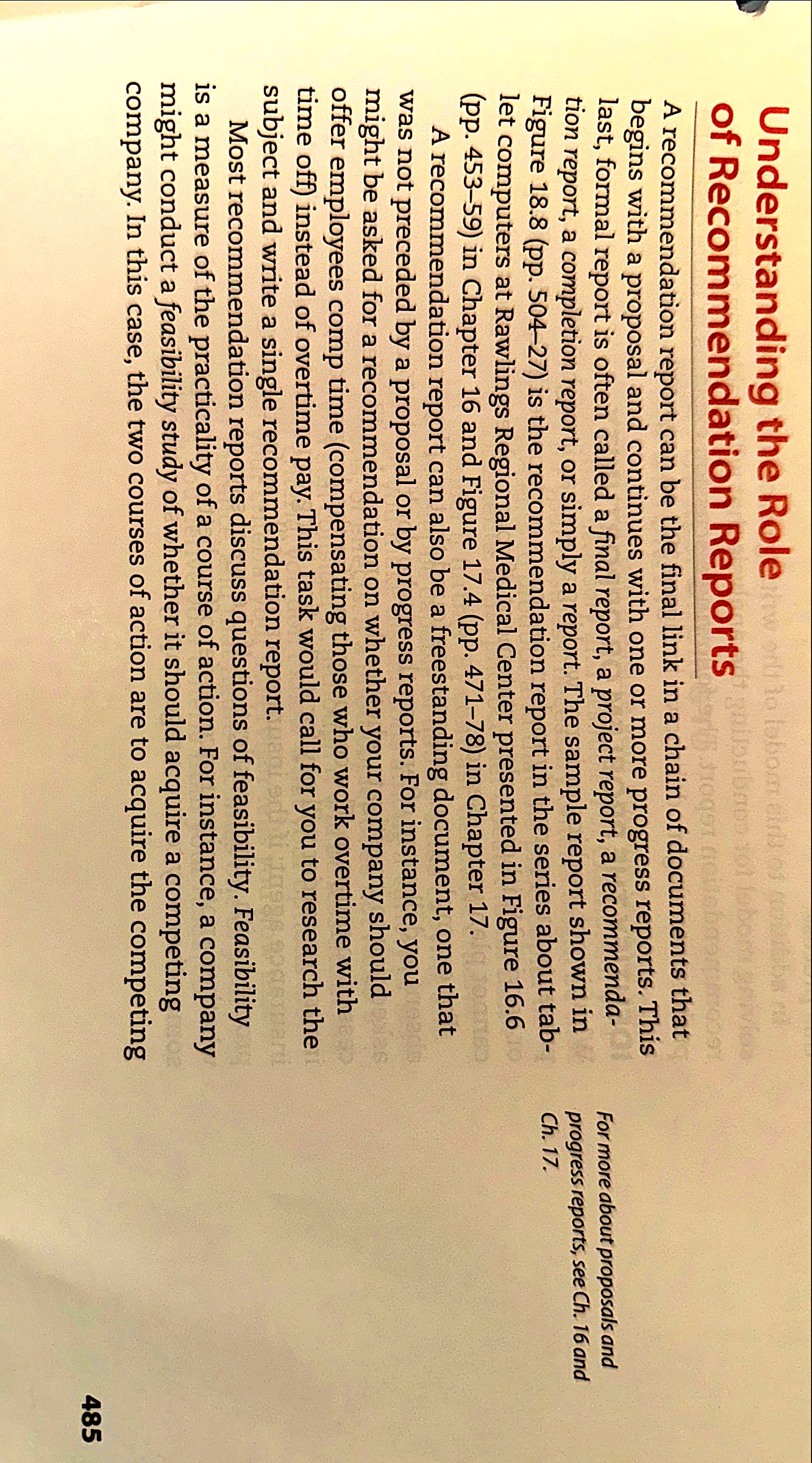
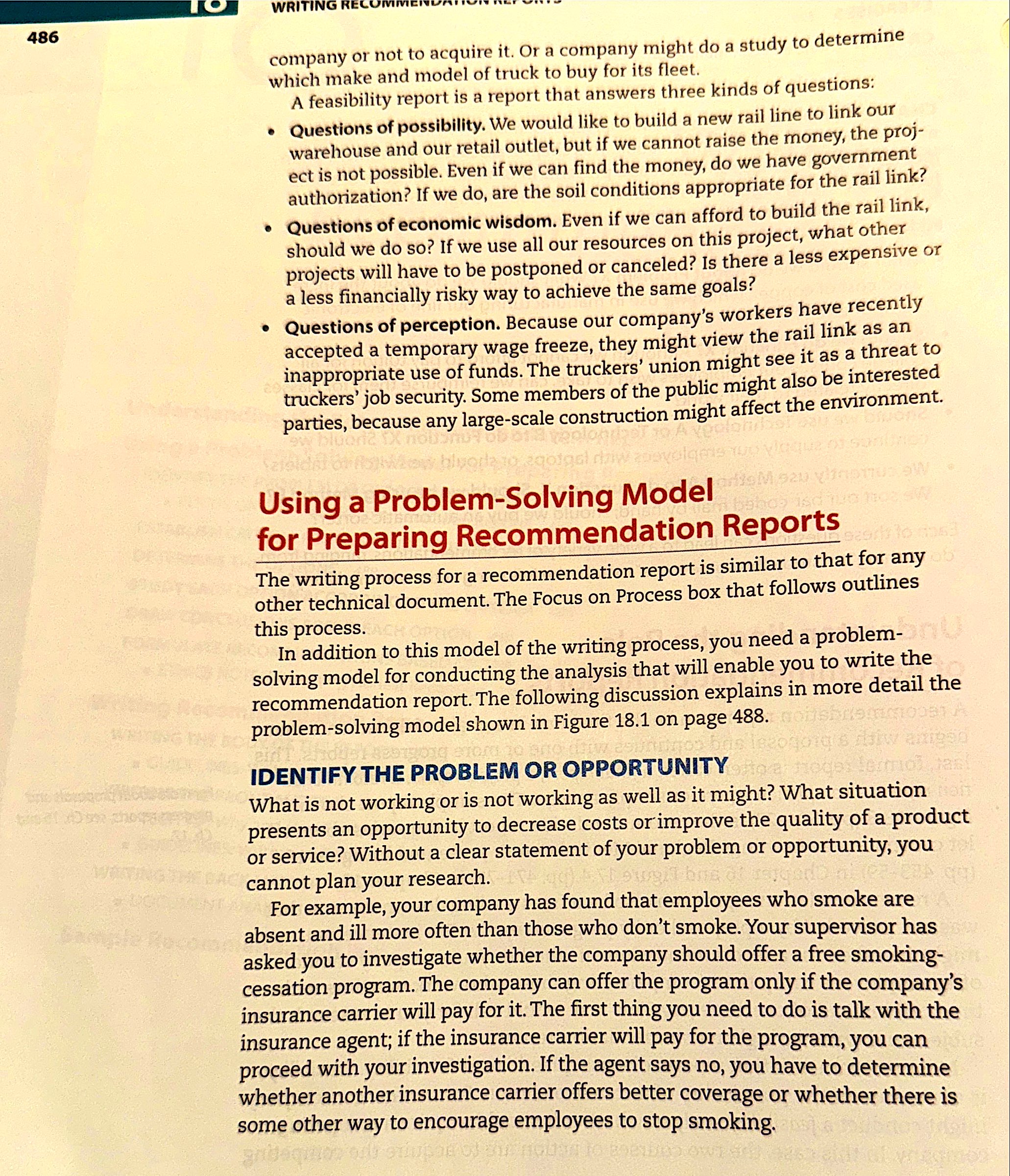
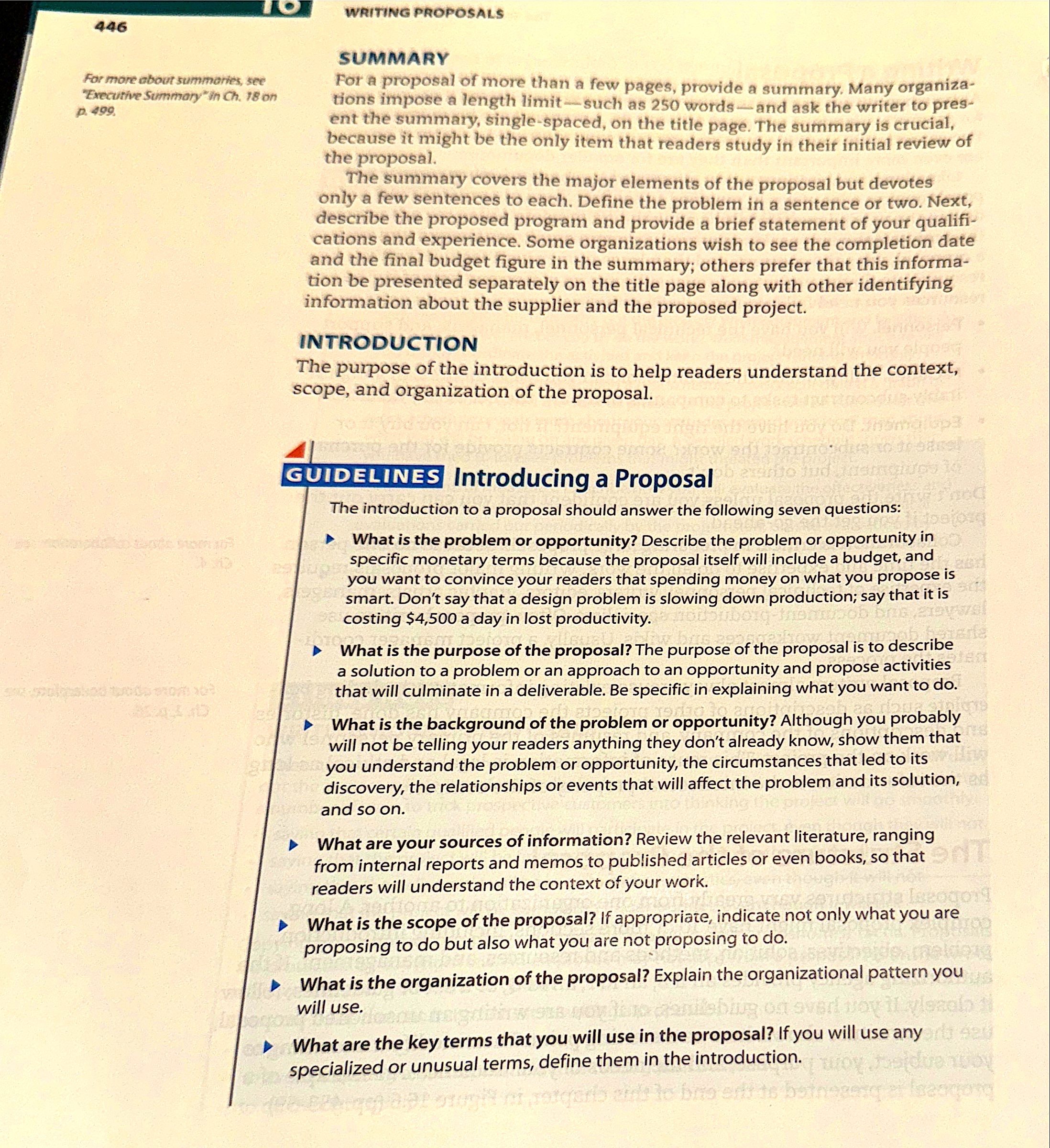
Purpose: //additional information for Markel, 446 is at last.
The general purpose of any informational report is simple: "to describe something that has happened or is happening now" (Markel, 446). More important, an informational report should "provide clear, accurate, specific information to an audience" (p. 446).
In addition, many informational reports analyze situations and provide recommendations for future organizational action. Indeed, your report will do both.
Procedure:
For this project, submit a field report written for a very specific audience, of this subject "Parking Lots' Effect on Student Parking" (University of Kentucky Parking and Transportation Services). begin with the general purpose of developing a field based on a study of a specific University of Kentucky site.
UK Traffic example: You should think of traffic broadly?your site might be a particular street on or near campus, a specific parking area, shuttle routes or stops, classroom areas, pedestrian bottlenecks, desire paths (Link:https://en.wikipedia.org/wiki/Desire_path), or bicycle infrastructure. "Traffic," in other words, does not mean "cars" or "parking lots" alone.
After picking above mention site on the subject further refine the purpose before beginning the site study; for example,
- Report on a site's overall efficiency?
- Consider the overall experience or satisfaction?
- Focus on wait times or spatial problems?
- Focus on actual vs. intended use (e.g., desire paths)?
- Explore people movement and impediments to traffic flow?
Getting Started:
Follow the below sections while writing field report project.
- Research your audience
- Identify a viable and mutually interesting field site
- Research your field site generally (secondary research)
- Develop a primary research protocol
- Conduct primary research
- Analyze your research data
- Outline your report
- Final field report
Conducting Secondary Research:
One of the first steps is simply researching your audience. This will likely be secondary research: what can you find out about your audience from the web? What kind of public perception does your audience have? Who are the specific people in charge of making decisions about the issues you'll study?
After settled on a topic and field site, you'll need to conduct some additional secondary research on Parking Lots' Effect on Student Parking.
For example, if your group chose to focus on patron parking experience at the Commonwealth Stadium lot, you might begin by doing some secondary research on UK's parking infrastructure: what is the PTS mission and vision? How does the PTS office generally interact with the public? What kinds of major public media attention has the PTS office received in the last year relative to customer experience?
Next, you might mine social media for popular perceptions of patron experiences. You might narrow that down to local instantiations by searching tagged tweets or Instagram posts, for example. The key point here is that you should conduct some thorough secondary research about both your audience and field site before developing your primary research protocol.
Conducting Primary Research:
Primary Research must be on following topic:
. Front Paid Lot
. Chellgren Lot
. Back Left Lot
. Far Left Lot
In order to conduct field research well, you should begin by developing a protocol (the procedures and rules you will follow during field research).
For example, you should begin to develop your primary research protocol with triangulation in mind: you should collect multiple forms of field data across multiple instances of data collection. In other words, a well-researched field report will not rely on interviews alone.
What do these data collection methods look like in practice? Maybe something like this:
- Observations x4 (consider online tools when available)
- Interviews with customers x4 (consider email, zoom or phone interviews)
- Interviews with employees x4 (consider email, zoom or phone interviews)
- Photographs of traffic flows x4
Again, let's say we're working on studying Commonwealth Stadium lot patron experience during peak morning hours. First, we would need an understanding of when these peak periods typically take place?let's say it's 9:00 am, M-F.
All four members of the group could simply meet at the lot one Monday morning at 8:55, observe and take fieldnotes from 9:00-9:15, and move on. This would be a very efficient use of the group's time, but this protocol would result in a very poorly triangulated and researched site study.
Instead, our protocol should be more like this:
- Tyler observes Monday from 9:00-9:15, taking detailed fieldnotes about availability, traffic flows, wait times, and any obvious breakdowns (disputes over spaces, people running toward campus to catch a class, etc.)
- At 9:15, Tyler conducts informal, brief interviews with 2 or 3 patrons, asking them about their experience, and asking them about their experience with parking at this time of day
- Stacy follows the same procedures on Tuesday from 9:00-9:15
- Juan follows the same procedures on Wednesday from 9:00-9:15
- Tracy follows the same procedures on Thursday from 9:00-9:15
By analyzing all of this observational data together, we can identify trends over several forms of data collection (observations, interviews, photographs), over several instances of data collection (Monday through Thursday), with multiple PTS patrons.
Between our secondary research and our well-triangulated primary research, we should be able to produce a grounded and well-informed report from our site study.
Deliverable: //additional information for (Markel, p. 485-486) is at last.
complete Field Report Project should include the following components:
- An Executive Summary (Markel, p. 485-486)
- Introduction with contextual details and a clearly defined problem statement
- Methods for your field study
- Data collection procedures (from your protocol)
- Data analysis procedures (what you did with the data you collected)
- Findings or Results of your field study that clearly address the problem statement
- Application of Findings (so what? Might include recommendations)
- Conclusions and/or directions for future site studies.
Tips
produce a professional, well-designed, informative field report. claims must be based on secondary and primary research.
Your field report should include visuals of some kind (tables, charts, photographs from your field study, etc.).
References
https://transportation.uky.edu/bus/routes
https://uknowledge.uky.edu/ktc_researchreports/875/
https://uknowledge.uky.edu/ktc_researchreports/1397/
https://www.govinfo.gov/app/details/GOVPUB-TD2-PURL-gpo53166
http://crashinformationky.org/AdvancedSearch
Additional Document:
Step by Step Solution
There are 3 Steps involved in it

Get step-by-step solutions from verified subject matter experts
 Study Help