







Question: please provide 2, 3, 4 & 5 Time Management Exercise Effective time management is one of the most difficult chores facing even the most experienced
please provide 2, 3, 4 & 5 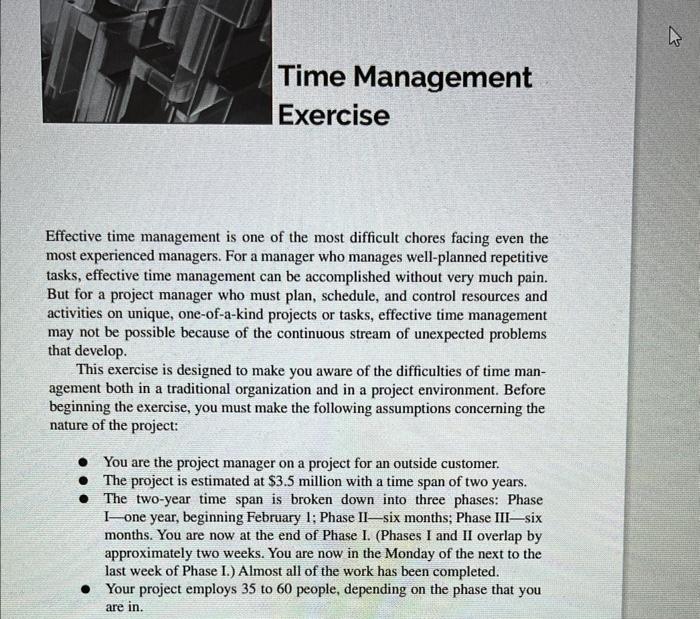
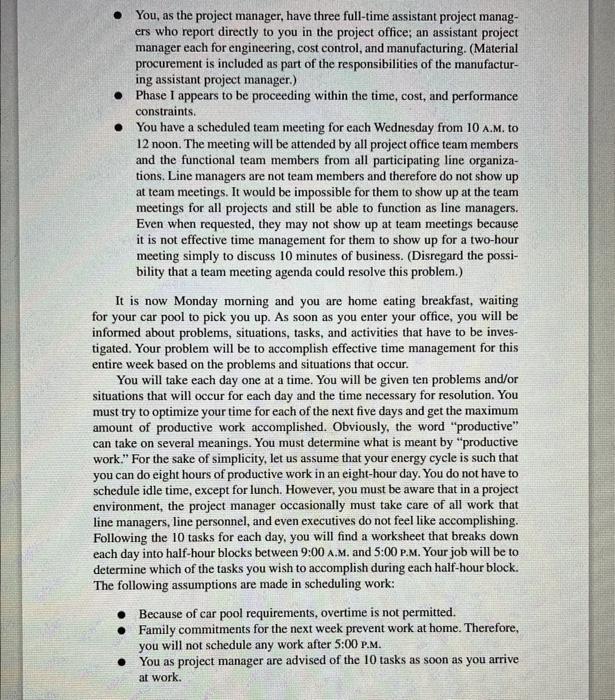
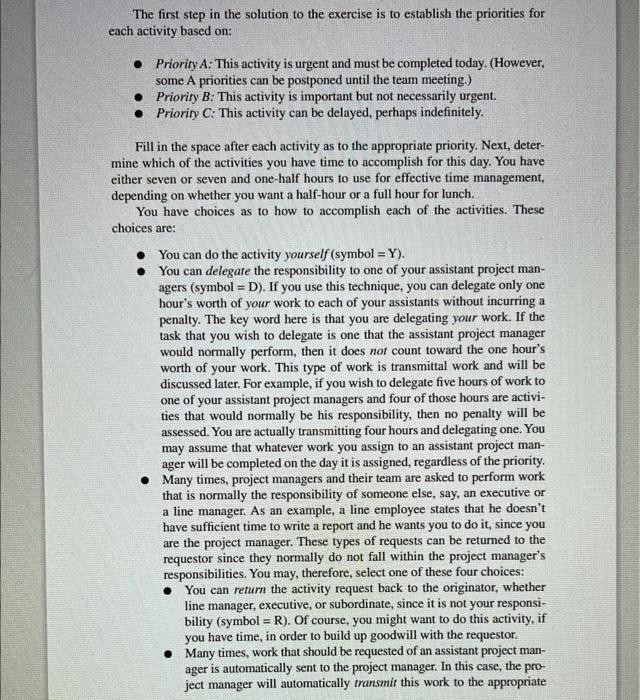
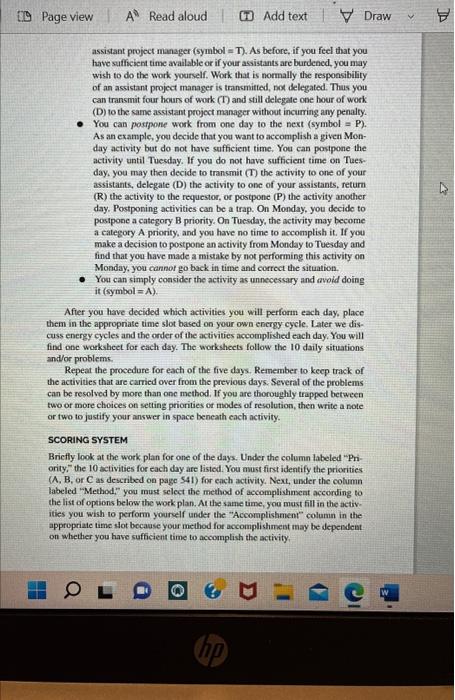
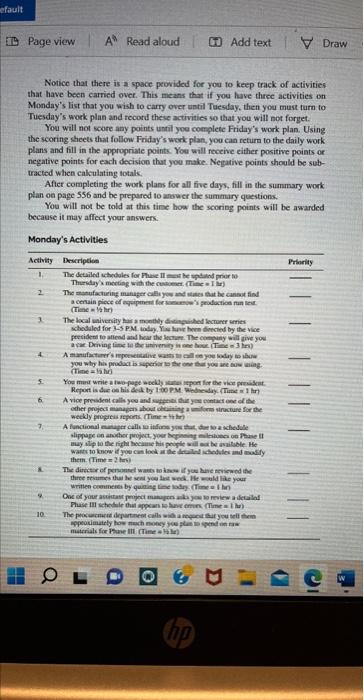
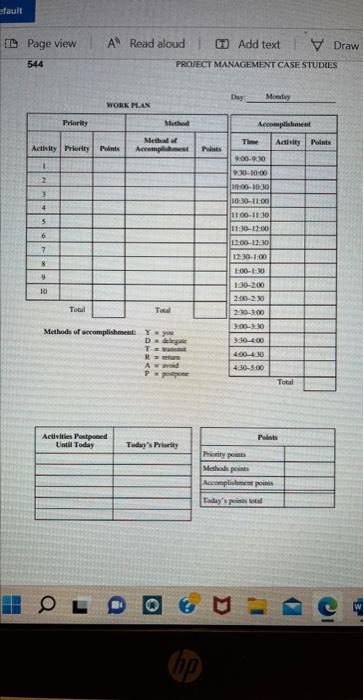
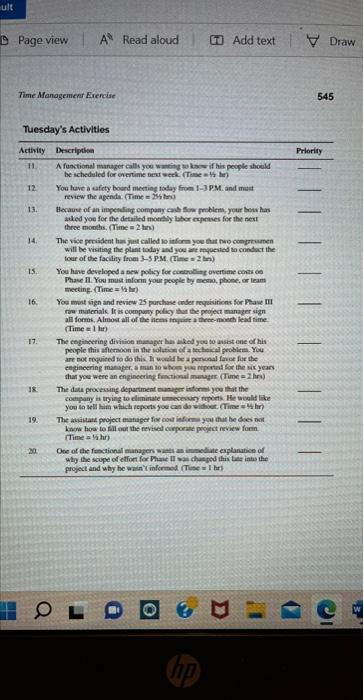
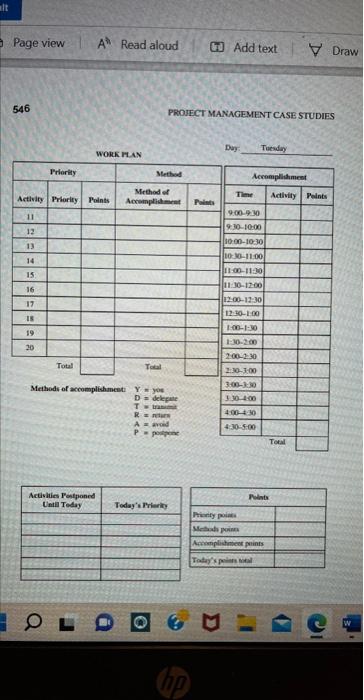
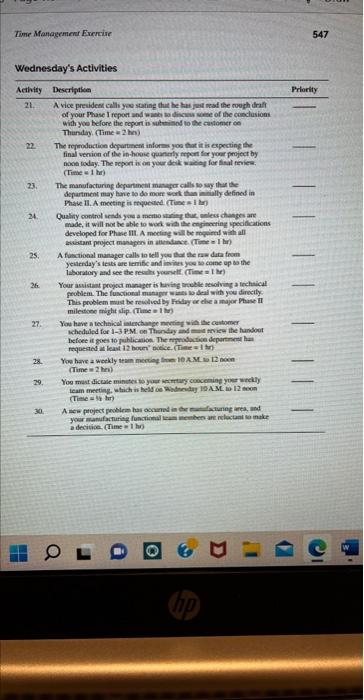
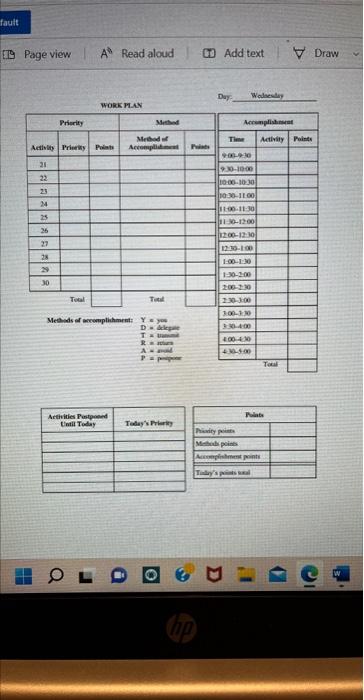
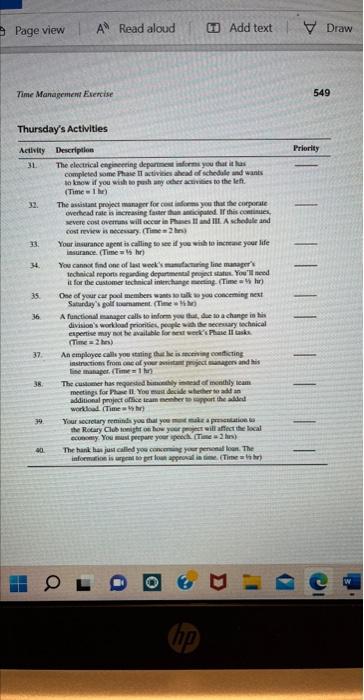
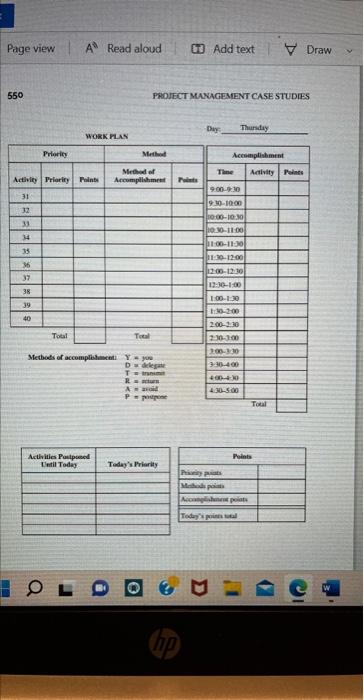
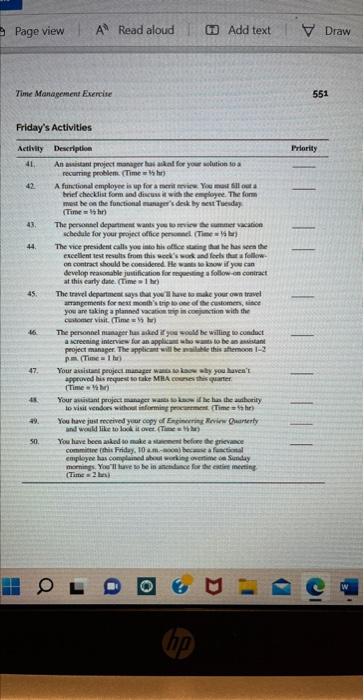
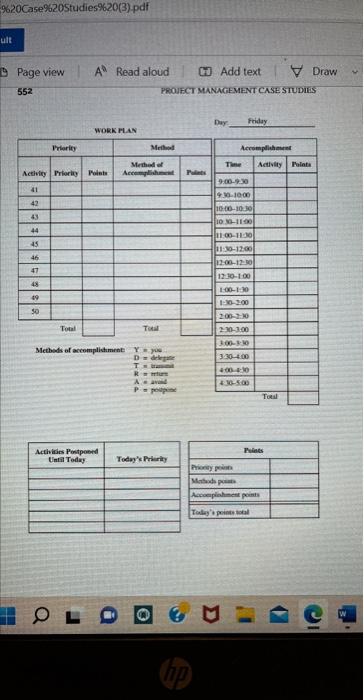
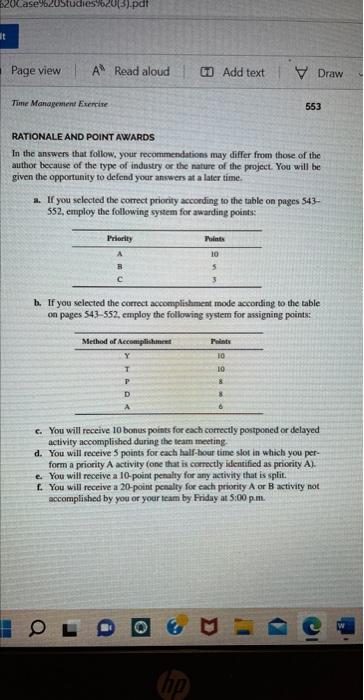
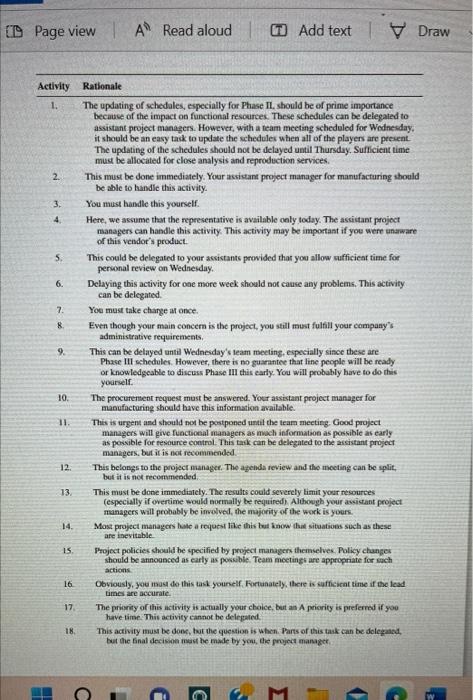
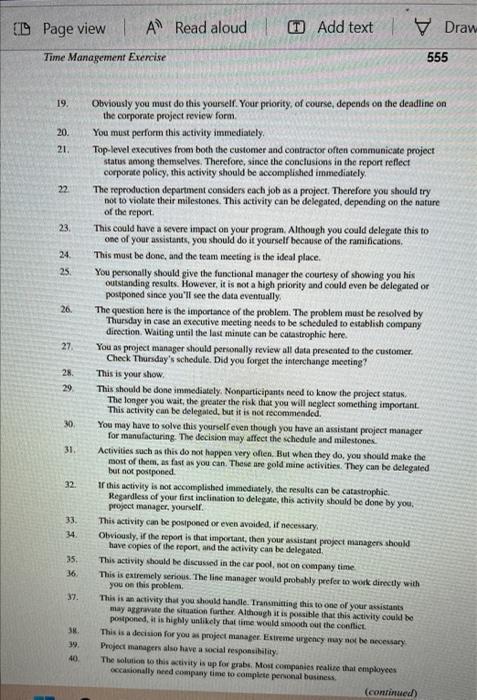
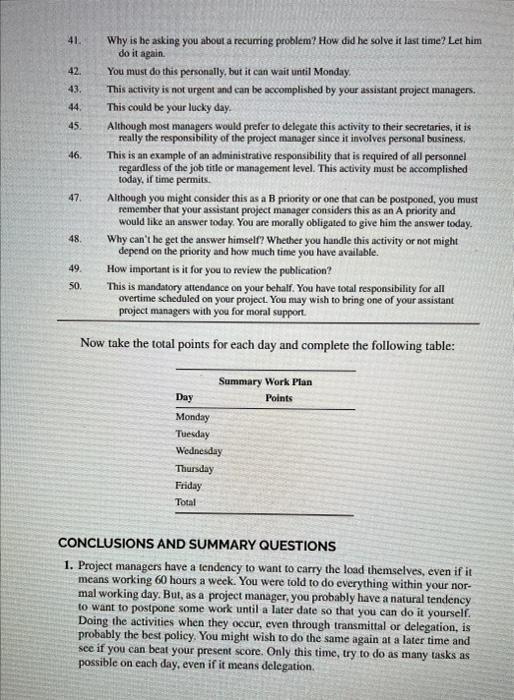
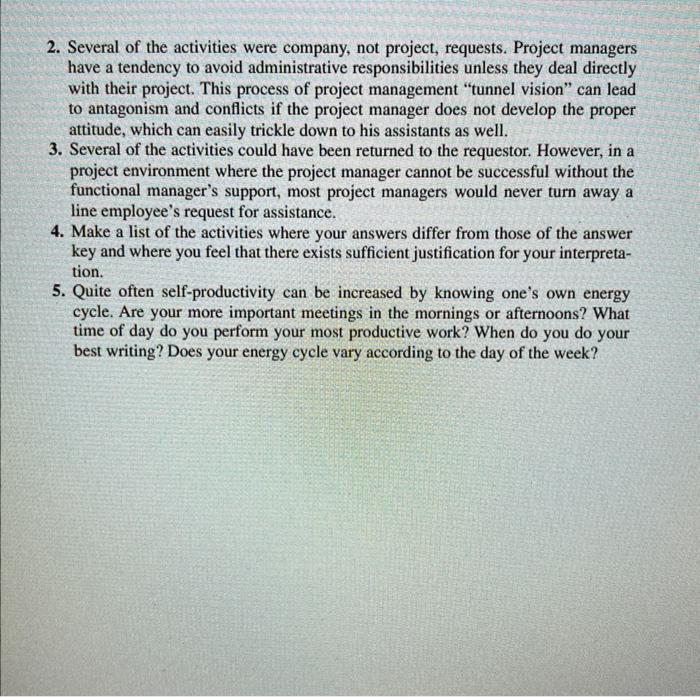
Time Management Exercise Effective time management is one of the most difficult chores facing even the most experienced managers. For a manager who manages well-planned repetitive tasks, effective time management can be accomplished without very much pain. But for a project manager who must plan, schedule, and control resources and activities on unique, one-of-a-kind projects or tasks, effective time management may not be possible because of the continuous stream of unexpected problems that develop. This exercise is designed to make you aware of the difficulties of time management both in a traditional organization and in a project environment. Before beginning the exercise, you must make the following assumptions concerning the nature of the project: - You are the project manager on a project for an outside customer. - The project is estimated at $3.5 million with a time span of two years. - The two-year time span is broken down into three phases: Phase I-one year, beginning February 1; Phase II - six months; Phase III-six months. You are now at the end of Phase I. (Phases I and II overlap by approximately two weeks. You are now in the Monday of the next to the last week of Phase I.) Almost all of the work has been completed. - Your project employs 35 to 60 people, depending on the phase that you are in. - You, as the project manager, have three full-time assistant project managers who report directly to you in the project office; an assistant project manager each for engineering, cost control, and manufacturing. (Material procurement is included as part of the responsibilities of the manufacturing assistant project manager.) - Phase I appears to be proceeding within the time, cost, and performance constraints. - You have a scheduled team meeting for each Wednesday from 10 A.M. to 12 noon. The meeting will be attended by all project office team members and the functional team members from all participating line organizations. Line managers are not team members and therefore do not show up at team meetings. It would be impossible for them to show up at the team meetings for all projects and still be able to function as line managers. Even when requested, they may not show up at team meetings because it is not effective time management for them to show up for a two-hour meeting simply to discuss 10 minutes of business. (Disregard the possibility that a team meeting agenda could resolve this problem.) It is now Monday morning and you are home eating breakfast, waiting for your car pool to pick you up. As soon as you enter your office, you will be informed about problems, situations, tasks, and activities that have to be investigated. Your problem will be to accomplish effective time management for this entire week based on the problems and situations that occur. You will take each day one at a time. You will be given ten problems and/or situations that will occur for each day and the time necessary for resolution. You must try to optimize your time for each of the next five days and get the maximum amount of productive work accomplished. Obviously, the word "productive" can take on several meanings. You must determine what is meant by "productive work." For the sake of simplicity, let us assume that your energy cycle is such that you can do eight hours of productive work in an eight-hour day. You do not have to schedule idle time, except for lunch. However, you must be aware that in a project environment, the project manager occasionally must take care of all work that line managers, line personnel, and even executives do not feel like accomplishing. Following the 10 tasks for each day, you will find a worksheet that breaks down each day into half-hour blocks between 9:00 A.M. and 5:00 P.M. Your job will be to determine which of the tasks you wish to accomplish during each half-hour block. The following assumptions are made in scheduling work: - Because of car pool requirements, overtime is not permitted. - Family commitments for the next week prevent work at home. Therefore, you will not schedule any work after 5:00 P.M. - You as project manager are advised of the 10 tasks as soon as you arrive at work. The first step in the solution to the exercise is to establish the priorities for each activity based on: - Priority A : This activity is urgent and must be completed today. (However, some A priorities can be postponed until the team meeting.) - Priority B: This activity is important but not necessarily urgent. - Priority C: This activity can be delayed, perhaps indefinitely. Fill in the space after each activity as to the appropriate priority. Next, determine which of the activities you have time to accomplish for this day. You have either seven or seven and one-half hours to use for effective time management, depending on whether you want a half-hour or a full hour for lunch. You have choices as to how to accomplish each of the activities. These choices are: - You can do the activity yourself ( symbol =Y). - You can delegate the responsibility to one of your assistant project managers (symbol = D). If you use this technique, you can delegate only one hour's worth of your work to each of your assistants without incurring a penalty. The key word here is that you are delegating your work. If the task that you wish to delegate is one that the assistant project manager would normally perform, then it does not count toward the one hour's worth of your work. This type of work is transmittal work and will be discussed later. For example, if you wish to delegate five hours of work to one of your assistant project managers and four of those hours are activities that would normally be his responsibility, then no penalty will be assessed. You are actually transmitting four hours and delegating one. You may assume that whatever work you assign to an assistant project manager will be completed on the day it is assigned, regardless of the priority. - Many times, project managers and their team are asked to perform work that is normally the responsibility of someone else, say, an executive or a line manager. As an example, a line employee states that he doesn't have sufficient time to write a report and he wants you to do it, since you are the project manager. These types of requests can be returned to the requestor since they normally do not fall within the project manager's responsibilities. You may, therefore, select one of these four choices: - You can return the activity request back to the originator, whether line manager, executive, or subordinate, since it is not your responsibility (symbol = R). Of course, you might want to do this activity, if you have time, in order to build up goodwill with the requestor. - Many times, work that should be requested of an assistant project manager is automatically sent to the project manager. In this case, the project manager will automatically transmit this work to the appropriate assistant project manager (symbol =T ). As before, if you feel that you have safficient time available or if your assistants are burdened, you may wish to do the work yourself. Work that is normally the respoasibility of an assistant project manager is trancmitted, not delegated. This you can transmit four hours of work (T) and sill delegate one hour of work (D) to the same assistant project manager without incurring any penalty. - You can posfpone work from one day to the next (symbol = P). As an example, you decide that you want to accomplish a given Monday activity but do not hrve sufficient time. You can postpone the activity until Tuesday. If you do not have sufficient time on Thesday. you may then decide to transmit (T) the activity to one of your assistants, delegate (D) the activity to one of your assistants, return (R) the activity to the requestor, or postpone (P) the activity another day. Postponing activities can be a trap. On Monday, you decide to posipone a category B priority, On Tuesday, the activity may become a category A priority, and you have no time to accomplish it. If you make a decision to postpone an activity from Monday to Tuesday and find that you have made a mistake by not performing this activity on Monday, you cannof go back in time and correct the situation. - You can simply consider the activity as unnecessary and avoid doing it ( symbol =A). After you have decided which activities you will perform each day, place them in the appropniate time slot based on your own energy cycle. Later we discuss energy cycles and the order of the activities accomplished each day. You will find one worksheet for each day. The workshects follow the 10 daily situations and/or problems. Repeat the procedure for each of the five days. Remember to keep track of the activities that are carried over from the previous days. Several of the problems can be resolved by more than one method. If you are thoroughly trapped between two or more choices on setting priorities of modes of resolution, then write a note or two to justify your answer in space beneath each activity. SCORING SYSTEM Bricfly look at the work plan for one of the days. Under the column labeled "Pnority," the 10 activities for each day are listed. You must first identify the priorities (A, B, or C as described on page 541) for each activity. Next, under the column labeled "Method," you must select the method of accomplishmeat according to the list of options below the work plan. At the same time, you must fill in the activities you wish to perform yourself under the "Accomplishment" column in the appropriate time slot because your method for accomplishment may be deperslent: on whether you have sufficient time to accomplish the activity, Notice that there is a space peovided for you fo keep track of activitien that have been carried over. This means that if you have three activities on Monday's list that you wish to carry over antil Tuesday. then yoa must furn fo Tuesday"s work plan and record these activities so that you will not forget. You will not weore any points until yoe complete Friday's work plan. Using the scoring sheets that follon Friday's werk plan, you can retura to the daily work: plans and fill in the applogriate points. You will receive cither positive points or negative points for each decision that you make. Negative points should be subtracted when caleulating sotalk. After completing the work plans for all five days, fill in the summary work pian oe page 556 and be prepared to answer the summary questions. You will not be told at this time how the secring points will be awarded because it may afficet your answers. 12. You have a cafcty boand menting 1oday from 1=1PN. and mas 13. Hocause of an imperelife company cadk fore frobleth, yeur thous hars. weled yow for the defailed motuly laker entienes foe the ners three morths, (Time =2 her will be visitine the plant todey and yoe art macesed ba conduct the foer of the facility fount 3-5 PM. (These =2 Len) 13. Vivel have developed a new folky for conerilint gvertathe canhs in Thase II Yoe must inforn your pecele by roeso, phome, ar leam mecting. (Thime =4 hir) 16. Yos mast sign and review 25 purchae onder reyeivitions for Phave 111 ran muferials. If is coenpuery policy thot the proyect manazer sizn (Thime e 1 ht) are not roquitod to do this. If would be a perwad faves for the engincering manspar, ai tran 10 atwen yoe nepcotest for the mix years than you were an enginecring fientiknal macuptr. (Tame a 2 hriv) 12. The date procesing departinenf naniger int oral yow low the coengany a trying to climinate uncoeven ropirts. Ite tovih like know how b fill our the fevisel cirporate project review form. Ilime a 4 hir) project and uty he wain't informed (Thae w 1 hr) PRDIECT MANMGEMENT CASE STUDIES Time Management Errrcise 547 Wednesday's Activities Time Management Eitercise 549 Thursday's Acthvities PADIELT MANACHMANTCASESTUDIFS Time Managesent Exercise 551 Friday's Activities \%20Case\%.205tudies\%20(3) pdf 9 Pageview Ao Readaloud A Add text Draw 552 PGOJFCT MANMCTEMENTCASESTUDIES \begin{tabular}{|c|c|} \hline Mctiviries Postpoend Untal Today & Todpy's Prilarty \\ \hline & \\ \hline & \\ \hline & \\ \hline & \\ \hline & \\ \hline \end{tabular} RATIONALEAND POINT AWARDS In the answers that follow, your recommendations may differ from those of the author because of the type of industry or the nature of the project. You will be given the opportunity to defend your ancwers at a later time. a. If you selected the correct priority according to the table on pages 543 552. employ the following system for awarding points: b. If you selected the correct accomipliahment mode according to the table oa pages 543-552, employ the following system for assigning points: c. You will receive 10 bonus points for each correctly postponed or delayed activity accompliched daring the team meeting. d. You will receive 5 points for each half-bour time slot in which you perform a priority A activity (one that is corroctly identified as priority A). e. You will receive a 10-poiot penalty for any activity that is split. f. You will receive a 20-point penalty for each priority A or B activity not accomplished by yod or your team by Friday at 5:00 p.m. because of the impact on functicnal resources. These schedules can be defegated to assistant project managcrs. However, with a team mecting scheduled for Wodnesday. it should be an easy task to update the chetodules when all of the players are peceseat. The updating of the schedules should not be delayed until Thursday. Sufficient time mus be allocated for close analysis and reprodecion services. 2. This must be done immediately. Your assistant proyect manager for manufacturing should be able to handie this activity. 3. You must handle this younelf. 4. Here, we assume that the repesentative is available only today. The assistant projoct managers can handle this activity. This activity may be important if yoe were enarware of this vendor's product. 5. This could be delegated to your acsistants provided thar you allow sufficieat time for personal review on Wednesday. 6. Delaying this activity for oae more week should not cause any problems. This activity can be delegated. 7. Yoe must take charge at once. 8. Even theugh your main concera is the project, you still must fulfill your company"' administrative requirements. 9. This can be delayed until Wednesday's leam necting, especially since these afe Phace 111 schedules. However, there is no guarantee that line people will be ready or knowledgeable to discuss Phase IIl this carfy. You will probably have to do this yourself. 10. The procurement reques must be answered. Yoter assistaat project manager for manufactaring should have this information awailable. 11. This is urgent and should nod be postponed ustal the tean zeeting. Good project managcrs will grve funchocal masagers as mush informatson as porsibie as early as parsible for tesource control. This tak can be delegated to the assistant project mankers. but it is not recommend.d. 12. This belongs to the project nanager. The agenda review and tho mocting can be split, but it is nee recommended. 13. This must be dene immediately. The results could severcly timit your nesources (especially if overtime would aormally be required) Althowgh your awsictant project managers wall pechably be imsolved, the majority of the work is yours. 14. Most project manaycrs hale a request Tike this leat inow that situations such as these afe incvitable. 15. Froject pokicies should be specified by project managers themselves. Policy changes should be annoanced as early as porsibic. Team moetings are appropriate for sach actions. 16. Oowiously, you mast dot this task. yourelf. Fortanately. there is suffecieat time af the lead Limes are accurale. 17. The privity of this activity is actaally your choice, but an A priority is preferred if you have- bime. This activity cannot be delegated. 18. This activity must be dom, twt the question is when. Tharts of this task ean be delegatad. but the final decision nast he made by you, die groyect managet. 19. Obviously you must do this yourself. Your priority, of course, depends on the deadline on the cofporate project review form. 20. You must perfortn this activity immediately. 21. Top-level executives from both the customer and contractor often commenanicate project status amsong themselves. Therefore, sance the conclusions in the report reflect corporate policy, this activity should be accomplished immediately. 22. The reproduction department considers each job as a project. Therefore you should try not to violate their milestones. This activiry can be delegated, depending on the nafure of the report. 23. This could have a severe impact on your program. Although you could delegate this to one of your assistants, you should do it yourself because of the ramifications. 24. This mast be done, and the team meeting is the ideal place. 25. You personally should give the functional manager the courtesy of showing you his outsianding results. However, it is not a high priority and coeld even be delegated or postponed since you'll see the data eventally. 26. The question here is the importance of the problem. The problem must be resolved by Thursday in case an executive meeting needs to be scheduled to establish company direction. Waiting uatil the last minute can be catastrophic here. 27. You as project manager should perionally review all data preseated to the customer. Check. Thursday's schedule. Did you forget the interchange meeting? 28. This is your show, 29. This should be done immsediately. Nonparticipants need to know the project status. The longer you wait, the greater the risk that you will negloct something important. This activity can be delegated, bus it is not recemmeaded. 30. You may have to wolve this yourself evea though you have an assistant project manager for manufacturing. The decision may affect the schedule and milestones. 31. Activilies sach as this do not happen very offen. But when they do, you should make the most of them, as fast as you can. Thene are gold mine activitics. They can be delegated but not portponed. 32. If this activity is not accomplished imenediately, the results can be catastrophic. Regardless of your first inclination io delegate, this activity should be done by yoe, project manager, yourself. 33. Thic activity can be posiponed or even avoided. if necersary; 34. Obviously, if the report is that important, then your arsistant project managers shoeld have copies of the report, and the activity can be delcgated. 35. This activity thould be diccusied in the car pool, not on company time. 36. This is extremely senous. The line manager would probebly prefer to wovk directly with you on this problem. 37. This is an activity that you shoold handle. Transuiting this to one of your awistants may agerwate the situation farther. Although it is possible that this activity could be posiponed, it is highly unlikely that time would smonth cat the conflict. 38. This is a decision for you as project manager. Eivirme urgency muy not be necessary: 39. Project managers also have a social responsibitity. 40. The solutien to this aceivity is up for grabe. Most companies realine that enpsoyees: cccasionally ised enmpany time to complete perwonal basiness. 41. Why is he asking you about a recuring problem? How did he solve it last time? Let him do it again. 42. You must do this personally, but it can wait unitil Monday. 43. This activity is not urgent and can be accomplished by your assistant project managers. 44. This could be your lucky day. 45. Although most managers would prefer fo delegate this activity to their secretaries, it is really the responsibility of the project manager since it involves personal business. 46. This is an example of an administrative responsibility that is required of all personnel regardless of the job title or management level. This activity must be accomplished today, if time permits. 47. Although you might consider this as a B priority or one that can be postponed, you must remember that your assistant project manager considers this as an A priority and would like an answer today. You are morally obligated to give him the answer today. 48. Why can't he get the answer himself? Whether you handle this activity or not might depend on the priority and how much time you have available. 49. How important is it for you to review the publication? 50. This is mandatory attendance on your behalf. You have total responsibility for all overtime scheduled on your project. You may wish to bring one of your assistant project managers with you for moral support. Now take the total points for each day and complete the following table: CONCLUSIONS AND SUMMARY QUESTIONS 1. Project managers have a tendency to want to carry the load themselves, even if it means working 60 hours a week. You were told to do everything within your normal working day. But, as a project manager, you probably have a natural tendency to want to postpone some work until a later date so that you can do it yourself. Doing the activities when they occur, even through transmittal or delegation, is probably the best policy. You might wish to do the same again at a later time and see if you can beat your present score. Only this time, try to do as many tasks as possible on each day, even if it means delegation. 2. Several of the activities were company, not project, requests. Project managers have a tendency to avoid administrative responsibilities unless they deal directly with their project. This process of project management "tunnel vision" can lead to antagonism and conflicts if the project manager does not develop the proper attitude, which can easily trickle down to his assistants as well. 3. Several of the activities could have been returned to the requestor. However, in a project environment where the project manager cannot be successful without the functional manager's support, most project managers would never turn away a line employee's request for assistance. 4. Make a list of the activities where your answers differ from those of the answer key and where you feel that there exists sufficient justification for your interpretation. 5. Quite often self-productivity can be increased by knowing one's own energy cycle. Are your more important meetings in the mornings or afternoons? What time of day do you perform your most productive work? When do you do your best writing? Does your energy cycle vary according to the day of the week? Time Management Exercise Effective time management is one of the most difficult chores facing even the most experienced managers. For a manager who manages well-planned repetitive tasks, effective time management can be accomplished without very much pain. But for a project manager who must plan, schedule, and control resources and activities on unique, one-of-a-kind projects or tasks, effective time management may not be possible because of the continuous stream of unexpected problems that develop. This exercise is designed to make you aware of the difficulties of time management both in a traditional organization and in a project environment. Before beginning the exercise, you must make the following assumptions concerning the nature of the project: - You are the project manager on a project for an outside customer. - The project is estimated at $3.5 million with a time span of two years. - The two-year time span is broken down into three phases: Phase I-one year, beginning February 1; Phase II - six months; Phase III-six months. You are now at the end of Phase I. (Phases I and II overlap by approximately two weeks. You are now in the Monday of the next to the last week of Phase I.) Almost all of the work has been completed. - Your project employs 35 to 60 people, depending on the phase that you are in. - You, as the project manager, have three full-time assistant project managers who report directly to you in the project office; an assistant project manager each for engineering, cost control, and manufacturing. (Material procurement is included as part of the responsibilities of the manufacturing assistant project manager.) - Phase I appears to be proceeding within the time, cost, and performance constraints. - You have a scheduled team meeting for each Wednesday from 10 A.M. to 12 noon. The meeting will be attended by all project office team members and the functional team members from all participating line organizations. Line managers are not team members and therefore do not show up at team meetings. It would be impossible for them to show up at the team meetings for all projects and still be able to function as line managers. Even when requested, they may not show up at team meetings because it is not effective time management for them to show up for a two-hour meeting simply to discuss 10 minutes of business. (Disregard the possibility that a team meeting agenda could resolve this problem.) It is now Monday morning and you are home eating breakfast, waiting for your car pool to pick you up. As soon as you enter your office, you will be informed about problems, situations, tasks, and activities that have to be investigated. Your problem will be to accomplish effective time management for this entire week based on the problems and situations that occur. You will take each day one at a time. You will be given ten problems and/or situations that will occur for each day and the time necessary for resolution. You must try to optimize your time for each of the next five days and get the maximum amount of productive work accomplished. Obviously, the word "productive" can take on several meanings. You must determine what is meant by "productive work." For the sake of simplicity, let us assume that your energy cycle is such that you can do eight hours of productive work in an eight-hour day. You do not have to schedule idle time, except for lunch. However, you must be aware that in a project environment, the project manager occasionally must take care of all work that line managers, line personnel, and even executives do not feel like accomplishing. Following the 10 tasks for each day, you will find a worksheet that breaks down each day into half-hour blocks between 9:00 A.M. and 5:00 P.M. Your job will be to determine which of the tasks you wish to accomplish during each half-hour block. The following assumptions are made in scheduling work: - Because of car pool requirements, overtime is not permitted. - Family commitments for the next week prevent work at home. Therefore, you will not schedule any work after 5:00 P.M. - You as project manager are advised of the 10 tasks as soon as you arrive at work. The first step in the solution to the exercise is to establish the priorities for each activity based on: - Priority A : This activity is urgent and must be completed today. (However, some A priorities can be postponed until the team meeting.) - Priority B: This activity is important but not necessarily urgent. - Priority C: This activity can be delayed, perhaps indefinitely. Fill in the space after each activity as to the appropriate priority. Next, determine which of the activities you have time to accomplish for this day. You have either seven or seven and one-half hours to use for effective time management, depending on whether you want a half-hour or a full hour for lunch. You have choices as to how to accomplish each of the activities. These choices are: - You can do the activity yourself ( symbol =Y). - You can delegate the responsibility to one of your assistant project managers (symbol = D). If you use this technique, you can delegate only one hour's worth of your work to each of your assistants without incurring a penalty. The key word here is that you are delegating your work. If the task that you wish to delegate is one that the assistant project manager would normally perform, then it does not count toward the one hour's worth of your work. This type of work is transmittal work and will be discussed later. For example, if you wish to delegate five hours of work to one of your assistant project managers and four of those hours are activities that would normally be his responsibility, then no penalty will be assessed. You are actually transmitting four hours and delegating one. You may assume that whatever work you assign to an assistant project manager will be completed on the day it is assigned, regardless of the priority. - Many times, project managers and their team are asked to perform work that is normally the responsibility of someone else, say, an executive or a line manager. As an example, a line employee states that he doesn't have sufficient time to write a report and he wants you to do it, since you are the project manager. These types of requests can be returned to the requestor since they normally do not fall within the project manager's responsibilities. You may, therefore, select one of these four choices: - You can return the activity request back to the originator, whether line manager, executive, or subordinate, since it is not your responsibility (symbol = R). Of course, you might want to do this activity, if you have time, in order to build up goodwill with the requestor. - Many times, work that should be requested of an assistant project manager is automatically sent to the project manager. In this case, the project manager will automatically transmit this work to the appropriate assistant project manager (symbol =T ). As before, if you feel that you have safficient time available or if your assistants are burdened, you may wish to do the work yourself. Work that is normally the respoasibility of an assistant project manager is trancmitted, not delegated. This you can transmit four hours of work (T) and sill delegate one hour of work (D) to the same assistant project manager without incurring any penalty. - You can posfpone work from one day to the next (symbol = P). As an example, you decide that you want to accomplish a given Monday activity but do not hrve sufficient time. You can postpone the activity until Tuesday. If you do not have sufficient time on Thesday. you may then decide to transmit (T) the activity to one of your assistants, delegate (D) the activity to one of your assistants, return (R) the activity to the requestor, or postpone (P) the activity another day. Postponing activities can be a trap. On Monday, you decide to posipone a category B priority, On Tuesday, the activity may become a category A priority, and you have no time to accomplish it. If you make a decision to postpone an activity from Monday to Tuesday and find that you have made a mistake by not performing this activity on Monday, you cannof go back in time and correct the situation. - You can simply consider the activity as unnecessary and avoid doing it ( symbol =A). After you have decided which activities you will perform each day, place them in the appropniate time slot based on your own energy cycle. Later we discuss energy cycles and the order of the activities accomplished each day. You will find one worksheet for each day. The workshects follow the 10 daily situations and/or problems. Repeat the procedure for each of the five days. Remember to keep track of the activities that are carried over from the previous days. Several of the problems can be resolved by more than one method. If you are thoroughly trapped between two or more choices on setting priorities of modes of resolution, then write a note or two to justify your answer in space beneath each activity. SCORING SYSTEM Bricfly look at the work plan for one of the days. Under the column labeled "Pnority," the 10 activities for each day are listed. You must first identify the priorities (A, B, or C as described on page 541) for each activity. Next, under the column labeled "Method," you must select the method of accomplishmeat according to the list of options below the work plan. At the same time, you must fill in the activities you wish to perform yourself under the "Accomplishment" column in the appropriate time slot because your method for accomplishment may be deperslent: on whether you have sufficient time to accomplish the activity, Notice that there is a space peovided for you fo keep track of activitien that have been carried over. This means that if you have three activities on Monday's list that you wish to carry over antil Tuesday. then yoa must furn fo Tuesday"s work plan and record these activities so that you will not forget. You will not weore any points until yoe complete Friday's work plan. Using the scoring sheets that follon Friday's werk plan, you can retura to the daily work: plans and fill in the applogriate points. You will receive cither positive points or negative points for each decision that you make. Negative points should be subtracted when caleulating sotalk. After completing the work plans for all five days, fill in the summary work pian oe page 556 and be prepared to answer the summary questions. You will not be told at this time how the secring points will be awarded because it may afficet your answers. 12. You have a cafcty boand menting 1oday from 1=1PN. and mas 13. Hocause of an imperelife company cadk fore frobleth, yeur thous hars. weled yow for the defailed motuly laker entienes foe the ners three morths, (Time =2 her will be visitine the plant todey and yoe art macesed ba conduct the foer of the facility fount 3-5 PM. (These =2 Len) 13. Vivel have developed a new folky for conerilint gvertathe canhs in Thase II Yoe must inforn your pecele by roeso, phome, ar leam mecting. (Thime =4 hir) 16. Yos mast sign and review 25 purchae onder reyeivitions for Phave 111 ran muferials. If is coenpuery policy thot the proyect manazer sizn (Thime e 1 ht) are not roquitod to do this. If would be a perwad faves for the engincering manspar, ai tran 10 atwen yoe nepcotest for the mix years than you were an enginecring fientiknal macuptr. (Tame a 2 hriv) 12. The date procesing departinenf naniger int oral yow low the coengany a trying to climinate uncoeven ropirts. Ite tovih like know how b fill our the fevisel cirporate project review form. Ilime a 4 hir) project and uty he wain't informed (Thae w 1 hr) PRDIECT MANMGEMENT CASE STUDIES Time Management Errrcise 547 Wednesday's Activities Time Management Eitercise 549 Thursday's Acthvities PADIELT MANACHMANTCASESTUDIFS Time Managesent Exercise 551 Friday's Activities \%20Case\%.205tudies\%20(3) pdf 9 Pageview Ao Readaloud A Add text Draw 552 PGOJFCT MANMCTEMENTCASESTUDIES \begin{tabular}{|c|c|} \hline Mctiviries Postpoend Untal Today & Todpy's Prilarty \\ \hline & \\ \hline & \\ \hline & \\ \hline & \\ \hline & \\ \hline \end{tabular} RATIONALEAND POINT AWARDS In the answers that follow, your recommendations may differ from those of the author because of the type of industry or the nature of the project. You will be given the opportunity to defend your ancwers at a later time. a. If you selected the correct priority according to the table on pages 543 552. employ the following system for awarding points: b. If you selected the correct accomipliahment mode according to the table oa pages 543-552, employ the following system for assigning points: c. You will receive 10 bonus points for each correctly postponed or delayed activity accompliched daring the team meeting. d. You will receive 5 points for each half-bour time slot in which you perform a priority A activity (one that is corroctly identified as priority A). e. You will receive a 10-poiot penalty for any activity that is split. f. You will receive a 20-point penalty for each priority A or B activity not accomplished by yod or your team by Friday at 5:00 p.m. because of the impact on functicnal resources. These schedules can be defegated to assistant project managcrs. However, with a team mecting scheduled for Wodnesday. it should be an easy task to update the chetodules when all of the players are peceseat. The updating of the schedules should not be delayed until Thursday. Sufficient time mus be allocated for close analysis and reprodecion services. 2. This must be done immediately. Your assistant proyect manager for manufacturing should be able to handie this activity. 3. You must handle this younelf. 4. Here, we assume that the repesentative is available only today. The assistant projoct managers can handle this activity. This activity may be important if yoe were enarware of this vendor's product. 5. This could be delegated to your acsistants provided thar you allow sufficieat time for personal review on Wednesday. 6. Delaying this activity for oae more week should not cause any problems. This activity can be delegated. 7. Yoe must take charge at once. 8. Even theugh your main concera is the project, you still must fulfill your company"' administrative requirements. 9. This can be delayed until Wednesday's leam necting, especially since these afe Phace 111 schedules. However, there is no guarantee that line people will be ready or knowledgeable to discuss Phase IIl this carfy. You will probably have to do this yourself. 10. The procurement reques must be answered. Yoter assistaat project manager for manufactaring should have this information awailable. 11. This is urgent and should nod be postponed ustal the tean zeeting. Good project managcrs will grve funchocal masagers as mush informatson as porsibie as early as parsible for tesource control. This tak can be delegated to the assistant project mankers. but it is not recommend.d. 12. This belongs to the project nanager. The agenda review and tho mocting can be split, but it is nee recommended. 13. This must be dene immediately. The results could severcly timit your nesources (especially if overtime would aormally be required) Althowgh your awsictant project managers wall pechably be imsolved, the majority of the work is yours. 14. Most project manaycrs hale a request Tike this leat inow that situations such as these afe incvitable. 15. Froject pokicies should be specified by project managers themselves. Policy changes should be annoanced as early as porsibic. Team moetings are appropriate for sach actions. 16. Oowiously, you mast dot this task. yourelf. Fortanately. there is suffecieat time af the lead Limes are accurale. 17. The privity of this activity is actaally your choice, but an A priority is preferred if you have- bime. This activity cannot be delegated. 18. This activity must be dom, twt the question is when. Tharts of this task ean be delegatad. but the final decision nast he made by you, die groyect managet. 19. Obviously you must do this yourself. Your priority, of course, depends on the deadline on the cofporate project review form. 20. You must perfortn this activity immediately. 21. Top-level executives from both the customer and contractor often commenanicate project status amsong themselves. Therefore, sance the conclusions in the report reflect corporate policy, this activity should be accomplished immediately. 22. The reproduction department considers each job as a project. Therefore you should try not to violate their milestones. This activiry can be delegated, depending on the nafure of the report. 23. This could have a severe impact on your program. Although you could delegate this to one of your assistants, you should do it yourself because of the ramifications. 24. This mast be done, and the team meeting is the ideal place. 25. You personally should give the functional manager the courtesy of showing you his outsianding results. However, it is not a high priority and coeld even be delegated or postponed since you'll see the data eventally. 26. The question here is the importance of the problem. The problem must be resolved by Thursday in case an executive meeting needs to be scheduled to establish company direction. Waiting uatil the last minute can be catastrophic here. 27. You as project manager should perionally review all data preseated to the customer. Check. Thursday's schedule. Did you forget the interchange meeting? 28. This is your show, 29. This should be done immsediately. Nonparticipants need to know the project status. The longer you wait, the greater the risk that you will negloct something important. This activity can be delegated, bus it is not recemmeaded. 30. You may have to wolve this yourself evea though you have an assistant project manager for manufacturing. The decision may affect the schedule and milestones. 31. Activilies sach as this do not happen very offen. But when they do, you should make the most of them, as fast as you can. Thene are gold mine activitics. They can be delegated but not portponed. 32. If this activity is not accomplished imenediately, the results can be catastrophic. Regardless of your first inclination io delegate, this activity should be done by yoe, project manager, yourself. 33. Thic activity can be posiponed or even avoided. if necersary; 34. Obviously, if the report is that important, then your arsistant project managers shoeld have copies of the report, and the activity can be delcgated. 35. This activity thould be diccusied in the car pool, not on company time. 36. This is extremely senous. The line manager would probebly prefer to wovk directly with you on this problem. 37. This is an activity that you shoold handle. Transuiting this to one of your awistants may agerwate the situation farther. Although it is possible that this activity could be posiponed, it is highly unlikely that time would smonth cat the conflict. 38. This is a decision for you as project manager. Eivirme urgency muy not be necessary: 39. Project managers also have a social responsibitity. 40. The solutien to this aceivity is up for grabe. Most companies realine that enpsoyees: cccasionally ised enmpany time to complete perwonal basiness. 41. Why is he asking you about a recuring problem? How did he solve it last time? Let him do it again. 42. You must do this personally, but it can wait unitil Monday. 43. This activity is not urgent and can be accomplished by your assistant project managers. 44. This could be your lucky day. 45. Although most managers would prefer fo delegate this activity to their secretaries, it is really the responsibility of the project manager since it involves personal business. 46. This is an example of an administrative responsibility that is required of all personnel regardless of the job title or management level. This activity must be accomplished today, if time permits. 47. Although you might consider this as a B priority or one that can be postponed, you must remember that your assistant project manager considers this as an A priority and would like an answer today. You are morally obligated to give him the answer today. 48. Why can't he get the answer himself? Whether you handle this activity or not might depend on the priority and how much time you have available. 49. How important is it for you to review the publication? 50. This is mandatory attendance on your behalf. You have total responsibility for all overtime scheduled on your project. You may wish to bring one of your assistant project managers with you for moral support. Now take the total points for each day and complete the following table: CONCLUSIONS AND SUMMARY QUESTIONS 1. Project managers have a tendency to want to carry the load themselves, even if it means working 60 hours a week. You were told to do everything within your normal working day. But, as a project manager, you probably have a natural tendency to want to postpone some work until a later date so that you can do it yourself. Doing the activities when they occur, even through transmittal or delegation, is probably the best policy. You might wish to do the same again at a later time and see if you can beat your present score. Only this time, try to do as many tasks as possible on each day, even if it means delegation. 2. Several of the activities were company, not project, requests. Project managers have a tendency to avoid administrative responsibilities unless they deal directly with their project. This process of project management "tunnel vision" can lead to antagonism and conflicts if the project manager does not develop the proper attitude, which can easily trickle down to his assistants as well. 3. Several of the activities could have been returned to the requestor. However, in a project environment where the project manager cannot be successful without the functional manager's support, most project managers would never turn away a line employee's request for assistance. 4. Make a list of the activities where your answers differ from those of the answer key and where you feel that there exists sufficient justification for your interpretation. 5. Quite often self-productivity can be increased by knowing one's own energy cycle. Are your more important meetings in the mornings or afternoons? What time of day do you perform your most productive work? When do you do your best writing? Does your energy cycle vary according to the day of the week Step by Step Solution
There are 3 Steps involved in it
1 Expert Approved Answer
Step: 1 Unlock

Question Has Been Solved by an Expert!
Get step-by-step solutions from verified subject matter experts
Step: 2 Unlock
Step: 3 Unlock
 Study Help