







Question: Please provide an explanation. QUESTION 4 Consider a computer that divides instructions into four categories or classes of instructions. If we know the IM and
Please provide an explanation.
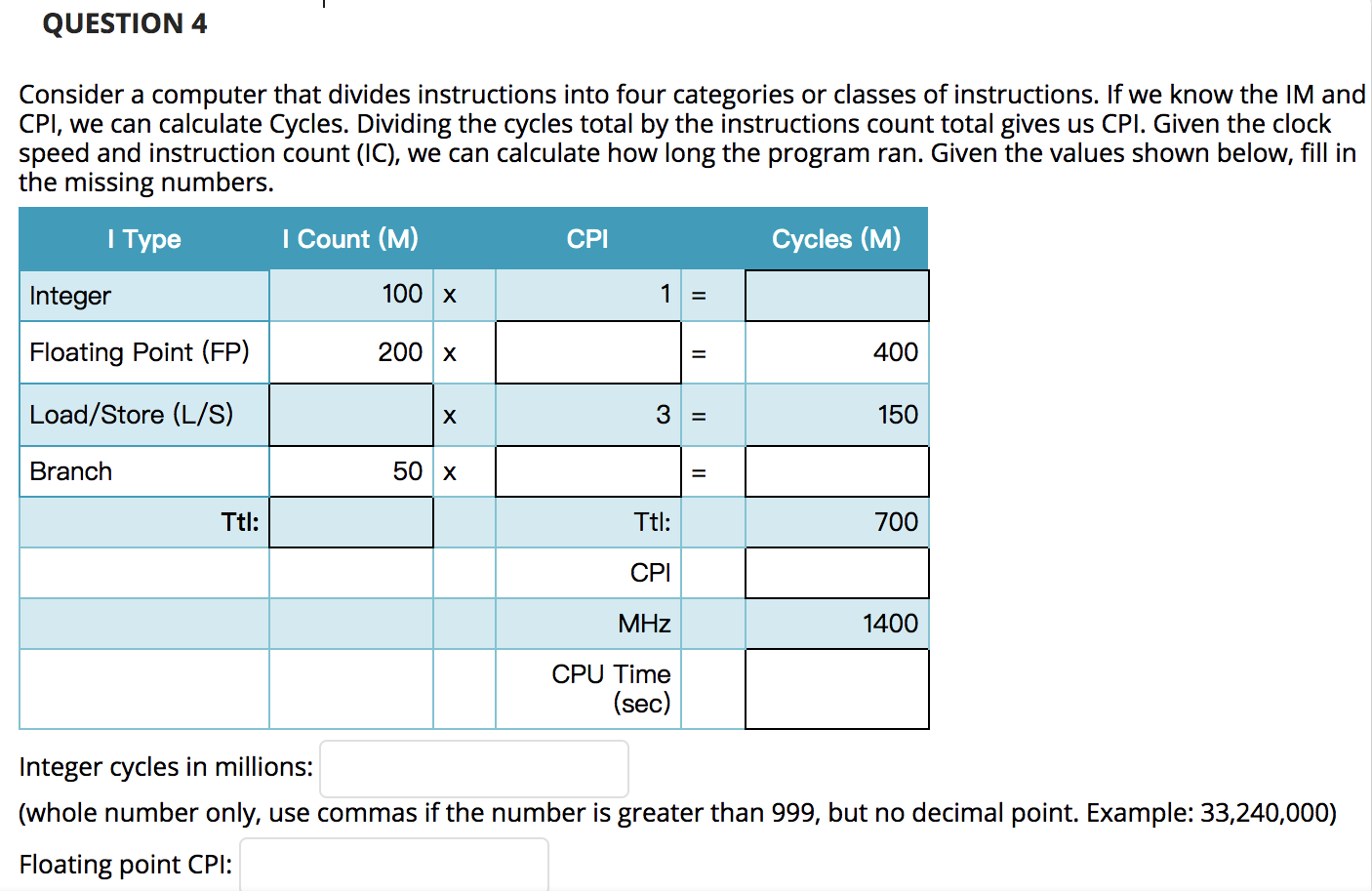
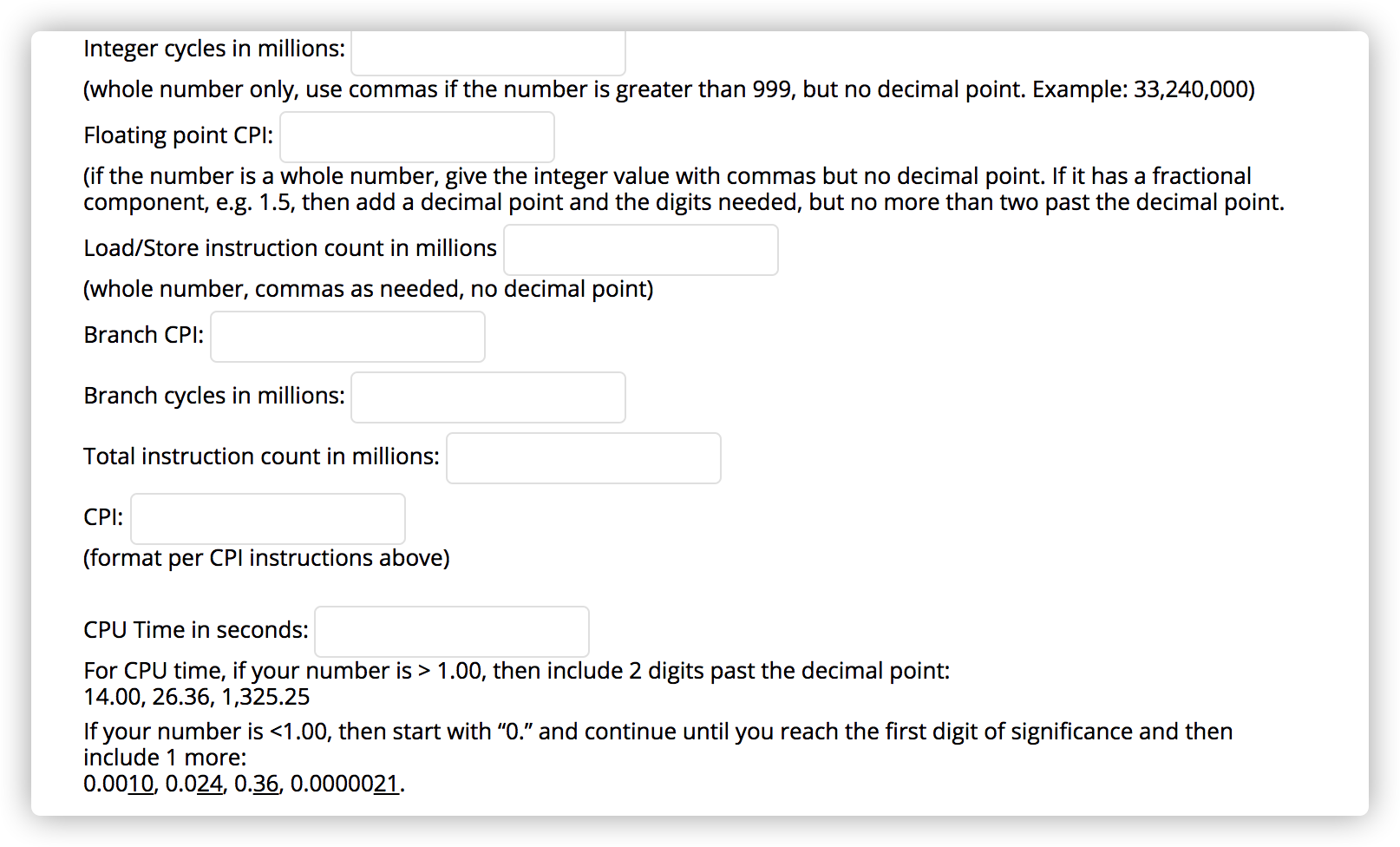
QUESTION 4 Consider a computer that divides instructions into four categories or classes of instructions. If we know the IM and CPI, we can calculate Cycles. Dividing the cycles total by the instructions count total gives us CPI. Given the clock speed and instruction count (IC), we can calculate how long the program ran. Given the values shown below, fill in the missing numbers. I Type I Count (M) CPI Cycles (M) Integer 100 x 1 Floating Point (FP) 200 x 400 Load/Store (L/S) 3 = 150 Branch 50 x Ttl: Ttl: 700 CPI MHz 1400 CPU Time (sec) Integer cycles in millions: (whole number only, use commas if the number is greater than 999, but no decimal point. Example: 33,240,000) Floating point CPI: Integer cycles in millions: (whole number only, use commas if the number is greater than 999, but no decimal point. Example: 33,240,000) Floating point CPI: (if the number is a whole number, give the integer value with commas but no decimal point. If it has a fractional component, e.g. 1.5, then add a decimal point and the digits needed, but no more than two past the decimal point. Load/Store instruction count in millions (whole number, commas as needed, no decimal point) Branch CPI: Branch cycles in millions: Total instruction count in millions: CPI: (format per CPI instructions above) CPU Time in seconds: For CPU time, if your number is > 1.00, then include 2 digits past the decimal point: 14.00, 26.36, 1,325.25 If your number is
Step by Step Solution
There are 3 Steps involved in it

Get step-by-step solutions from verified subject matter experts
 Study Help