







Question: PLEASE READ! I need help figuring out how to answer the question in the format given. I do not understand how to transfer the information
PLEASE READ! I need help figuring out how to answer the question in the format given. I do not understand how to transfer the information from a balance sheet to the format needed by my homework. Which is why I need your help. Please put it in the same format!!!
.
.
.
.
.
.
.
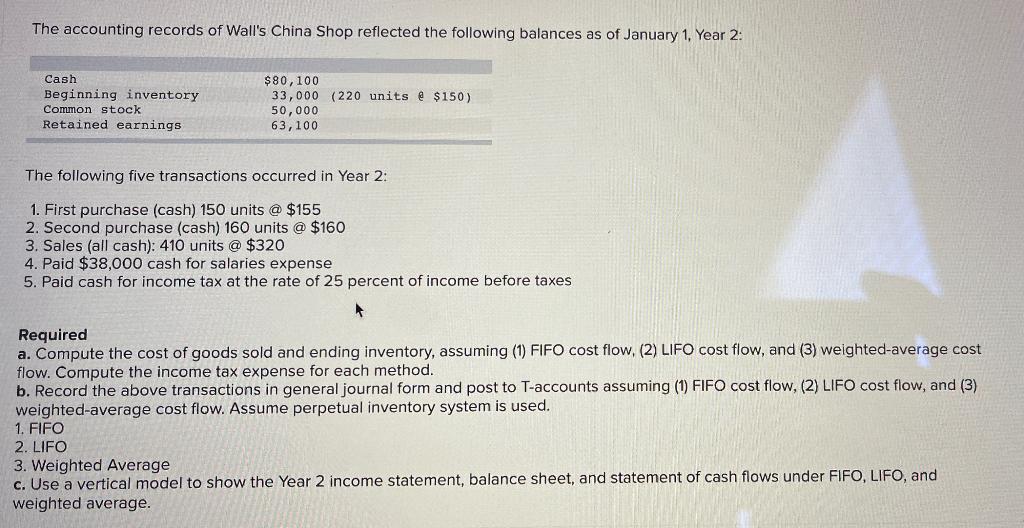
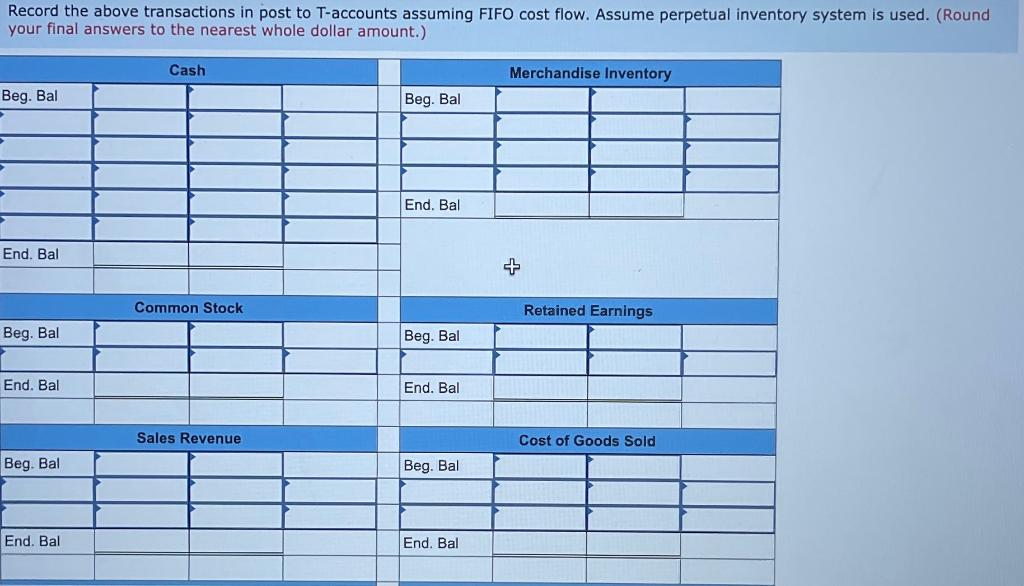
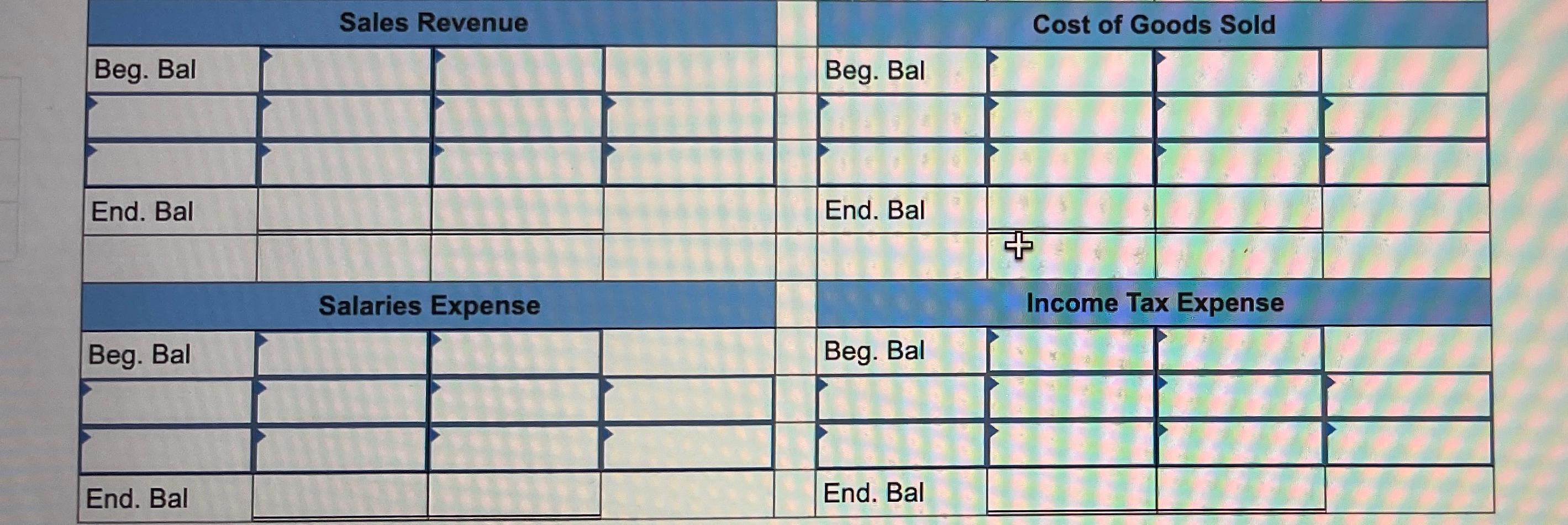
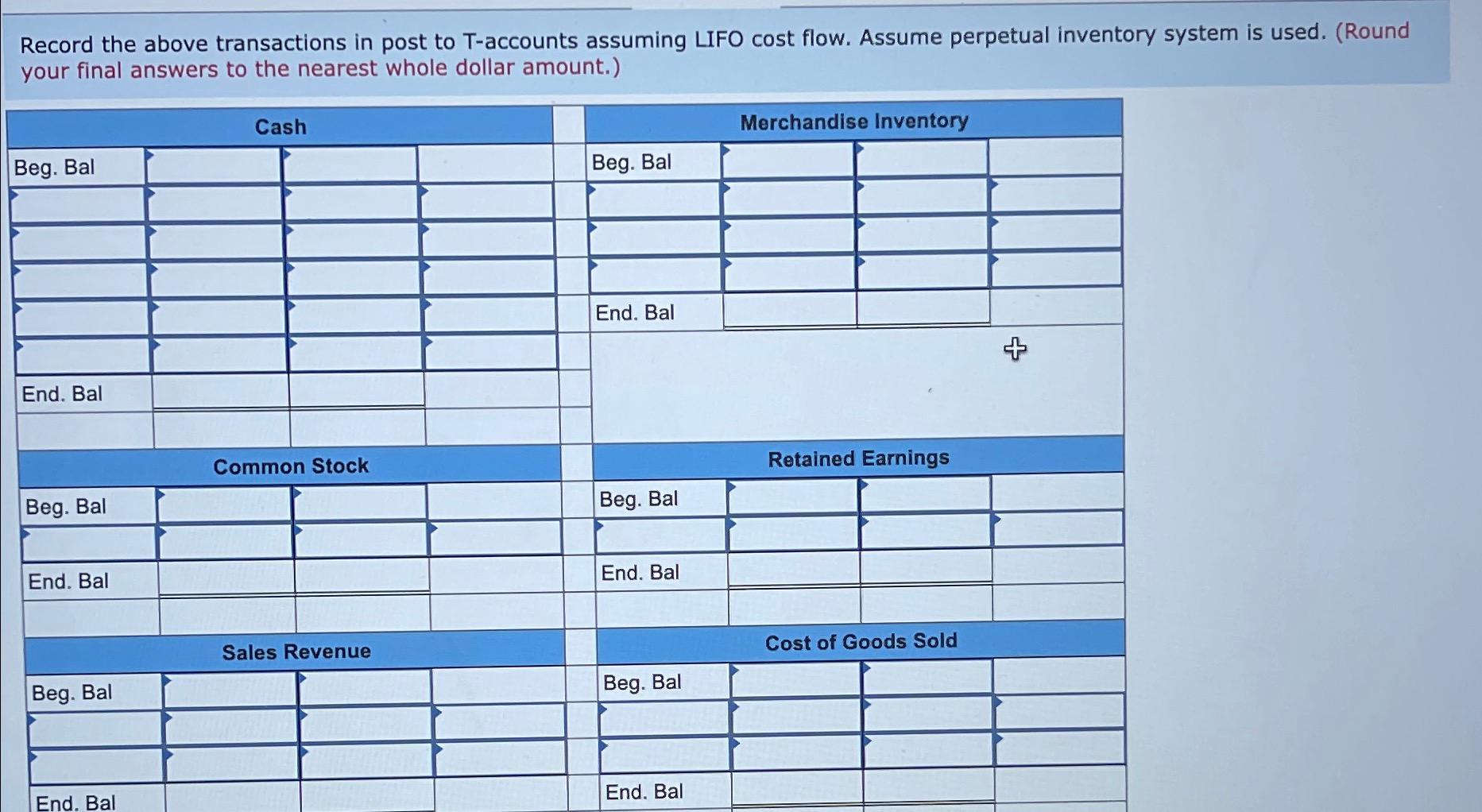

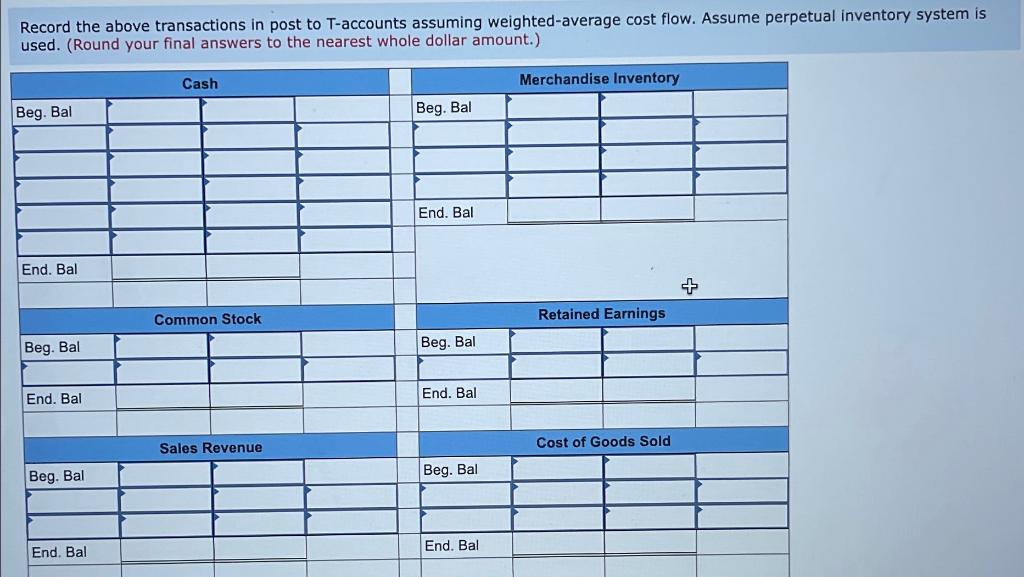

The accounting records of Wall's China Shop reflected the following balances as of January 1, Year 2: Cash Beginning inventory Common stock Retained earnings $80, 100 33,000 (220 units @ $150) 50,000 63,100 The following five transactions occurred in Year 2: 1. First purchase (cash) 150 units @ $155 2. Second purchase (cash) 160 units @ $160 3. Sales (all cash): 410 units @ $320 4. Paid $38,000 cash for salaries expense 5. Paid cash for income tax at the rate of 25 percent of income before taxes Required a. Compute the cost of goods sold and ending inventory, assuming (1) FIFO cost flow, (2) LIFO cost flow, and (3) weighted average cost flow. Compute the income tax expense for each method. b. Record the above transactions in general journal form and post to T-accounts assuming (1) FIFO cost flow, (2) LIFO cost flow, and (3) weighted average cost flow. Assume perpetual inventory system is used. 1. FIFO 2. LIFO 3. Weighted Average c. Use a vertical model to show the Year 2 income statement, balance sheet, and statement of cash flows under FIFO, LIFO, and weighted average. Record the above transactions in post to T-accounts assuming FIFO cost flow. Assume perpetual inventory system is used. (Round your final answers to the nearest whole dollar amount.) Cash Merchandise Inventory Beg. Bal Beg. Bal End. Bal End. Bal + Common Stock Retained Earnings Beg. Bal Beg. Bal End. Bal End. Bal Sales Revenue Cost of Goods Sold Beg. Bal Beg. Bal End. Bal End. Bal Sales Revenue Cost of Goods Sold Beg. Bal Beg. Bal End. Bal End. Bal + Salaries Expense Income Tax Expense Beg. Bal Beg. Bal End. Bal End. Bal Record the above transactions in post to T-accounts assuming LIFO cost flow. Assume perpetual inventory system is used. (Round your final answers to the nearest whole dollar amount.) Cash Merchandise Inventory Beg. Bal Beg. Bal End. Bal End. Bal Common Stock Retained Earnings Beg. Bal Beg. Bal End. Bal End. Bal Sales Revenue Cost of Goods Sold eg. Bal Beg. Bal End. Bal End. Bal Income Tax Expense Salaries Expense Beg. Bal Beg. Bal End. Bal End. Bal Record the above transactions in post to T-accounts assuming weighted average cost flow. Assume perpetual inventory system is used. (Round your final answers to the nearest whole dollar amount.) Cash Merchandise Inventory Beg. Bal Beg. Bal End. Bal End. Bal + Common Stock Retained Earnings Beg. Bal Beg. Bal End. Bal End. Bal Sales Revenue Cost of Goods Sold Beg. Bal Beg. Bal End. Bal End. Bal Salaries Expense Income Tax Expense Beg. Bal Beg. Bal End. Bal End. Bal
Step by Step Solution
There are 3 Steps involved in it

Get step-by-step solutions from verified subject matter experts
 Study Help