







Question: Please read the article below, and use the information in the article to answer the following questions. Brexit Accelerates the British Pound's 100 Years of
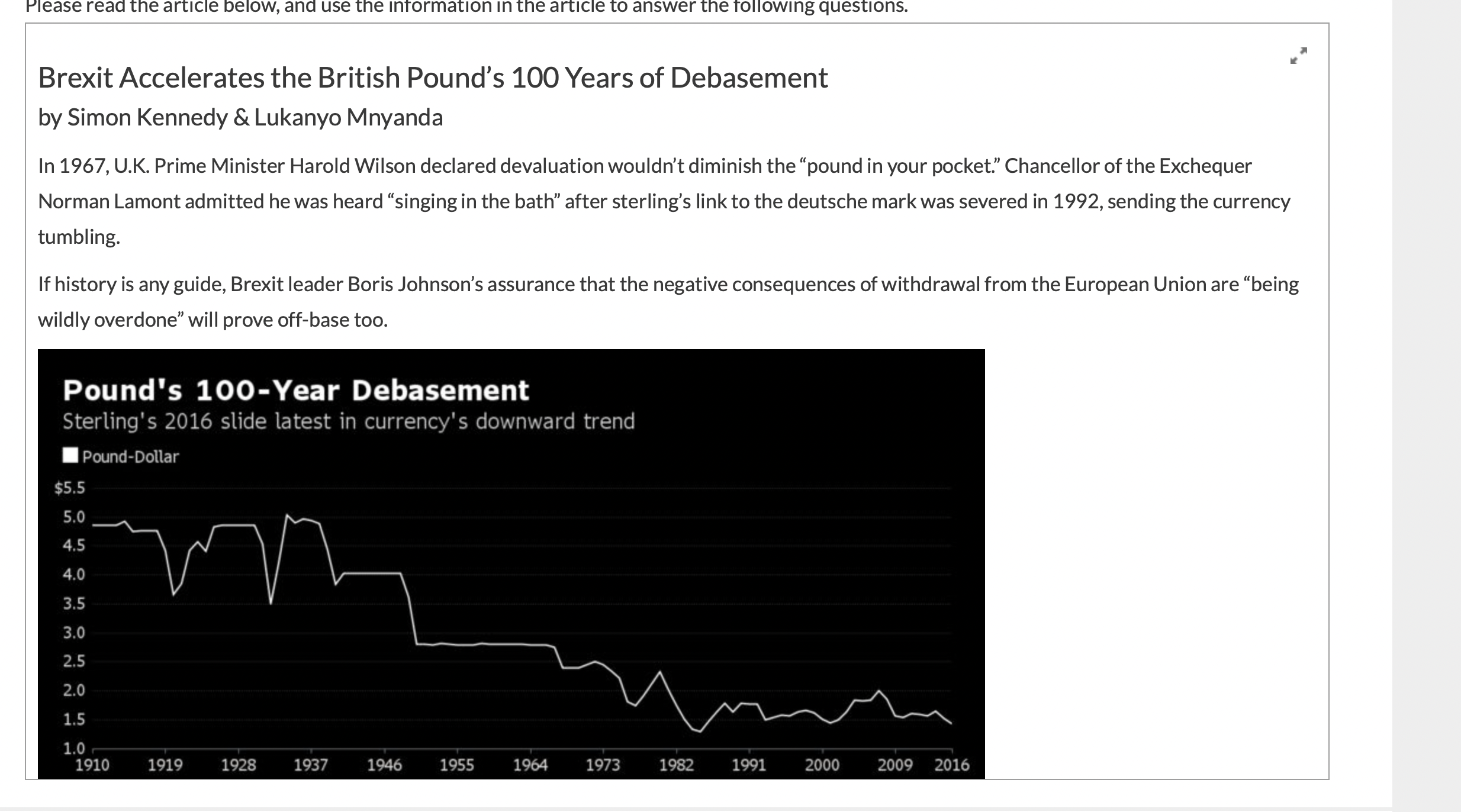
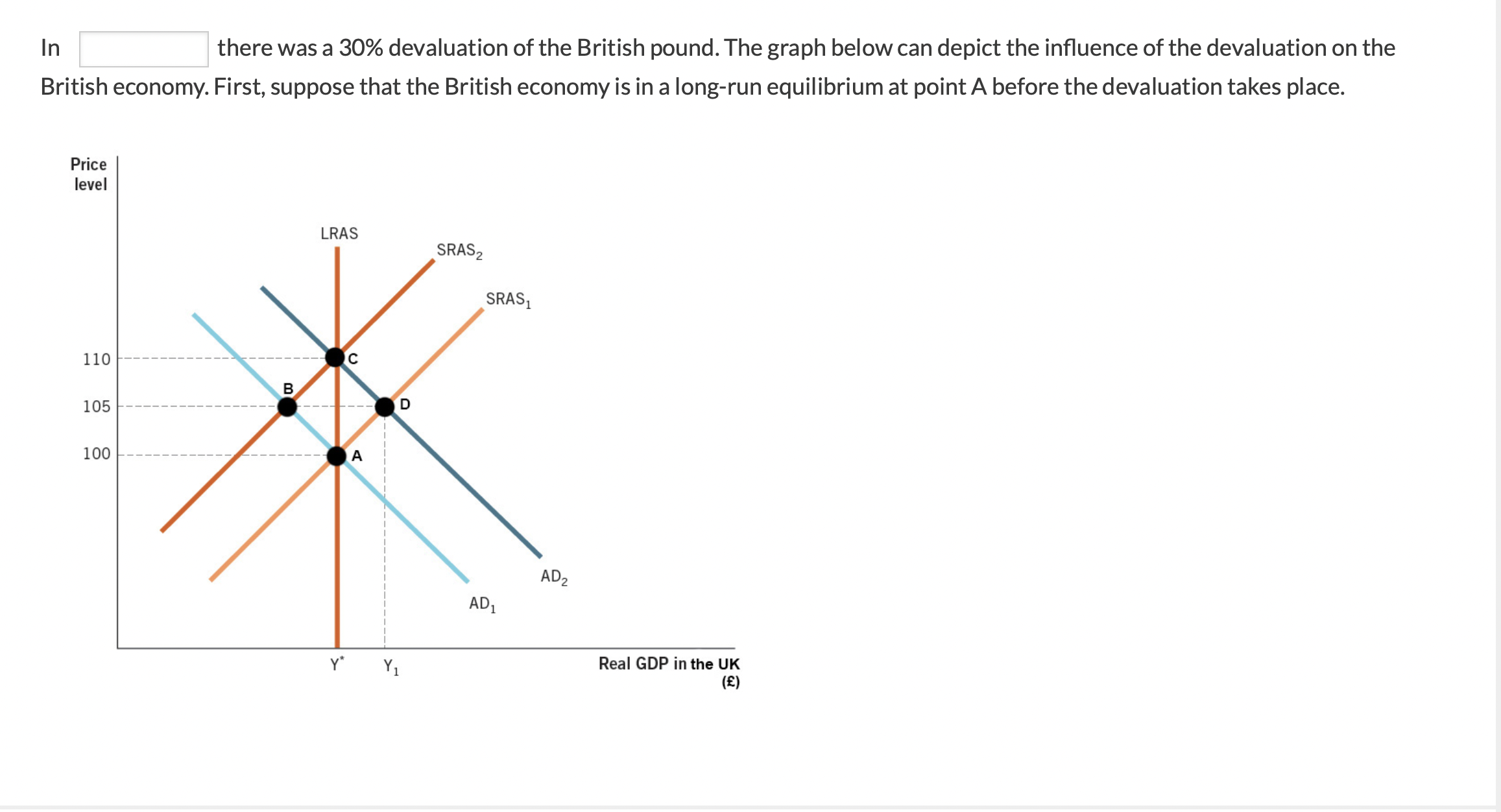

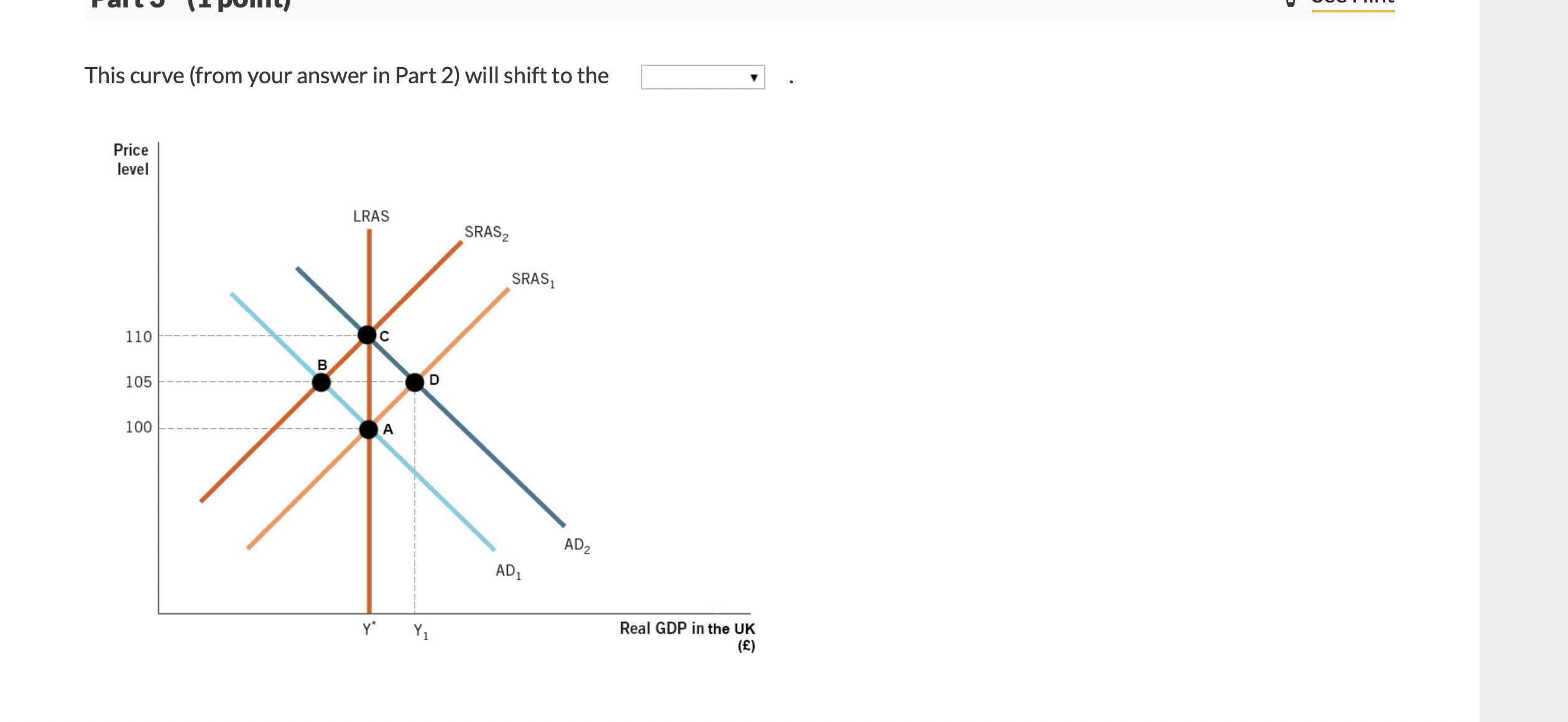
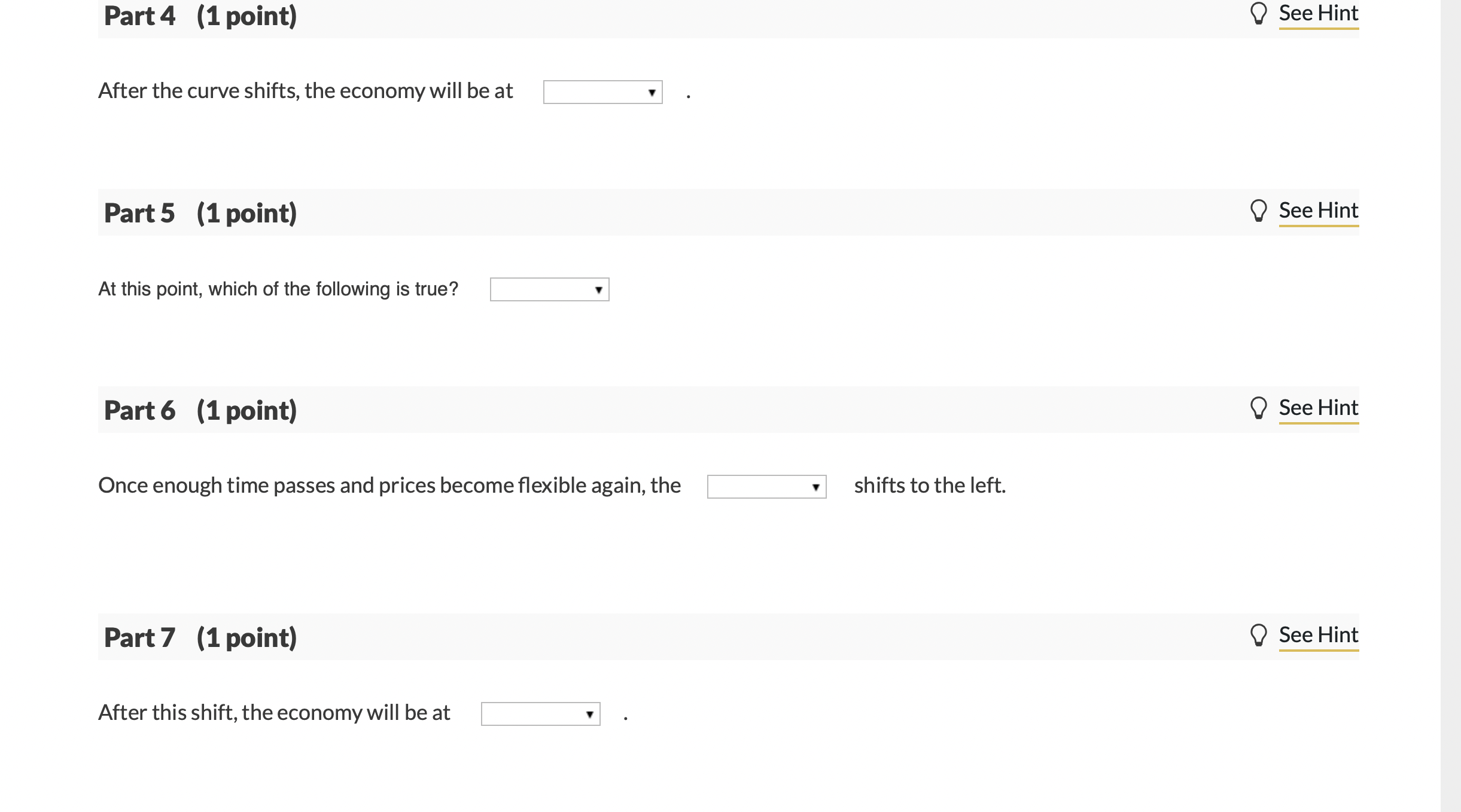

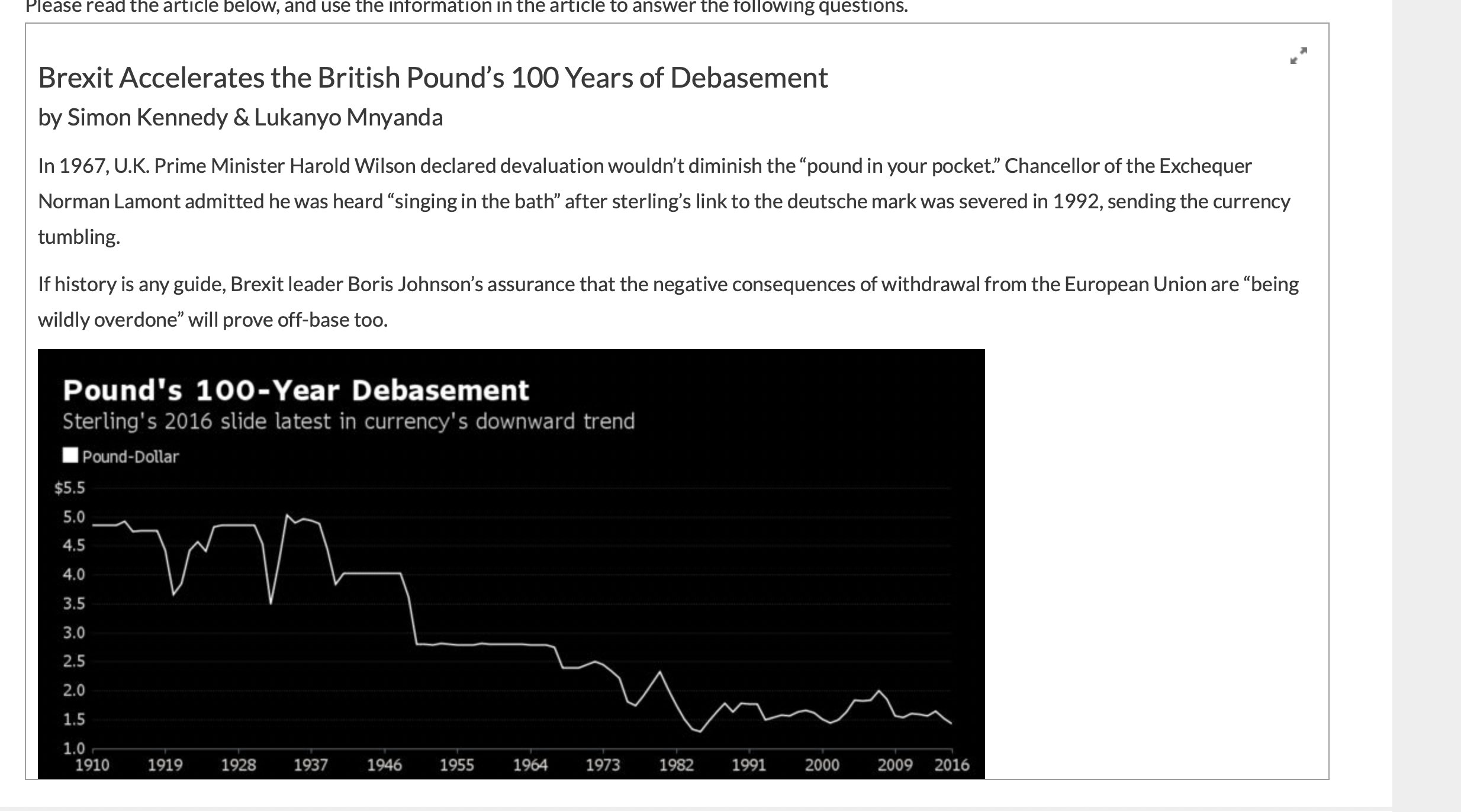
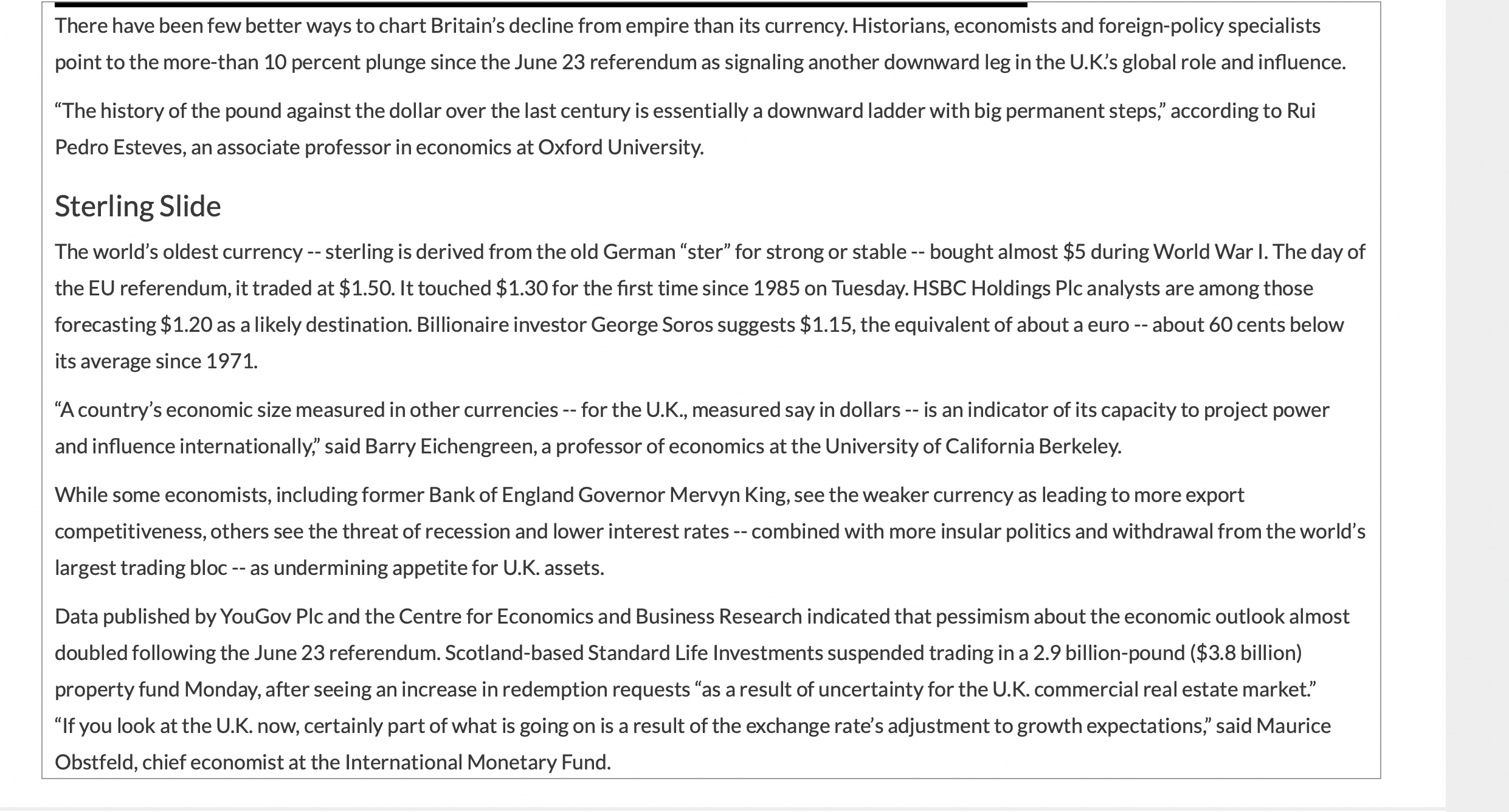
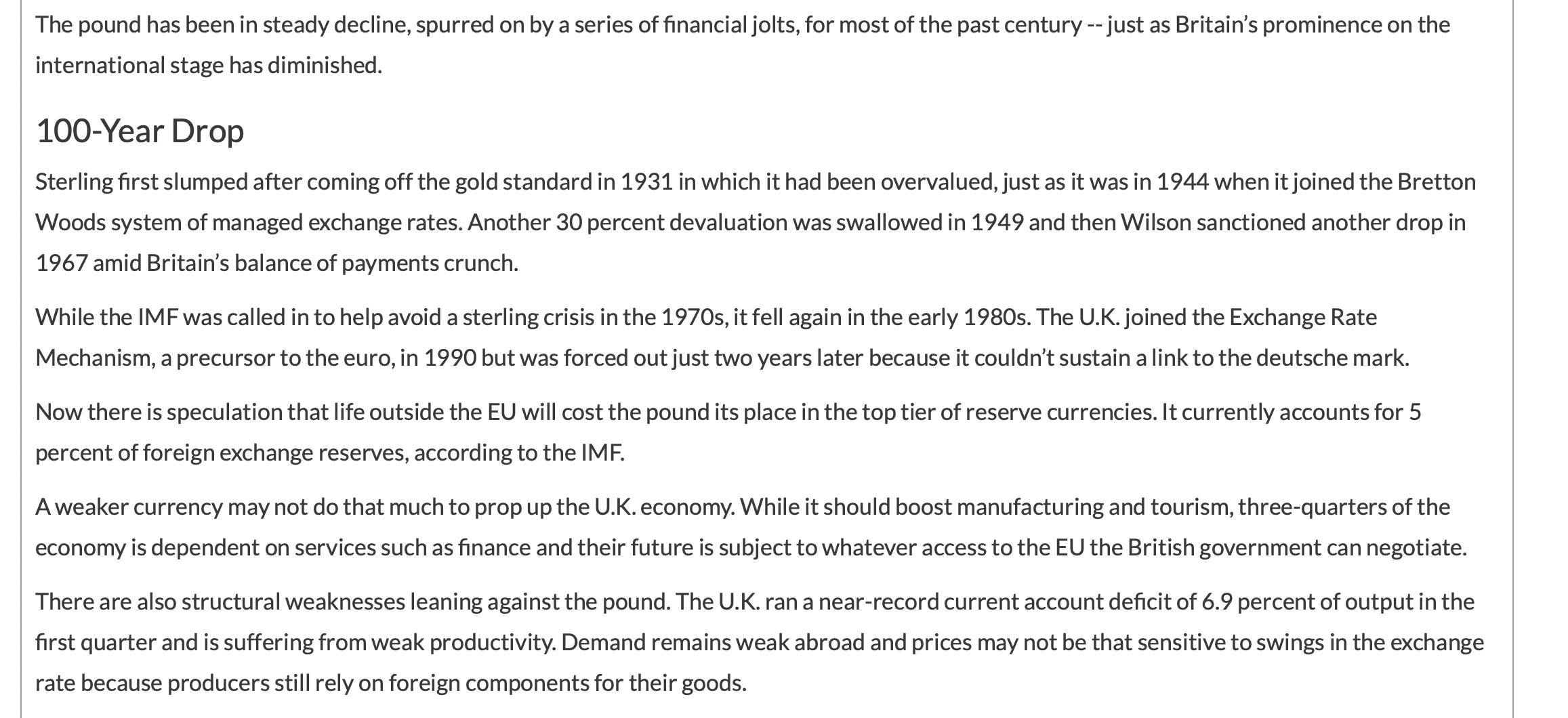
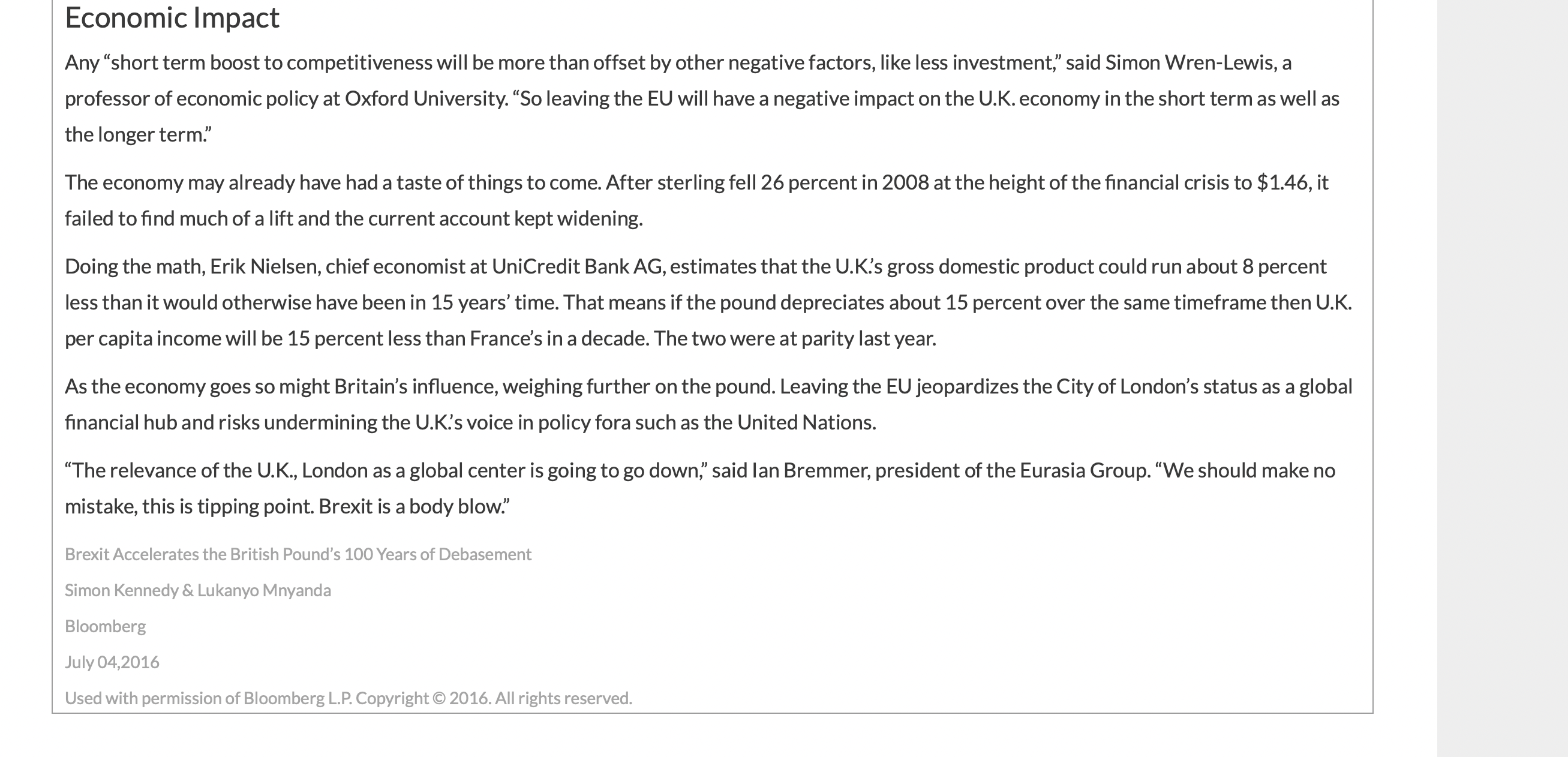
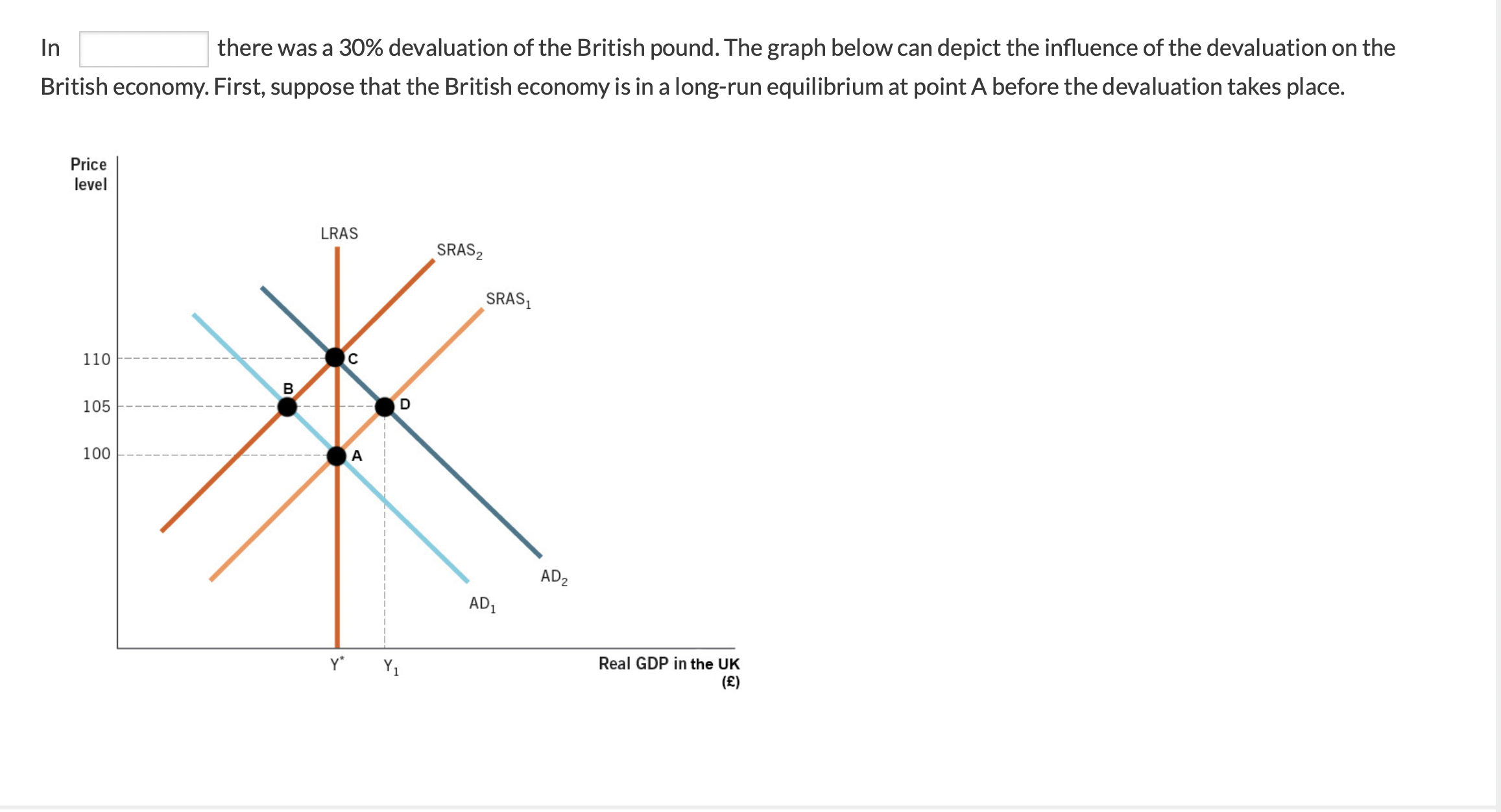

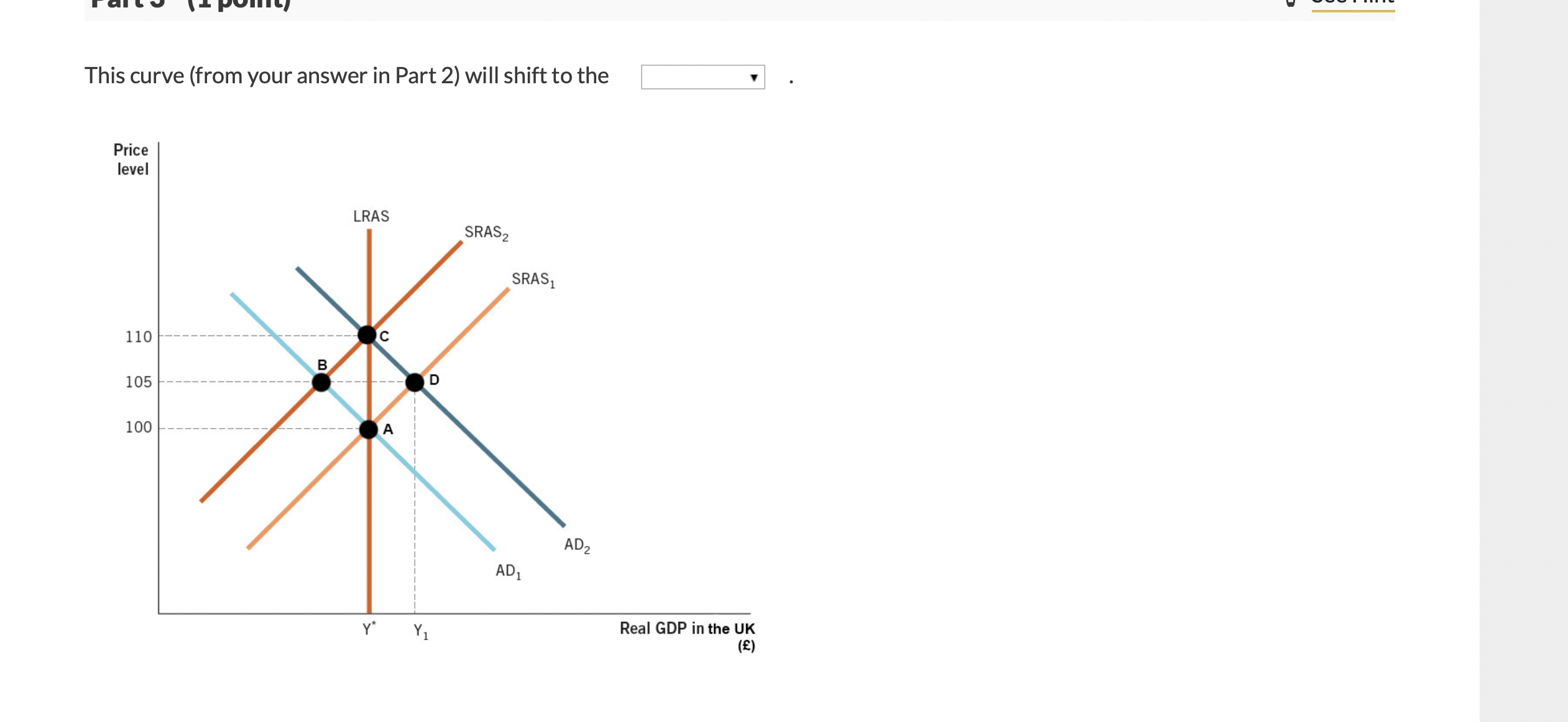
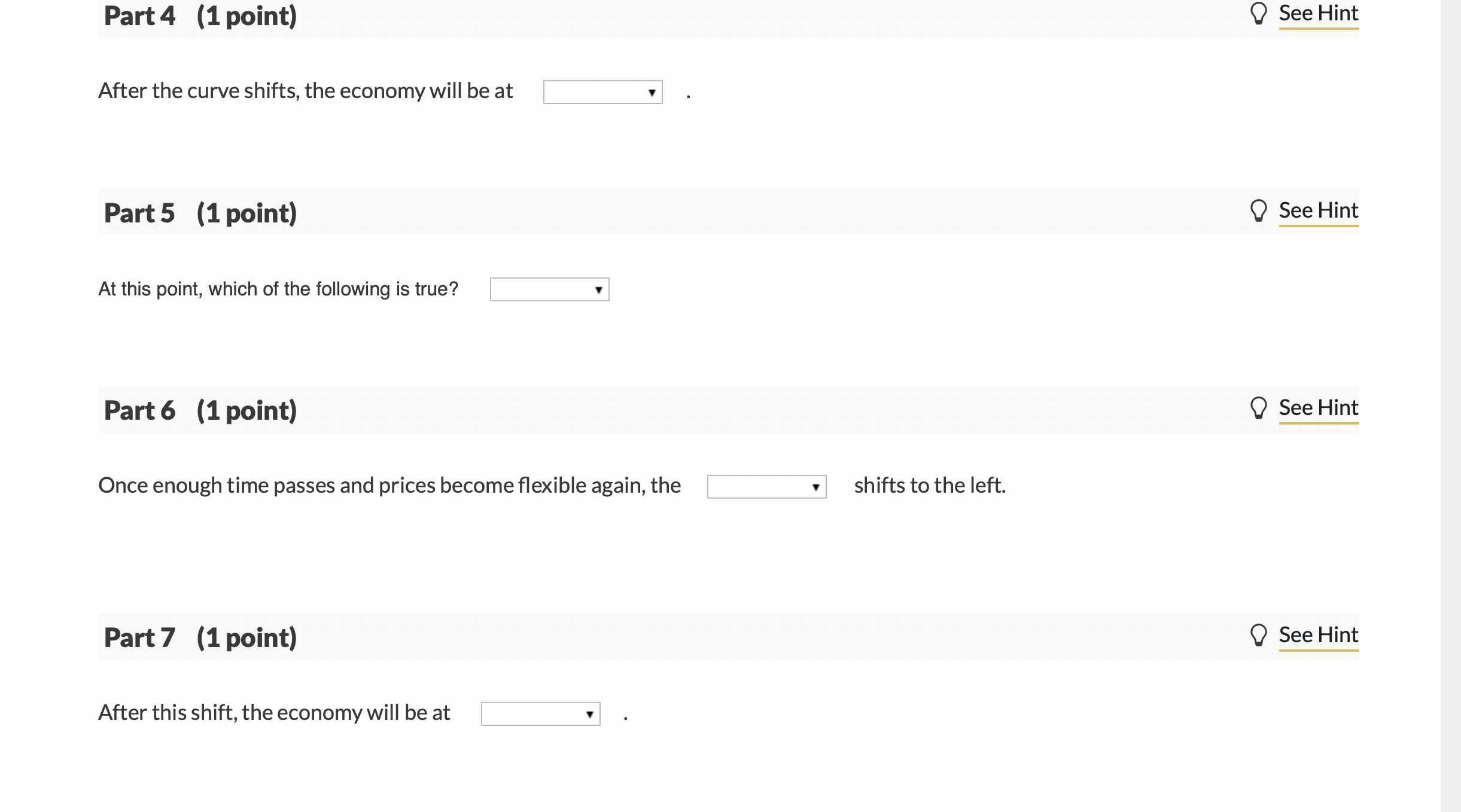

Please read the article below, and use the information in the article to answer the following questions. Brexit Accelerates the British Pound's 100 Years of Debasement by Simon Kennedy & Lukanyo Mnyanda In 1967, U.K. Prime Minister Harold Wilson declared devaluation wouldn't diminish the "pound in your pocket." Chancellor of the Exchequer Norman Lamont admitted he was heard "singing in the bath" after sterling's link to the deutsche mark was severed in 1992, sending the currency tumbling. If history is any guide, Brexit leader Boris Johnson's assurance that the negative consequences of withdrawal from the European Union are "being wildly overdone" will prove off-base too. Pound's 100-Year Debasement Sterling's 2016 slide latest in currency's downward trend Pound-Dollar $5.5 5.0 4.5 4.0 3.5 3.0 2.5 2.0 1.5 1.0 1910 1919 1928 1937 1946 1955 1964 1973 1982 1991 2000 2009 2016There have been few better ways to chart Britain's decline from empire than its currency. Historians, economists and foreign-policy specialists point to the more-than 10 percent plunge since the June 23 referendum as signaling another downward leg in the U.K's global role and influence. "The history of the pound against the dollar over the last century is essentially a downward ladder with big permanent steps," according to Rui Pedro Esteves, an associate professor in economics at Oxford University. Sterling Slide The world's oldest currency -- sterling is derived from the old German "ster" for strong or stable -- bought almost $5 during World War I. The day of the EU referendum, it traded at $1.50. It touched $1.30 for the first time since 1985 on Tuesday. HSBC Holdings Plc analysts are among those forecasting $1.20 as a likely destination. Billionaire investor George Soros suggests $1.15, the equivalent of about a euro -- about 60 cents below its average since 1971. 'A country's economic size measured in other currencies -- for the U.K., measured say in dollars -- is an indicator of its capacity to project power and influence internationally," said Barry Eichengreen, a professor of economics at the University of California Berkeley. While some economists, including former Bank of England Governor Mervyn King, see the weaker currency as leading to more export competitiveness, others see the threat of recession and lower interest rates -- combined with more insular politics and withdrawal from the world's largest trading bloc -- as undermining appetite for U.K. assets. Data published by YouGov Pic and the Centre for Economics and Business Research indicated that pessimism about the economic outlook almost doubled following the June 23 referendum. Scotland-based Standard Life Investments suspended trading in a 2.9 billion-pound ($3.8 billion) property fund Monday, after seeing an increase in redemption requests "as a result of uncertainty for the U.K. commercial real estate market." "If you look at the U.K. now, certainly part of what is going on is a result of the exchange rate's adjustment to growth expectations," said Maurice Obstfeld, chief economist at the International Monetary Fund.The pound has been in steady decline, spurred on by a series of financial jolts, for most of the past century -- just as Britain's prominence on the international stage has diminished. 100-Year Drop Sterling first slumped after coming off the gold standard in 1931 in which it had been overvalued, just as it was in 1944 when it joined the Bretton Woods system of managed exchange rates. Another 30 percent devaluation was swallowed in 1949 and then Wilson sanctioned another drop in 1967 amid Britain's balance of payments crunch. While the IMF was called in to help avoid a sterling crisis in the 1970s, it fell again in the early 1980s. The U.K. joined the Exchange Rate Mechanism, a precursor to the euro, in 1990 but was forced out just two years later because it couldn't sustain a link to the deutsche mark. Now there is speculation that life outside the EU will cost the pound its place in the top tier of reserve currencies. It currently accounts for 5 percent of foreign exchange reserves, according to the IMF. A weaker currency may not do that much to prop up the U.K. economy. While it should boost manufacturing and tourism, three-quarters of the economy is dependent on services such as finance and their future is subject to whatever access to the EU the British government can negotiate. There are also structural weaknesses leaning against the pound. The U.K. ran a near-record current account deficit of 6.9 percent of output in the first quarter and is suffering from weak productivity. Demand remains weak abroad and prices may not be that sensitive to swings in the exchange rate because producers still rely on foreign components for their goods.Economic Impact Any "short term boost to competitiveness will be more than offset by other negative factors, like less investment," said Simon Wren-Lewis, a professor of economic policy at Oxford University. "So leaving the EU will have a negative impact on the U.K. economy in the short term as well as the longer term." The economy may already have had a taste of things to come. After sterling fell 26 percent in 2008 at the height of the financial crisis to $1.46, it failed to find much of a lift and the current account kept widening. Doing the math, Erik Nielsen, chief economist at UniCredit Bank AG, estimates that the U.K's gross domestic product could run about 8 percent less than it would otherwise have been in 15 years' time. That means if the pound depreciates about 15 percent over the same timeframe then U.K. per capita income will be 15 percent less than France's in a decade. The two were at parity last year. As the economy goes so might Britain's influence, weighing further on the pound. Leaving the EU jeopardizes the City of London's status as a global financial hub and risks undermining the U.K's voice in policy fora such as the United Nations. "The relevance of the U.K., London as a global center is going to go down," said lan Bremmer, president of the Eurasia Group. "We should make no mistake, this is tipping point. Brexit is a body blow." Brexit Accelerates the British Pound's 100 Years of Debasement Simon Kennedy & Lukanyo Mnyanda Bloomberg July 04,2016 Used with permission of Bloomberg L.P. Copyright @ 2016. All rights reserved.In there was a 30% devaluation of the British pound. The graph below can depict the influence of the devaluation on the British economy. First, suppose that the British economy is in a long-run equilibrium at point A before the devaluation takes place. Price level LRAS SRAS2 SRAS, 110 C B 105 100 A AD2 AD1 Y* Y1 Real GDP in the UK (E)\fThis curve (from your answer in Part 2) will shift to the Y Price level LRAS SRAS2 SRAS1 110 C B D 105 100 A AD2 AD1 Y* Y1 Real GDP in the UK (E)Part 4 (1 point) After the curve shifts, the economy will be at v Part 5 (1 point) At this point, which of the following is true? v Part 6 (1 point) Once enough time passes and prices become exible again, the Part 7 (1 point) After this shift, the economy will be at v shifts to the left. 0 See Hint 0 See Hint 0 See Hint 0 See Hint Part 8 (1 point) 0 See Hint Compared to point A, which was the initial starting point for this economy, the v
Step by Step Solution
There are 3 Steps involved in it

Get step-by-step solutions from verified subject matter experts
 Study Help