







Question: *Please read the attached problem and then answer the question below* Draw a separate flowchart showing what happens at the end of the day when
*Please read the attached problem and then answer the question below*
Draw a separate flowchart showing what happens at the end of the day when the main computer system receives data from all the transit vehicles and how it processes all the data to maintain the accounts, enable or disable cards and to notify users of charges to their credit cards.
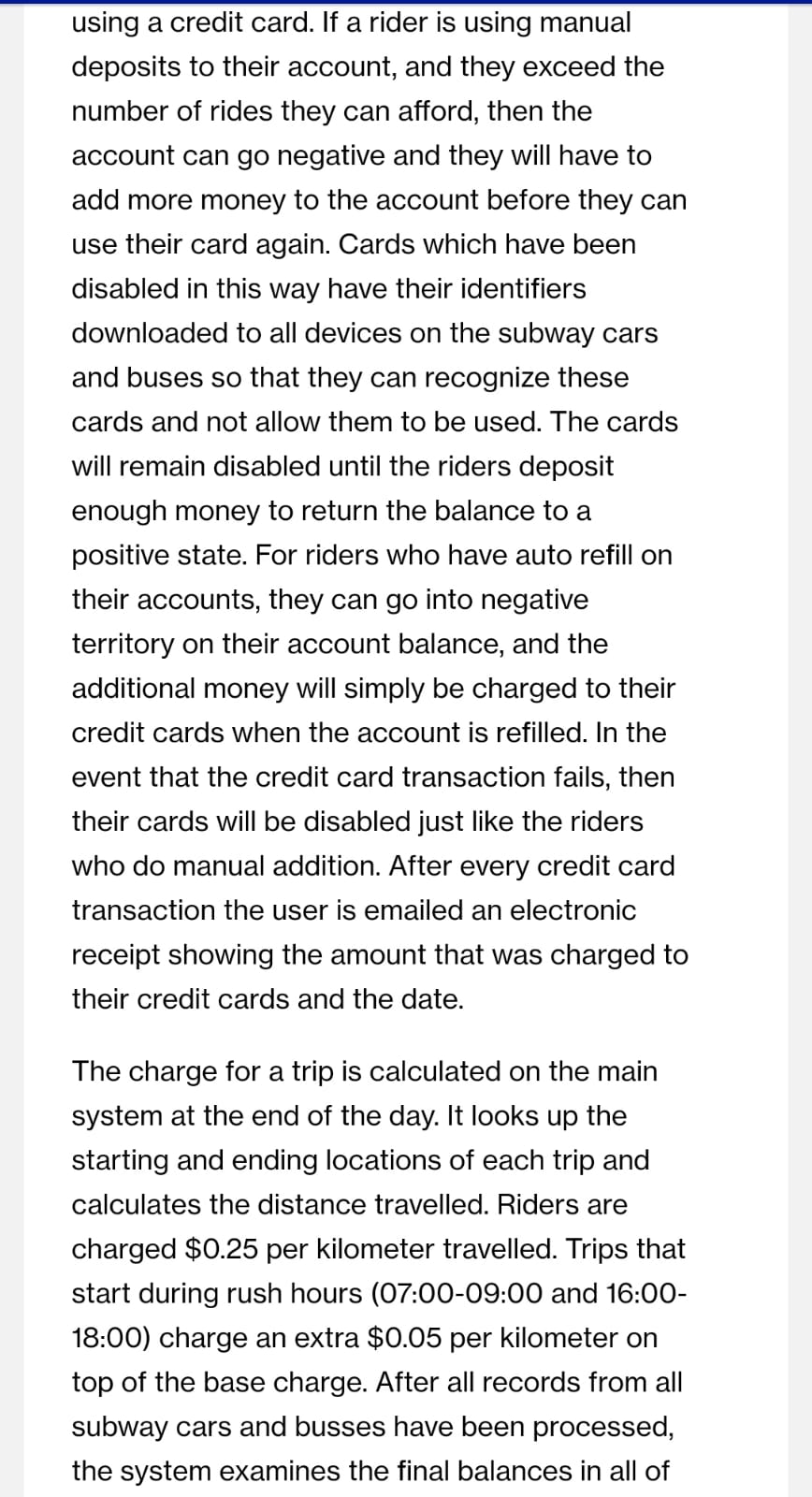
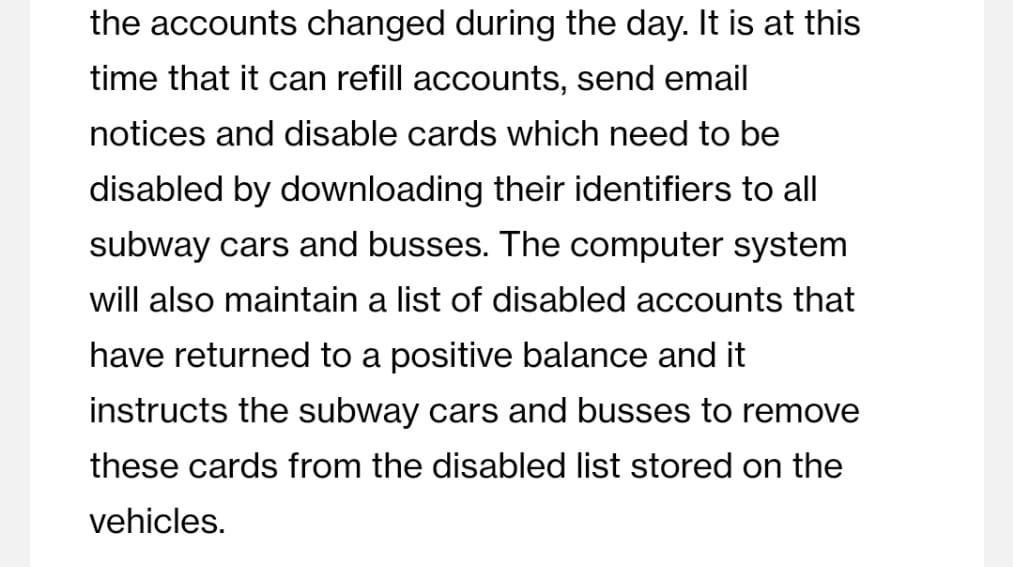
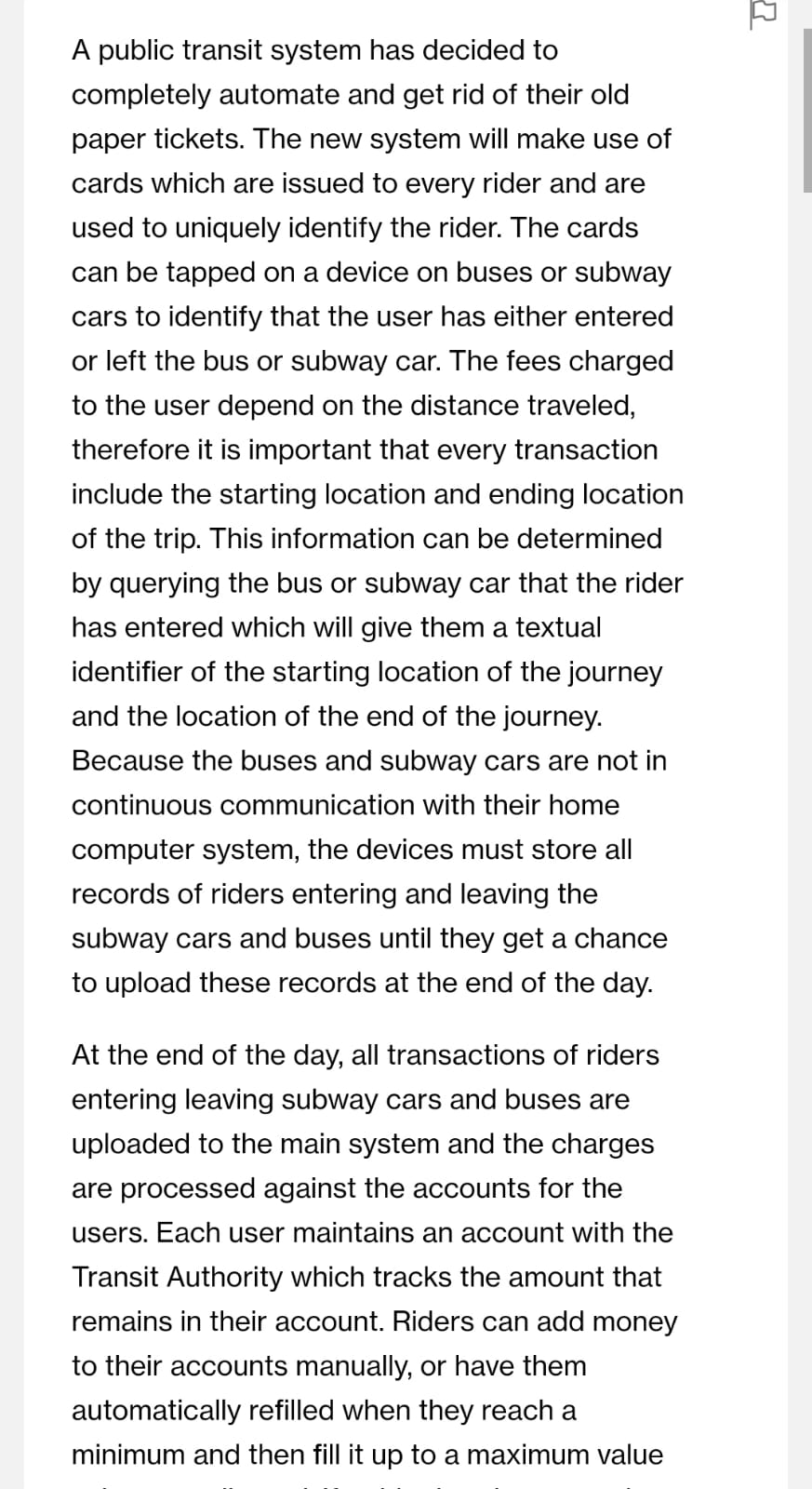
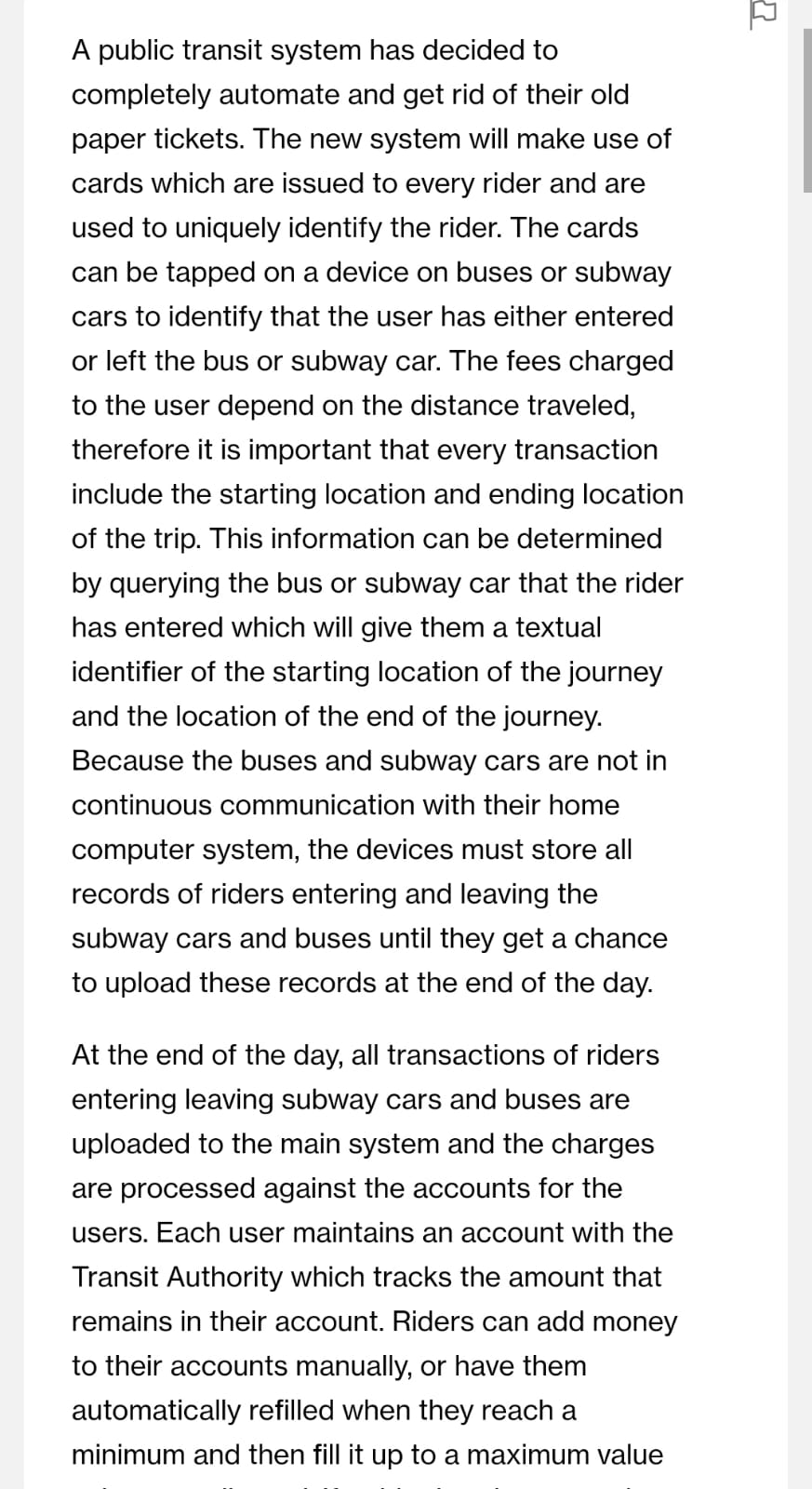
using a credit card. If a rider is using manual deposits to their account, and they exceed the number of rides they can afford, then the account can go negative and they will have to add more money to the account before they can use their card again. Cards which have been disabled in this way have their identifiers downloaded to all devices on the subway cars and buses so that they can recognize these cards and not allow them to be used. The cards will remain disabled until the riders deposit enough money to return the balance to a positive state. For riders who have auto refill on their accounts, they can go into negative territory on their account balance, and the additional money will simply be charged to their credit cards when the account is refilled. In the event that the credit card transaction fails, then their cards will be disabled just like the riders who do manual addition. After every credit card transaction the user is emailed an electronic receipt showing the amount that was charged to their credit cards and the date. The charge for a trip is calculated on the main system at the end of the day. It looks up the starting and ending locations of each trip and calculates the distance travelled. Riders are charged $0.25 per kilometer travelled. Trips that start during rush hours (07:0009:00 and 16:00~ 18:00) charge an extra $0.05 per kilometer on top of the base charge. After all records from all subway cars and busses have been processed, the system examines the final balances in all of the accounts changed during the day. It is at this time that it can refill accounts, send email notices and disable cards which need to be disabled by downloading their identifiers to all subway cars and busses. The computer system will also maintain a list of disabled accounts that have returned to a positive balance and it instructs the subway cars and busses to remove these cards from the disabled list stored on the vehicles. A public transit system has decided to completely automate and get rid of their old paper tickets. The new system will make use of cards which are issued to every rider and are used to uniquely identify the rider. The cards can be tapped on a device on buses or subway cars to identify that the user has either entered or left the bus or subway car. The fees charged to the user depend on the distance traveled, therefore it is important that every transaction include the starting location and ending location of the trip. This information can be determined by querying the bus or subway car that the rider has entered which will give them a textual identifier of the starting location of the journey and the location of the end of the journey. Because the buses and subway cars are not in continuous communication with their home computer system, the devices must store all records of riders entering and leaving the subway cars and buses until they get a chance to upload these records at the end of the day. At the end of the day, all transactions of riders entering leaving subway cars and buses are uploaded to the main system and the charges are processed against the accounts for the users. Each user maintains an account with the Transit Authority which tracks the amount that remains in their account. Riders can add money to their accounts manuallyI or have them automatically refilled when they reach a minimum and then fill it up to a maximum value
Step by Step Solution
There are 3 Steps involved in it

Get step-by-step solutions from verified subject matter experts
 Study Help