







Question: Please read the case above and answer the below question. Thank you! LIST THE ISSUES (ITEMS TO BE NEGOTIATED) IN ORDER OF IMPORTANT : LIST
Please read the case above and answer the below question. Thank you!
- LIST THE ISSUES (ITEMS TO BE NEGOTIATED) IN ORDER OF IMPORTANT :
- LIST THE INTERESTS OF YOUR ROLE
Substantive:
Relationship:
Process:
Other (such as ethics etc.):
- ASSESSING THE OTHER PARTY - List EVERYTHING you know about the person(s) that you are negotiating against. What are their interests?
- Explain what type of negotiation this is and why. List the issues and argue whether each one is integrative or distributive and why.
- Describe which party had the power in the negotiation and why. Describe which type of power they had with an explanation.
- Describe two ethical issues pertaining to this negotiation. Explain how they impacted the negotiation and outcome. Describe one way that each issue could have been dealt with more effectively
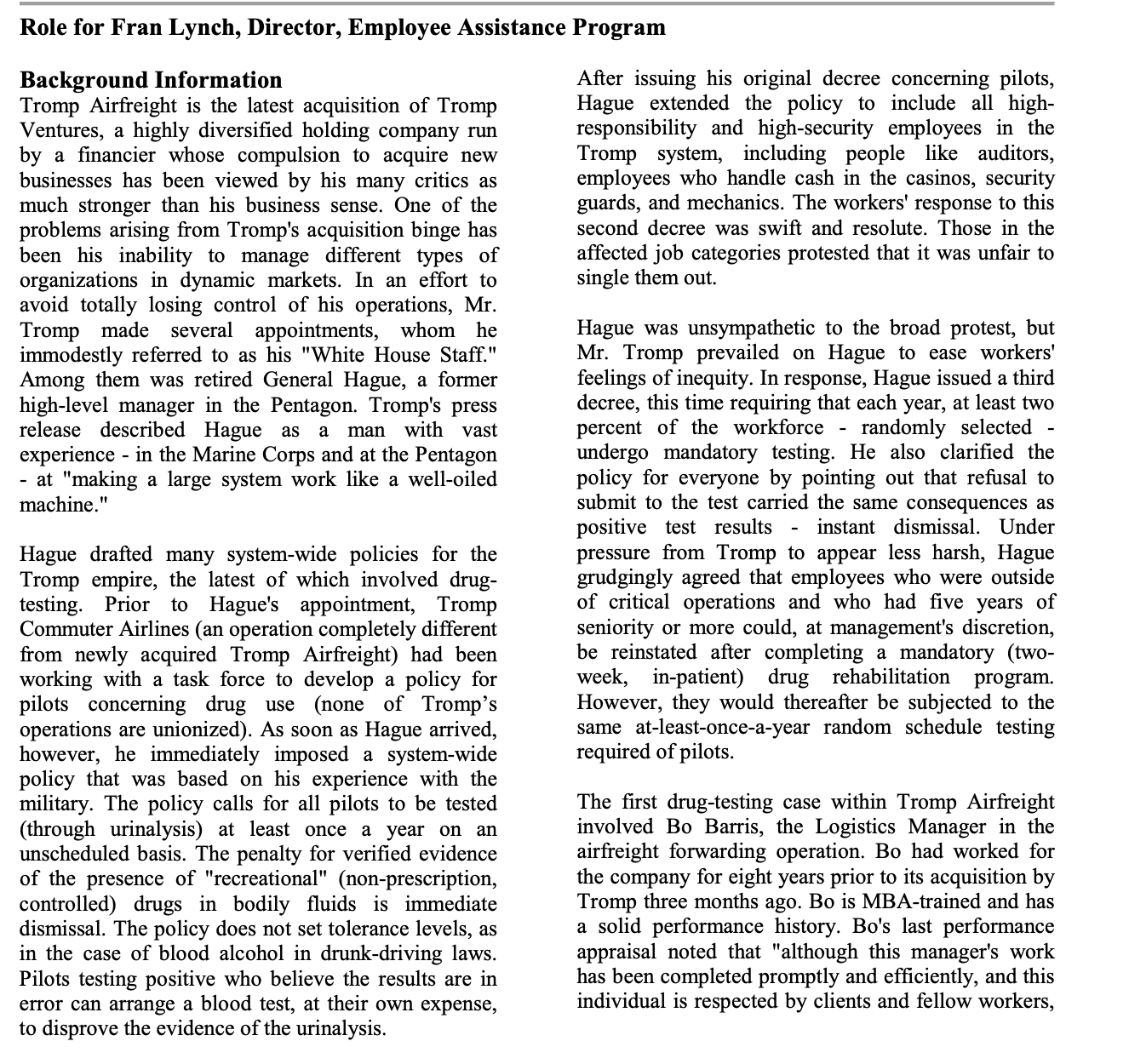
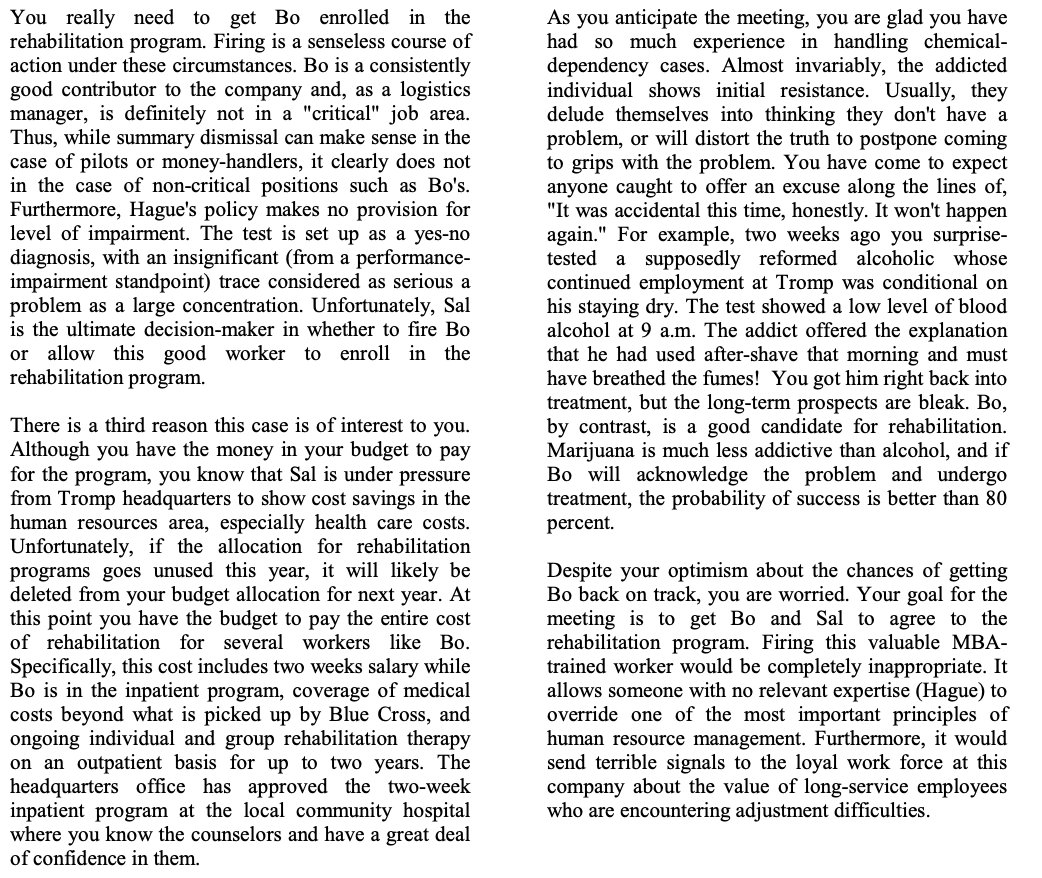
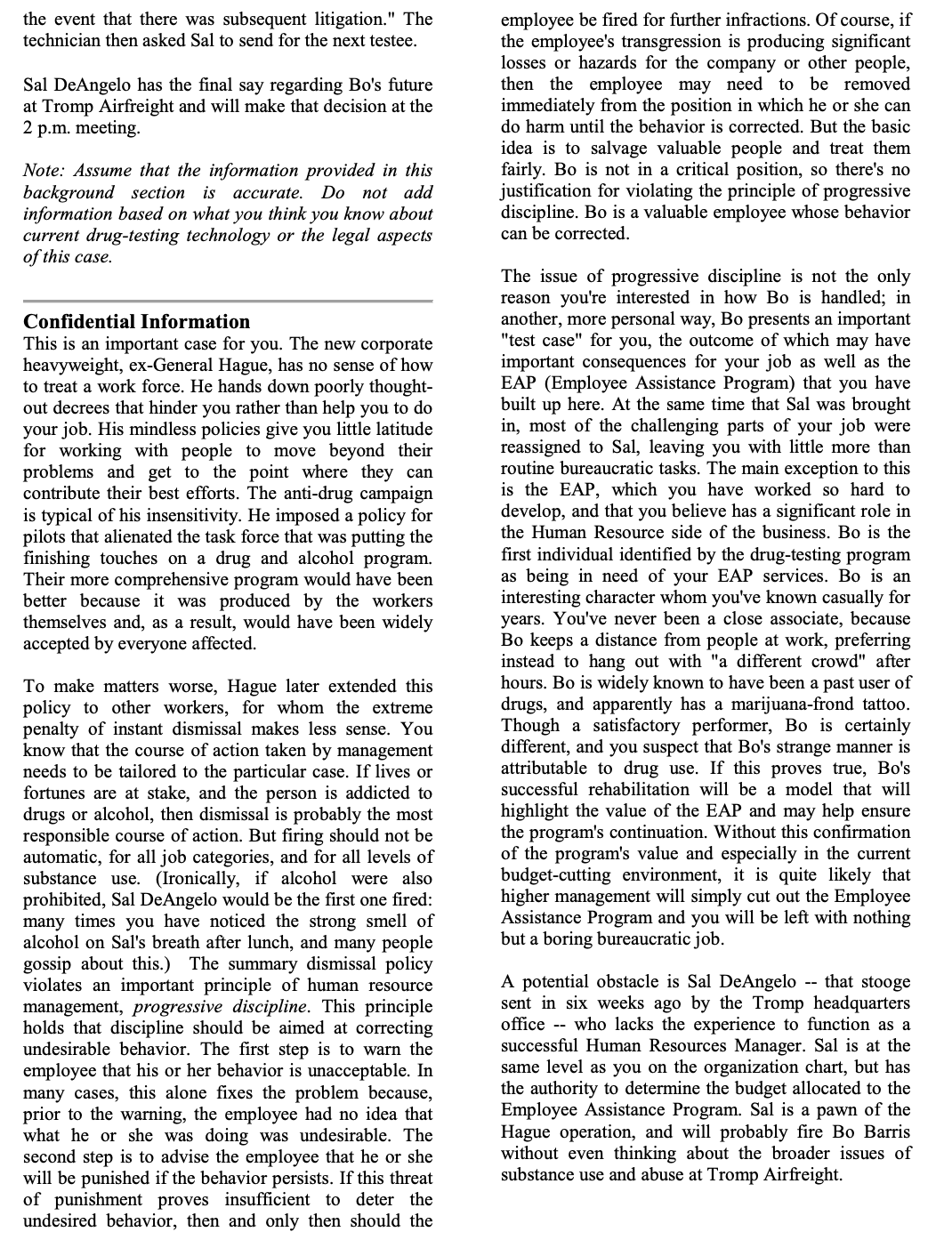
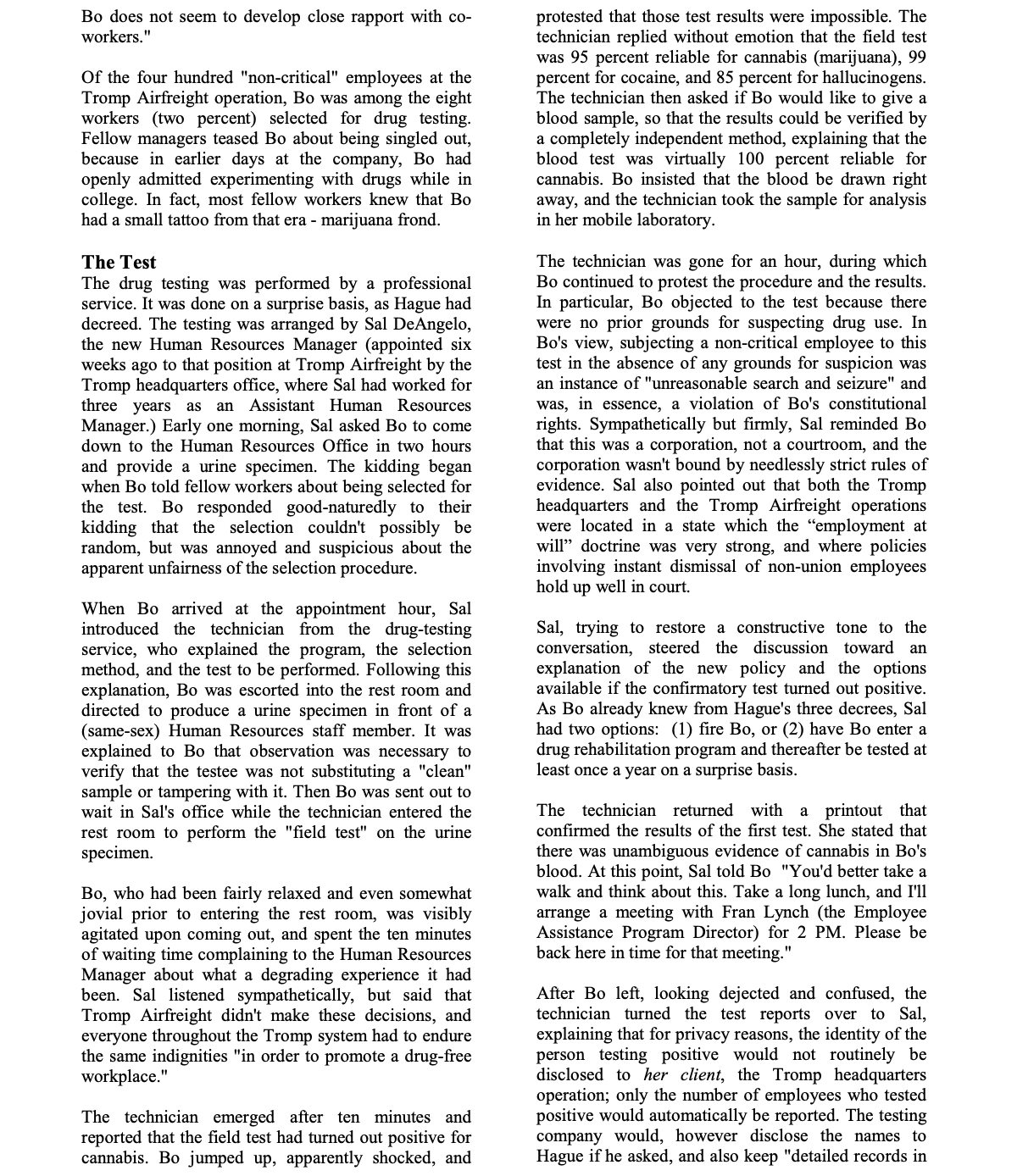
Role for Fran Lynch, Director, Employee Assistance Program Background Information Tromp Airfreight is the latest acquisition of Tromp Ventures, a highly diversified holding company run by a financier whose compulsion to acquire new businesses has been viewed by his many critics as much stronger than his business sense. One of the problems arising from Tromp's acquisition binge has been his inability to manage different types of organizations in dynamic markets. In an effort to avoid totally losing control of his operations, Mr. Tromp made several appointments, whom he immodestly referred to as his "White House Staff." Among them was retired General Hague, a former high-level manager in the Pentagon. Tromp's press release described Hague as a man with vast experience - in the Marine Corps and at the Pentagon - at "making a large system work like a well-oiled machine." Hague drafted many system-wide policies for the Tromp empire, the latest of which involved drugtesting. Prior to Hague's appointment, Tromp Commuter Airlines (an operation completely different from newly acquired Tromp Airfreight) had been working with a task force to develop a policy for pilots concerning drug use (none of Tromp's operations are unionized). As soon as Hague arrived, however, he immediately imposed a system-wide policy that was based on his experience with the military. The policy calls for all pilots to be tested (through urinalysis) at least once a year on an unscheduled basis. The penalty for verified evidence of the presence of "recreational" (non-prescription, controlled) drugs in bodily fluids is immediate dismissal. The policy does not set tolerance levels, as in the case of blood alcohol in drunk-driving laws. Pilots testing positive who believe the results are in error can arrange a blood test, at their own expense, to disprove the evidence of the urinalysis. After issuing his original decree concerning pilots, Hague extended the policy to include all highresponsibility and high-security employees in the Tromp system, including people like auditors, employees who handle cash in the casinos, security guards, and mechanics. The workers' response to this second decree was swift and resolute. Those in the affected job categories protested that it was unfair to single them out. Hague was unsympathetic to the broad protest, but Mr. Tromp prevailed on Hague to ease workers' feelings of inequity. In response, Hague issued a third decree, this time requiring that each year, at least two percent of the workforce - randomly selected undergo mandatory testing. He also clarified the policy for everyone by pointing out that refusal to submit to the test carried the same consequences as positive test results - instant dismissal. Under pressure from Tromp to appear less harsh, Hague grudgingly agreed that employees who were outside of critical operations and who had five years of seniority or more could, at management's discretion, be reinstated after completing a mandatory (twoweek, in-patient) drug rehabilitation program. However, they would thereafter be subjected to the same at-least-once-a-year random schedule testing required of pilots. The first drug-testing case within Tromp Airfreight involved Bo Barris, the Logistics Manager in the airfreight forwarding operation. Bo had worked for the company for eight years prior to its acquisition by Tromp three months ago. Bo is MBA-trained and has a solid performance history. Bo's last performance appraisal noted that "although this manager's work has been completed promptly and efficiently, and this individual is respected by clients and fellow workers, You really need to get Bo enrolled in the rehabilitation program. Firing is a senseless course of action under these circumstances. Bo is a consistently good contributor to the company and, as a logistics manager, is definitely not in a "critical" job area. Thus, while summary dismissal can make sense in the case of pilots or money-handlers, it clearly does not in the case of non-critical positions such as Bo's. Furthermore, Hague's policy makes no provision for level of impairment. The test is set up as a yes-no diagnosis, with an insignificant (from a performanceimpairment standpoint) trace considered as serious a problem as a large concentration. Unfortunately, Sal is the ultimate decision-maker in whether to fire Bo or allow this good worker to enroll in the rehabilitation program. There is a third reason this case is of interest to you. Although you have the money in your budget to pay for the program, you know that Sal is under pressure from Tromp headquarters to show cost savings in the human resources area, especially health care costs. Unfortunately, if the allocation for rehabilitation programs goes unused this year, it will likely be deleted from your budget allocation for next year. At this point you have the budget to pay the entire cost of rehabilitation for several workers like Bo. Specifically, this cost includes two weeks salary while Bo is in the inpatient program, coverage of medical costs beyond what is picked up by Blue Cross, and ongoing individual and group rehabilitation therapy on an outpatient basis for up to two years. The headquarters office has approved the two-week inpatient program at the local community hospital where you know the counselors and have a great deal of confidence in them. As you anticipate the meeting, you are glad you have had so much experience in handling chemicaldependency cases. Almost invariably, the addicted individual shows initial resistance. Usually, they delude themselves into thinking they don't have a problem, or will distort the truth to postpone coming to grips with the problem. You have come to expect anyone caught to offer an excuse along the lines of, "It was accidental this time, honestly. It won't happen again." For example, two weeks ago you surprisetested a supposedly reformed alcoholic whose continued employment at Tromp was conditional on his staying dry. The test showed a low level of blood alcohol at 9 a.m. The addict offered the explanation that he had used after-shave that morning and must have breathed the fumes! You got him right back into treatment, but the long-term prospects are bleak. Bo, by contrast, is a good candidate for rehabilitation. Marijuana is much less addictive than alcohol, and if Bo will acknowledge the problem and undergo treatment, the probability of success is better than 80 percent. Despite your optimism about the chances of getting Bo back on track, you are worried. Your goal for the meeting is to get Bo and Sal to agree to the rehabilitation program. Firing this valuable MBAtrained worker would be completely inappropriate. It allows someone with no relevant expertise (Hague) to override one of the most important principles of human resource management. Furthermore, it would send terrible signals to the loyal work force at this company about the value of long-service employees who are encountering adjustment difficulties
Step by Step Solution
There are 3 Steps involved in it

Get step-by-step solutions from verified subject matter experts
 Study Help