







Question: Please read the case Difficulties Attracting and Retaining Human Capital in the Nursing Profession and answer the following questions What type of training or development
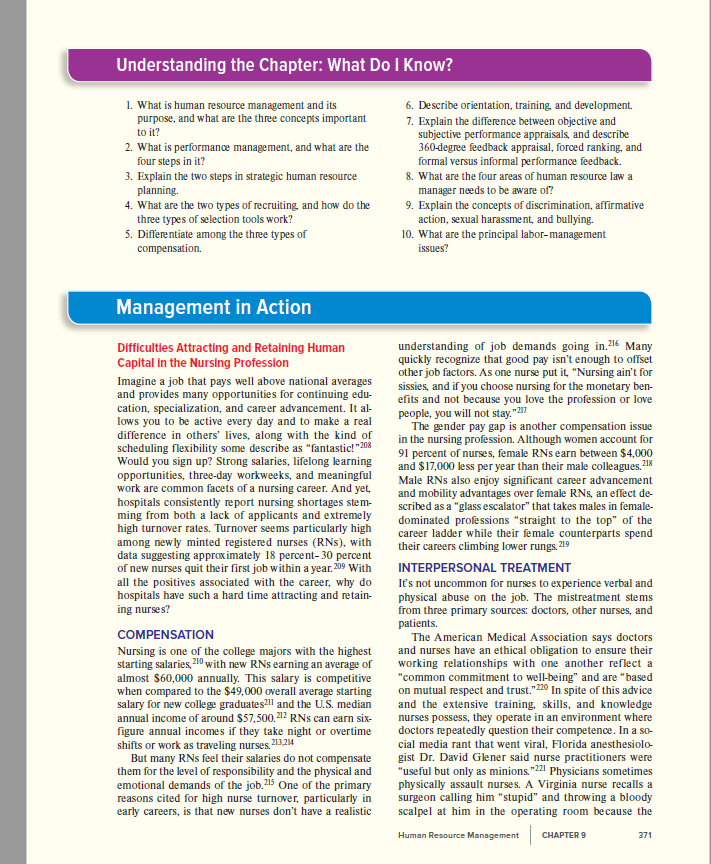
Please read the case Difficulties Attracting and Retaining Human Capital in the Nursing Profession and answer the following questions What type of training or development might hospitals offer to help reduce nurse turnover?
Understanding the Chapter: What Do I Know? 1. What is human resource management and its purpose, and what are the three concepts important to it? 2. What is performance management, and what are the four steps in it? 3. Explain the two steps in strategic human resource planning. 4. What are the two types of recruiting and how do the three types of selection tools work? 5. Differentiate among the three types of compensation 6. Describe orientation, training and development. 7. Explain the difference between objective and subjective performance appraisals and describe 360-degree feedback appraisal, forced ranking, and formal versus informal performance feedback. 8. What are the four areas of human resource law a manager needs to be aware of? 9. Explain the concepts of discrimination, affirmative action, sexual harassment, and bullying. 10. What are the principal labor-management issues? Management in Action Difficulties Attracting and Retaining Human Capital in the Nursing Profession Imagine a job that pays well above national averages and provides many opportunities for continuing edu- cation, specialization, and career advancement. It al- lows you to be active every day and to make a real difference in others' lives, along with the kind of scheduling flexibility some describe as "fantastic!"208 Would you sign up? Strong salaries, lifelong learning opportunities, three-day workweeks, and meaningful work are common facets of a nursing career. And yet, hospitals consistently report nursing shortages stem- ming from both a lack of applicants and extremely high turnover rates. Turnover seems particularly high among newly minted registered nurses (RNs), with data suggesting approximately 18 percent-30 percent of new nurses quit their first job within a year.209 With all the positives associated with the career, why do hospitals have such a hard time attracting and retain- ing nurses? COMPENSATION Nursing is one of the college majors with the highest starting salaries, 210 with new RNs earning an average of almost $60,000 annually. This salary is competitive when compared to the $49,000 overall average starting salary for new college graduates211 and the U.S. median annual income of around $57,500.212 RNs can earn six- figure annual incomes if they take night or overtime shifts or work as traveling nurses. 213,214 But many RNs feel their salaries do not compensate them for the level of responsibility and the physical and emotional demands of the job.215 One of the primary reasons cited for high nurse turnover, particularly in early careers, is that new nurses don't have a realistic understanding of job demands going in.216 Many quickly recognize that good pay isn't enough to offset other job factors. As one nurse put it, Nursing ain't for sissies, and if you choose nursing for the monetary ben- efits and not because you love the profession or love people, you will not stay. "217 The gender pay gap is another compensation issue in the nursing profession. Although women account for 91 percent of nurses, female RNs earn between $4,000 and $17,000 less per year than their male colleagues 218 Male RNs also enjoy significant career advancement and mobility advantages over female RNs, an effect de- scribed as a "glass escalator" that takes males in female- dominated professions "straight to the top" of the career ladder while their female counterparts spend their careers climbing lower rungs. 219 INTERPERSONAL TREATMENT It's not uncommon for nurses to experience verbal and physical abuse on the job. The mistreatment stems from three primary sources: doctors, other nurses, and patients. The American Medical Association says doctors and nurses have an ethical obligation to ensure their working relationships with one another reflect a "common commitment to well-being" and are "based on mutual respect and trust."220 In spite of this advice and the extensive training, skills, and knowledge nurses possess, they operate in an environment where doctors repeatedly question their competence. In a so- cial media rant that went viral, Florida anesthesiolo gist Dr. David Glener said nurse practitioners were "useful but only as minions "221 Physicians sometimes physically assault nurses. A Virginia nurse recalls a surgeon calling him "stupid" and throwing a bloody scalpel at him in the operating room because the Human Resource Management CHAPTER 9 371Step by Step Solution
There are 3 Steps involved in it
1 Expert Approved Answer
Step: 1 Unlock

Question Has Been Solved by an Expert!
Get step-by-step solutions from verified subject matter experts
Step: 2 Unlock
Step: 3 Unlock
 Study Help