







Question: Please read the following article on the Reduction in Force Policy that can be used as a guide in the reduction of force. Provide your
Please read the following article on the Reduction in Force Policy that can be used as a guide in the reduction of force.
Provide your opinion on RIF (reduction in force) and attach an article supporting your answer. With all the changes as it relates to the pandemic, Human Resources now faces new challenges.
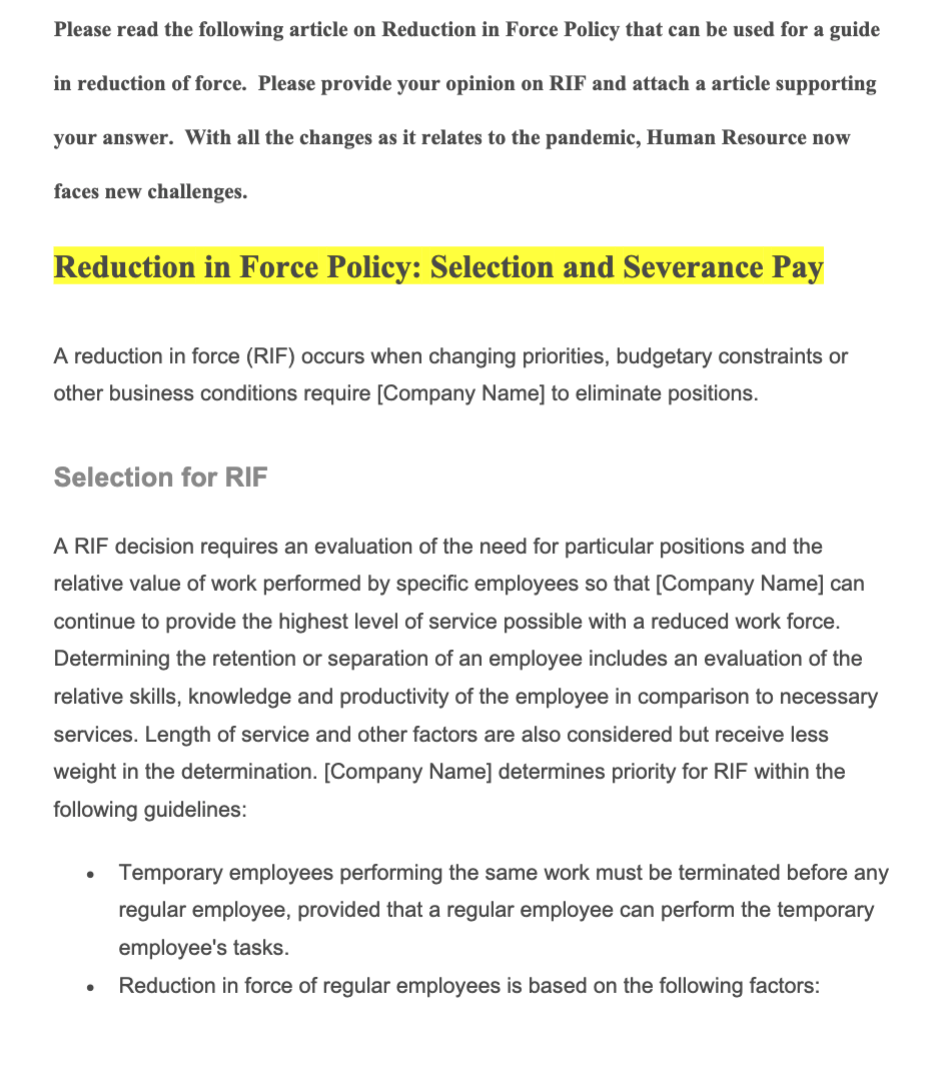
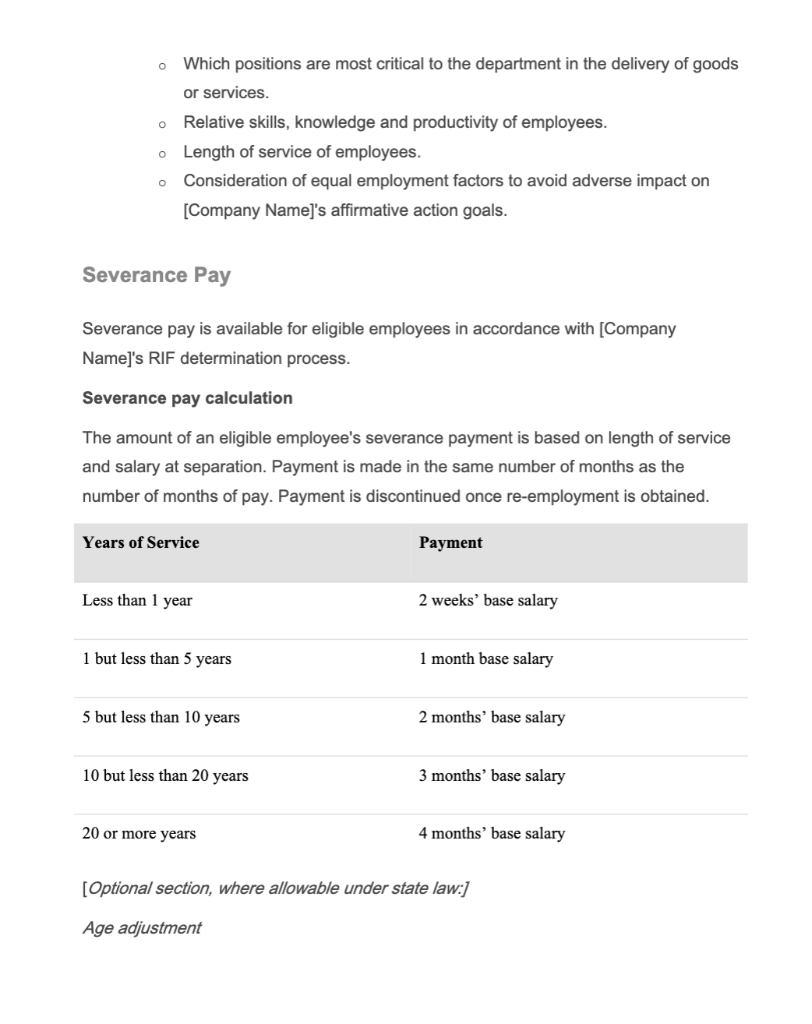
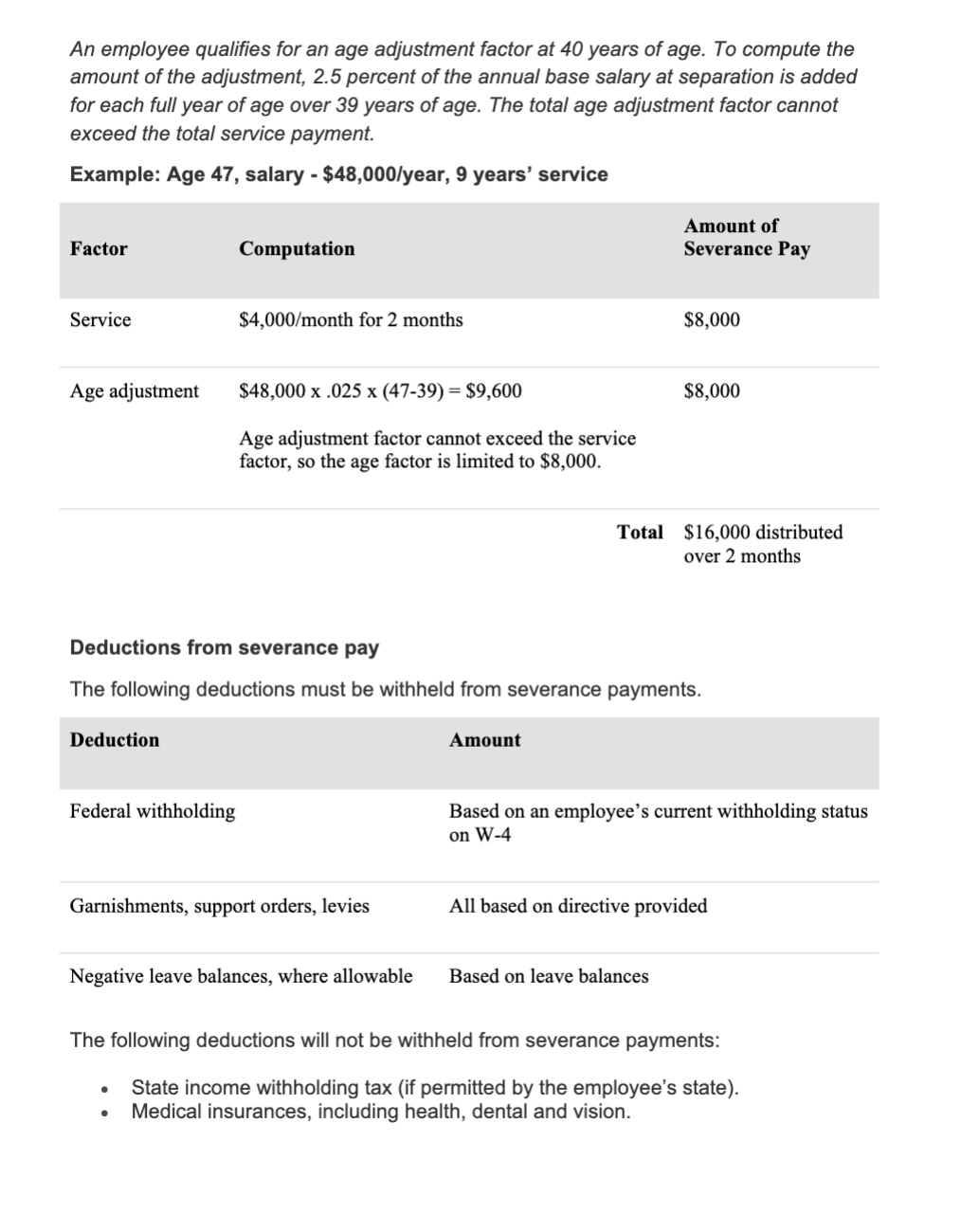
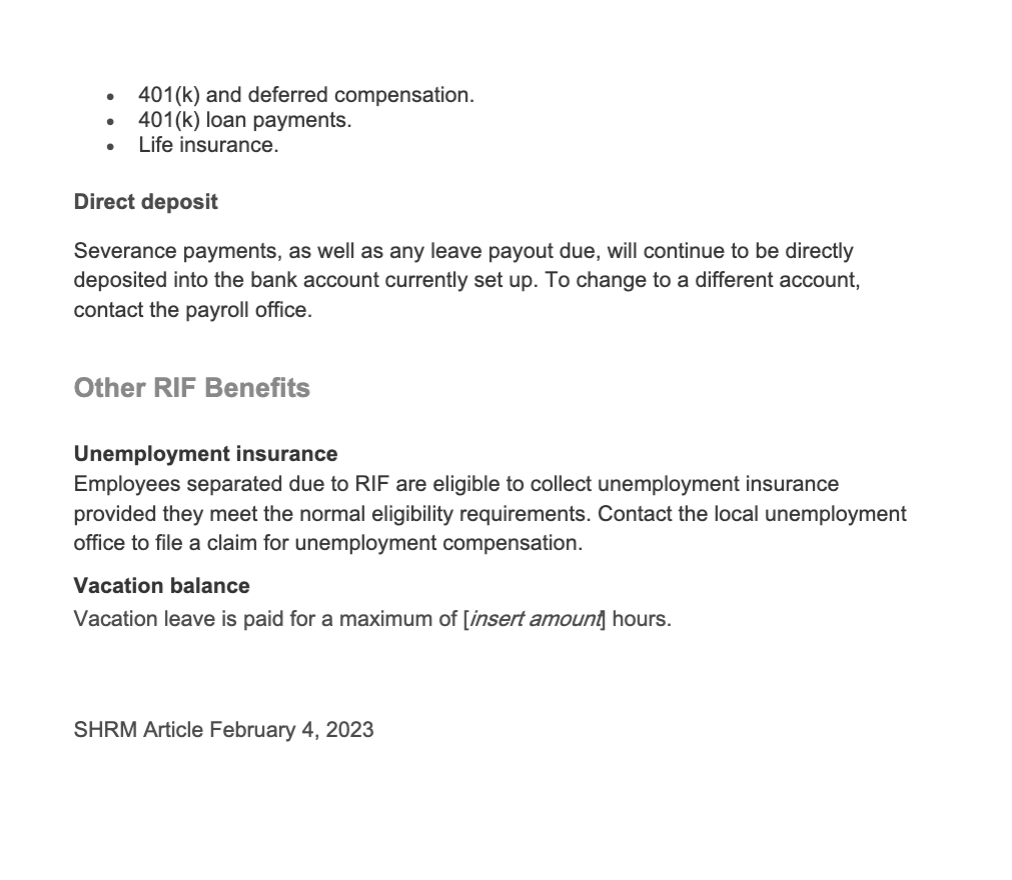
Please read the following article on Reduction in Force Policy that can be used for a guide in reduction of force. Please provide your opinion on RIF and attach a article supporting your answer. With all the changes as it relates to the pandemic, Human Resource now faces new challenges. Reduction in Force Policy: Selection and Severance Pay A reduction in force (RIF) occurs when changing priorities, budgetary constraints or other business conditions require [Company Name] to eliminate positions. Selection for RIF A RIF decision requires an evaluation of the need for particular positions and the relative value of work performed by specific employees so that [Company Name] can continue to provide the highest level of service possible with a reduced work force. Determining the retention or separation of an employee includes an evaluation of the relative skills, knowledge and productivity of the employee in comparison to necessary services. Length of service and other factors are also considered but receive less weight in the determination. [Company Name] determines priority for RIF within the following guidelines: - Temporary employees performing the same work must be terminated before any regular employee, provided that a regular employee can perform the temporary employee's tasks. - Reduction in force of regular employees is based on the following factors: - Which positions are most critical to the department in the delivery of goods or services. - Relative skills, knowledge and productivity of employees. - Length of service of employees. - Consideration of equal employment factors to avoid adverse impact on [Company Name]'s affirmative action goals. Severance Pay Severance pay is available for eligible employees in accordance with [Company Name]'s RIF determination process. Severance pay calculation The amount of an eligible employee's severance payment is based on length of service and salary at separation. Payment is made in the same number of months as the number of months of pay. Payment is discontinued once re-employment is obtained. An employee qualifies for an age adjustment factor at 40 years of age. To compute the amount of the adjustment, 2.5 percent of the annual base salary at separation is added for each full year of age over 39 years of age. The total age adjustment factor cannot exceed the total service payment. Example: Age 47, salary - $48,000/year,9 years' service Total $16,000 distributed over 2 months Deductions from severance pay The following deductions must be withheld from severance payments. - 401(k) and deferred compensation. - 401(k) loan payments. - Life insurance. Direct deposit Severance payments, as well as any leave payout due, will continue to be directly deposited into the bank account currently set up. To change to a different account, contact the payroll office. Other RIF Benefits Unemployment insurance Employees separated due to RIF are eligible to collect unemployment insurance provided they meet the normal eligibility requirements. Contact the local unemployment office to file a claim for unemployment compensation. Vacation balance Vacation leave is paid for a maximum of [insert amount] hours. SHRM Article February 4, 2023
Step by Step Solution
There are 3 Steps involved in it

Get step-by-step solutions from verified subject matter experts
 Study Help