Question: Please reply to this classmate post with additional information, a justified question, or a polite supported disagreement Studying Afican American and other minority health is
Please reply to this classmate post with additional information, a justified question, or a polite supported disagreement
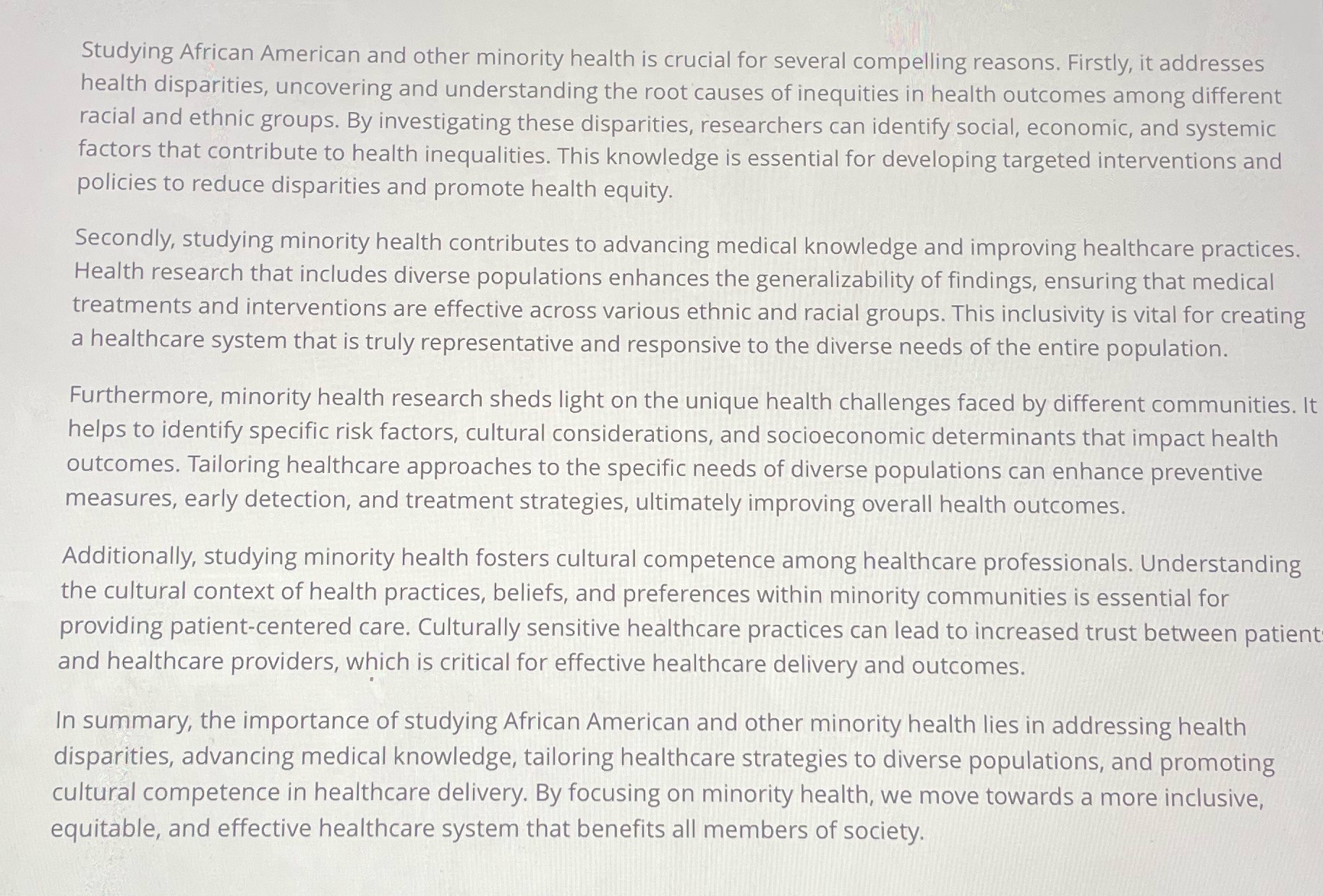
Studying Afican American and other minority health is crucial for several compelling reasons. Firstly, it addresses health disparities, uncovering and understanding the root causes of inequities in health outcomes among different racial and ethnic groups. By investigating these disparities, researchers can identify social, economic, and systemic factors that contribute to health inequalities. This knowledge is essential for developing targeted interventions and policies to reduce disparities and promote health equity. Secondly, studying minority health contributes to advancing medical knowledge and improving healthcare practices. Health research that includes diverse populations enhances the generalizability of findings, ensuring that medical treatments and interventions are effective across various ethnic and racial groups. This inclusivity is vital for creating a healthcare system that is truly representative and responsive to the diverse needs of the entire population. Furthermore, minority health research sheds light on the unique health challenges faced by different communities. It helps to identify specific risk factors, cultural considerations, and socioeconomic determinants that impact health outcomes. Tailoring healthcare approaches to the specific needs of diverse populations can enhance preventive measures, early detection, and treatment strategies, ultimately improving overall health outcomes, Additionally, studying minority health fosters cultural competence among healthcare professionals. Understanding the cultural context of health practices, beliefs, and preferences within minority communities is essential for providing patient-centered care. Culturally sensitive healthcare practices can lead to increased trust between patient and healthcare providers, which is critical for effective healthcare delivery and outcomes. In summary, the importance of studying African American and other minority health lies in addressing health disparities, advancing medical knowledge, tailoring healthcare strategies to diverse populations, and promoting cultural competence in healthcare delivery. By focusing on minority health, we move towards a more inclusive, equitable, and effective healthcare system that benefits all members of society









 Study Help