







Question: Please see power point below any feedback and or advice would be great. What is Emotional Intelligence . Self-awareness The 4 quadrants of emotional intelligence
Please see power point below any feedback and or advice would be great.
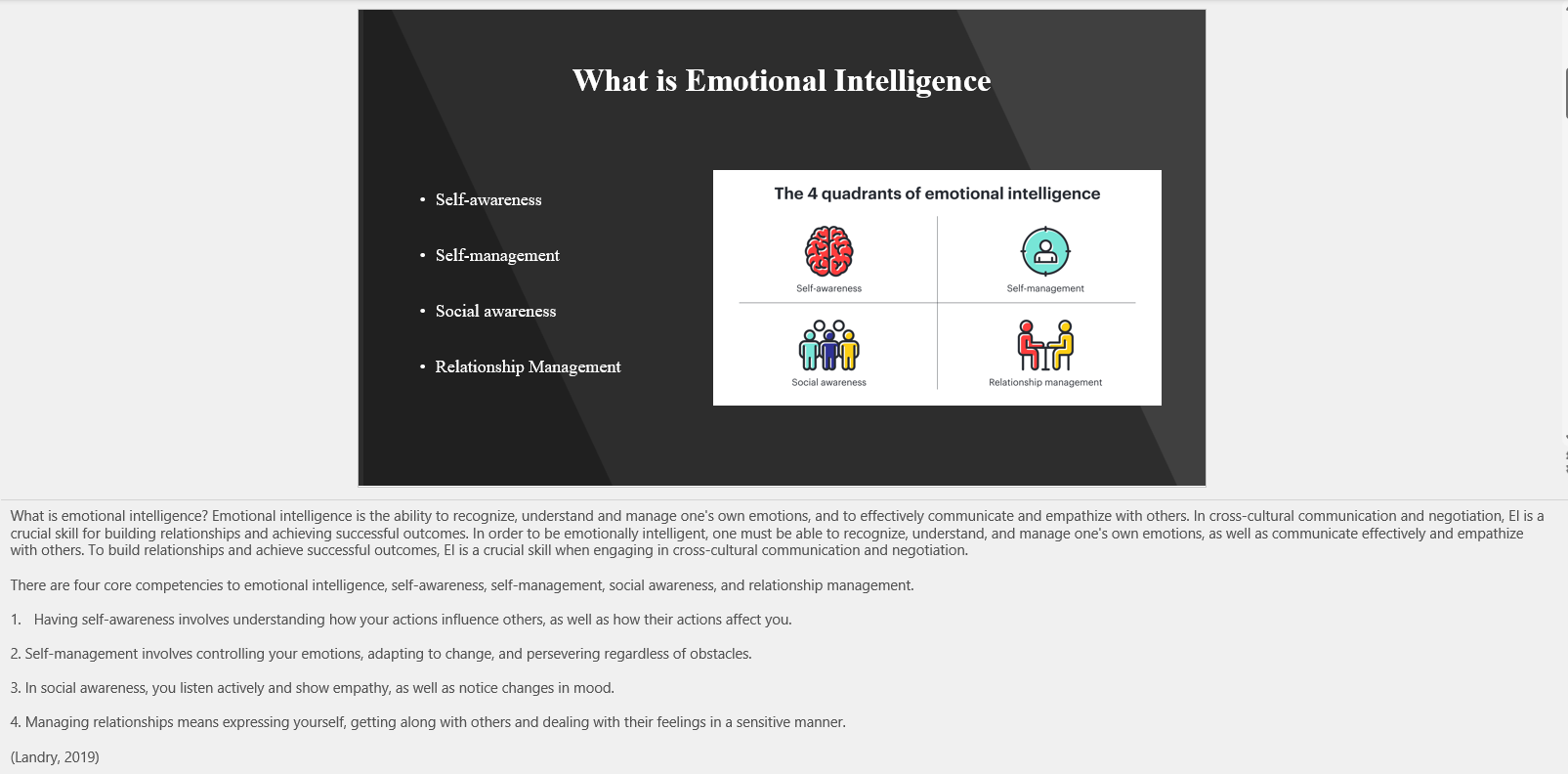
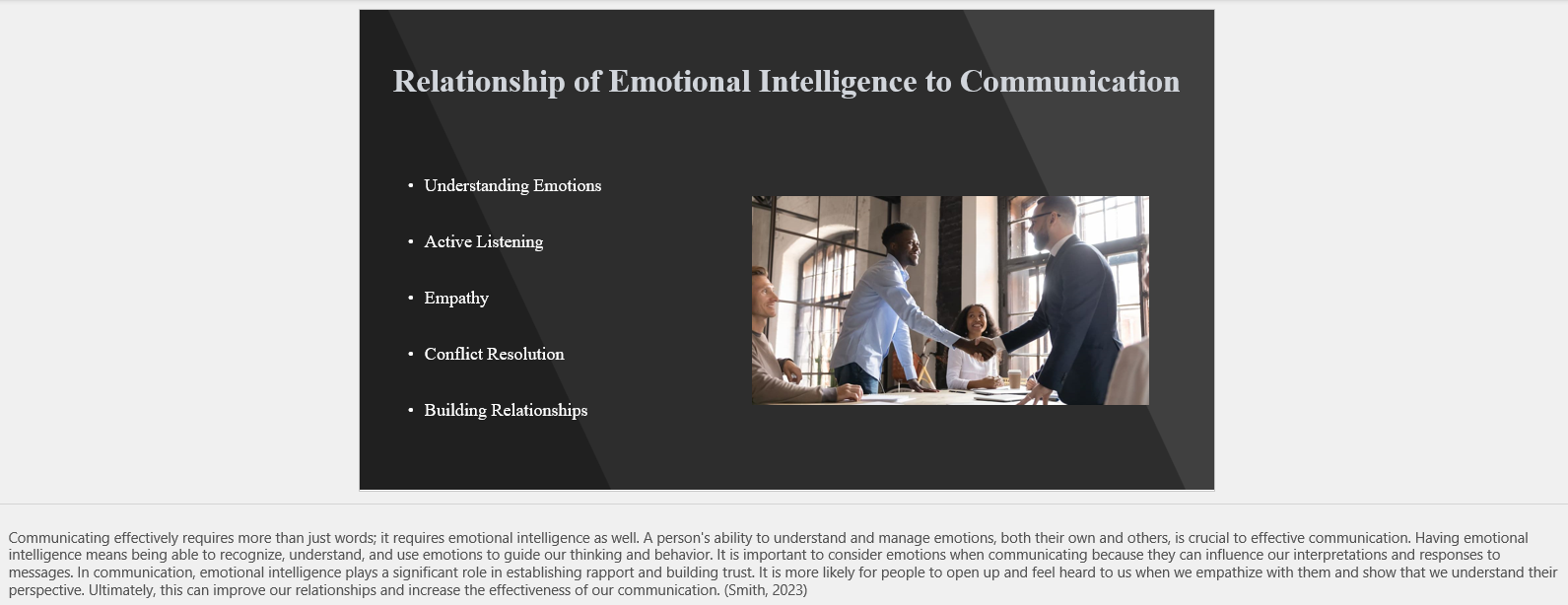
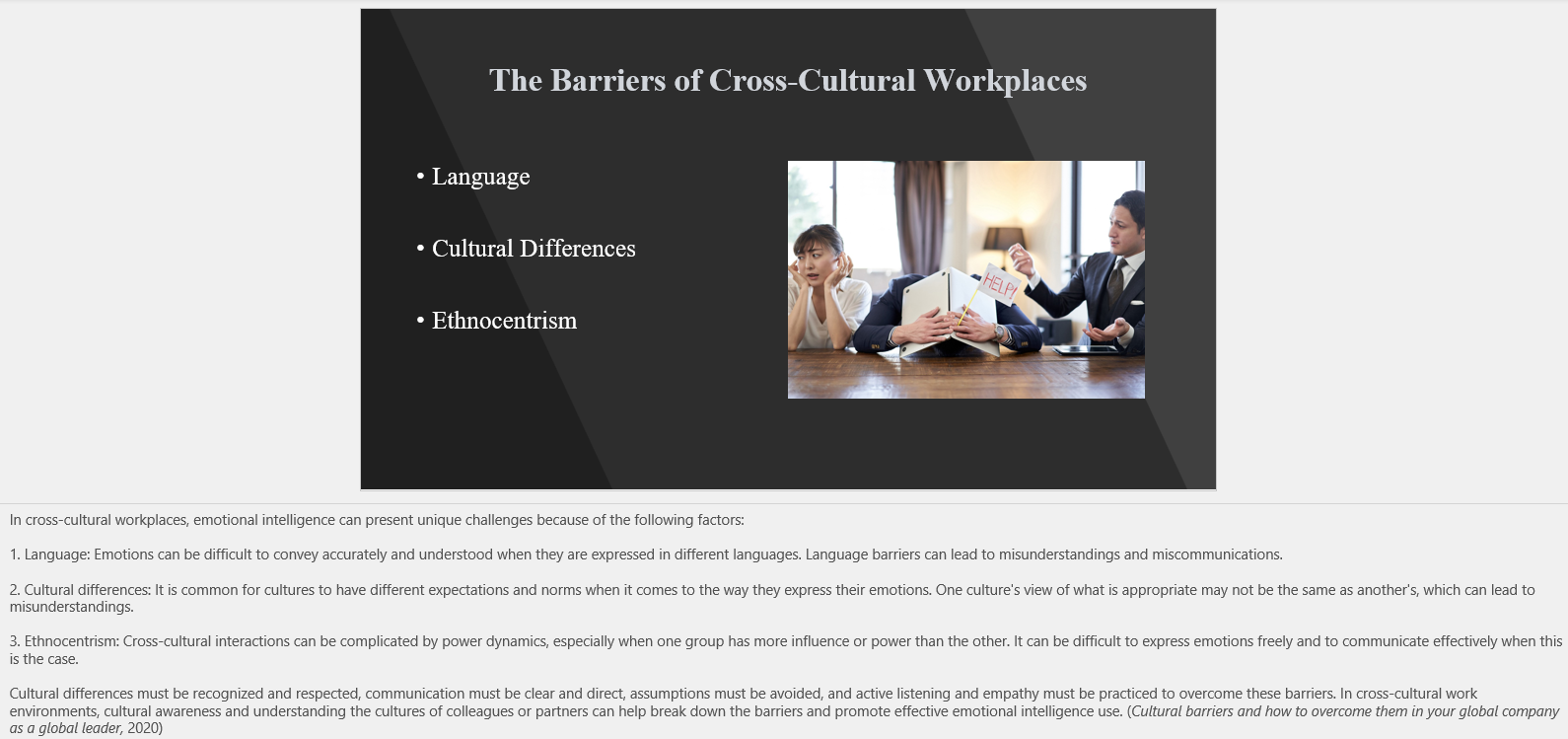
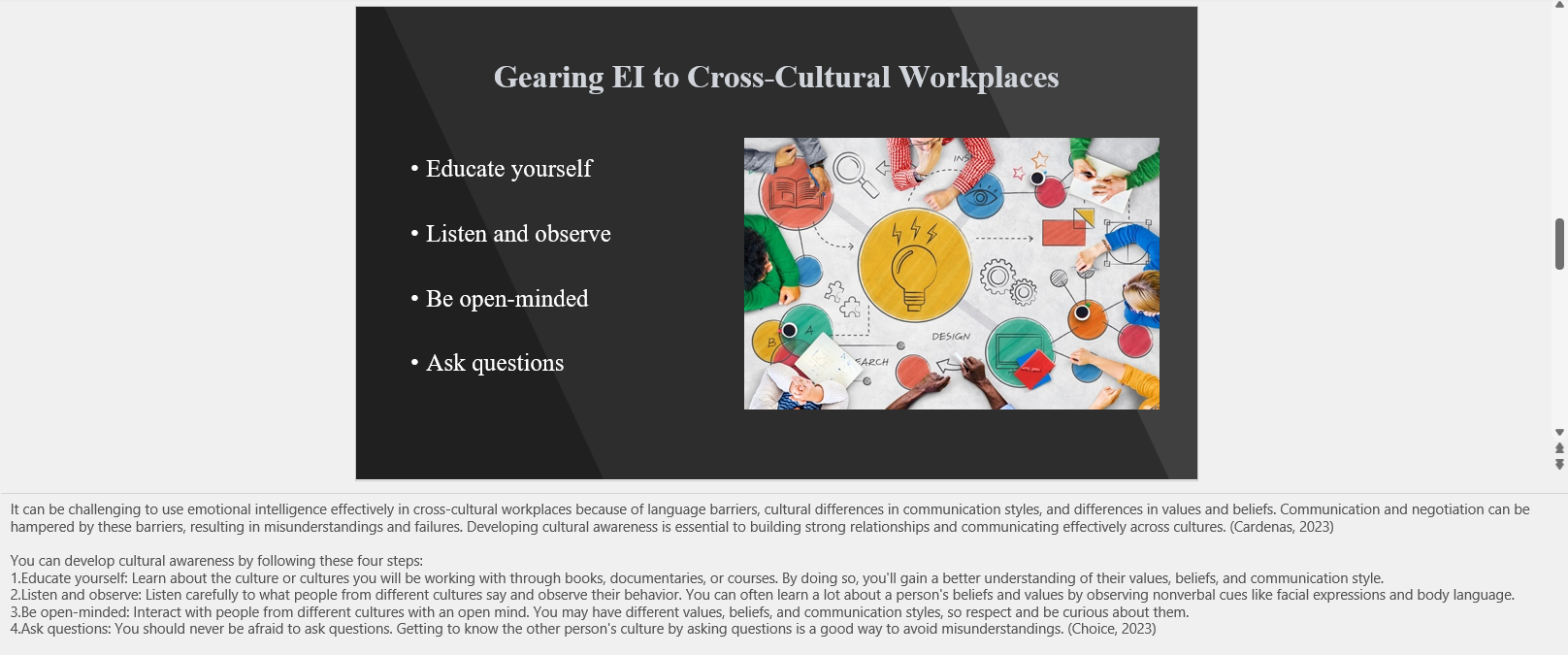
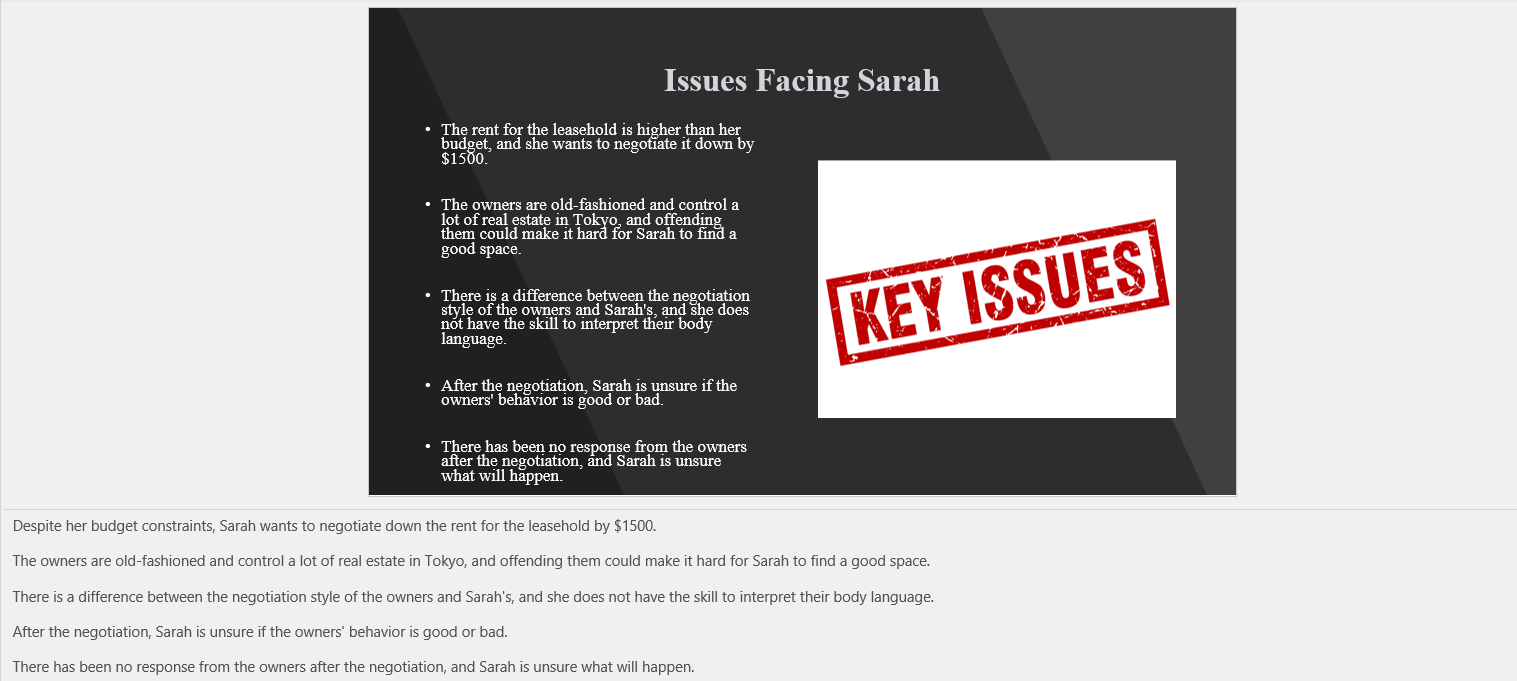
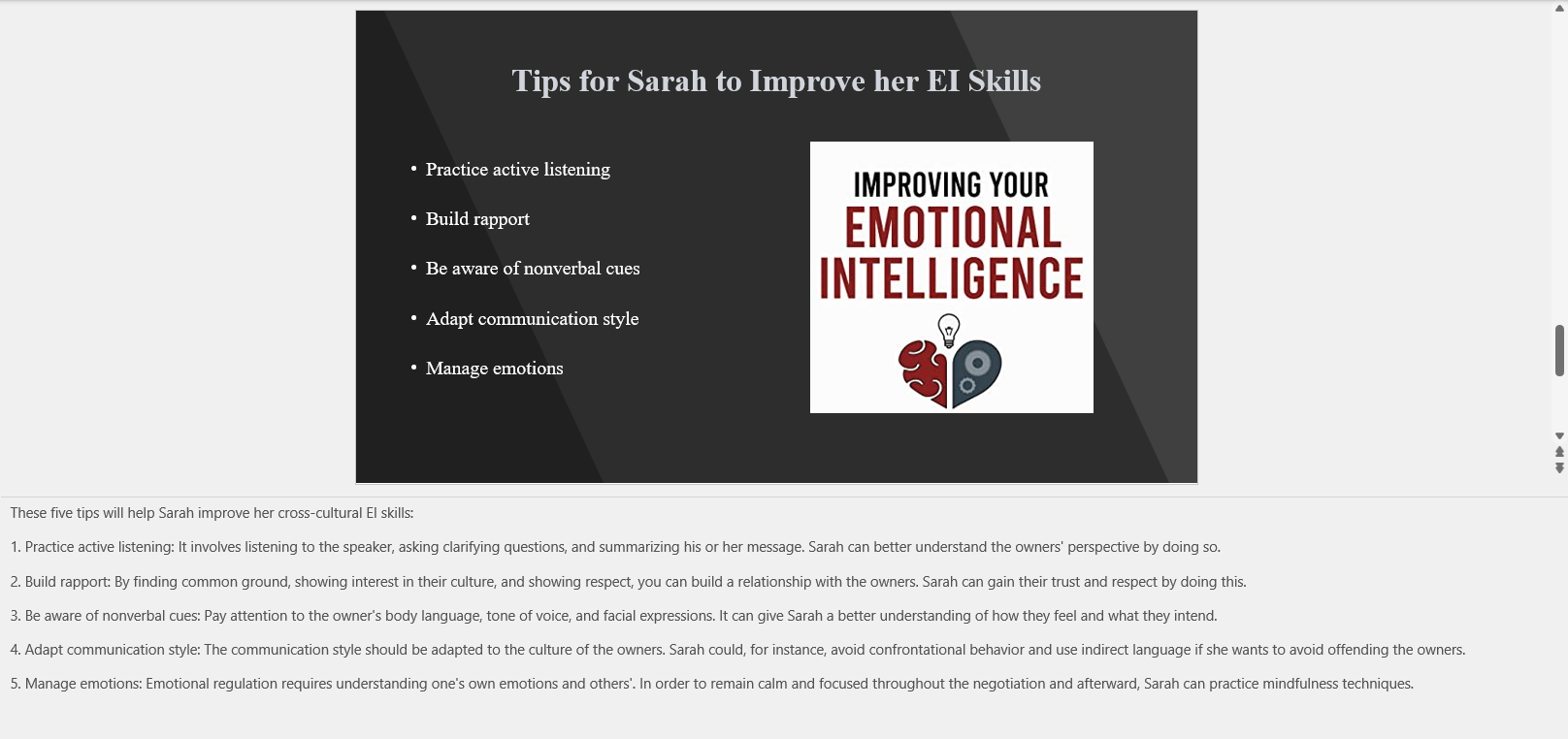
What is Emotional Intelligence . Self-awareness The 4 quadrants of emotional intelligence . Self-management Self-awareness Self-management Social awareness . Relationship Management Social awareness Relationship management What is emotional intelligence? Emotional intelligence is the ability to recognize, understand and manage one's own emotions, and to effectively communicate and empathize with others. In cross-cultural communication and negotiation, El is a crucial skill for building relationships and achieving successful outcomes. In order to be emotionally intelligent, one must be able to recognize, understand, and manage one's own emotions, as well as communicate effectively and empathize with others. To build relationships and achieve successful outcomes, El is a crucial skill when engaging in cross-cultural communication and negotiation. There are four core competencies to emotional intelligence, self-awareness, self-management, social awareness, and relationship management. 1. Having self-awareness involves understanding how your actions influence others, as well as how their actions affect you. 2. Self-management involves controlling your emotions, adapting to change, and persevering regardless of obstacles. 3. In social awareness, you listen actively and show empathy, as well as notice changes in mood. 4. Managing relationships means expressing yourself, getting along with others and dealing with their feelings in a sensitive manner. (Landry, 2019)Relationship of Emotional Intelligence to Communication . Understanding Emotions . Active Listening . Empathy . Conflict Resolution Building Relationships Communicating effectively requires more than just words; it requires emotional intelligence as well. A person's ability to understand and manage emotions, both their own and others, is crucial to effective communication. Having emotional intelligence means being able to recognize, understand, and use emotions to guide our thinking and behavior. It is important to consider emotions when communicating because they can influence our interpretations and responses to messages. In communication, emotional intelligence plays a significant role in establishing rapport and building trust. It is more likely for people to open up and feel heard to us when we empathize with them and show that we understand their perspective. Ultimately, this can improve our relationships and increase the effectiveness of our communication. (Smith, 2023)The Barriers of Cross-Cultural Workplaces . Language . Cultural Differences HELP . Ethnocentrism In cross-cultural workplaces, emotional intelligence can present unique challenges because of the following factors: 1. Language: Emotions can be difficult to convey accurately and understood when they are expressed in different languages. Language barriers can lead to misunderstandings and miscommunications. 2. Cultural differences: It is common for cultures to have different expectations and norms when it comes to the way they express their emotions. One culture's view of what is appropriate may not be the same as another's, which can lead to misunderstandings. 3. Ethnocentrism: Cross-cultural interactions can be complicated by power dynamics, especially when one group has more influence or power than the other. It can be difficult to express emotions freely and to communicate effectively when this is the case. Cultural differences must be recognized and respected, communication must be clear and direct, assumptions must be avoided, and active listening and empathy must be practiced to overcome these barriers. In cross-cultural work environments, cultural awareness and understanding the cultures of colleagues or partners can help break down the barriers and promote effective emotional intelligence use. (Cultural barriers and how to overcome them in your global company as a global leader, 2020)Gearing EI to Cross-Cultural Workplaces . Educate yourself . Listen and observe . Be open-minded DESIGN . Ask questions ARCH It can be challenging to use emotional intelligence effectively in cross-cultural workplaces because of language barriers, cultural differences in communication styles, and differences in values and beliefs. Communication and negotiation can be hampered by these barriers, resulting in misunderstandings and failures. Developing cultural awareness is essential to building strong relationships and communicating effectively across cultures. (Cardenas, 2023) You can develop cultural awareness by following these four steps: 1.Educate yourself: Learn about the culture or cultures you will be working with through books, documentaries, or courses. By doing so, you'll gain a better understanding of their values, beliefs, and communication style. 2.Listen and observe: Listen carefully to what people from different cultures say and observe their behavior. You can often learn a lot about a person's beliefs and values by observing nonverbal cues like facial expressions and body language. 3.Be open-minded: Interact with people from different cultures with an open mind. You may have different values, beliefs, and communication styles, so respect and be curious about them. 4.Ask questions: You should never be afraid to ask questions. Getting to know the other person's culture by asking questions is a good way to avoid misunderstandings. (Choice, 2023)Issues Facing Sarah The rent for the leasehold is higher than her budget, and she wants to negotiate it down by $1500. The owners are old-fashioned and control a lot of real estate in Tokyo, and offending them could make it hard for Sarah to find a good space. There is a difference between the negotiation style of the owners and Sarah's, and she does KEY ISSUES not have the skill to interpret their body language. After the negotiation, Sarah is unsure if the owners' behavior is good or bad. There has been no response from the owners after the negotiation, and Sarah is unsure what will happen. Despite her budget constraints, Sarah wants to negotiate down the rent for the leasehold by $1500. The owners are old-fashioned and control a lot of real estate in Tokyo, and offending them could make it hard for Sarah to find a good space. There is a difference between the negotiation style of the owners and Sarah's, and she does not have the skill to interpret their body language. After the negotiation, Sarah is unsure if the owners' behavior is good or bad. There has been no response from the owners after the negotiation, and Sarah is unsure what will happen.Tips for Sarah to Improve her EI Skills . Practice active listening IMPROVING YOUR . Build rapport EMOTIONAL . Be aware of nonverbal cues INTELLIGENCE . Adapt communication style . Manage emotions These five tips will help Sarah improve her cross-cultural El skills: 1. Practice active listening: It involves listening to the speaker, asking clarifying questions, and summarizing his or her message. Sarah can better understand the owners' perspective by doing so. 2. Build rapport: By finding common ground, showing interest in their culture, and showing respect, you can build a relationship with the owners. Sarah can gain their trust and respect by doing this. 3. Be aware of nonverbal cues: Pay attention to the owner's body language, tone of voice, and facial expressions. It can give Sarah a better understanding of how they feel and what they intend. 4. Adapt communication style: The communication style should be adapted to the culture of the owners. Sarah could, for instance, avoid confrontational behavior and use indirect language if she wants to avoid offending the owners. 5. Manage emotions: Emotional regulation requires understanding one's own emotions and others'. In order to remain calm and focused throughout the negotiation and afterward, Sarah can practice mindfulness techniques
Step by Step Solution
There are 3 Steps involved in it

Get step-by-step solutions from verified subject matter experts
 Study Help